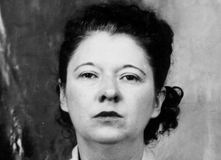
Bonnie Heady
Murderer Marie Noe
Murderer · USA · 1949
Marie Noe was convicted in June 1999 of murdering eight of her children. Betwee…
8 victims
Marie Noe
Murderer · USA · 1949
Marie Noe was convicted in June 1999 of murdering eight of her children. Betwee…
8 victims
 Earle Dennison
Murderer · USA · 1952
Earle Dennison was a widow and worked as a surgical nurse. She worked at the We…
2 victims
Earle Dennison
Murderer · USA · 1952
Earle Dennison was a widow and worked as a surgical nurse. She worked at the We…
2 victims
 Barbara Graham
Murderer · USA · 1953
Barbara Graham (June 26, 1923 – June 3, 1955) was an American criminal and conv…
1 victim
Barbara Graham
Murderer · USA · 1953
Barbara Graham (June 26, 1923 – June 3, 1955) was an American criminal and conv…
1 victim
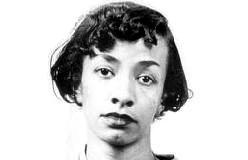 Betty Butler
Murderer · USA · 1952
Betty Butler was executed on June 11, 1954. She was 26 years old and was of the…
1 victim
Betty Butler
Murderer · USA · 1952
Betty Butler was executed on June 11, 1954. She was 26 years old and was of the…
1 victim
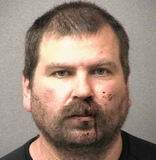 Adam Leroy Lane
Murderer · USA · 2007
Adam Leroy Lane was a former trucker who committed knife attacks on women in Ne…
2 victims
Adam Leroy Lane
Murderer · USA · 2007
Adam Leroy Lane was a former trucker who committed knife attacks on women in Ne…
2 victims
 Richard Lee Adams
Murderer · USA · 1998
The District Court of Appeal of the State of Florida opinion 5D00-1685 Richard…
1 victim
Richard Lee Adams
Murderer · USA · 1998
The District Court of Appeal of the State of Florida opinion 5D00-1685 Richard…
1 victim
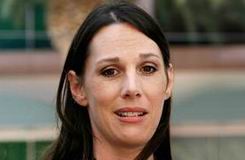 Cynthia Sommer
Justice miscarriage · USA · 2002
Cynthia Sommer was convicted of first-degree murder with the “special circumsta…
0 victims
Cynthia Sommer
Justice miscarriage · USA · 2002
Cynthia Sommer was convicted of first-degree murder with the “special circumsta…
0 victims
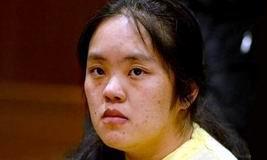 Ka Yang
Murderer · USA · 2011
Ka Yang was a mother of four, including her late daughter, Mirabelle Thao-Lo, a…
1 victim
Ka Yang
Murderer · USA · 2011
Ka Yang was a mother of four, including her late daughter, Mirabelle Thao-Lo, a…
1 victim
 Johann Otto Hoch
Serial killer · USA · 1890
Johann Otto Hoch (1855 - 1906) was the most famous and last-used alias of a Ger…
15 victims
Johann Otto Hoch
Serial killer · USA · 1890
Johann Otto Hoch (1855 - 1906) was the most famous and last-used alias of a Ger…
15 victims
- Gender
- female
- Country
- USA
- Location
- St. Joseph, Buchanan County, Missouri , USA
- Date of birth
- July 15, 1912
- Age at first offence
- 41
- Characteristics
- kidnapping, alcohol, drug addict
- Victim profile
- Robert Cosgrove Greenlease, Jr., known as Bobby, 6
- Method of murder
- Shooting ( .38 caliber revolver)
- Date(s) of murder
- September 28, 1953
- Years active
- 1953
- Date of arrest
- October 6, 1953
- Status
-
Executed
Executed in Missouri’s lethal gas chamber at the State Penitentiary, Jefferson City, Missouri, on December 18, 1953
Case record: Bonnie Heady
People
- Bonnie Emily Brown Heady — convicted under the Lindbergh Act; kidnapper and murderer of six-year-old Robert C. “Bobby” Greenlease (1947–1953).
- Carl Austin Hall — co-abductor; murdered Bobby Greenlease; convicted with Heady under the Lindbergh Act.
- Robert Cosgrove Greenlease, Sr. — Bobby Greenlease’s father; a wealthy automobile dealer who resided in Mission Hills, Kansas City, Missouri; paid the ransom; later died on September 17, 1969, at age 87.
- Robert Cosgrove Greenlease, Jr. (“Bobby”), — six years old at the time of the kidnapping and murder; son of Robert Cosgrove Greenlease, Sr.; kidnapped in September 1953; murdered by Hall and Heady.
- Virginia Greenlease — Bobby Greenlease’s mother; died on September 24, 2001, at age 91.
- Paul Robert Greenlease — Bobby’s adopted older brother; died in 1964, at age 47.
- Virginia Sue Greenlease — Bobby’s full sister; died at age 43 in 1984.
- Sister Morand — answered the door and was confronted by a woman claiming to be Bobby’s aunt.
- Sister Marthanna — called the Greenlease home to inquire about Mrs. Greenlease’s condition and learned the story was false.
- Willard Pearson Creech — cab driver for the Toedman Cab Company in Kansas City, Missouri.
- Johnny Hager — cabbie and “one-girl pimp” connected with Hall’s movements after the motel rental.
- Sandra O’Day — described as a former prostitute; was supposed to fly to Los Angeles and mail a letter from there to divert police attention; instead decided on “redirection of her own.”
- Joe Costello — a “mob confederate” identified as a boss connected to St. Louis policing infiltration.
- Officer Elmer Dolan — St. Louis Police officer involved in Hall’s arrest; later tried for perjury concerning the missing ransom money.
- Lt. Louis Ira Shoulders — St. Louis Police Lt.; arrested Hall and questioned him; later sentenced for perjury concerning the missing ransom money.
- Howard Kennedy — FBI agent assigned full-time to track the Greenlease ransom money.
- Herbert Brownell — United States Attorney General who followed the case intensely.
- J. Edgar Hoover — FBI Director who ordered full-time tracking and later urged other action; associated with the missing-ransom effort.
- Arthur Reeder — FBI Agent who read Carl Hall’s statement.
- J.E. Thornton — FBI Agent who interviewed Bonnie Heady.
- Phillip King — Agent who took a six-page statement from Dolan in Washington.
- President Dwight D. Eisenhower — discussed in the narrative as following the case intensely.
- Lyndon Johnson — President who pardoned Elmer Dolan in 1965.
- Bernard Patton — lawyer in St. Joe to whom a letter was to be addressed.
- Patton — referenced as lawyer Patton in St. Joe.
- Pastor/cleric referenced in execution account: an Episcopal priest led them in “the Lord’s prayer.”
- Rev. Joseph Freeman — Jesuit priest from Rockhurst College in Kansas City; received support from Bobby’s parents.
- Other identified persons related to later inferences or investigation: John Vitale — named as a St. Louis mob boss believed by the FBI to have connections for laundering; Charles/Paula Fass — name used in the narrative as an author (only a name appears; no direct quote provided).
Timeline
- September 1953 — Carl Austin Hall and Bonnie Emily Brown Heady kidnapped six-year-old Bobby Greenlease from Notre Dame de Sion in Kansas City, Missouri.
- September 28, 1953 — Sister Morand of the French Institute of Notre Dame de Sion answered the door; the woman claiming to be Bobby’s aunt was confronted and Bobby was taken; at about 11:30 a.m. Sister Marthanna called the Greenlease home and learned the story was false; Willard Pearson Creech transported Hall and the woman and observed ransom money and Bobby in the cab.
- September 28, 1953 (about noon) — Hall and Heady rented a cheap furnished apartment at 4504 Arsenal St.
- After the murder (ransom demand and payment described as ongoing in September 1953) — Hall and Heady sent Bobby’s father a message demanding a ransom of $600,000; Greenlease paid; the ransom was described as the largest in U.S. history at the time.
- October 7, (before 9 a.m.) — “The body was dug up from a chrysanthemum bed” in Heady’s yard in St. Joe; Hall and Heady were charged with federal crimes under the Lindbergh Act after crossing from Missouri to Kansas to kill the boy; they were charged because they crossed from Missouri to Kansas.
- November 16 (year not separately stated in the narrative beyond the case sequence) — a jury convened in federal court in Kansas City to determine fate.
- December 18, 1953 — prison officials led Hall and Heady to the building that housed the prison’s gas chamber; Heady was executed in Missouri’s lethal gas chamber at the State Penitentiary, Jefferson City, Missouri.
- March 1954 — Officer Elmer Dolan was tried, convicted, and sentenced to two years in prison.
- (A month later than March 1954) — Shoulders was sentenced to three years after a trial.
- 1962 — when Lou Shoulders and Joe Costello died, Dolan said he was ready to talk.
- September (year not explicitly separated in the narrative beyond “that September” following 1962) — Dolan was flown to Washington and a six-page statement was taken by Agent Phillip King.
- 1965 — at J. Edgar Hoovers urging, President Lyndon Johnson pardoned Elmer Dolan.
- 1969 — Robert Cosgrove Greenlease Sr. died on September 17, 1969.
- 1984 — Virginia Sue Greenlease died at age 43 in 1984.
- 2001 — Virginia Greenlease died on September 24, 2001, at age 91; five days short of the 48th anniversary of the kidnapping.
- 2002 — a U.S. Department of Justice study conducted in 2002 with statistics for the year 1999 estimated missing children figures.
- 1995 — “the 1995 demolition of the Coral Court turned up nothing.”
Background
Robert C. “Bobby” Greenlease was the son of multi-millionaire automobile dealer Robert Cosgrove Greenlease, Sr., of Kansas City, Missouri. Bobby Greenlease’s abduction in September 1953 led to the largest ransom payout in U.S. history at the time. Before the ransom demand was even issued, the young boy was murdered by his abductors, Carl Austin Hall and Bonnie Emily Brown Heady.
Multi-millionaire Robert Greenlease made his fortune introducing General Motors vehicles to the Great Plains in the early 20th century and owned dealerships from Texas to South Dakota. Greenlease was quite elderly when Bobby was born, and the Greenleases doted upon him. Bobby was described as a trusting boy. Author John Heidenry’s book is referenced in the narrative as telling the story of the abduction and the criminals who abducted him.
Bonnie Heady was described in the narrative as a “drug-addicted alcoholics then living together in Saint Joseph, Missouri.” Carl Hall had planned for some time to victimize his old classmate’s wealthy family, and the narrative states that in the early 1930s, Hall had attended Kemper Military School in Boonville, Missouri with Paul Robert Greenlease, Bobby’s adopted older brother.
The offence
In September 1953, Carl Austin Hall and Bonnie Emily Brown Heady kidnapped six-year-old Bobby Greenlease from Notre Dame de Sion, an exclusive Kansas City Catholic school. The kidnappers were described as drug-addicted alcoholics living together in Saint Joseph, Missouri.
In the school encounter, the narrative states:
- Sister Morand of the French Institute of Notre Dame de Sion answered the door and was confronted by a woman who said she was the aunt of Bobby Greenlease.
- The woman told Sister Morand that Bobby’s mother had just suffered a heart attack and had been taken to St. Mary’s Hospital.
- Sister Morand recalled that Bobby walked directly to the woman “without hesitation,” and there was nothing in Bobby’s action or behavior to indicate doubt.
- As the woman left the school, she had an arm around Bobby’s shoulder and was holding his hand, and Sister Morand last saw them as they entered a taxicab.
- At approximately 11:30 a.m., Sister Marthanna called the Greenlease home, spoke to Mrs. Greenlease, and learned that the story told by the woman who called for Bobby was false.
After obtaining Bobby, the narrative states Hall and Heady took him across the state line to Johnson County, Kansas, where Hall shot Bobby to death.
After the murder, Hall and Heady sent Bobby’s father a message demanding a ransom of $600,000. The narrative describes Greenlease as holding off the police and FBI and paying up in the effort to save his son.
Investigation
The narrative states that after Greenlease notified the chief of police in Kansas City, who reported the matter to the FBI, Willard Pearson Creech provided information about a woman matching the description of the caller entering his cab shortly before 11:00 a.m. on September 28, 1953.
Creech told authorities that the woman requested a drive to the school of Notre Dame de Sion, and then later directed Creech to wait while she desired to be driven to the Katz Drug Store at Westport and Main Streets in Kansas City. Creech said that in approximately six minutes, the woman reentered the cab accompanied by a small boy fitting Bobby Greenlease’s description. When Creech last saw them, they had stopped behind a blue 1952 or 1953 0 Studebaker with $425 in ransom money.
The narrative describes Hall and Heady moving into lodging and moving money via mail and multiple tavern stops, including a stop where Hall mailed $500 cash to lawyer Patton in St. Joe. It also describes later police activity that identified Hall as flaunting a large sum of money and brought him in for questioning, with Hall eventually implicating Heady.
The narrative further states that police found Heady back at her own home outside Kansas City and found a shallow grave in her backyard.
The body was described as being dug up from a chrysanthemum bed in Heady’s yard in St. Joe before 9 a.m. on Wednesday, October 7.
The narrative also describes FBI tracking of missing ransom money by distributing copies of serial numbers to banks across the land, and identifies that Hoover ordered a full-time assignment to Greenlease ransom money duty for 15 years carried out by agent Howard Kennedy, who spent that time attempting to recover the bills. It states that only 115 of the bills turned up and that the remaining bills presumably entered circulation undetected. The narrative states that for years, the FBI badgered Elmer Dolan to come clean.
A detailed speculative section about missing cash is included in the narrative and mentions:
- a cab driver who took Hall to the Coral Court Motel had tipped off mob boss Joe Costello,
- Hall tried unsuccessfully to bury the cash near the Meramec River,
- suitcases in Hall’s possession upon his arrest were not brought to the 11th District Precinct Station with two arresting officers (Lieutenant Louis Ira Shoulders and Patrolman Elmer Dolan) later federally indicted for perjury,
- cash falling into mobsters’ hands or hidden in the walls of the motel, and that 1995 demolition of the Coral Court turned up nothing.
Arrest and charges
The narrative states that once Hall was arrested, Heady was collected from the room where she had been holed up drunk for more than a day, after Hall gave up Heady.
Following Hall’s questioning and implicating Heady, the police arrested Hall, took him to a district police station, booked him, and placed him in a holding pen. After an 80-minute disappearance, the cops returned carrying the foot locker and suitcase containing $288,000, with more than half the ransom money missing and Hall described as having spent no more than $5,000.
The narrative then states that Hall and Heady were charged with federal crimes under the Lindbergh Act because they crossed from Missouri to Kansas to kill the boy.
Trial
The narrative states:
- They pleaded guilty to murder as a “gambit” that allowed their attorney to focus on avoiding the death penalty.
- A jury convened in federal court in Kansas City on November 16.
- Jurors condemned Hall to die within eight minutes of retiring to the jury room.
- One juror voted to spare Heady in the first vote, but the mind changed after less than an hour of back-and-forth.
- The judge announced the death sentence and ordered Heady and Hall to the prison in Jefferson City, Mo., to await execution.
The narrative describes confessions as evidence:
- The prosecutor took 45 minutes to read Bonnie Heady’s 25-page confession to the jury.
- FBI Agent Arthur Reeder read Carl Hall’s 36-page statement as Robert Greenlease sat glowering just yards from his sons killers.
- The narrative describes the trial as brief, with three days and deliberation described as an even briefer period.
Verbatim confession/interview details
Bonnie Heady’s interview with FBI Agent J.E. Thornton included the following verbatim material:
She began, “Im trying to help you as much as I can. Im just so hazy on some things that I cant remember. If you had been drunk as long as I had, it does something to your brain. I just travel around in a haze most of the time.”
When Thornton asked whether she remembered the day of the kidnapping, she replied, “No, I dont know what day it is half of the time.”
The agent tried to address the womans motivation. He asked, “You have some income of your own and have been a substantial citizen You know the boy had disappeared. Why didnt you call the police?”
Heady said, “I should have, I know that. But I thought if I called the police theyd come and take him (Hall) away, and I love him very much and want to keep him. We had been very happy together and I wanted to keep him.”
When confronted with Heady’s true account of the murder of the boy, the narrative reports:
- Hall dropped his head, groaned and said, “Its true, its true.”
- Later that night, Hall sat in the interview room muttering, “Money, money, money.”
Sentencing
The narrative states:
Execution and last words
The narrative states that from death row, Bonnie Heady wrote a note of apology to the Greenlease family.
Verbatim letter excerpt
The note read in part:
“I doubt if this letter will do much good, but there isnt anything we could do or say that would atone for our mistake I would give anything if I could go back to that Sunday in September and erase everything that has happened since. It all seems like a nightmare to me I dont say I dont enjoy money, as everybody does, but that was not my motive. I could have been very, very happy with Carl living in my house as I had been, but he was used to more money. My case was loving not wisely, but too well. I wanted so much for him to be happy I think anyone will find if you drink from one to two fifths of whiskey a day for a year and half that your brain doesnt function properly. Since I have been in jail is the first time Ive been able to reason clearly for some time.”
The narrative then states:
- “Just after midnight on December 18, 1953,” about 81 days after they committed murder, prison officials led Hall and Heady to the building that housed the prison’s gas chamber.
- They walked without rancor to the execution chambers anteroom.
- An Episcopal priest led them in “the Lords prayer.”
- The two were allowed to hold hands for a moment, and they kissed goodbye.
- They were blindfolded, led into the chamber and strapped into adjacent chairs.
- Before gas began seeping into the room, they spoke their last words.
Verbatim last words
“Bonnie Heady said, Are you doing all right, honey?” “Carl Hall replied, Yes, mama.”
Outcome
Bonnie Heady was executed in Missouri’s lethal gas chamber at the State Penitentiary, Jefferson City, Missouri, on December 18, 1953.
Aftermath
After the execution, a grand jury indicted Officer Dolan and Lt. Shoulders for perjury concerning the missing ransom money.
The narrative states:
- Dolan was tried in March 1954, convicted, and sentenced to two years in prison.
- Shoulders was sentenced to three years after a trial a month later.
- Joe Costello escaped indictment in the case and invoked the Fifth Amendment against self-implication each time he was questioned about the missing money.
- Cabdriver Johnny Hager cooperated in the investigation and was not charged.
- The narrative states that Hager returned the remainder of the $2,500 that Hall had given him.
- The narrative states that Sandy O’Day was not charged; it also adds that she “never made it to St. Joe,” got as far as Kansas City, and was “waylaid in a hotel bacchanal.”
- The narrative states that police found her in bed with another woman.
- The narrative states that the recovered half of the ransom was returned to Robert Greenlease.
- It also describes the missing cash as a “black mark on the St. Louis Police Department” and a “thorn in the side of FBI Director J. Edgar Hoover for some years.”
At J. Edgar Hoovers urging, President Lyndon Johnson pardoned Elmer Dolan in 1965. The narrative includes statements attributed to Dolan in a six-page statement taken by Agent Phillip King: the cop said Lt. Shoulders passed the money-laden luggage to Costello outside the hotel before they took Carl Hall in for booking; Costello took the money home; Shoulders offered Dolan $50,000; Dolan said he told Shoulders, “I dont want anything to do with that crap.” It also states:
- Dolan said Shoulders replied, “You really dont have anything to say about it.”
- Dolan said he lied to protect Shoulders and Costello because he feared for his life.
- While he said he didnt take the cash offered him, he did accept $1,500 in hush money from Costello after he was released from prison.
- The narrative states that it was Christmastime, Dolan said, and he had a wife and six kids.
- The FBI believes Costello laundered the money through St. Louis mob boss John Vitale, who had connections with the Chicago mob.
After Bobby Greenlease’s murder, FBI Director Hoover issued a directive asking schools and youth organizations to review safety procedures to combat stranger kidnappings. The narrative includes verbatim Hoover language:
“Assuredly, a more heinous crime cannot be conceived,” Hoover wrote.
The narrative states that most schools changed procedures for removal of pupils by non-parents, including the use of emergency contact cards that authorized certain individuals to pick up a child. It also states that such a system might have saved Bobby Greenlease.
The narrative then references a trend described as “democratization of kidnapping” related to custody disputes and “parental kidnappings,” citing author Paula Fass. It includes contemporary missing-children statistics: the U.S. Department of Justice study conducted in 2002 with statistics for year 1999 estimated nearly 800,000 children were listed as missing, with more than half runaways, about 204,000 family abductions, some 58,000 abductions by non-family members, and 115 victims of what authorities call stereotypical kidnappings (financial or sexual motives). It adds that the National Center for Missing and Exploited Children says about 100 such incidents are reported each year, and that in three of four cases, the abducted child is killed within three hours, “just as in the Greenlease case.”
The narrative also notes that technology “might have hastened the arrest” using microchips in ransom bundles and advanced telephone tracking technology, in connection with Greenlease-case phone calls to the Greenlease residence before the money drop occurred.
The Greenlease legacy
The narrative states that Bobby Greenlease’s parents took refuge in their Catholic faith after the murder and made frequent visits to his burial site, the Abbey Mausoleum at Forest Hills Cemetery in Kansas City.
It states that Virginia and Robert Greenlease drew comfort from the Rev. Joseph Freeman, a Jesuit priest from Rockhurst College in Kansas City, and that they funded a permanent position named in Freemans honor on the school’s philosophy faculty. It states that over the years they continued to donate generously to the school in their sons memory.
The narrative further states:
- They financed construction of a library and art gallery for the college.
- In 1962, they donated land for a new affiliated high school.
- The school property was named the Greenlease Memorial Campus.
It states that none of their offspring was so fortunate:
- Bobbys adopted half-brother, Paul, died in 1964 at age 47.
- Bobbys full sister, Virginia Sue, died at age 43 in 1984.
- A cousin of the family said of Virginia Sue Greenlease: “The sister never grew up to be a happy, normal person. What happened to her brother had a bad effect on her.”
- Robert Cosgrove Greenlease Sr. lived for 16 years after the kidnapping, died on September 17, 1969, at age 87.
- The mother, Virginia, died at age 91 on September 24, 2001, five days short of the 48th anniversary of the kidnapping.
- She left $1 million each to Rockhurst College and Rockhurst High School in the names of Robert Greenlease Jr. and Sr.
Spotted an error, or have more information about this case?