Susan Hey
Murderer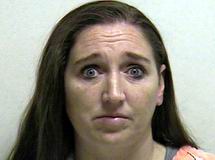 Megan Huntsman
Murderer · USA · 1996
Megan Huntsman was 40 at sentencing. She was a mother of three children who wer…
6 victims
Megan Huntsman
Murderer · USA · 1996
Megan Huntsman was 40 at sentencing. She was a mother of three children who wer…
6 victims
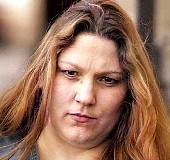 Angela Johnson
Murderer · USA · 1993
Angela Jane Johnson was convicted in federal court of aiding and abetting the m…
5 victims
Angela Johnson
Murderer · USA · 1993
Angela Jane Johnson was convicted in federal court of aiding and abetting the m…
5 victims
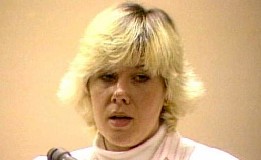 Catherine May Wood
Murderer · USA · 1987
Catherine May Wood was an American caregiver who worked at the Alpine Manor Nur…
5 victims
Catherine May Wood
Murderer · USA · 1987
Catherine May Wood was an American caregiver who worked at the Alpine Manor Nur…
5 victims
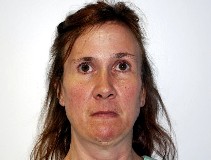 Michele Kalina
Murderer · USA · 1996
Michele Kalina pleaded guilty to murder for one of five infants she initially w…
5 victims
Michele Kalina
Murderer · USA · 1996
Michele Kalina pleaded guilty to murder for one of five infants she initially w…
5 victims
 Tiffany Hall
Murderer · USA · 2006
Tiffany Hall was 24 when she was charged in September 2006. She later entered a…
5 victims
Tiffany Hall
Murderer · USA · 2006
Tiffany Hall was 24 when she was charged in September 2006. She later entered a…
5 victims
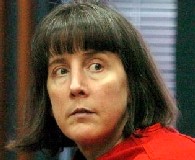 Amy Bishop
Murderer · USA · 1986
Amy Bishop — biology professor and perpetrator · James Anderson — Bishop’s husb…
4 victims
Amy Bishop
Murderer · USA · 1986
Amy Bishop — biology professor and perpetrator · James Anderson — Bishop’s husb…
4 victims
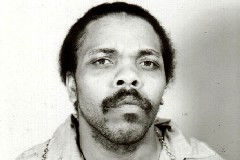 Vincent James
Murderer · USA · 1989
Vincent James instructed Gayle Taylor, an employee, to give him her ring, and s…
1 victim
Vincent James
Murderer · USA · 1989
Vincent James instructed Gayle Taylor, an employee, to give him her ring, and s…
1 victim
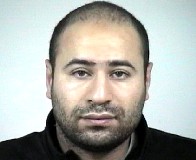 Nordine Amrani
Mass murderer · Belgium · 2011
13 December 2011 — Nordine Amrani carried out a murder–suicide attack in Saint-…
6 victims
Nordine Amrani
Mass murderer · Belgium · 2011
13 December 2011 — Nordine Amrani carried out a murder–suicide attack in Saint-…
6 victims
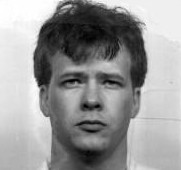 Jeff Emery
Murderer · USA · 1979
Jeff Emery was executed by lethal injection in Texas on December 8, 1998. He wa…
1 victim
Jeff Emery
Murderer · USA · 1979
Jeff Emery was executed by lethal injection in Texas on December 8, 1998. He wa…
1 victim
 Marilyn Edge
Murderer · USA · 2013
Marilyn Edge was a mother from Scottsdale, Arizona, accused of poisoning and ki…
2 victims
Marilyn Edge
Murderer · USA · 2013
Marilyn Edge was a mother from Scottsdale, Arizona, accused of poisoning and ki…
2 victims
 Alexander Hamilton
Murderer · USA · 2005
Alexander Hamilton (20) was an Antioch man convicted in Contra Costa County for…
1 victim
Alexander Hamilton
Murderer · USA · 2005
Alexander Hamilton (20) was an Antioch man convicted in Contra Costa County for…
1 victim
- Gender
- female
- Country
- USA
- Location
- Austin, Travis County, Texas, USA
- Date of birth
- October 11, 1958
- Age at first offence
- 38
- Characteristics
- nurse
- Victim profile
- Walter Lee Kelley, 80 / Harry Waddell, 83
- Method of murder
- Poisoning (potassium overdoses)
- Date(s) of murder
- July 13/28, 1996
- Years active
- 1996
- Date of arrest
- January 4, 1997
- Status
-
Pleaded guilty; sentenced to two 50-year sentences in prison on May 6, 1998
Parties and roles
- Susan Hey was an ex-nurse who pleaded guilty to the mercy killings of two elderly men at an Austin nursing home in 1996.
- Susan Hey’s lawyer was Linda Icenhauer-Ramirez.
- Susan Hey’s husband was Mark Hey.
- Mark Hey wrote information in his diary and later confided it to their pastor and marriage counselor, Mark Weaver.
- Mark Weaver called the police with Mark Hey’s permission.
- The investigation involved Austin homicide detectives Robert Merrill and Paul Johnson.
- Travis County Medical Examiner Robert Bayardo gave forensic evidence about potassium overdoses.
- Cannon Oaks Rehabilitation and Nursing Center administrator James Whitis spoke about the facility and employment matters.
- Cannon Oaks was owned by Beverly Enterprises Inc.
- Marie Wisdom was president of Advocates for Nursing Home Reform.
Timeline
- July 13, 1996 — 80-year-old Walter Lee Kelley died at the Austin nursing home.
- July 28, 1996 — 83-year-old Harry Waddell died at the Austin nursing home.
- May 5, 1998 — Susan Hey faced prison after pleading guilty to mercy killings of two elderly men at an Austin nursing home in 1996.
- May 6, 1998 — Susan Hey was sentenced to two concurrent 50-year sentences in prison.
Background
Susan Hey was a nurse at Cannon Oaks Rehabilitation and Nursing Center on William Cannon Drive in Austin.
Both deaths were originally ruled to be from natural causes.
Police said an anonymous tip and Hey’s statement to police played a vital role in the investigation.
Cannon Oaks was owned by Beverly Enterprises Inc., a company based in Arkansas with 640 nursing homes nationwide.
The offence
Susan Hey admitted killing Walter Lee Kelley and Harry Waddell with potassium overdoses when she worked as a nurse at the home.
- According to Susan Hey’s lawyer, Hey acted out of compassion when she administered potassium overdoses to the men.
- Hey injected potassium in the men’s feeding tubes after their health began deteriorating.
- Kelley and Waddell were buried without autopsies.
Investigation
Travis County Medical Examiner Robert Bayardo said it was “impossible to determine a potassium overdose.”
Bayardo explained that blood cells break down after death and release potassium into body fluids, and that the longer the body was dead, the higher the potassium content. He also stated that high doses of potassium can cause an irregular heartbeat that stops the heart and causes death.
An autopsy was not conducted on Waddell because his death occurred in a medical facility and he had a terminal illness.
Robert Bayardo said:
"It is impossible to determine a potassium overdose."
Bayardo further said:
"Because of this, it is normal for potassium to show up in high levels, "
and:
"The longer the body is dead, the higher the potassium content."
He said that high doses of potassium can cause an irregular heartbeat:
"He said high doses of potassium can cause an irregular heartbeat that stops the heart and causes death."
Austin homicide detectives Robert Merrill and Paul Johnson went to Hey’s home at 3804 Holt Drive near McCarty and Brodie lanes and asked her to come to police headquarters for questioning.
Detective Merrill said Hey told the officers she administered potassium to Waddell “in an amount which she knew could cause heart arrhythmias (irregular heartbeats) and cause Waddell to die.”
Merrill said Hey also told the officers she administered “60 cubic centimenters of potassium” through Waddell’s feeding tube.
Bayardo said:
"It may be that the district attorney will ask for an exhumation,"
and:
"We could determine by microscopic examination whether the kidneys were in good shape."
Police began investigating Waddell’s death on Thursday night after they received a tip from an anonymous caller who said Hey had injected an elderly nursing home resident named “Harry” with a lethal dose of potassium.
Police will not say what they believed Hey’s motive was.
Arrest
Police said Susan Hey was in jail Sunday in lieu of $100,000 bail on a charge of murder.
The reported bail amount was $100,000.
Trial
Susan Hey pleaded guilty to two counts of murder.
Her plea was entered after she was facing a capital murder charge and after her realization that she would probably lose a jury trial.
Susan Hey’s lawyer said:
''We decided we had no choice. If she was convicted of (capital murder), it was going to be an automatic life sentence.''
Her lawyer also said:
"We decided we had no choice,'' said Linda Icenhauer-Ramirez, Hey's lawyer. "If she was convicted of (capital murder), it was going to be an automatic life sentence.''
Sentencing
Susan Hey was sentenced to two concurrent 50-year sentences on Monday.
She must serve at least 25 years in prison before she would become eligible for parole.
On May 6, 1998, she received two 50-year sentences in prison.
Appeals
No appeal information was included.
Outcome
Susan Hey pleaded guilty to the mercy killings of two elderly men at an Austin nursing home in 1996 and was sentenced to two concurrent 50-year prison terms on May 6, 1998.
Aftermath
Susan Hey later recanted and tried to fight the charge.
Police had difficulty obtaining physical evidence even after exhuming the men’s bodies because a large dose of potassium can stop the heart, while the natural potassium level in a body rises after death, masking an overdose.
Susan Hey’s lawyer said Hey also hurt her defense by confessing to neighbors and friends who would have been called to testify.
Her lawyer said:
"The law doesn't recognize any distinction between mercy killing and any other murder, so testimony about her motive would not have been allowed in a trial, Icenhauer-Ramirez said."
Nursing home and related regulatory matters
In July, federal regulators rescinded a $168,000 fine imposed in July against Cannon Oaks, according to officials with the federal Health Care Financing Administration in Dallas.
Sharon Flippen, a Beverly representative in Texas, said in September that the company fought the $168,000 fine because it was excessive.
State inspectors found problems including that the nursing home staff gave the wrong medication to residents and failed to give medication on time.
Whitis said the facility corrected the flaws and that Texas Department of Human Services inspectors found that the facility conformed to standards during inspections on Aug. 21 and Sept. 16.
Marie Wisdom, president of Advocates for Nursing Home Reform, said the group was trying to push new regulations through the Texas Legislature requiring more supervision of nurses in residential care centers and checks on the criminal background of nursing applicants using a nationwide database instead of only checking whether a nurse has a criminal record in Texas.
Marie Wisdom said:
"But even with close supervision, it is difficult to catch a criminal if they are going to play God,"
Other details
- Walter Lee Kelley was 80 years old when he died on July 13, 1996.
- Harry Waddell was 83 years old when he died on July 28, 1996.
- Waddell was a retired trucking company employee from California.
- In the account of the arrest investigation, Susan Hey was described as 38 years old.
- Susan Hey was described as formerly a nurse at Cannon Oaks Rehabilitation and Nursing Center in South Austin.
- Susan Hey’s husband, Mark Hey, declined to discuss the case or talk about his wife.
Mark Hey said:
"I just got back this morning from taking our children to church, "
and:
"I have no comment."
The couple had three children.
Administrator James Whitis said he would not reveal details of Hey’s employment at the nursing home or why she left her job.
Whitis said Hey’s credentials, including her nurse’s license and a criminal background check, were examined before she was hired.

Spotted an error, or have more information about this case?