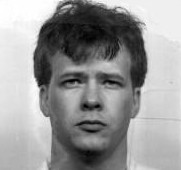
Jeff Emery
Murderer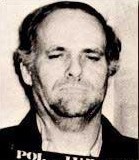 Ervil LeBaron
Murderer · USA · 1972
Ervil Morrell LeBaron (1925 to August 16, 1981) was the leader of a polygamous…
35 victims
Ervil LeBaron
Murderer · USA · 1972
Ervil Morrell LeBaron (1925 to August 16, 1981) was the leader of a polygamous…
35 victims
 Brian Kevin Rosenfeld
Murderer · USA · 1985
Brian Kevin Rosenfeld Brian Kevin Rosenfeld was sentenced to three concurrent l…
23 victims
Brian Kevin Rosenfeld
Murderer · USA · 1985
Brian Kevin Rosenfeld Brian Kevin Rosenfeld was sentenced to three concurrent l…
23 victims
 Marvin Gray
Murderer · USA · 1975
Marvin Gray was convicted killer who claimed responsibility for 23 slayings and…
23 victims
Marvin Gray
Murderer · USA · 1975
Marvin Gray was convicted killer who claimed responsibility for 23 slayings and…
23 victims
 Yahweh ben Yahweh
Murderer · USA · 1980
Yahweh ben Yahweh was born and legally named Hulon Mitchell Jr. (October 27, 19…
23 victims
Yahweh ben Yahweh
Murderer · USA · 1980
Yahweh ben Yahweh was born and legally named Hulon Mitchell Jr. (October 27, 19…
23 victims
 Gay Oakes
Murderer · New Zealand · 1993
Gay Oakes — convicted of the murder of her partner Doug Gardner. · Doug Gardner…
1 victim
Gay Oakes
Murderer · New Zealand · 1993
Gay Oakes — convicted of the murder of her partner Doug Gardner. · Doug Gardner…
1 victim
 Nicholas Wiley
Serial killer · USA · 2004
Nicholas Wiley was a high-risk Level 3 sex offender and worked as a handyman in…
3 victims
Nicholas Wiley
Serial killer · USA · 2004
Nicholas Wiley was a high-risk Level 3 sex offender and worked as a handyman in…
3 victims
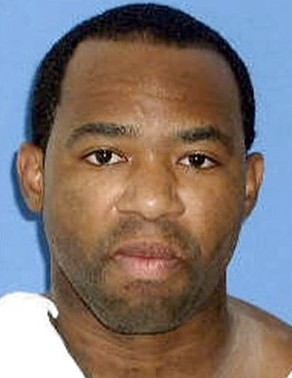 Tommie Collins Hughes
Murderer · USA · 1997
Tommie Collins Hughes was convicted of capital murder for the robbery-related s…
2 victims
Tommie Collins Hughes
Murderer · USA · 1997
Tommie Collins Hughes was convicted of capital murder for the robbery-related s…
2 victims
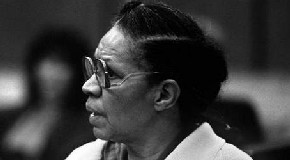 Priscilla Ford
Mass murderer · USA · 1980
Priscilla Ford was sentenced to death for killing six people and injuring 23 mo…
6 victims
Priscilla Ford
Mass murderer · USA · 1980
Priscilla Ford was sentenced to death for killing six people and injuring 23 mo…
6 victims
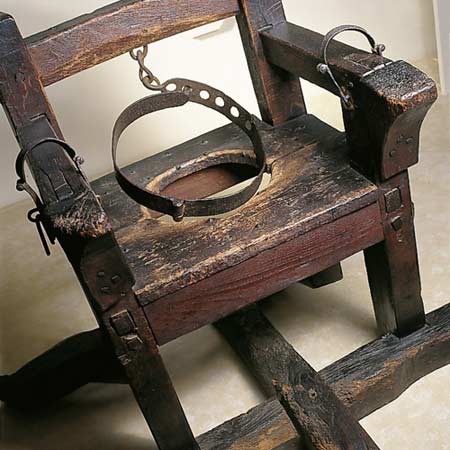 Klaas Annink
Murderer · Netherlands · 1774
Klaas Annink (June 18, 1710 – September 13, 1775), better known as Huttenkloas,…
Klaas Annink
Murderer · Netherlands · 1774
Klaas Annink (June 18, 1710 – September 13, 1775), better known as Huttenkloas,…
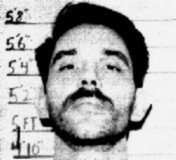 Richard Huffman
Murderer · USA · 1984
Richard Huffman met Golden in the context of Huffman’s longtime friends, Herb U…
1 victim
Richard Huffman
Murderer · USA · 1984
Richard Huffman met Golden in the context of Huffman’s longtime friends, Herb U…
1 victim
- Gender
- male
- Country
- USA
- Location
- Brazos County, Texas, USA
- Date of birth
- J une 25, 1959
- Age at first offence
- 20
- Characteristics
- mutilation, rape, rape?, torture, crack addict
- Victim profile
- LaShan Muhlinghaus (female, 19)
- Method of murder
- St abbing with knife 25 times
- Date(s) of murder
- October 12, 1979
- Years active
- 1979
- Date of arrest
- January 1983
- Status
-
Executed
Executed by lethal injection in Texas on December 8, 1998
Overview
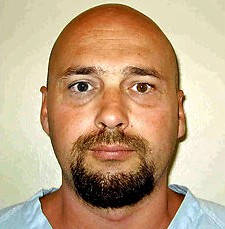
Jeff Emery was executed by lethal injection in Texas on December 8, 1998. He was condemned for the Oct. 12, 1979, attack on LaShan Muhlinghaus, who entered her College Station apartment while Emery was inside committing a burglary.
Timeline
- Oct. 12, 1979 — LaShan Muhlinghaus returned to her apartment and was attacked after Emery entered using a stolen pass key; she was stabbed twenty-five times and sexual intercourse occurred with her body.
- 1979 — Emery hid in a closet when Muhlinghaus entered; Emery attacked Muhlinghaus with a knife, stabbing her twenty-five times.
- 1986 — Emery was sentenced to death.
- 1990 — The Texas Court of Criminal Appeals reversed Emery’s first conviction because portions of the trial transcript had been stolen.
- 1991 — The state retried Emery and obtained a second conviction; the jury sentenced him to death.
- 1994 — Emery argued that the jury instructions at the penalty phase were inadequate because they did not allow the jury to consider all relevant mitigating evidence; the claim was unsuccessful on appeal.
- 1995 (August) — The Texas Court of Criminal Appeals denied Emery’s first state habeas petition on the merits.
- 1995 (November) — Emery filed a second state habeas petition raising several new issues.
- 1995 — Emery filed his first state habeas petition in July, and his second state habeas petition in November while the federal habeas petition was pending.
- 1996 (February) — The Court of Criminal Appeals dismissed Emery’s second state habeas petition.
- 1996 (August) — The federal district court denied Emery relief on all his claims but granted a certificate of probable cause (“CPC”) to appeal.
- Sept. 10, 1997 — The United States Court of Appeals for the Fifth Circuit issued an opinion affirming and vacating the stay of execution.
- April 15, 1998 — The court denied Emery’s petition for rehearing.
- December 8, 1998 — Emery was pronounced dead at 6:24 p.m., after an executioner started a flow of lethal drugs into his arms.
The offence
LaShan Muhlinghaus returned to her apartment and undressed. Emery entered the apartment using a stolen pass key without her knowledge. When Muhlinghaus entered, Emery hid in her roommate’s closet. Muhlinghaus went into her roommate’s bedroom to return a dress she had borrowed.
Emery attacked Muhlinghaus, stabbing her twenty-five times. After she was dead, Emery had sexual intercourse with her body. Police did not find any evidence that Emery stole anything. Emery was condemned for the Oct. 12, 1979, attack.
Victims and injuries
- LaShan Muhlinghaus was attacked and killed.
- She had 25 stab wounds.
- She was raped and her body was mutilated.
Investigation and arrest
The case went unsolved for 4 years. Emery’s ex-wife went to police in Milwaukee and told them about Emery returning home that night covered with blood. Brazos County District Attorney Bill Turner said: “She couldn’t take it any more,” and later recalled Turner said, “Truly he is the one guy if he were out in the free world I would fear for me and my family.”
Detectives tracked down Emery, who at the time was being held in St. Paul, Minn., on 3 counts of burglary. Turner said: “When he was arrested, he was planning to kill his wife for turning him in.” Turner also said: “Other people said he was planning his wife’s death.” Turner said: “Some cases are just obvious. I’m convinced he would have hurt other people if we had not done our job.”
Additional conduct described during proceedings
Emery was described as having returned to the house where he lived with his wife, Deborah Emery (“Deborah”). After showering and disposing of his blood-stained knife and clothes, Emery drove to the scene of the crime with Deborah to observe the police investigation. Emery confessed his actions to his wife and later to James Smith, his foster brother, and Marie Michaeloff.
Deborah described that Emery assaulted her at least every other day, usually hitting her with his fists but sometimes using a metal bar, ashtrays, nicknacks, and lighters. She said he would pound her head on the bathtub. She stated that at least once he hit her child, who was a toddler, across the room. In July 1982, Deborah began divorce proceedings, and five months later she reported Emery’s crimes to the police.
Trial
Emery was convicted of capital murder during the commission of a burglary, see TEX. PEN.CODE ANN. § 19.03(a)(2) (Vernon 1994), and was sentenced to death in 1986. The Texas Court of Criminal Appeals reversed because portions of the trial transcript had been stolen. Emery v. Texas, 800 S.W.2d 530 (Tex.Crim.App.1990) (en banc). The state retried Emery and obtained a second conviction. A jury sentenced him to death in 1991.
Emery unsuccessfully argued that the jury instructions at the penalty phase were inadequate because they did not allow the jury to consider all relevant mitigating evidence. See Emery v. Texas, 881 S.W.2d 702, 711-12 (Tex.Crim.App.1994), cert. denied, 513 U.S. 1192, 115 S.Ct. 1257, 131 L.Ed.2d 137 (1995).
Emery declined to be interviewed by reporters.
Confession evidence and witnesses
Deborah testified about Emery returning to the house with a blood-stained knife and blood-stained underpants, and that Emery had blood on his arms, smeared on his arms and his hands, on his shirt, and his pants, and some on his work boot. She testified that Emery drove her to the site of the murder to watch the investigation and that Emery told James Smith that he had killed a man in Texas and instructed Smith to request verification from Debbie.
The court described testimony from James Smith and Marie Michaeloff as well. James Smith and Marie Michaeloff testified that Emery confessed to them. Emery originally told Smith that he had stabbed a man, but later identified Muhlinghaus in a picture. Michaeloff recounted a confession that was far more detailed and accurate than that reported by Deborah.
Appeals and habeas proceedings
First conviction and reversal
Emery’s first conviction was reversed by the Texas Court of Criminal Appeals because portions of the trial transcript had been stolen. Emery v.
Federal appellate litigation
Emery appealed the denial of his petition for writ of habeas corpus. The United States Court of Appeals for the Fifth Circuit concluded that several claims were barred by procedural default and that the others were without merit, and affirmed and vacated the stay of execution.
Second state habeas petition and procedural rules
Texas followed a rule that a state prisoner may seek habeas relief in state or federal court but not both. Texas courts refused to consider a habeas petition while a federal petition was pending, and the Court of Criminal Appeals dismissed Emery’s second state habeas petition in February 1996.
Ineffective assistance and right to testify
The Fifth Circuit analyzed multiple ineffective-assistance-of-counsel claims and concluded that Emery did not demonstrate prejudice on the claims concerning counsel’s questioning Deborah about Emery’s confession and pass key burglaries, as well as failure to object regarding Emery slapping Deborah.
The Fifth Circuit also addressed Emery’s allegation that he was denied the right to testify at trial. The court discussed that Emery did not testify at his first trial and told counsel he wished to testify at the beginning of the second trial. The court described counsel’s concerns and a colloquy in which Emery stated on the record that he understood his rights and was voluntarily declining to testify.
Sentencing-instruction challenge
Emery raised an argument based on Penry v. Lynaugh, asserting that Texas’s sentencing scheme as applied through the jury instructions prevented the jury from considering evidence of abuse Emery suffered as a child. The court stated the instruction given to the jury allowed the jury to consider mitigating circumstances and required the jury not to sentence Emery to death if a life sentence was appropriate in light of his moral culpability.
The court included the jury instruction verbatim:
[Y]our answers to the Special Issues, which determine the punishment to be assessed the defendant by the court, should be reflective of your finding as to the personal moral culpability of the defendant in this case.
When you deliberate about the questions posed in the Special Issues, you are to consider any mitigating circumstances supported by the evidence presented in both phases of the trial.
A mitigating circumstance may be any aspect of the defendant's background, character, and record, or circumstances of the crime, which you believe makes a sentence of death inappropriate in this case.
If you find that there are any mitigating circumstances, you must decide how much weight they deserve and give them effect when you answer the special issues.
If you determine, in consideration of this evidence, that a life sentence, rather than a death sentence, is an appropriate response to the personal moral culpability of the defendant, you are instructed to answer the Special Issue under consideration "No".
The Fifth Circuit’s decision concluded:
Accordingly, the judgment is AFFIRMED, and the stay of execution is VACATED.
On petition for rehearing (April 15, 1998), the court denied rehearing and concluded that the cited cases did not undermine the determination that Texas’s common-law abuse-of-the-writ doctrine constituted a state ground adequate to bar federal review of claims Emery did not present in his first state habeas petition. The court concluded:
Accordingly, we DENY Emery's petition for rehearing.
Sentencing and execution
Sentence
Emery was sentenced to death. The record described a first sentencing in 1986 and a second sentencing by the jury in 1991 after retrial.
Execution details and last statement
12, 1979, attack on LaShan Muhlinghaus. He was executed by lethal injection in Texas on December 8, 1998. Emery was pronounced dead at 6:24 p.m., 6 minutes after an executioner started a flow of lethal drugs into his arms.
Emery made a brief statement to a female friend who watched through glass a few feet away:
“You know how I feel about you,” he said.
“Take care of yourself. That’s all I have to say.”
After the drugs took effect, Emery gasped twice and exhaled deeply before he stopped moving.
Aftermath
LaShan Muhlinghaus’s sister Dee said after watching the execution:
“What happened to him is what should have happened to him,” Dee said after watching the execution.
“He made that decision when he killed my sister. “I'm not happy. I'm not going out tonight to celebrate, but I'm relieved. And I think all of my family is relieved that Mr. Emery will never be able to do this to anyone else and no other family will have to suffer what we went through for 19 years.”
The record also stated that Emery became the 19th condemned inmate to be put to death this year in Texas, and the 163rd overall since the state resumed executions on Dec. 7, 1982.
Other details
Trial-related individuals and relationships
- Deborah Emery (“Deborah”) was Emery’s wife.
- James Smith was Emery’s foster brother.
- Marie Michaeloff was a person to whom Emery later confessed.
- LaShan Muhlinghaus was described as a 19-year-old student from Rowlett.
- Emery was described as having never got beyond the 8th grade.
References embedded in the record
- United States Court of Appeals, Fifth Circuit, Jeff EMERY, Petitioner-Appellant, v. Gary L. JOHNSON, Director, Texas Department of Criminal Justice, Institutional Division, Respondent-Appellee. No. 96-20826.
- Appeal filing and procedural entries included: “Sept. 10, 1997” and “On Petition for Rehearing April 15, 1998.”

Spotted an error, or have more information about this case?