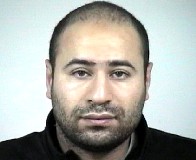
Nordine Amrani
Mass murderer Geneviève Lhermitte
Mass murderer · Belgium · 2007
Geneviève Lhermitte was a Belgian woman convicted for killing her five children…
5 victims
Geneviève Lhermitte
Mass murderer · Belgium · 2007
Geneviève Lhermitte was a Belgian woman convicted for killing her five children…
5 victims
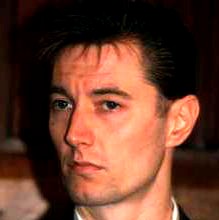 Remy Lecrenier
Mass murderer · Belgium · 1997
Remy Lecrenier lived with his girlfriend, Vinciane, and her family in the small…
4 victims
Remy Lecrenier
Mass murderer · Belgium · 1997
Remy Lecrenier lived with his girlfriend, Vinciane, and her family in the small…
4 victims
 Kim Dae-Han
Mass murderer · South Korea · 2003
Name: Kim Dae-Han · Age: 56 · Occupation/background: He was an unemployed forme…
198 victims
Kim Dae-Han
Mass murderer · South Korea · 2003
Name: Kim Dae-Han · Age: 56 · Occupation/background: He was an unemployed forme…
198 victims
 Zhang Pilin
Mass murderer · China · 2002
Zhang Pilin (张丕林) died in the plane crash of China Northern Airlines Flight 613…
111 victims
Zhang Pilin
Mass murderer · China · 2002
Zhang Pilin (张丕林) died in the plane crash of China Northern Airlines Flight 613…
111 victims
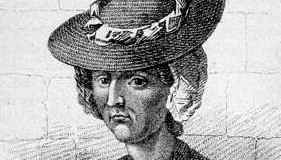 Elizabeth Brownrigg
Murderer · United Kingdom · 1767
Elizabeth Brownrigg was an eighteenth century murderer. Her victim, Mary Cliffo…
1 victim
Elizabeth Brownrigg
Murderer · United Kingdom · 1767
Elizabeth Brownrigg was an eighteenth century murderer. Her victim, Mary Cliffo…
1 victim
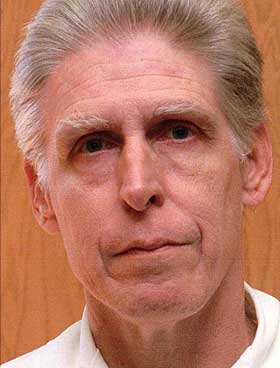 George Sibley
Murderer · USA · 1993
George Sibley Jr. was executed in Alabama on August 4, 2005. His common-law wif…
1 victim
George Sibley
Murderer · USA · 1993
George Sibley Jr. was executed in Alabama on August 4, 2005. His common-law wif…
1 victim
 Peter Hogg
Homicide · United Kingdom · 1976
Peter Hogg was an airline pilot for Air Europe. Margaret Hogg worked as an airl…
1 victim
Peter Hogg
Homicide · United Kingdom · 1976
Peter Hogg was an airline pilot for Air Europe. Margaret Hogg worked as an airl…
1 victim
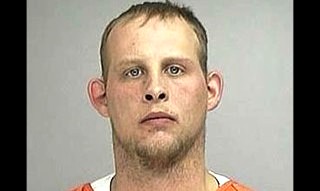 Michael Zabawa
Murderer
Michael Zabawa was a Minnesota man who lived in Matawan, and he worked at a hog…
2007 victims
Michael Zabawa
Murderer
Michael Zabawa was a Minnesota man who lived in Matawan, and he worked at a hog…
2007 victims
- Gender
- male
- Country
- Belgium
- Location
- Liège, Wallonia region, Belgium
- Date of birth
- November 15, 1978
- Age at first offence
- 33
- Characteristics
- murder-suicide, armed robbery, drugs
- Victim profile
- Gabriel Leblonk, 17 month-old / Mehdi Nathan Belhadj, 15 / Pierre Gerouville, 17 / Laurent Kremer, 20 / Claudette Putzys, 75 / Antonietta Racano, the 45 year-old cleaning lady he killed at his apartment before the attack
- Method of murder
- Hand grenades - Shooting
- Date(s) of murder
- December 13, 2011
- Years active
- 2011
- Date of arrest
- —
- Status
-
Died in custody
Committed suicide by shooting himself with a revolver on 13 December 2011
Case record: Nordine Amrani (Liège attack)
Timeline
- 13 December 2011 — Nordine Amrani carried out a murder–suicide attack in Saint-Lambert Square in Liège, throwing grenades and firing an FN FAL rifle at civilians on the square; he killed five people and wounded 125 others, then committed suicide by shooting himself with a revolver.
- 13 December 2011 — Amrani attacked Saint-Lambert Square at 12:33 local time (11:33 UTC).
- 13 December 2011 — A 17-month-old boy died later in a hospital.
- 15 December 2011 — After Tuesday’s attack, the bag Amrani used to carry his haul of weapons was found to still contain several loaded magazines and a number of live grenades.
- December 23 — A sixth victim, who had been in an induced coma since the attack, died of head injuries.
Background
Nordine Amrani was 33-year-old and carried out the attack in Liège on 13 December 2011. He was born in Ixelles/Elsene in Brussels, Belgium on 15 November 1978. He was described as a French-speaking Belgian of Moroccan origin. A lawyer said he could not speak Arabic nor was he Muslim.
Amrani worked as a welder by trade. He grew up near Brussels and had been living with his fiancée, a care home nurse. He had been orphaned early and was raised in foster homes.
Amrani had an interest in guns and had a history of convictions for possession of weapons. He was released from prison in October 2010. He had been convicted in 2008 by a Liège court to a 58-month (4 years, 10 months) sentence.
His conviction in 2008 was for possession of thousands of weapons parts, dozens of weapons (including a rocket launcher, assault and sniper rifles), and 2,800 cannabis plants, in the context of a criminal conspiracy (association de malfaiteurs). He also had convictions for handling stolen goods and sex offences, but had no known links to terror groups.
On the day of the attack, Amrani had been summoned for an interview with police to answer questions about a sexual abuse case. Earlier that day, he transferred money from his account to that of his girlfriend.
People involved
- Nordine Amrani — attacker; described as a Belgian gunman of Moroccan origin; welder by trade; suicide shooter.
- Perrin Balon — Amrani’s fiancée; described as a nurse for a home visits social care company outside Liège; she paid the bills on the warehouse where a cleaner’s body was found; she was said to be in hiding.
- Jean-François Dister — Amrani’s criminal defence lawyer in Liège.
- Cedric Visart de Bocarme — a Liegeois prosecutor.
- Daniele Reynders — Liege public prosecutor.
- Willy Demeyer — mayor of Liège.
- Elio Di Rupo — Prime Minister.
- Albert II — King of Belgium.
- Paola — Queen of Belgium.
- Nicolas Gilenne — journalist.
- Matthew Price — BBC journalist.
- Pierre Gerouville — identified as a 17-year-old victim.
- Christine Collard — a 16-year-old quoted on the day after the attack.
- Sophie Bodart — quoted student.
- Robin Hames — quoted pupil.
- Gabriel — a 17-month-old victim.
The offence
On 13 December 2011, a murder–suicide attack took place in the city of Liège, in the Wallonia region of Belgium. The attack occurred in Saint-Lambert Square, home to the town’s courthouse, described as a busy day with many shoppers in the nearby Christmas market.
Witnesses reported four explosions and gunfire. At first, it was believed there were two or more assailants, who threw stun grenades into the courthouse while another hurled them at a bus shelter.
Amrani then fired shots from the rooftop of a bakery shop located across the square. Police sealed off the square after arriving quickly.
Amrani killed five people in the attack and wounded 125 others, with seven suffering serious injuries. Two of the dead were teenage boys aged 15 and 17. A 17-month-old boy died later in a hospital. A 75-year-old woman died from her injuries two days after the attack. A sixth victim, in an induced coma since the attack, died of head injuries on December 23.
Amrani committed suicide after the attack by shooting himself with a revolver, described as a .357 Magnum revolver in one account and also described as shooting himself in the forehead with his revolver. He carried out the suicide after throwing three grenades and spraying shoppers with rounds from an FN-FAL assault rifle.
Attack sequence
A raised walkway above a bus stop was used during the attack:
- Amrani parked near Le Point Chaud bakery with hand grenades, a handgun and an automatic weapon.
- Around 12:30, he walked to a paved terrace above the bakery, threw 3 grenades at people waiting at bus stops, and then opened fire with the automatic weapon; three people were killed and about 125 were wounded. He then shot himself dead with the handgun.
- A body was later found in a shed at his property.
Victims and injuries
- A 15-year-old boy died instantly.
- A 17-year-old boy died in hospital after being shot.
- A 17-month-old boy died later in hospital.
- A 45-year-old cleaner was murdered earlier and her body was found in a shed (details in the next section).
- A 75-year-old woman died two days after the attack.
- A sixth victim died on December 23 after being in an induced coma.
Five people were still fighting for their lives, including a 75-year-old woman initially declared dead on arrival at hospital.
Earlier murder and subsequent actions
Earlier that day, Amrani murdered a 45-year-old woman in his house. The victim was working as a cleaner for Amrani’s neighbour. It was said he possibly lured her into his flat under the pretext of offering her work. After the murder, he hid her body in his shed.
He then left his flat for the city centre, equipped with a backpack containing the weapons. A prosecutor said police searches had not found any message from the gunman. Officials later said the shed used by Amrani was used to grow cannabis.
A quote attributed to Cedric Visart de Bocarme described the timing of the murder relative to the square attack:
- Cedric Visart Bocarme, the Belgian Attorney General, confirmed that the woman “would have been murdered by the killer just before he went to Place Saint-Lambert”.
Police also found two weapons and a stockpile of ammunition in the shed. A police source said the cleaner had been working in a neighbour’s home and that it appeared Amrani had invited her into his own flat to discuss cleaning his flat. The cleaner was described as having signs of a struggle and it was said it may have involved an attempt to rape her; the victim was said to have been killed with a bullet to the head.
Investigation and policing
Police in Belgium found the body of the murdered woman in a shed belonging to Amrani. The body was found with a bullet wound to the head.
Police say Amrani had been known to them for previous drugs and firearms offences and acted alone in the attack.
Investigators were described as ruling out organised political terrorism. Authorities said they had yet to determine why he opened fire and would examine whether there was anything indicating in advance that he might have posed a danger to the public.
Amrani had been asked to attend a police station on the day of the attack for an interview related to charges against him. He did not attend.
A prosecutorial statement and a lawyer account described what was found and what was not found:
- Police officials said no message was found from the attacker.
- After searching addresses associated with Amrani and finding the body of the murdered woman, prosecutors said they had not found any message from the gunman.
Arrest, detention, and prior legal proceedings
Amrani had been released from prison in October 2010. In 2008, a Liège court had sentenced him to 58 months for possessing weapons parts and cannabis plants in the context of a criminal conspiracy. It was also described that his appeal court acquitted him of the gun possession charges a year later on the grounds that he had had the necessary permissions to keep them.
It was reported that:
- When he was paroled in 2010, his guns were not returned because of a drug-dealing conviction, but he was said to have been under no special gun restrictions.
- At the time of the massacre, he was again in trouble with the police, in a vice case.
- Police had wanted to question him over an incident at a party in November, without giving details.
A lawyer described Amrani’s fear of being jailed again:
- Jean-François Dister said: “What worried him most was to be jailed again. According to my client it was a set-up by people who wanted to harm him. Mr Amrani had a grudge against the law. He thought he had been wrongfully convicted.”
Another account described Amrani’s grievance in connection with an abduction allegation:
- “He explained to me that he had been questioned over an abduction. According to him, he had been framed and someone was out to get him. Mr Amrani had a grievance against the law.”
Trial and sentencing
The available information described a 2008 conviction and sentence of 58 months (4 years, 10 months) from a Liège court. The record also described that an appeals court had acquitted him of the gun possession charges a year later on grounds of having necessary permissions.
No further trial proceedings are stated in the provided material for the 2011 offences because the attacker died by suicide the same day.
Appeals
An appeal was described as occurring a year after the 2008 conviction. It was described that a court of appeal acquitted him of the gun possession charges.
Outcome
Amrani died on 13 December 2011 in a murder–suicide attack. He committed suicide by shooting himself with a revolver after shooting and throwing grenades in Saint-Lambert Square. The attack killed five people and wounded 125, with deaths including a 17-month-old child, a 75-year-old woman who died two days later, and a sixth victim who died on December 23.
Aftermath and public response
A minute’s silence was held at the Place Saint-Lambert at midday local time on Wednesday, 24 hours after the shooting. Some people laid flowers.
Students at Saint Barthelemy high school, attended by two victims, joined hands and observed the silence. One student said:
- Sophie Bodart said: “It's difficult to accept that it happened in Liege and you realise no-one is safe in this case - it could have been him, it could have been someone else”. Another pupil said:
- Robin Hames said: “It's traumatising to know - you see him in school but he will never be back”. Robin Hames also said: “He didn't do anything. It was an exam day and he never came home”.
A tribute page had been set up on Facebook for Pierre Gerouville.
Public officials made visits and remarks:
- Prime Minister Elio Di Rupo visited the square on Tuesday and said: “no words to describe this tragedy”.
- Willy Demeyer said the attack had “sown sorrow in the heart of the city”.
King Albert II and Queen Paola visited Place Saint-Lambert to pay their respects.
A journalist quoted in connection with the attack said:
- Nicolas Gilenne told AFP: “He wanted to hurt as many people as possible”. He also said: “I heard four explosions and shots during about 10 seconds”.
Another statement described the attack as a tragedy:
- The mayor’s remark was also cited as “sown sorrow in the heart of the city”.
Other details
Device and armament described
Amrani was described as leaving his apartment armed with:
- A Belgian-made FN-FAL automatic rifle
- A handgun (revolver)
- Up to a dozen grenades carried in a backpack
Investigators described firearms and weapon parts in earlier raids:
- Police found 2,800 cannabis plants and an arsenal including 10 guns and 9,500 gun parts.
- The arsenal included a Law rocket launcher, an AK-47 assault rifle, a sniper rifle, a K31 rifle, and a Fal assault rifle, along with hundreds of cartridges.
- It was also said that “Amrani made silencers himself.”
- Another report said he refused to say where the weapons had come from and where they were destined.
Money transfer and note
Before the attack, Amrani transferred money to his fiancée’s account with words:
- “I love you my love. Good luck.”
Identity and background remarks by lawyers
Jean-François Dister described Amrani:
- “He feared being returned to prison. He called me twice on Monday afternoon and on Tuesday morning about it.”
- “What worried him most was to be jailed again.”
A family lawyer, Abdelhadi Amrani, said he was not related to the killer and described Amrani’s upbringing:
- “I remember a man deeply marked by loss of his parents. He lost his father and mother very early. He was marked by fate. I would add he was a very smart boy, gifted. Nordine often spoke of his desire to start a family. He was to be married in Liege with a nurse.”
Abdelhadi Amrani’s remarks also included dismissal of terrorist motives through the fiancée’s lawyer:
- “He did not feel at all Moroccan. He did not speak a word of Arabic and was not Muslim. What he said is that he felt a Belgian.”
- “He was crazy about weapons but as a collector. He felt he had not had much luck in life and felt unfairly treated by the courts. This was a 'ras-le-bol' of a tormented soul: estranged from justice, and against society.”
Quotes about the attacker’s motive
The press account of lawyers’ comments said Amrani launched the attack because he knew he would be sent back to prison and that he had a “grudge against society”:
- It was stated that “grudge against society” was part of his lawyers’ explanation.
Legal issue described as “sexually molesting”
Amrani had been due to answer a summons about allegedly “sexually molesting” a young woman, per the defence lawyer’s account.
Spotted an error, or have more information about this case?