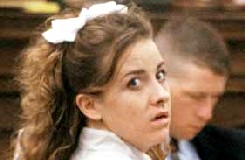
Brittany Holberg
Murderer Megan Huntsman
Murderer · USA · 1996
Megan Huntsman was 40 at sentencing. She was a mother of three children who wer…
6 victims
Megan Huntsman
Murderer · USA · 1996
Megan Huntsman was 40 at sentencing. She was a mother of three children who wer…
6 victims
 Angela Johnson
Murderer · USA · 1993
Angela Jane Johnson was convicted in federal court of aiding and abetting the m…
5 victims
Angela Johnson
Murderer · USA · 1993
Angela Jane Johnson was convicted in federal court of aiding and abetting the m…
5 victims
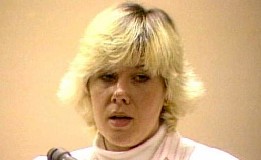 Catherine May Wood
Murderer · USA · 1987
Catherine May Wood was an American caregiver who worked at the Alpine Manor Nur…
5 victims
Catherine May Wood
Murderer · USA · 1987
Catherine May Wood was an American caregiver who worked at the Alpine Manor Nur…
5 victims
 Michele Kalina
Murderer · USA · 1996
Michele Kalina pleaded guilty to murder for one of five infants she initially w…
5 victims
Michele Kalina
Murderer · USA · 1996
Michele Kalina pleaded guilty to murder for one of five infants she initially w…
5 victims
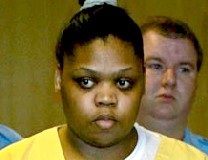 Tiffany Hall
Murderer · USA · 2006
Tiffany Hall was 24 when she was charged in September 2006. She later entered a…
5 victims
Tiffany Hall
Murderer · USA · 2006
Tiffany Hall was 24 when she was charged in September 2006. She later entered a…
5 victims
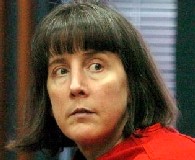 Amy Bishop
Murderer · USA · 1986
Amy Bishop — biology professor and perpetrator · James Anderson — Bishop’s husb…
4 victims
Amy Bishop
Murderer · USA · 1986
Amy Bishop — biology professor and perpetrator · James Anderson — Bishop’s husb…
4 victims
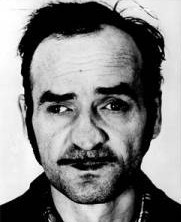 Fritz Honka
Serial killer · Germany · 1971
Fritz Honka Fritz Honka was a German serial killer. He killed at least four pro…
4 victims
Fritz Honka
Serial killer · Germany · 1971
Fritz Honka Fritz Honka was a German serial killer. He killed at least four pro…
4 victims
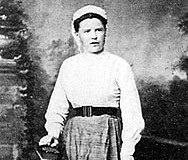 Marguerite Dixblanc
Murderer · United Kingdom · 1872
Marguerite Dixblanc was a Belgian cook. She entered the Park Lane household of…
1 victim
Marguerite Dixblanc
Murderer · United Kingdom · 1872
Marguerite Dixblanc was a Belgian cook. She entered the Park Lane household of…
1 victim
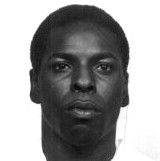 Karl Hammond
Murderer · USA · 1986
Karl Hammond was convicted of capital murder involving the rape and murder of D…
1 victim
Karl Hammond
Murderer · USA · 1986
Karl Hammond was convicted of capital murder involving the rape and murder of D…
1 victim
 Charles Jason Baldwin
Homicide · USA · 1993
Charles Jason Baldwin was born April 11, 1977. At the time of his arrests, Jaso…
3 victims
Charles Jason Baldwin
Homicide · USA · 1993
Charles Jason Baldwin was born April 11, 1977. At the time of his arrests, Jaso…
3 victims
 Engelica Castillo
Murderer · USA · 2009
Engelica Castillo was sentenced to life in prison without the possibility of pa…
1 victim
Engelica Castillo
Murderer · USA · 2009
Engelica Castillo was sentenced to life in prison without the possibility of pa…
1 victim
- Gender
- female
- Country
- USA
- Location
- Amarillo, Randall County, Texas, USA
- Date of birth
- January 1, 1973
- Age at first offence
- 23
- Characteristics
- robbery, drug addict
- Victim profile
- A.B. Towery Sr., 80
- Method of murder
- The victim was struck with a hammer and stabbed nearly 60 times. The weapons used were: a paring knife, a butcher knife, a grapefruit knife, and a fork. A lamp pole had been shoved more than 5 inches down the victim's throat
- Date(s) of murder
- November 13, 1996
- Years active
- 1996
- Date of arrest
- 3 months later
- Status
-
Sentenced to death
Sentenced to death on March 27, 1998
Case overview
Brittany Holberg robbed and murdered an 80-year-old white male in his home. The victim was struck with a hammer and stabbed nearly 60 times. The weapons used were: a paring knife, a butcher knife, a grapefruit knife, and a fork. A lamp pole had been shoved more than 5 inches down the victim's throat.
Brittany Marlowe Holberg was a 23-year-old prostitute and drug addict. She was convicted of capital murder and sentenced to death.
Background
Brittany Holberg was on death row in the U.S. state of Texas. She was born January 1, 1973, and was 23 at the time of the crime.
Her prior occupation was laborer. Her prior prison record included participation in a substance abuse felony punishment program, which she was released from upon completion.
The victim was A.B. Towery, Sr., an 80-year-old white male.
The offence
At approximately 4:30 p.m., November 13, 1996, in Randall County, 80-year-old A.B. Towery, Sr. purchased groceries at an Albertson's store and then walked back to his apartment. Towery was approached by Holberg, a 23-year-old prostitute and drug addict, who asked to use his telephone. Towery consented, and the two proceeded into his apartment.
Holberg asked Towery for money, but he refused. Holberg then tried to take Towery's money by force, and the two struggled. During the struggle, Holberg grabbed several objects (a cast iron skillet, a steam iron, a hammer, a paring knife, a butcher knife, and two forks) and used them to beat and stab Towery, fatally injuring him. After Towery fell to the floor, dying, Holberg shoved the base of a lamp five inches down his throat, choking him and hastening his death.
Holberg then searched Towery's pants pockets, found his wallet, and took $1,400 in cash. After showering and changing into some of Towery's clothes, she left. She spent the evening using Towery's money to buy cocaine, which she snorted with a friend.
The victim sustained 58 stab wounds and numerous blunt force injuries, and also suffered blunt trauma to the head from a hammer.
Investigation
Holberg filed an appeal in the Court of Criminal Appeals of Texas (No. 73,127).
During the appeal proceedings, the state court discussed issues including sufficiency of the evidence and jury selection.
Holberg's identification was connected to her arrest in Memphis, Tenn., after she was identified by several viewers of "America's Most Wanted."
Arrest
Holberg was arrested three months later in Memphis, Tenn.
Trial
Charges and conviction
Holberg was found guilty of capital murder and sentenced to death.
The appellate opinion stated that Holberg was charged with and found guilty of intentionally committing murder in the course of attempting to commit and committing robbery and burglary. The opinion cited Tex.Pen.Code §§ 19.03(a)(2), 29.02(a)(1), and 30.02(a)(1) & (3).
Evidence described at guilt/innocence
The State presented 21 witnesses and numerous exhibits at the guilt/innocence stage, including Holberg's incriminating written statement. Holberg presented eleven witnesses (including herself) and numerous exhibits in her defense.
In her written statement given to police shortly after her arrest, Holberg admitted killing the victim but claimed she did so in self-defense.
Defence theory and arguments
Holberg's defence counsel Catherine Brown Dodson argued that Towery was wrongly portrayed as an innocent elderly man, and that Holberg acted in self-defense when Towery attacked her.
Dodson said Towery became angry and violent when he found a crack pipe on Holberg. Dodson said Towery struck Holberg twice in the head with a metal pan while her back was turned, and then threatened her with a knife. Dodson argued that Holberg reacted by stabbing him with his own knife and that the fight escalated until Holberg put the lamp post in his mouth to attempt to end the struggle.
Holberg believed she would have little legal recourse because of her status as a drug-abusing prostitute and fled to Tennessee.
Punishment stage evidence and future dangerousness
At the punishment stage, the jury was asked “whether there is a probability that the defendant would commit criminal acts of violence that would constitute a continuing threat to society.” Article 37.071, § 2(b)(1).
The State presented seven witnesses at the punishment stage and Holberg presented twelve witnesses in rebuttal.
The appellate opinion described the evidence presented as follows:
- Sometime prior to November 6, 1995, Holberg struck the head of her elderly “sugar daddy,” E.R. Williams, with a cane, rendering him unconscious, because he would not give her money for illicit drugs.
- While awaiting trial in the instant case, Holberg repeatedly solicited a cell-mate to kill Vickie Marie Kirkpatrick, a key prosecution witness.
- Holberg was once convicted of theft.
Dr. Richard E. Coons, a psychiatrist, testified that, based on Holberg's record, there was a “significant probability that [she] would commit criminal acts of violence in the future.”
Jury selection issues raised on appeal
The appellate opinion described that:
- Juror Carpenter’s voir dire and an issue about whether he was excludable for cause were raised on appeal; however, the court stated that Holberg did not object in the trial court and thus forfeited the right to complain on appeal.
- Venireman Fritzmeyer regarding parole law was at issue; the appellate court stated that at the time of Holberg's trial in March 1998, the parole law was not a proper subject for voir dire questioning.
- A challenge for cause of Venireman Balderas was discussed, and the appellate court described Balderas' responses about being unable to vote to assess the death penalty under any circumstances and vacillation during voir dire. The appellate court found no abuse of discretion and overruled the issue.
Quotations from punishment-stage witness testimony
Gibbs testimony included:
Q: Have you ever talked with Brittany about when Jesus Christ was hanging on the cross?
A: Yes, we have,
Q: For all of us.
Q: Have you ever talked with her about the fact that one of the thieves, in fact, admitted he was there because he deserved to be there?
A: Uh-huh.
Q: And Jesus Christ forgave him, didn't he?
A: (Nods head up and down.)
Q: But he didn't take him down off the cross, did he?
A: No, he didn't.
Karnes testimony on direct included:
Q: What types of things would you [and appellant] discuss?
A: I wanted to reassure Brittany that she is a valuable person, that her life has great potential, and that this is the mortal portion of an eternal life. Brittany is an eternal being and through the many prayers from my [prayer] group [in Lubbock,] I have been led to come back into this child's life to support her here, to encourage her, to find her courage from the Holy Spirit within her, and to let her know that there is a human being mortal person who will stand beside her and see the good in her and support whatever God plans for the rest of your [sic] life.
Karnes testimony on cross included:
Q: You mentioned that this is the mortal portion of the Defendant Brittany Holberg's life, and that's true of all of us, isn't it?
Q: Would you agree with me that our relationship with God and how God is going to deal with us is one issue, and whatever obligations we have to mankind on this earth is another issue? I mean, just because man doesn't forgive us doesn't necessarily mean God doesn't?
A: Absolutely.
Sentencing
Holberg was sentenced to death by a 251st state District Judge Patrick Pirtle on March 27, 1998.
The appellate opinion explained the first punishment issue and stated that the jury's affirmative answer to that issue was supported by the evidence described at the punishment stage. The court affirmed the trial court's judgment.
Appeals
Holberg appealed to the Court of Criminal Appeals of Texas (No. 73,127).
On November 29, 2000, the appeals court upheld the decision of the trial court.
Points of error and rulings described in the opinion
The appellate opinion addressed multiple points of error and overruled them, including but not limited to:
- Legal sufficiency of the evidence supporting the capital murder conviction (overruled points of error numbers 18 and 19).
- Sufficiency of evidence supporting the jury's affirmative answer to the first punishment issue (overruled point of error number 15; also discussed point of error number 16).
- Arguments regarding provocation and whether the State had to prove lack of provocation on the part of the victim (overruled point of error number 20).
- Constitutional challenges to Penal Code § 19.03 and Article 37.071 under the Establishment Clause (overruled point of error number 10).
- Challenges under the Cruel and Unusual Punishments Clause (overruled point of error number 11).
- Arguments regarding jury instructions distinguishing capital murder theories and post-homicide theft, and vagueness/overbreadth (overruled point of error number 17).
- Additional procedural and constitutional challenges, including issues about voir dire questioning, parole law, and jury selection (various points overruled).
- Multiple claims of ineffective assistance of counsel were addressed under Strickland v. Washington and overruled across points including numbers 1, 2, 3, 4, 5, 7, 12, 13, 14, 15, 17, 21, 22, 23, 24, 25, 26, 27, 28, 29, 30, 31, 32, 33, 34, 35, 36, 37, 38, 39, 40, 41, 42, 43, 44, 45, 46, 46-A, 47, 48, and 49 as discussed in the opinion.
Quotation: juror questions and trial court response
The jury sent two questions during deliberations at the guilt/innocence stage:
- “Judge, can you commit robbery after you murder someone or is it theft?”
- “Judge, on the definition of burglary, does the portion of the definition after the 1st comma (without the effective consent of the owner) apply to both phrases or does it belong with only the 1st one (the phrase immediately following)?”
The trial court's response was:
“In response to your two (2) inquiries: I regret that the Court is unable to provide you any additional instructions at this time. Please refer to the instructions of the Court as contained in the original Charge of the Court.”
Quotation: prosecutor statements described in the opinion
The appellate opinion included verbatim prosecutor arguments in several places. Examples include the following:
Prosecutor argument described as follows:
PROSECUTOR: What makes people different? What made my father different from people who did not honor their promises, who didn't honor their duty? What makes Mother Theresa different than Karla Faye Tucker? What makes Florence Nightingale different than Diane Zamora? What makes Mary Burnett different than Brittany Holberg? Duty, honor, promises, promises made, promises kept. Choices. Choices based on duty and honor. We're all responsible for the choices that we make. The same thing is what makes us different as a people. Duty, honor, promises, promises made, promises kept. Reporter's Record, vol. 25, pp. 177-178.
Prosecutor statement about jury questionnaires:
PROSECUTOR: I looked at the questionnaires that you filled out earlier, and lots of you answered some of the questions one way and some of the questions another way. But there were two questions that every one of you answered exactly the same, not just each one of you, all twelve of you. Each one of you answered these questions the same way: capital punishment is just and necessary in an appropriate case. And number two, “My decision as to whether to assess the death penalty will depend or would depend on the facts and circumstances of the case.” Those promises included some implied promises just as surely as if you said them or wrote them down on that piece of paper. Those promises implied that though you may loathe the thought of a 25-year-old young woman being sentenced to death, sympathy for the defendant would not change your answers. If the circumstances and the evidence dictate that answer, duty and honor will demand that you answer it truthfully. Sympathy for the defendant would not change that. You promised. Reporter's Record, vol. 25, pp. 180-181.
Prosecutor argument about whether to consider mitigating evidence solely from guilt/innocence:
PROSECUTOR: Under our law, you can take into consideration and ignore every piece of evidence you heard during the punishment phase of the trial. You can make your decision, make your answers to those [punishment] questions based totally on what you heard during the guilt/innocence phase of the trial about what kind of crime this was. The person who committed that crime, are they likely to commit criminal acts of violence in the future? Yes. You can decide that. Is there any mitigating evidence that would overcome that crime? You can make that decision solely based on the evidence during guilt/innocence. And the answer to that is “no.” Someone who commits that crime, there's no amount of mitigating evidence. I don't care whether it's a bad childhood, the drug use, if she was assaulted by other people when she was young, there are other people in those situations who don't go out and commit these crimes. * * *
Other details
Defendant identity and age
Brittany Marlowe Holberg was also identified as “Brittany Marlowe Johnson” in the case caption.
Holberg was described as having a history of being on death row and speaking out about the death penalty and about abuse in the Texas Criminal Justice system.
Substance abuse and program completion
Holberg was released from state custody after completion of a substance abuse felony punishment program on September 1, 1996.
Arrest and media mention
Holberg was arrested in Memphis, Tenn., three months later after being identified by viewers of "America's Most Wanted."
Holberg's most recent media mention described her participation among ten women convicted of crimes in a January 2007 Maxim magazine article titled "Babes Behaving Badly."
Personal life details described
Holberg married as a teenager and in 1993 gave birth to daughter Mackenzie, who lived with her father in Tulsa. At the age of 20, Brittany moved back to Amarillo, her hometown.
Letter quotation
In 2001, Holberg wrote a letter to the Canadian Coalition Against the Death Penalty and stated:
"Just two weeks ago, we were informed that not only would we be strip-searched for our one hour of recreation a day, but also when taken for a shower. So for the last two weeks, we have been stripped no less than six times a day, and our cells have been completely ransacked. This is every day, sometimes at times like 2:30 and 3 a.m., and we never leave the building - or our cells for that matter."
She also wrote on behalf of other prisoners, including a 62-year-old grandmother named Betty Lou Beets.
Victim and name references used in the opinion
The victim was identified as A.B. Towery, Sr. The opinion also used “Towery” for the victim. The appellate opinion included family references including Rocky Towery, Deanna Towery, Rusty, and Linda Hagan in the prosecutor argument.
Appellate court and judge names (as described)
The appellate opinion was delivered by Mansfield, J., with McCormick, P.J., and Holland and Keasler, JJ., joined. Meyers, J., did not participate in the decision of the case. Keller, J., joined the opinion except with respect to its discussion of point of error number 40, and joined the judgment of the court. Price, J., joined only the judgment of the court. Womack, J., joined the opinion except with respect to its discussion of point of error number sixteen, and joined the judgment of the court. Johnson, J., joined the opinion except with respect to its disposition of point of error number 40, to which she dissented.


Spotted an error, or have more information about this case?