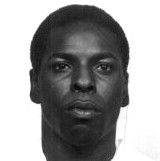
Karl Hammond
Murderer Brian Kevin Rosenfeld
Murderer · USA · 1985
Brian Kevin Rosenfeld Brian Kevin Rosenfeld was sentenced to three concurrent l…
23 victims
Brian Kevin Rosenfeld
Murderer · USA · 1985
Brian Kevin Rosenfeld Brian Kevin Rosenfeld was sentenced to three concurrent l…
23 victims
 Yahweh ben Yahweh
Murderer · USA · 1980
Yahweh ben Yahweh was born and legally named Hulon Mitchell Jr. (October 27, 19…
23 victims
Yahweh ben Yahweh
Murderer · USA · 1980
Yahweh ben Yahweh was born and legally named Hulon Mitchell Jr. (October 27, 19…
23 victims
 Russell Ellwood
Murderer · USA · 1991
Russell Ellwood was a former taxi driver. Authorities suspected him of killing…
20 victims
Russell Ellwood
Murderer · USA · 1991
Russell Ellwood was a former taxi driver. Authorities suspected him of killing…
20 victims
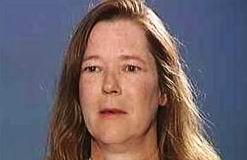 Paula Sims
Murderer · USA · 1986
Paula Sims gave birth to three children, but only one survived. A son was born…
2 victims
Paula Sims
Murderer · USA · 1986
Paula Sims gave birth to three children, but only one survived. A son was born…
2 victims
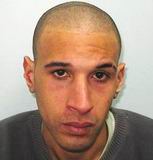 Matthew Quesada
Murderer · United Kingdom · 2011
Matthew Quesada was sentenced to serve a minimum of 26 years in prison on July…
1 victim
Matthew Quesada
Murderer · United Kingdom · 2011
Matthew Quesada was sentenced to serve a minimum of 26 years in prison on July…
1 victim
 Miyoko Sumida
Serial killer · Japan · 2003
Miyoko Sumida was a Japanese serial killer who killed six people in a case invo…
6 victims
Miyoko Sumida
Serial killer · Japan · 2003
Miyoko Sumida was a Japanese serial killer who killed six people in a case invo…
6 victims
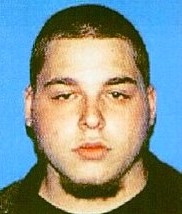 Jacob Robida
Murderer · USA · 2006
Jacob D. Robida (June 13, 1987 – February 5, 2006) was a Massachusetts teenager…
2 victims
Jacob Robida
Murderer · USA · 2006
Jacob D. Robida (June 13, 1987 – February 5, 2006) was a Massachusetts teenager…
2 victims
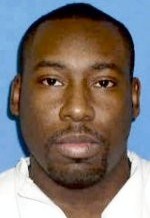 Frederick Patrick McWilliams
Murderer · USA · 1996
Frederick Patrick McWilliams McWilliams was executed by lethal injection in Tex…
1 victim
Frederick Patrick McWilliams
Murderer · USA · 1996
Frederick Patrick McWilliams McWilliams was executed by lethal injection in Tex…
1 victim
- Gender
- male
- Country
- USA
- Location
- Bexar County, Texas, USA
- Date of birth
- J uly 4, 1964
- Age at first offence
- 22
- Characteristics
- rape, robbery
- Victim profile
- Donna Lynn Vetter, 21 (FBI secretary)
- Method of murder
- St abbing with knife
- Date(s) of murder
- September 4, 1986
- Years active
- 1986
- Date of arrest
- —
- Status
-
Executed
Executed by lethal injection in Texas on June 22, 1995
Case record
Offender
Karl Hammond was convicted of capital murder involving the rape and murder of Donna Lynn Vetter.
Victim
Donna Lynn Vetter was an FBI secretary who had moved to San Antonio to begin working as a secretary for the FBI. She was a 1982 honors graduate from New Braunfels High School. She was 21 at the time of the murder.
The offence
Donna Lynn Vetter’s brutally raped body was found in her northeast San Antonio apartment. Her body had fatal stab wounds to the throat, chest, stomach and legs. After a brief struggle, her unconscious body was dragged from the kitchen floor to the living room where she was raped, sodomized and left for dead.
A knife hidden in the apartment had fingerprints lifted from it that matched Karl Hammond.
Karl Hammond broke into Vetter’s apartment, which was located in a complex near his sister’s home. A security guard noticed that Vetter’s front window screen had been removed, and police arrived after that observation. Hammond was awaiting indictment on an armed robbery charge at the time of the assault.
Investigation
Fingerprints lifted from a knife hidden in the apartment matched Karl Hammond. The investigation included ultraviolet rays. Three federal agents were sent down to aid in the investigation.
Arrest and custody events
Karl Hammond appeared before a judge in March 1986 after being shackled and gagged due to numerous outbursts.
The jury found Hammond guilty of capital murder. The day before the punishment phase of the trial began, Hammond escaped from the Bexar County Jail. Court Clerk Richard Burch was ordered to telephone the jurors informing them of the escape. Transportation was also offered to and from the hearings, which were carried on without the fugitive.
Hammond was apprehended in downtown San Antonio the following night and returned to custody.
Trial
Karl Hammond was sentenced to death. Despite defense attempts including a motion for mistrial, he received a death sentence the next day. The jury found him guilty of capital murder.
Appeal lawyer Jordan Steiker criticized the trial and said Hammond did not receive a fair trial. Steiker stated that Hammond “was not allowed to testify” and said he was “not clear as to why that was.” Steiker also said information concerning Hammond’s family background was not introduced, and quoted:
“He witnessed his own father being murdered by his brother,” said Steiker. “He was so traumatized by this (that he suffered) massive audio and visual hallucinations.”
Defense attorney Ed Garcia claimed that the trial court acted as a witness in the case when they were notified of the escape. Garcia also stated that despite his motion for mistrial, his client was handed a death sentence the next day.
Prosecutor Ron Mendoza described the scene, stating:
“There was a silhouette of blood on the carpet,” said Prosecutor Ron Mendoza. “It looked like a crucifixion.”
Sentencing
Karl Hammond, 30, was sentenced to death and later denied clemency.
Appeals
A set of certiorari-related applications were considered in the case styled as: Robert MADDEN, Applicant, v. TEXAS. David Wayne DeBLANC, Applicant, v. TEXAS. Alvin Urial GOODWIN, Applicant, v. TEXAS. Karl HAMMOND, Applicant, v. TEXAS. Nos. A-626 to A-628, and A-635.
On February 20, 1991, Justice SCALIA, Circuit Justice, addressed extension requests in those four cases. The law stated:
“The time for appeal or application for a writ of certiorari to review the judgment of a State court in a criminal case shall be as prescribed by rules of the Supreme Court.”
28 U.S.C. § 2101(d).
The rules were quoted:
“a petition for a writ of certiorari to review a judgment in any case, civil or criminal, entered by a state court of last resort . . . shall be deemed in time when it is filed with the Clerk of this Court within 90 days after the entry of judgment,” Rule 13.1.
This period may be extended by a Justice of this Court “for good cause shown” for a period not to exceed 60 days, Rule 13.2, but an application for such an extension “is not favored,” Rule 13.6. “Any such application ‘must be submitted at least 10 days before the specified final filing date,’ Rule 30.2; applications ‘received less than 10 days before the final filing date’ will not be granted ‘except in the most extraordinary circumstances,’ ibid (emphasis added).”
Justice Scalia described the timing for the Hammond extension:
- In November 1990, the Texas Resource Center received notice that Hammond’s appellate attorney, David Weiner, was withdrawing and could not prepare his petition for certiorari.
- Undersigned counsel intended to prepare the petition, but could not prepare it because of his father’s recent death.
- The Texas Resource Center had attempted to recruit new counsel but had been unsuccessful.
- The 90-day period for filing a petition expired on February 26, 1991.
- Extension applications were sent via overnight courier on February 15, 1991 and received by an officer on duty on February 16, the last possible day under the 10-day rule.
Justice Scalia’s conclusions on the extension applications included that:
- He found good cause to grant 30-day extensions in Nos. A-627, A-628, and A-635.
- He stated he would not grant extensions in similar circumstances again.
- He found inadequate cause to extend the filing period in No. A-626.
Justice Scalia stated his view on “good cause shown” and addressed counsel withdrawal and predictability. He stated:
“In my view, none of these applications, as an original matter, would meet the standard of ‘good cause shown’ for the granting of an extension.” He later said: “I find good cause to grant 30-day extensions in Nos. A-627, A-628, and A-635. I shall not grant extensions in similar circumstances again. I find inadequate cause to extend the filing period in No. A-626.”
Outcome
Karl Hammond was executed by lethal injection in Texas on June 22, 1995. His execution took place by injection in Huntsville, Tex.
When asked for a final statement, Hammond responded:
“I know it's hard for people to lose someone they loved so much…it's best for me to just say nothing at all.”
Karl Hammond’s final meal was double-meat cheeseburger, french fries, chocolate milk and cake or pie.
Other details
Before the offence, Hammond had previously served an 8-year sentence in the Texas Department of Corrections in Huntsville for burglary and rape, and he was released on parole in November 1985. He was out of prison for less than a year before being apprehended for armed robbery.
Vetter was associated with the Bureau, and Bexar County District Attorney Fred Rodriguez said her association with the Bureau may have helped convict her assailant. Rodriguez stated:
“That's the first time I'd seen fingerprints lifted from carpet,” said Rodriguez. “They used ultraviolet rays. We never had those capabilities in a state case.”
Prior to execution, Virginia, Vetter’s mother, made a statement:
“It's too quick,” Ms. Vetter's mother, Virginia, said before the execution. “He would need to suffer a little bit more according to what he gave Donna, which was a lot of suffering.”
Jordan Steiker also said Hammond’s lawyer stated that the client had not received a fair trial. Steiker stated that the trial lawyer had not told the jury that Hammond had been denied access to anti-psychotic medication after leaving prison and that could have contributed to his behavior. He also contended that Hammond had suffered physical and sexual abuse as a child.
“I just want to say that I know it's so hard for people to lose someone they love so much,” Mr. Hammond, 30, told witnesses.
“I think it's best for me to just say nothing at all.”
Spotted an error, or have more information about this case?