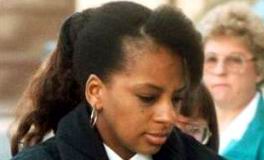
Carolyn King
Murderer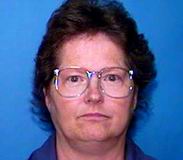 Bobbie Sue Terrell
Murderer · USA · 1984
Bobbie Sue Dudley Terrell was a Pinellas County nurse and worked as the night s…
12 victims
Bobbie Sue Terrell
Murderer · USA · 1984
Bobbie Sue Dudley Terrell was a Pinellas County nurse and worked as the night s…
12 victims
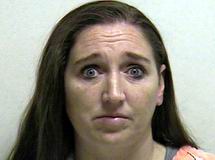 Megan Huntsman
Murderer · USA · 1996
Megan Huntsman was 40 at sentencing. She was a mother of three children who wer…
6 victims
Megan Huntsman
Murderer · USA · 1996
Megan Huntsman was 40 at sentencing. She was a mother of three children who wer…
6 victims
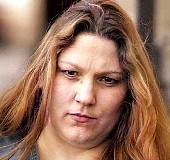 Angela Johnson
Murderer · USA · 1993
Angela Jane Johnson was convicted in federal court of aiding and abetting the m…
5 victims
Angela Johnson
Murderer · USA · 1993
Angela Jane Johnson was convicted in federal court of aiding and abetting the m…
5 victims
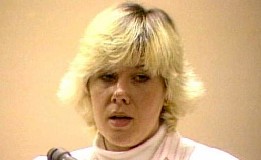 Catherine May Wood
Murderer · USA · 1987
Catherine May Wood was an American caregiver who worked at the Alpine Manor Nur…
5 victims
Catherine May Wood
Murderer · USA · 1987
Catherine May Wood was an American caregiver who worked at the Alpine Manor Nur…
5 victims
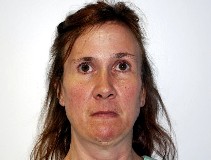 Michele Kalina
Murderer · USA · 1996
Michele Kalina pleaded guilty to murder for one of five infants she initially w…
5 victims
Michele Kalina
Murderer · USA · 1996
Michele Kalina pleaded guilty to murder for one of five infants she initially w…
5 victims
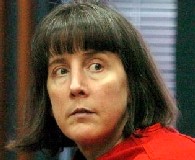 Amy Bishop
Murderer · USA · 1986
Amy Bishop — biology professor and perpetrator · James Anderson — Bishop’s husb…
4 victims
Amy Bishop
Murderer · USA · 1986
Amy Bishop — biology professor and perpetrator · James Anderson — Bishop’s husb…
4 victims
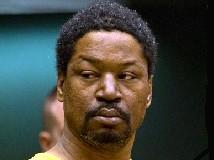 Anthony Kirkland
Serial killer · USA · 1987
Anthony Kirkland (born September 13, 1968) was an American serial killer. In 19…
5 victims
Anthony Kirkland
Serial killer · USA · 1987
Anthony Kirkland (born September 13, 1968) was an American serial killer. In 19…
5 victims
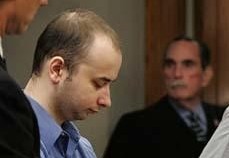 Mykhaylo Kofel
Murderer · USA · 2001
Mykhaylo Kofel was a Byzantine Catholic Church monk-in-training. He had brought…
1 victim
Mykhaylo Kofel
Murderer · USA · 2001
Mykhaylo Kofel was a Byzantine Catholic Church monk-in-training. He had brought…
1 victim
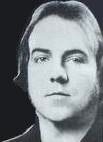 Christian Dornier
Spree killer · France · 1989
Christian Dornier Christian Dornier was found insane on November 10, 1989 and w…
14 victims
Christian Dornier
Spree killer · France · 1989
Christian Dornier Christian Dornier was found insane on November 10, 1989 and w…
14 victims
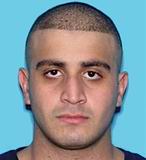 Omar Mateen
Mass murderer · USA · 2016
Omar Mir Seddique Mateen was an American mass murderer who killed 49 people and…
49 victims
Omar Mateen
Mass murderer · USA · 2016
Omar Mir Seddique Mateen was an American mass murderer who killed 49 people and…
49 victims
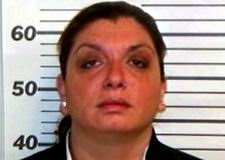 Brenda Nicholas
Murderer · USA · 2011
Brenda Nicholas was sentenced to 34 years in prison for the robbery and stabbin…
1 victim
Brenda Nicholas
Murderer · USA · 2011
Brenda Nicholas was sentenced to 34 years in prison for the robbery and stabbin…
1 victim
- Gender
- female
- Country
- USA
- Location
- Palmira, Lebanon County, Pennsylvania / Elko, Elko County, Nevada, USA
- Date of birth
- 1965
- Age at first offence
- 28
- Characteristics
- robbery, abuse, escape, domestic violence
- Victim profile
- Guy Goodman, 74 / Donna Mae Martz, 59
- Method of murder
- Suffocation (duct-taped a plastic bag over his head) / Shooting (.357 magnum revolver)
- Date(s) of murder
- September 15 / October 3, 1993
- Years active
- 1993
- Date of arrest
- October 5, 1993
- Status
-
Life imprisonment
Resentenced to life in prison without parole in Pennsylvania on March 3, 2005; sentenced to death in 1994 in Pennsylvania; sentenced to life in prison in Nevada on August 3, 2010
Case record: Carolyn King
Other details
Carolyn King was convicted along with Bradley Martin of the 1993 murder of 74-year-old Guy Goodman in his Palmyra townhouse and also convicted of related offenses. King was resentenced in Pennsylvania.
Timeline
- September 15, 1993 — Bradley Martin, serving a sentence at the Lebanon County Correctional Facility as the result of a parole violation, obtained a two-hour visitation pass, left prison, met King, and traveled to Palmyra, Pennsylvania to call upon Guy Goodman. Shortly after their arrival, Martin hit Goodman over the head with a vase, Goodman was bound with wrists, ankles and neck constrained so that he could not extricate himself, a bathrobe was wrapped around Goodman’s head, a plastic bag was placed over it, duct tape sealed the bag, a bedspread was wrapped over the bag, Goodman was carried into the basement, and he suffocated. Martin and King stole Mr. Goodman’s checkbook and credit card and left in his car.
- Ten days later — Goodman’s body was found by police.
- October 3, 1993 — Martin and King went shopping in Bismarck.
- October 5, 1993 — Martin and King were arrested in Arizona after a police chase.
- October 1993 — The death of Donna Martz occurred after the pair abducted her and drove to Elko, with a subsequent drive into the desert where Donna Martz was forced to disrobe and lie down in a ditch and was shot once in the head with a .357 magnum revolver.
- December 02, 1998 — The Pennsylvania Supreme Court affirmed the consolidated direct appeals from death sentences imposed after a jury found co-defendants Carolyn King and Bradley Martin guilty of first-degree murder and related offenses.
- January 11, 1994 — Elko District Judge Jack Ames sentenced Martin to two consecutive life sentences without parole for Donna Martz and also sentenced King on Tuesday, ordering her to serve her sentence consecutive to any other sentence she had to serve.
- February 7, 1994 — A package plea offer was made to Martin and King and was available to them when their trial began on September 30, 1994.
- September 30, 1994 — Martin and King’s trial began.
- October 14, 1994 — King and Martin were convicted and sentenced to die.
- December (after Martin’s January resentencing) — Lebanon County Senior Judge Robert J. Eby ruled the prosecution could not seek the death penalty against Martin, stating the proposed agreement as to Martin violated Due Process protections because Martin had been prevented from accepting its terms solely on the basis of a whim of his co-defendant.
- January 26 (year not stated) — Martin was resentenced to life in prison without parole.
- May 12, 2014 — A status conference for King was held; a scheduling hearing was to be set for the first or second week of October.
- June 28, 2014 — Chief Public Defender Brian Deiderick stated Martin was willing to plead guilty to a sentence of life in prison; Martin’s scheduling hearing for resentencing was described as late spring 2015, with King’s hearing to follow.
- August 27, 2013 — Lebanon County District Attorney David Arnold said he would continue to seek the death penalty in the cases of Bradley Martin and Carolyn King.
- August 4, 2010 — Judge Harold A. Thomson Jr. ruled King should receive a new penalty hearing to consider mitigating evidence regarding past abuse and mental disorders not presented at King’s sentencing hearing in 1994.
- March 3, 2005 — King was resentenced to life in prison without parole in Pennsylvania.
- August 3, 2010 — King was sentenced to life in prison in Nevada.
- March 5, 2015 — Senior Judge David Grine resentenced King in Pennsylvania to life in prison without the possibility of parole.
The offence
Murder of Guy Goodman (Palmyra, Pennsylvania)
Bradley Martin and Carolyn King killed Guy Goodman, a 74-year-old Palmyra florist, in his townhouse in 1993. The manner of killing included binding of Goodman’s wrists, ankles and neck so that he could not extricate himself, wrapping a bathrobe around his head, placing a plastic bag over it, sealing it with duct tape, wrapping a bedspread over the bag, and carrying Goodman into the basement where he suffocated.
The evidence at trial included findings that the upstairs had been ransacked, Martin’s fingerprints were found on currency left in the victim’s bedroom, both King’s and Martin’s fingerprints were found on pieces of duct and masking tape left in the home, as well as on a glass and a bowl of peanuts in the kitchen. Handwriting on checks drawn on the victim’s bank account matched that of King. Store clerks identified King and Martin as the individuals who had presented the victim’s credit card or checks as payment. Martin was in possession of Mr. Goodman’s credit card when apprehended, and blank checks found in Goodman's abandoned vehicle bore the fingerprints of both defendants. King gave inculpatory statements to federal law enforcement officials and reiterated her inculpatory statement to Lebanon County detectives. Martin inculpated himself to Lebanon County detectives after Miranda warnings and signed a waiver form, and later gave additional statements to a corrections officer at the Lebanon County Prison.
At the conclusion of the guilt phase, the jury found both defendants guilty of first-degree murder, aggravated assault, robbery, theft by unlawful taking, flight to avoid apprehension, escape and conspiracy.
Offence in Nevada: kidnapping and killing of Donna Martz
After Goodman’s murder, Martin and King stole Goodman’s car, credit card and checkbook and drove to Bismarck, N.D., where they abducted a 59-year-old woman, Donna Martz. They later killed Martz in the Nevada desert. They were arrested in Arizona after a police chase on Oct. 5, 1993. Martin and King pleaded guilty to first-degree murder in the death of Donna Martz and were sentenced to life in prison in Nevada. The Nevada sentence was consecutive to the sentence for the Goodman murder.
Investigation
King’s statement was given to federal law enforcement officials while she was advised of her rights in Arizona and her statement inculpated herself and Martin in Goodman’s murder. King later reiterated her inculpatory statement to Lebanon County detectives investigating Goodman’s death.
Martin was interrogated by Lebanon County detectives while in custody in Arizona, received Miranda warnings, waived his rights by signing a form, and inculpated himself in the robbery and murder. Martin also made an additional statement to a corrections officer at the Lebanon County Prison admitting he had killed Goodman.
Trial
Consolidation and severance issues
Martin and King filed motions for severance prior to trial, and the trial court denied the motions. The Pennsylvania Supreme Court stated that finger pointing alone was insufficient to warrant separate trials and that when defendants argued conflicting versions about the extent of their participation, it was a reason in favor of joint trial.
The Appellants also challenged consolidation of the escape charge indictment with the homicide indictment. The Pennsylvania Supreme Court addressed consolidation standards and concluded that Martin’s escape was part of the natural chain of events leading up to Goodman’s murder, and that the evidence supporting each offense was capable of separation. The court referenced the trial court’s instruction that the jury was required to decide separately each issue and stated that there was no abuse of discretion or prejudice.
Evidence and exhibits
The trial court admitted photographs of Goodman’s body, including Exhibit 42, a black-and-white photograph depicting the manner in which the victim was tied, and showing signs of decomposition including blackening of Goodman’s hands and secretion of bodily fluids. The Supreme Court held the photograph’s evidentiary value outweighed the possibility of inflaming jurors and upheld its admission.
The court also addressed evidence of Goodman’s personal character, including a letter written by Goodman to Martin mentioning Goodman’s regular attendance of church services, health problems, and concern for his own mortality, and expressing confidence, support and concern for Martin. Testimony was also presented through Goodman’s daughter about her concern because he lived alone and could not seek assistance if injured. A photographer from a local newspaper testified about photographing the victim's home for an article on distinctive homes, and pictures of the home were admitted into evidence.
King challenged admission of evidence related to an application for federal assistance, her use of the alias “Anna” King when checking into a local motel as of Sept. 15, 1993 with another party, and other collateral evidence concerning her marriage to Carl William King. The Pennsylvania Supreme Court upheld admission, stating that Barbara Charles’ testimony authenticated King’s signature on the federal assistance application included in a list of handwriting exemplars and that the trial court and prosecutor references to Charles being the district attorney’s wife were passing references not used to bolster her veracity. The Supreme Court also held that evidence of use of an alias was relevant to knowledge about Martin’s prison status and desire to facilitate his escape. It held the Commonwealth’s impeachment concerning parentage and marriage was proper because King’s defense asserted Martin was the father of her son.
Fifth Amendment counsel-invocation claim
Martin argued his incriminating statements were obtained after he invoked his Fifth Amendment right to counsel and should be suppressed. The Pennsylvania Supreme Court held Martin failed to establish that he invoked his right to counsel and that the record supported Miranda warnings, a waiver form, and an incriminating statement given after waiving rights. It also held an additional statement to a corrections officer was admissible because it was initiated by Martin and was a gratuitous utterance, and Miranda warnings were unnecessary.
Sentencing
Pennsylvania death sentence and penalty-phase findings
During the penalty phase, the Commonwealth presented aggravating circumstances with respect to both defendants: perpetration of the homicide during the commission of a felony, and commission of the offense by means of torture. The Commonwealth also presented evidence regarding a significant history of felony convictions involving the use or threat of violence to the person with respect to Martin, using five prior burglary and criminal trespass convictions.
Mitigating evidence included the defendants’ ages at the time of the crime and other evidence concerning their character and records and the circumstances of the offense. King additionally presented evidence that her participation in the homicidal act was relatively minor.
The jury found all aggravating circumstances presented with respect to each defendant had been established, found no mitigating circumstances for either defendant, and accordingly death sentences were imposed.
Torture aggravator and Dr. Isadore Mihalikis testimony
The Supreme Court addressed the Commonwealth’s use of videotaped testimony of Dr. Isadore Mihalikis, a forensic pathologist, during the penalty phase. The Supreme Court concluded the testimony concerning the victim’s emotional state was improperly admitted and that the trial court erred in permitting the jury to consider the aggravator of torture in its penalty determination.
The Supreme Court referenced specific quoted testimony from Dr. Mihalikis during the penalty phase, including statements that Goodman would have experienced terror due to physical limitations and the impossibility of freeing himself, that there would have been a period of terror as he realized impending death, that altercation, binding and wrappings were “very, in fact extremely, terrorizing,” and that Goodman experienced “terror because he was not getting enough oxygen and would eventually run out of air and die.” The Supreme Court also quoted: “I have no doubt that fear is probably a mild term ․ to have gone through this kind of a confrontation, to have all these things on top of you, to have the binding ․ it is not fear, it is terror with a capital T.”
Despite the Supreme Court’s holding that the torture aggravator should not have been submitted, it concluded the remaining aggravating circumstance supporting death and other findings supported affirmance of verdicts and death sentences.
State Supreme Court disposition on death sentences
The Pennsylvania Supreme Court affirmed the convictions and death sentences imposed on Bradley Martin and Carolyn King.
Appeals
The Pennsylvania Supreme Court affirmed consolidated direct appeals from death sentences imposed after the jury found King and Martin guilty of first-degree murder and related offenses.
The Supreme Court’s decision included review of issues including severance, consolidation, admissibility of photographs and evidence of victim character, suppression arguments, penalty-phase jury instructions, and issues related to aggravating circumstances and mitigating factors.
Martin’s death sentence was overturned in 2004.
Lebanon County Senior Judge Robert J. Eby ruled in December that the prosecution could not seek the death penalty against Martin, citing Due Process protections and a plea agreement issue involving Martin being prevented from accepting its terms solely on the basis of a whim of his co-defendant. District Attorney David Arnold did not appeal Eby’s ruling.
Martin was resentenced to life in prison without parole on Jan. 26, and King’s resentencing followed.
Outcome
King was resentenced in Pennsylvania to life in prison without the possibility of parole by Senior Judge David Grine. Her resentencing hearing involved a video hookup from the State Correctional Institution at Muncy in Lycoming County.
As part of the sentencing agreement that resulted in King being sentenced to life in prison, King gave up her right to file any future appeals in state or federal courts.
Additional sentencing outcomes in other jurisdictions
King was sentenced to death in 1994 in Pennsylvania. King was sentenced to life in prison in Nevada on August 3, 2010. King was resentenced to life in prison without parole in Pennsylvania on March 3, 2005.
Spotted an error, or have more information about this case?