
Sante Kimes
Murderer Megan Huntsman
Murderer · USA · 1996
Megan Huntsman was 40 at sentencing. She was a mother of three children who wer…
6 victims
Megan Huntsman
Murderer · USA · 1996
Megan Huntsman was 40 at sentencing. She was a mother of three children who wer…
6 victims
 Angela Johnson
Murderer · USA · 1993
Angela Jane Johnson was convicted in federal court of aiding and abetting the m…
5 victims
Angela Johnson
Murderer · USA · 1993
Angela Jane Johnson was convicted in federal court of aiding and abetting the m…
5 victims
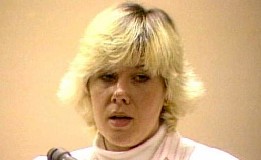 Catherine May Wood
Murderer · USA · 1987
Catherine May Wood was an American caregiver who worked at the Alpine Manor Nur…
5 victims
Catherine May Wood
Murderer · USA · 1987
Catherine May Wood was an American caregiver who worked at the Alpine Manor Nur…
5 victims
 Michele Kalina
Murderer · USA · 1996
Michele Kalina pleaded guilty to murder for one of five infants she initially w…
5 victims
Michele Kalina
Murderer · USA · 1996
Michele Kalina pleaded guilty to murder for one of five infants she initially w…
5 victims
 Tiffany Hall
Murderer · USA · 2006
Tiffany Hall was 24 when she was charged in September 2006. She later entered a…
5 victims
Tiffany Hall
Murderer · USA · 2006
Tiffany Hall was 24 when she was charged in September 2006. She later entered a…
5 victims
 Amy Bishop
Murderer · USA · 1986
Amy Bishop — biology professor and perpetrator · James Anderson — Bishop’s husb…
4 victims
Amy Bishop
Murderer · USA · 1986
Amy Bishop — biology professor and perpetrator · James Anderson — Bishop’s husb…
4 victims
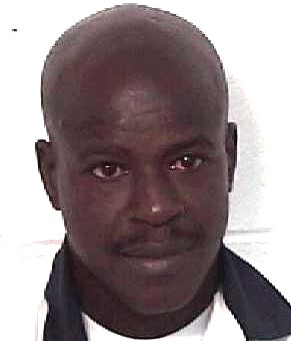 Nelson Earl Mitchell
Murderer · USA · 1986
Nelson Earl Mitchell, 34, was sentenced to death on February 14, 1990. He was s…
1 victim
Nelson Earl Mitchell
Murderer · USA · 1986
Nelson Earl Mitchell, 34, was sentenced to death on February 14, 1990. He was s…
1 victim
 Byron Looper
Murderer · USA · 1998
Byron Looper (also “Byron (Low Tax) Looper”), a former Republican politician in…
1 victim
Byron Looper
Murderer · USA · 1998
Byron Looper (also “Byron (Low Tax) Looper”), a former Republican politician in…
1 victim
 Mark Arlo Sheppard
Murderer · USA · 1993
November 28, 1993 — Mark Arlo Sheppard and his companion Andre Graham shot and…
2 victims
Mark Arlo Sheppard
Murderer · USA · 1993
November 28, 1993 — Mark Arlo Sheppard and his companion Andre Graham shot and…
2 victims
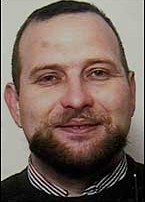 Mauro Antonello
Mass murderer · Italy · 2002
Mauro Antonello was a 40-year-old construction worker, former security guard an…
7 victims
Mauro Antonello
Mass murderer · Italy · 2002
Mauro Antonello was a 40-year-old construction worker, former security guard an…
7 victims
 Raymond Landry
Murderer · USA · 1982
Raymond Landry Sr. was the person convicted in a Texas capital case. Raymond La…
1 victim
Raymond Landry
Murderer · USA · 1982
Raymond Landry Sr. was the person convicted in a Texas capital case. Raymond La…
1 victim
 George Williams
Murderer · USA · 1983
George Williams was a Chicago native, born in 1942. He watched his mother die i…
7 victims
George Williams
Murderer · USA · 1983
George Williams was a Chicago native, born in 1942. He watched his mother die i…
7 victims
- Gender
- female
- Country
- USA
- Location
- The Bahamas / California/New York, USA
- Date of birth
- July 24, 1934
- Age at first offence
- 62
- Characteristics
- robbery, burglary, domestic violence, alcohol, kidnapping
- Victim profile
- Syed Bilal Ahmed / David Kazdin / Irene Silverman, 82
- Method of murder
- Drowning / Shooting / Strangulation
- Date(s) of murder
- 1996 / 1998
- Years active
- 1996–1998
- Date of arrest
- July 1998
- Status
-
Life imprisonment
Sentenced to 120 years and 8 months in New York on June 27, 2000; sentenced to life in prison in California in 2004; currently serving a sentence of 120 years at Bedford Hills Correctional Facility for Women in New York with a projected release date of March 3, 2119
People
- Sante Kimes (born July 24, 1934), American felon convicted of two murders, along with robbery, violation of anti-slavery laws, forgery and numerous other crimes. She was convicted together with her son Kenneth Kimes for the murder of Irene Silverman and together were convicted of murder and numerous other charges.
- Kenneth Kimes (described as “Kenny” or “Kenneth”), son of Sante Kimes. He was convicted with Sante Kimes for the murder of Irene Silverman and faced further trial for the murder of David Kazdin.
- David Kazdin, whose name was used on a deed for a Las Vegas home occupied by Kenneth and Sante Kimes in the 1970s. He was killed; his body was found in March 1998 in a dumpster near Los Angeles airport.
- Irene Silverman, 82-year-old socialite and landlady; her body was never found. She owned a $7.7 million Manhattan mansion and was last seen in July 1998.
- Sayed Bilal Ahmed, banker in the Bahamas. Kenneth Kimes confessed to killing him in 1996 at his mother’s behest; no charges were filed.
- Patricia Nixon, referenced as a White House recipient during the attempted bicentennial-related access.
- David Rhode, New York Times reporter referenced in connection with Sante Kimes passing a note in court.
- Maria Zone, Court TV reporter, held hostage by Kenneth Kimes by pressing a ballpoint pen into her throat.
- Kathleen Kennedy-Powell, presiding judge in the Kazdin case who imposed sentence and ordered silence; also referenced in characterization of Sante and Kenneth.
- Stan Patterson, described as a Las Vegas trailer park resident who sold guns and did odd jobs for Sante and Kenny; later cooperated with the FBI.
- Elmer Holmgren, described as the family lawyer who burned down one home for insurance money, later becoming an informant; his body was never found.
- Ana Celia Sorano, one of the servants who testified about mistreatment.
- Dolores Vasquez, one of the servants who testified about mistreatment and torture.
- Maribel Ramirez, one of the servants who testified about mistreatment.
- Katherine Kenworthy, referenced as the woman whose ranch mink coat was stolen in February 1980.
- Rena Beachy, referenced as a witness in the mink coat incident.
- Benito (Benito Raho), father of Vittorio Raho, referenced discussing resemblance to Elizabeth Taylor.
- Vittorio Raho, neighbor who lived next door to Kenny when the family had its Las Vegas house.
- Kara Craver-Jones, described as a hired playmate in Hawaii.
- Ruth Tanis, described as a friend of Sante (Sandra Chambers) and a person who described catching an informant concern about who would come first, FBI or Sante.
- Duane Glanzman, recalled Sante’s school activities and class president context.
- John Gruen, referenced as the person Irene Silverman spoke to about her employment.
- Miki Ben-Kiki, referenced as neighbor who described Irene’s behavior with guests.
Timeline
- June 27, 2000 — Sante Kimes was sentenced to 125 years in prison in New York.
- 2004 — Sante Kimes was sentenced to life in prison in California.
- March 1998 — Kazdin’s body was found in a dumpster near Los Angeles airport.
- July 5, 1998 — Irene Silverman’s body was referenced as inside a trunk and she was described as last seen in July 1998.
- August 1985 — Sante Kimes was arrested and sentenced by the U.S. District Court to five years in prison for violating Federal anti-slavery laws.
- 1989 — Sante Kimes was released from prison and she later returned to further criminal activity described in the narrative.
- 1990 — A family lawyer, Elmer Holmgren, burned down one of the homes for the insurance money.
- March 28, 1994 — Sante Kimes pulled up in front of a Santa Barbara bank and Ken Sr. died of a heart attack.
- 1994 — Ken Sr. died.
- 1996 — Kenneth confessed to killing banker Sayed Bilal Ahmed in the Bahamas.
- January 2000 / “spring of 2000” — Sante Kimes and Kenneth Kimes were tried and convicted in connection with Irene Silverman.
- In October 2000 — Kenneth Kimes held Court TV reporter Maria Zone hostage by pressing a ballpoint pen into her throat.
- March 2001 — Kenneth Kimes was extradited to Los Angeles to stand trial for the murder of David Kazdin.
- June 2001 — Sante Kimes was extradited to Los Angeles.
- June 2004 — During the Kazdin case, Kenneth changed his plea from “not guilty” to “guilty” and implicated his mother in exchange for a plea deal.
- March 3, 2119 — projected release date stated on prisoner papers.
Background
Sante Kimes was described as being born Sandra Louise Walker in Oklahoma City, and also described as having been born Sante Louise Singhrs in July 1934 on the edge of Oklahoma City, with parents Rattan and Mary. She was described as the third of four children. She was described as migrating to Southern California in the late thirties, after which her father deserted the family and her mother became a prostitute in Los Angeles. She was described as moving through foster homes or orphanages, with a hangout at a soda shop on Melrose Avenue, and being known under multiple names including Sante Singhrs and Sandy Singer, later becoming Sandra Chambers after adoption.
She was described as getting decent grades at Carson High School, including being a cheerleader for the basketball team, the historian for the Spanish club, member of the Glee club, and co-editor of the school’s newspaper, The Chatter, and as being best known for being “boy crazy.” She was described as being caught shoplifting at a local five-and-dime (not prosecuted) and as going on a shopping spree after stealing her adoptive father’s credit card.
On her high school graduation day in June 1952, she was described as telling others she would go to college, get a degree, and become a journalist. She was described as marrying a high school sweetheart, Lee Powers, three months later and divorcing him three months after that. She was described as taking a six-week secretarial course at a Reno Business School and bouncing around northern California between office work and college courses. She was later described as marrying Edward Walker in 1956 and having a child, Kent.
She was described as being arrested in 1961 in Sacramento for petty theft and returning to the streets of Los Angeles, alternating between prostitution and crime. She was described as being arrested for grand theft in Los Angeles in 1965 and auto theft a few days later in Norwalk, California, with a narrative describing a Cadillac dealership test drive that ended with police taking her into custody.
Her criminal behavior was described as including numerous schemes, including insurance fraud often through arson and collecting property-damage proceeds, along with forgery and theft. She was described as using elaborate cons and sometimes impersonating Elizabeth Taylor.
She was described as introducing her husband as an ambassador, and as gaining access to a White House reception during the Ford administration.
She was described as being arrested for Federal anti-slavery law violations in August 1985 and sentenced by the U.S. District Court to five years in prison.
She was described as being released from prison in 1989 and continuing criminal activity afterward.
The offence
Irene Silverman murder
In June 1998, with her son Kenny, Sante Kimes was described as perpetrating a scheme to assume the identity of their landlady, 82-year-old socialite Irene Silverman, and appropriate ownership of her $7.7 million Manhattan mansion. Her body was described as never being found, and she was presumed dead.
Prosecution statements were described as believing the Kimeses drugged Silverman, smothered her, stashed her body in a stolen Lincoln towncar, and dumped her in an undisclosed location. The narrative described that there was no sign of a struggle in Silverman’s mansion and no evidence of Silverman’s or the Kimeses’ blood in the house.
When police searched the Kimeses’ car, it was described as finding a fake Social Security card bearing Silverman’s name, an allegedly forged deed transferring Silverman’s Manhattan townhouse to a shell Florida firm set up by the Kimeses, and loaded .9 mm and .22 caliber pistols. The narrative also described Silverman’s keys, cassettes of Silverman’s telephone conversations taken from wiretaps, wigs and masks, plastic handcuffs, $30,000 in cash, and an empty stun gun box found in the car. Prosecutors were described as presenting these items as supporting an elaborate murder-robbery plot.
A narrative description of the offense included that Kenneth Kimes confessed that after his mother had used a stun gun on the sleeping Silverman, he strangled her, stuffed her corpse into a bag, and deposited it in a dumpster in Hoboken, New Jersey.
David Kazdin murder
Sante Kimes was described as using the name of David Kazdin on the deed of a Las Vegas home occupied by Kenneth and Sante Kimes in the 1970s. The narrative described that Sante Kimes convinced a notary to forge Kazdin’s signature on an application for a loan of $280,000, with the house as collateral.
The narrative described that when Kazdin discovered the forgery and threatened to expose Sante Kimes she ordered him killed, and Kenneth Kimes murdered Kazdin by shooting him in the back of the head. Another accomplice’s later testimony was described as stating that all three participated in disposing of the evidence. Kazdin’s body was described as found in a dumpster near Los Angeles airport in March 1998, and the murder weapon was described as never being recovered because it had been disassembled and dropped into a storm sewer.
Bahamas murder of Sayed Bilal Ahmed (suspected; no charges filed)
The narrative described that Kenneth Kimes confessed to murdering a third man, banker Sayed Bilal Ahmed, at his mother’s behest in the Bahamas in 1996. It also described that Bahamian authorities suspected the pair at the time, but no charges were filed.
The narrative described that Kenneth testified they acted together to drug Ahmed, drown him in a bathtub, and dump his body offshore. In later narrative describing the Kazdin trial, Kenneth was described as confessing to killing Ahmed by first drugging him, then drowning him in a bathtub, and disposing of the body in the ocean.
Investigation
The narrative described that evidence recovered from their car helped establish the case for trying them on Kazdin’s murder as well as the Silverman murder.
It also described that the FBI talked to Stan Patterson and negotiated his cooperation, with the statement that they would not prosecute him for selling guns illegally if he led them to Sante.
The narrative described that when Sante and Kenny met Patterson at a rendezvous at the New York Hilton, federal agents surrounded them. The narrative described that inside the stolen Lincoln there was incriminating evidence including Irene’s passport and keys, a Glock .9 mm pistol and a .22 Beretta, real estate transfer papers, and a notebook showing Sante practicing Irene Silverman’s signature. It also described an empty stun gun box, blank social security cards, handcuffs, extra license plates, syringes, and walkie-talkies.
The narrative also described that Sante and Kenny were apprehended in New York City and tried first for the Silverman murder.
Arrest
Sante and Kenny were described as having been arrested in New York City after the FBI’s involvement with Patterson and their meeting at the New York Hilton.
The narrative described that the arrest followed a phone call from Sante to Patterson and that Patterson had been approached by the FBI about David Kazdin’s murder and the stolen Lincoln.
Trial
Silverman trial
The narrative described that the Silverman trial was unusual due to the rare combination of a mother/son team and the fact that no body was recovered. It described the jury as unanimous in voting to convict them not only of murder but of 117 other charges.
The narrative also described that the jury forewoman pronounced “guilty” 118 times—58 times for Sante Kimes and 60 times for Kenneth Kimes—in the slaying of Irene Silverman, a former Radio City Music Hall dancer whose body had never been found.
The narrative described that the judge ordered Kimes not to speak to the media even after the jury had been sequestered because she passed a note to New York Times reporter David Rhode in court. It described that the judge threatened to have Kimes handcuffed during further court appearances if she persisted and restricted her telephone access to calls to her lawyers.
The narrative described that Kimes had chosen not to take the stand after the judge ruled prosecutors could question her about the previous conviction on slavery charges.
During sentencing in the Silverman trial, the narrative described that Sante Kimes made a prolonged statement blaming authorities, including their own lawyers, for framing them. She compared the trial to the Salem Witch Trials and claimed the prosecutors were guilty of “murdering the Constitution.” After her statement, the presiding judge responded that Mrs Kimes was a sociopath and a degenerate and her son was a dupe and “remorseless predator” before imposing the maximum sentence on both of them.
The narrative also described that Kimes and her son were convicted of 58 different crimes for Sante and 60 for Kenneth, with jury conviction described as including robbery, burglary, conspiracy, grand larceny, illegal weapons possession, forgery, and eavesdropping.
Hostage incident during imprisonment
The narrative described that in October 2000 Kenneth held Court TV reporter Maria Zone hostage by pressing a ballpoint pen into her throat. It described that Zone had previously interviewed Kimes once without incident. It also described that Kenneth’s demand was that his mother not be extradited to California, where both faced the death penalty for the murder of David Kazdin. It described that after four hours of negotiation, Kimes removed the pen and negotiators created a distraction that allowed Zone to be removed and Kimes to be subdued.
Kazdin murder trial in California
The narrative described that Kenneth was extradited to Los Angeles in March 2001, and Sante was extradited to Los Angeles in June 2001.
During the Kazdin trial in June 2004, the narrative described that while Kenneth faced the death penalty, he changed his plea from “not guilty” to “guilty” and implicated his mother in exchange for a plea deal that his mother not receive the death penalty if convicted.
The narrative described that Sante Kimes again made a prolonged statement denying the murders and accusing police and prosecutors of various misconduct and was again ordered by the presiding judge to be silent. It described the sentencing judge in the Kazdin case calling Mrs. Kimes “one of the most evil individuals” they had met in their time as a judge.
Sentencing
Silverman case (New York)
The narrative described that on June 27, 2000 Sante Kimes was sentenced to 120 years and 8 months in prison in New York, and Kenneth Kimes received 125 years and four months. Another portion of the narrative stated that she was sentenced to 125 years in prison in New York on June 27, 2000.
The narrative described that both mother and son were slapped with sentences of more than 100 years for the murder of Irene Silverman in a plot to take her $10 million townhouse.
The narrative also described that at sentencing, Sante was asked if she had anything to say, and with that she jumped to her feet and ranted about her life and the unfairness of her trial for more than an hour. It also described that the judge told her that her performance was over and that marshals led them both away.
Kazdin case (California)
The narrative described that in California, both Kenneth and Sante Kimes were each sentenced to life for the death of David Kazdin.
The narrative also described that Sante’s California life sentence was described as being added on to more than 100 years already being served.
Appeals
No appeal content was provided beyond the pleaded change of plea and sentencing proceedings.
Outcome
Sante Kimes remained convicted of the murder of Irene Silverman and was sentenced in New York with a term stated as 120 years and 8 months / 125 years in separate passages, followed by a California sentence of life in prison in 2004.
The narrative described that Sante and Kenneth were convicted last month of killing Irene Silverman, and separately described their convictions as including numerous counts for related robbery, burglary, conspiracy, grand larceny, illegal weapons possession, forgery and eavesdropping, with no body recovered.
The narrative also described that Kenneth confessed to the murder of Sayed Bilal Ahmed, but no charges were filed in that case.
Imprisonment and current status
The narrative described that Sante Kimes was serving a sentence of 120 years at Bedford Hills Correctional Facility for Women in New York. It stated that her prisoner papers listed a projected release date of March 3, 2119.
Aftermath
A narrative described that media adaptations included a 2001 made-for-TV movie, Like Mother, Like Son: The Strange Story of Sante and Kenny Kimes, starring Mary Tyler Moore as Sante Kimes, Gabriel Olds as Kenny, and Jean Stapleton as Silverman.
The narrative also described that in 2006 another television movie based on a book about the case, A Little Thing Called Murder, starring Judy Davis and Jonathan Jackson, aired on Lifetime.
Other details
- The narrative described that the National Crime Information Center lists 28 different aliases for Sante Kimes.
- The narrative described that Sante was described as an alcoholic motel tycoon’s wife (Kenneth Kimes) and that Kenneth Kimes was involved in an alcohol treatment program after a plea bargain in connection with the earlier slavery law conviction.
- The narrative described a legal dispute over Sante being convicted while absent, involving phony medical letters, and that her lawyer argued it was illegal; it described that she won on a technicality.
- The narrative described an attempted escape or disappearance pattern after her earlier conviction, including a flight after being held without bail and her later capture at a Las Vegas bar called The Elbow Room.
- The narrative described that Elmer Holmgren burned down a home for insurance money in 1990, became an informant, and then his body was never found.
- The narrative described that on March 28, 1994 Ken Sr. died of a heart attack in a car outside a Santa Barbara bank and that Sante greeted Kenny upon his return and showed him Ken’s ashes, then forced him to leave for Hawaii where she scattered the ashes on the waves near Honolulu.
- The narrative described that authorities doubted even the authenticity of a marriage certificate Sante could produce for Ken Sr.
- The narrative described an incident in February 1980 involving a mink coat at the Mayflower hotel, with charges involving theft of the fur coat and bond set at $4000.
- The narrative included a statement: “No body, no crime,” which was described as a family motto and also quoted as something Kenny told the judge.


Spotted an error, or have more information about this case?