Jessie King
Murderer Mary Pearcey
Murderer · United Kingdom · 1890
Mary Pearcey (Mary Eleanor Wheeler; also known as Mary Eleanor) was born in 186…
2 victims
Mary Pearcey
Murderer · United Kingdom · 1890
Mary Pearcey (Mary Eleanor Wheeler; also known as Mary Eleanor) was born in 186…
2 victims
 Catherine Flannagan
Murderer · United Kingdom · 1883
Catherine Flannagan and her sister Margaret Higgins used arsenic to poison peop…
1 victim
Catherine Flannagan
Murderer · United Kingdom · 1883
Catherine Flannagan and her sister Margaret Higgins used arsenic to poison peop…
1 victim
 Kate Webster
Murderer · United Kingdom · 1879
Kate Webster was executed by hanging at Wandsworth Prison on July 29, 1879. · 2…
1 victim
Kate Webster
Murderer · United Kingdom · 1879
Kate Webster was executed by hanging at Wandsworth Prison on July 29, 1879. · 2…
1 victim
 Louisa Jane Taylor
Murderer · United Kingdom · 1882
Louisa Jane Taylor was widowed in 1882 and had a small pension to survive on. S…
1 victim
Louisa Jane Taylor
Murderer · United Kingdom · 1882
Louisa Jane Taylor was widowed in 1882 and had a small pension to survive on. S…
1 victim
 Margaret Waters
Murderer · United Kingdom · 1866
Margaret Waters was an English murderess who was hanged by executioner William…
19 victims
Margaret Waters
Murderer · United Kingdom · 1866
Margaret Waters was an English murderess who was hanged by executioner William…
19 victims
 Catherine Wilson
Murderer · United Kingdom · 1854
Catherine Wilson was a British nurse who poisoned victims after befriending the…
7 victims
Catherine Wilson
Murderer · United Kingdom · 1854
Catherine Wilson was a British nurse who poisoned victims after befriending the…
7 victims
 Edward Lee Harper
Murderer · USA · 1982
Edward Lee Harper Jr. was executed by lethal injection in Kentucky on May 25, 1…
2 victims
Edward Lee Harper
Murderer · USA · 1982
Edward Lee Harper Jr. was executed by lethal injection in Kentucky on May 25, 1…
2 victims
 Robert Anthony Murray
Murderer · USA · 1985
Robert Anthony Murray was convicted of two counts of first-degree murder and se…
2 victims
Robert Anthony Murray
Murderer · USA · 1985
Robert Anthony Murray was convicted of two counts of first-degree murder and se…
2 victims
 Jerry Lynn McCracken
Mass murderer · USA · 1990
Jerry Lynn McCracken was an Oklahoma death row inmate executed by lethal inject…
4 victims
Jerry Lynn McCracken
Mass murderer · USA · 1990
Jerry Lynn McCracken was an Oklahoma death row inmate executed by lethal inject…
4 victims
 Mauricio Rodriguez Silva
Serial killer · USA · 1978
Mauricio Rodriguez Silva was born with “gigantism” which enlarges features and…
4 victims
Mauricio Rodriguez Silva
Serial killer · USA · 1978
Mauricio Rodriguez Silva was born with “gigantism” which enlarges features and…
4 victims
 Friedrich Schumann
Serial killer · Germany · 1911
Friedrich Schumann (1 February 1893 – 27 August 1921) was a German serial kille…
6 victims
Friedrich Schumann
Serial killer · Germany · 1911
Friedrich Schumann (1 February 1893 – 27 August 1921) was a German serial kille…
6 victims
 Georg Karl Grossmann
Serial killer · Germany · 1913
Georg Karl Grossmann, who commonly called himself just Karl Grossman (also give…
50 victims
Georg Karl Grossmann
Serial killer · Germany · 1913
Georg Karl Grossmann, who commonly called himself just Karl Grossman (also give…
50 victims
- Gender
- female
- Country
- United Kingdom
- Location
- Edinburgh, Scotland, United Kingdom
- Date of birth
- 1866
- Age at first offence
- 21
- Characteristics
- child killer, murder for hire
- Victim profile
- Children (The babies in this case were the illegitimate sons and daughters of domestic servants and factory girls whose unwanted pregnancies threatened what was already a precarious existence)
- Method of murder
- Strangulation and suffocation
- Date(s) of murder
- August 1887 - October 1888
- Years active
- 1887–1888
- Date of arrest
- —
- Status
-
Executed
Executed by hanging on March 11, 1889
Case record: Jessie King
Background
Jessie King was executed in Edinburgh on March 11, 1889, and she was described as the last woman executed in Edinburgh.
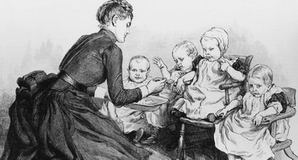
Jessie King was accused of taking money to adopt babies and then killing them. The case involved baby-farming, where a baby-farmer took children after responding to newspaper advertisements for “Person wanted to adopt child”, and the children were then either killed or severely neglected. Jessie King was not the mothers of the children, and the babies were described as the illegitimate sons and daughters of domestic servants and factory girls whose unwanted pregnancies threatened what was already a precarious existence.
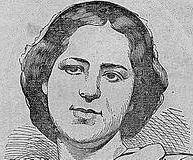
During her trial, Jessie King was described as beyond evil in coverage and drawings. She was also portrayed as a “ravaged, wretch, a rat-like creature” instead of as a 27-year-old woman who had been described as vulnerable and perhaps having a mental health problem.
Jessie King met Thomas Pearson when she was heavily pregnant to a man who had offered to marry her, and she subsequently fell under the spell of Thomas Pearson. Thomas Pearson was described as a disgraced Glasgow man who was some 30 years older than her. He was described as having abandoned his wife and family and as drinking himself towards destitution.
Jessie King and Thomas Pearson were said to have “adopted” at least three babies and that they did not live long. The period of the pair’s activity was described as between August 1887 and October 1888.
The offence
Jessie King was charged with having murdered three children by strangulation and suffocation:
- the first child was twelve months old
- the second was six weeks old
- the third was five months old
The children were described as illegitimate and had been adopted by Jessie King, who received sums varying from £2 to £5 in each case.
A declaration made by Jessie King in November last was described as including that she strangled one of the children, and that after getting the second child she brought it home and gave it some whisky to keep it quiet. The whisky was described as taking away the child’s breath, and while the child was gasping she put her hand upon its mouth and choked it.
At trial, Jessie King was described as admitting the murder of two of the infants. Thomas Pearson was described as denying his guilt.
The remains of one victim were also described as having been found on a shelf which was too high for Jessie King to reach, and another child was described as having been found wrapped in Pearson’s coat.
Investigation
The case came to the attention of police when some boys playing in the Stockbridge area of Edinburgh found the body of an infant wrapped in an old coat. Inquiries led to Jessie King and her lover being charged with the murder of three children.
A discovery was also described as occurring after a group of young friends made a makeshift football from a bundle of oilskin found in the lane behind Cheyne Street, which led to the discovery of the body of a dead child and authorities being alerted. Jessie King and Thomas Pearson came under suspicion, and when their house was raided a baby girl was found strangled in the coal closet.
Arrest
Jessie King and Thomas Pearson came under suspicion after the discovery of a dead child and later after the house raid.
Trial
Charges and pleas
In February 1889, Jessie King appeared at the High Court in Edinburgh accused of the murders of three babies.
At the High Court, Jessie King pleaded “Not guilty.”
At trial, evidence was led at great length for the prosecution, but there was no evidence for the defence. The Solicitor-General withdrew the charge in the third case, and Jessie King was not described as admitting that third charge. The charge withdrawn was the third case.
Prosecution and defence positions
Jessie King took on all the guilt and claimed that Thomas Pearson knew nothing of what went on. When Thomas Pearson was subsequently released, Jessie King asked to withdraw her confession but it was too late.
During the trial, Thomas Pearson was described as turning Queen’s evidence and helping convict King. Louise Yeoman described that Pearson was “allowed immunity from prosecution for being a Crown witness.”
A separate account described that Pearson was more anxious to speak up and gave evidence as a prosecution witness, saving his own neck from the rope and ensuring Jessie's conviction. The Solicitor-General was described as withdrawing the third charge, which she had not admitted.
Counsel for King made an effort to suggest reasonable doubt and to persuade the jury to consider the role the lover had played.
The Lord Justice Clerk was described as summing up by indicating that it appeared to be quite a common thing for guilty parents to hand over their offspring to the care of others. It was also stated that when it was learned that advertisements for the adoption of such children were answered by twenty-five such persons, the jury could not but have the most grave suspicion that, underlying the system of supposed adoption, there lay a state of things which was dangerous to the moral welfare of the State. The Lord Justice Clerk also indicated that the parents of the children must bear at least some moral responsibility, but it was also stated that if the jury accepted the evidence, it was enough to convict.
Verdict
The jury took only minutes to find Jessie King guilty in one account, and another account described the jury after an absence of six minutes unanimously finding the prisoner guilty of murder on both charges.
The first account also stated that the trial ended with almost inevitable verdicts of guilty on two of the charges of murder, and that King was sentenced to be hanged by the neck until dead.
Quotations and statements
Eleanor Gordon described Jessie King in the context of mercy and portrayals, and she said:
“Jessie was given no mercy, either in the press coverage or even in the drawings that depicted her. “She was portrayed as a ravaged, wretch, a rat-like creature, instead of a 27-year-old woman who was vulnerable and perhaps had a mental health problem.”
Louise Yeoman stated about Thomas Pearson:
“He was allowed immunity from prosecution for being a Crown witness.”
A Roman Catholic confessor wrote pleading for Jessie King’s life to the Secretary for State, and wrote:
“To save Pearson she made the statement which has done her so much injury. She now declares that he in one of the cases did the deed and in the other two, he stood near directing and guiding her in the administration of the [whisky]...”
The confessor continued:
“It seems a more likely solution of this terrible crime that this hard-hearted man and unfaithful husband - an aged man! was there directing the unsteady and clumsy hand of a poor woman he had made his slave.”
After sentencing, when Jessie King was removed, she was described as saying:
“ Oh ! to be hanged ! What a death !”
Sentencing
A sentence of death was pronounced after the unanimous guilty verdict.
While awaiting execution in Calton Jail, Jessie King made unsuccessful attempts at beating the hangman by trying to strangle herself. Her mental health was investigated, but she was pronounced fit to hang and the sentence was carried out on March 11, 1889.
Appeals
No appeals were described in the material.
Outcome
Jessie King was hanged on March 11, 1889.
The last woman executed in Edinburgh was described as being buried under the car park of St Andrew's House, which used to be the site of the Calton Gaol. Thomas Pearson died in Glasgow the following year.
Louise Yeoman stated:
“I don't think justice was done. Thomas Pearson was clearly the person that came up with this scheme. "I don't think Jessie could have come up with it on her own. Thomas Pearson really should have carried some responsibility for this.”
Advocate Clare Connelly stated:
“It is my belief that if Jessie King was to be tried for a similar crime today, given what we know about her mental impairment, her relationship with Pearson, the controlling and coercive nature of that relationship, that she would certainly be pleading diminished responsibility to a charge of murder and that, if successfully pled, would have resulted in a conviction of culpable homicide rather than murder.”
Aftermath
On the night of 10 March 1889, Jessie King parted with her own baby, Thomas, for the last time.

Spotted an error, or have more information about this case?