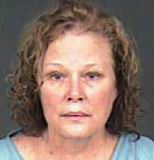
Mary Koontz
Murderer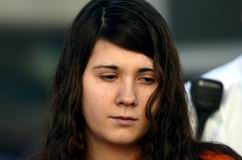 Miranda Barbour
Murderer · USA · 2013
Miranda Barbour, 19, defendant. · Elytte Barbour, 22, defendant and husband of…
100 victims
Miranda Barbour
Murderer · USA · 2013
Miranda Barbour, 19, defendant. · Elytte Barbour, 22, defendant and husband of…
100 victims
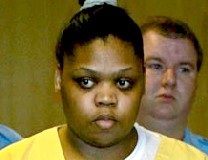 Tiffany Hall
Murderer · USA · 2006
Tiffany Hall was 24 when she was charged in September 2006. She later entered a…
5 victims
Tiffany Hall
Murderer · USA · 2006
Tiffany Hall was 24 when she was charged in September 2006. She later entered a…
5 victims
 Banita Jacks
Murderer · USA · 2007
Banita Jacks was a Washington, DC resident convicted of murdering her four daug…
4 victims
Banita Jacks
Murderer · USA · 2007
Banita Jacks was a Washington, DC resident convicted of murdering her four daug…
4 victims
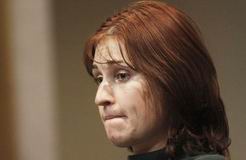 Holly Grigsby
Murderer · USA · 2011
Holly Grigsby was sentenced to life in prison without parole on July 15, 2014.…
4 victims
Holly Grigsby
Murderer · USA · 2011
Holly Grigsby was sentenced to life in prison without parole on July 15, 2014.…
4 victims
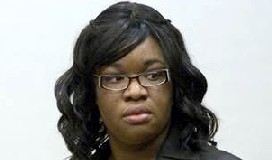 Jessica Tata
Murderer · USA · 2011
Jessica Tata was a Houston home day care owner who fled to Nigeria after a fire…
4 victims
Jessica Tata
Murderer · USA · 2011
Jessica Tata was a Houston home day care owner who fled to Nigeria after a fire…
4 victims
 Amanda Bennett
Murderer · USA · 2011
Amanda Bennett was an Indiana woman who shot her three children and set the fam…
3 victims
Amanda Bennett
Murderer · USA · 2011
Amanda Bennett was an Indiana woman who shot her three children and set the fam…
3 victims
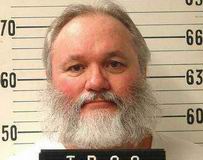 Dennis Suttles
Murderer · USA · 1996
Dennis Wade Suttles was convicted of premeditated first degree murder and sente…
1 victim
Dennis Suttles
Murderer · USA · 1996
Dennis Wade Suttles was convicted of premeditated first degree murder and sente…
1 victim
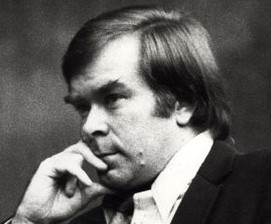 Richard Cottingham
Serial killer · USA · 1967
Richard Francis Cottingham was a serial killer from New Jersey who operated in…
6 victims
Richard Cottingham
Serial killer · USA · 1967
Richard Francis Cottingham was a serial killer from New Jersey who operated in…
6 victims
 George Twitchell
Murderer · USA · 1868
George Twitchell, Jr. had failures in business and received callers upon him in…
1 victim
George Twitchell
Murderer · USA · 1868
George Twitchell, Jr. had failures in business and received callers upon him in…
1 victim
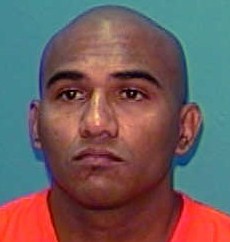 Noel Doorbal
Murderer · USA · 1995
Noel Doorbal (DOB: 12/21/71) was sentenced to death on 07/17/98. Eleventh Judic…
2 victims
Noel Doorbal
Murderer · USA · 1995
Noel Doorbal (DOB: 12/21/71) was sentenced to death on 07/17/98. Eleventh Judic…
2 victims
- Gender
- female
- Country
- USA
- Location
- Glen Arm, Baltimore County, Maryland , USA
- Date of birth
- 1950
- Age at first offence
- 59
- Characteristics
- parricide, domestic violence
- Victim profile
- Ronald G. Koontz, 66 (her estranged husband)
- Method of murder
- Shooting ( .38-caliber revolver)
- Date(s) of murder
- June 19, 2009
- Years active
- 2009
- Date of arrest
- Same day
- Status
-
Life imprisonment
Sentenced to life in prison without parole on August 9, 2010
Case record: Mary Koontz
Background
Mary Koontz was 60 years old at the time of the murder trial. She had been a former English teacher at Sparrows Point High School.
Her estranged husband was Ronald G. Koontz, a former Towson High wrestling coach and county schools administrator. He was 66 years old when he was killed.
Mary Koontz and Ronald G. Koontz had a teenage daughter, Kelsey, and also had children including a half brother, Joby Luca. Kelsey later became 17 years old.
The Koontz family had been described in court as a “pretty close-knit” group for years, with Mary Koontz welcoming her daughter’s friends into a quiet suburban home. Kelsey described her childhood as fine, and said she could see love between her parents.
Over time, the family harmony dissolved into mistrust and recriminations, and the parents separated. Mary Koontz went to live in Florida.
The offence
Mary C. Koontz was convicted of killing her estranged husband, Ronald G. Koontz, in a shooting on June 19, 2009, in Glen Arm.
Ronald G. Koontz was shot four times.
Mary Koontz was also convicted of the attempted murder of her daughter, Kelsey. The evidence described Mary Koontz firing toward Kelsey, who was 16 at the time of the offence and later became 17. In that incident, Kelsey was uninjured.
Prosecutors said Mary Koontz gained access to the home where she and her estranged husband had previously lived on Manor Springs Court, entered the main bedroom, confronted Ronald G. Koontz with a gun, and shot him. Prosecutors also said she then went into Kelsey’s room and fired at her, and the bullet missed its mark.
Mary Koontz’s defence presented her actions as the result of a disturbed mind and argued that she was not criminally responsible.
Kelsey said Mary Koontz called her a brat and a terrible daughter. Kelsey also described a period after her parents’ separation during which Mary Koontz repeatedly and often abusively called Kelsey and Ronald G. Koontz from the family’s condominium on Marco Island, Florida.
During one voice-mail message played for the jury, Mary Koontz told her daughter that Ronald Koontz had abused her sexually as a child and suggested that the father and daughter were in an intimate relationship now that Kelsey was no longer around. Kelsey said no sexual abuse or intimacy ever occurred and called that idea “disgusting”.
The voice-mail message included:
“Your father can’t control his urges,” Mary Koontz told Kelsey during the call. “You win,” Mary Koontz went on in the phone message. “You have my husband, you have my dog.”
Investigation / pretrial and legal process
Mary Koontz was charged with first-degree murder and ordered held without bail.
She was transferred to Clifton T. Perkins State Hospital in Jessup after being charged.
As her case progressed, there were bereavement messages posted online on Legacy.com by former students and others.
One message quoted Cynthia Burton said:
“I just wanted to say your father was such an inspiration to me while attending Towson High School. He made me feel smart for the first time in my life. He stood out from the crowd as a great teacher and kind man.”
Another message described Dorothy Thornton telling Kelsey:
“the light of your father’s life.”
Mary Koontz also wrote a 10-page letter in February 2008 to Judith C. Ensor, a Circuit Court judge who had granted an order forcing her to be evaluated three months earlier. In the letter, Mary Koontz wrote:
“I am very ill, your honor, but it’s not mental illness, like my husband accuses me of,”
She also described ailments including fibromyalgia, trigeminal neuralgia, pulmonary hypertension and lupus, and wrote:
“I have been physically and verbally abused for this!”
She wrote that her husband and daughter criticized her and that:
“All they did was criticize me,”
She wrote that when she tried to correct her daughter, her daughter would tell her husband:
“Mom’s acting crazy, Dad!”
She wrote that her husband would always side with her. She described her son Christopher Luca’s disorder as causing a true crisis in the family, and wrote that she joined a support group, the National Alliance on Mental Illness, but that her husband and Kelsey reacted by gossiping about “what was happening in our home.” She wrote:
“gossiping”
and said:
“destroyed our family, not my son’s illness.”
Mary Koontz described being removed from the house by a police officer after the evaluation order had been granted and being placed in a restricted area under guard at Franklin Square Hospital Center. She wrote that when she was released after 12 hours, a doctor called Ron Koontz to pick her up, and Ron Koontz’s response was:
“She is no longer welcome here,”
Arrest / custody before trial
Mary Koontz was arrested in the killing of her husband after police officers ran up to her and her husband. She and her husband were described as being covered in blood. She had been taken initially to Franklin Square Hospital Center, questioned by detectives, and then taken to Clifton T. Perkins State Hospital where she spent six weeks.
A death notice in The Baltimore Sun said Ronald G. Koontz had died “suddenly” on June 19 and that he was the father of Kelsey and stepfather of two boys, and it made no mention of Mary Koontz.
Trial
The trial involved an insanity defence. Mary Koontz offered an insanity defence that asked the jury to find she was not responsible because she was mentally ill. The jury rejected that argument.
A jury found her guilty of first-degree murder for the killing of her estranged husband in Glen Arm.
The jury also convicted Mary Koontz of first-degree attempted murder for firing toward her daughter, now 17, while Kelsey was uninjured.
After verdicts were announced indicating she was declared criminally responsible, Kelsey and her sister-in-law, Beth Luca, burst into tears. Deputy State’s Attorney Robin S. Coffin hugged Kelsey and other family members, and then met with Richard M. Karceski in the judge’s chambers to set a sentencing date for Aug. 10.
Kelsey said “We’re relieved” after the verdicts were announced.
The county state’s attorney, Scott Shellenberger, read a statement on behalf of the Koontz family outside the courthouse:
“We are grateful for the diligence and patience of the jury in their pursuit for truth and justice,” he said. “Ronald Koontz was a loving father, loyal friend and dedicated Baltimore County employee. We are offended by the defense’s unyielding attacks on Ronald Koontz’s character. We do not, however, feel the need to defend his honor because he left his legacy in the students he taught, the children he raised and the people he inspired.”
Mary Koontz testified at trial. She described not understanding how her .38-caliber revolver ended up in her grasp on the morning her husband was killed and said she “never heard the gun.” She acknowledged buying and learning to use the gun and checking it in with her luggage on flights to Baltimore from her condominium in Florida.
On June 19, 2009, Mary Koontz described the scene as though she had been removed from it, “from the perspective of the ceiling.” She said:
“I was in a fog.”
She testified that:
“The next thing I remember is seeing the gun in my hand, and shaking it, like: ‘What is this gun doing here?’”
She also described praying a little bit at the stream and said the stream held special significance because she and her husband had sometimes prayed there after building a four-bedroom house on Manor Springs Court in 1990. She said she did not recall leaving her rental car at the stream or her gun case on the front passenger seat where police later found it. She said she remembered letting herself in with a key she had kept since leaving 19 months earlier.
Mary Koontz testified:
“I always took my shoes off before I stepped on the white carpet,” she told the jury.
She said she went upstairs and walked into their bedroom and saw Ron standing at the bottom of the bed, describing herself as seeing her actions as if she were observing them. She said she did not describe firing the gun at either her husband or daughter, but under cross-examination she did not dispute Kelsey’s testimony that she had crouched into a two-handed firing stance before pulling the trigger.
Mary Koontz testified that after leaving her daughter’s room and closing the door, she went into her daughter’s bathroom, said she “lost consciousness,” and then came around to find herself lying on the floor with her husband on top of her. She said:
“He said, ‘I’ve always loved you,’” “I said, ‘I’ve always loved you.’” “The next thing, he’s banging my head on the door frame. I don’t understand — he just said he loved me.”
She described struggling for the gun and her desire to use it to kill herself. She said she and her husband “slid down the steps together, side by side,” grappling for the weapon on the grass outside the house, and that officers ran up to them and disarmed her.
She also told prosecutor Robin C. Coffin under cross-examination that her real intent was to kill herself, but she could not explain how her husband died.
During trial, Kelsey described a path to the shooting and testified about her childhood and the family’s dissolution. She described that the worst of it began when she entered 7th grade, became involved in soccer, made new friends, and started spending time away from home. She testified that her father accompanied her to matches and her mother did not.
Sentencing
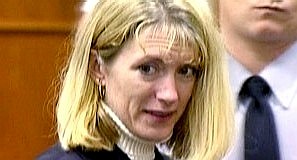
On August 9, 2010, Mary Koontz was sentenced to life in prison without parole for first-degree murder.
Before the sentence was pronounced, Mary Koontz turned to face Kelsey in the Towson courtroom and apologized. She said:
“I want you to know I am so very sorry,” she said, looking directly at 17-year-old Kelsey, the youngest of her three children, in the Towson courtroom. “You deserve nothing but goodness in your life.”
The sentencing judge was Baltimore County Circuit Judge Thomas J. Bollinger.
In addition to the life sentence on the first-degree murder charge, Koontz was given a second life term for the attempted murder of Kelsey, and 20 years each on two weapons charges.
The sentences on those counts ran concurrently with the term in the murder count.
Bollinger agreed to the defence request that he recommend Koontz be evaluated for admission to the Patuxent Institution in Jessup, described as a maximum-security correctional facility focused on providing psychotherapeutic treatment for violent offenders.
The jury had rejected the defence contention that Koontz was insane and suffering from so-called dissociative disorders and therefore did not understand the gravity of her actions.
Mary Koontz’s lawyer, Richard M. Karceski, asked the judge to consider her long history of emotional fragility when deciding her sentence. Karceski said:
“It was real, it was there, and it contributed to Mrs. Koontz’s actions,” and “Mrs. Koontz’s ticket to her destination began long ago, since she was a child.”
Karceski said her disorders remained untreated for years and that:
“began to fester and grow worse.”
He said the final straw came when her marriage fell apart, and she was ejected from the family home in November 2007. He said she was forced into an uneasy exile in a condominium on Marco Island, Fla., and that Koontz called her husband and daughter as many as 30 times a day, often delivering obscenity-laden harangues, which were played for the jury.
Karceski said Ron Koontz separating himself had “created a chasm” and caused her disorders to worsen, and said:
“He could have handled it differently,” “He perhaps didn’t realize the gravity of the situation. Mary Koontz became more broken and less rational in her isolation.”
Karceski told the judge that after Mary Koontz was arrested in the killing, Koontz told a doctor that she “couldn’t take it anymore.” He also conceded:
“you don’t go out and commit murder, and shoot at your daughter and try to kill her.”
During the sentencing proceedings, Deputy State’s Attorney Robin S. Coffin asked the judge to prevent Karceski from addressing Koontz’s children, and Bollinger dismissed the objection. Karceski continued by insisting that Koontz was remorseful and bore no malice toward anyone, saying:
“She does not blame,” and “She does not despise.”
Kelsey made remarks to the judge, reading from a prepared statement. She said her heart had been “completely broken” by the death of her 67-year-old father. She described him “blubbering like a baby” when she passed her driving test, doing a back flip off the diving board into their pool as the first jump each summer, and wrapping batteries in Christmas paper with a “little clue” as to what might be inside.
Kelsey said:
“I still have my dad’s number saved in my phone,” “Only his name has changed from ‘Dad’ to ‘Dad-I-miss-you.’ I know this is silly, but sometimes, when I’m really missing him, I’ll press ‘send’ just to hear the sound of the ring. I feel like maybe, by some miracle, he just might answer.”
Outcome / aftermath
After the sentencing hearing, Kelsey told reporters that she was excited to “move on with my life” and put her mother’s trial behind her. She said it was “really empowering for me to be able to speak my mind” in the courtroom.
She said she was comforted by the notion that her mother is unlikely to ever be free, and that the alternative was “scary.”
Kelsey said her mother’s apology did not impress her. She said:
“I've lived with her and I know how she is,” and “Bad things can happen to people, but I'm not going to get down about it and ruin other people’s lives.”
Kelsey said her mother neglected her responsibility to seek help for herself and said:
“It's possible,” “to make sure you come out on top and be a better person.”
Kelsey said she would begin her first semester at an out-of-state college.
Other details
Ron Koontz was described as having attended a party in honor of his retirement after more than 30 years in the county schools system, mostly as an administrator.
Mary Koontz had a right arm shaking slightly when the sentence was pronounced, and she said nothing when it was pronounced. Her expression was described as empty for most of an 11-day trial that ended last month.
Mary Koontz was transferred to Clifton T. Perkins Hospital Center in Jessup.
Mary Koontz was accused of shooting multiple times in the upper body, and despite his gunshot wounds, Ronald Gene Koontz caught up to his wife, Mary Koontz, and held her on the ground in the front lawn until officers arrived.
Spotted an error, or have more information about this case?