
Dennis Suttles
Murderer Russell Ellwood
Murderer · USA · 1991
Russell Ellwood was a former taxi driver. Authorities suspected him of killing…
20 victims
Russell Ellwood
Murderer · USA · 1991
Russell Ellwood was a former taxi driver. Authorities suspected him of killing…
20 victims
 Robert Martines Perez
Murderer · USA · 1994
Name: Robert Martines Perez · Other name used in proceedings: Robert Martinez P…
15 victims
Robert Martines Perez
Murderer · USA · 1994
Name: Robert Martines Perez · Other name used in proceedings: Robert Martinez P…
15 victims
 Billy Frank Vickers
Murderer · USA · 1993
Billy Frank Vickers Vickers was executed by lethal injection in Texas on Januar…
14 victims
Billy Frank Vickers
Murderer · USA · 1993
Billy Frank Vickers Vickers was executed by lethal injection in Texas on Januar…
14 victims
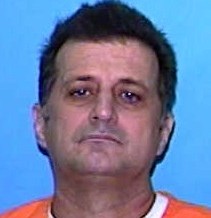 Omar Blanco
Murderer · 1982
Omar Blanco (also known as Omar Curro) was tried in the Seventeenth Judicial Ci…
1 victim
Omar Blanco
Murderer · 1982
Omar Blanco (also known as Omar Curro) was tried in the Seventeenth Judicial Ci…
1 victim
 Yang Xinhai
Serial killer · China · 2000
Yang Xinhai (simplified Chinese: 杨新海; pinyin: Yáng Xīnhǎi; 17 July 1968–14 Febr…
67 victims
Yang Xinhai
Serial killer · China · 2000
Yang Xinhai (simplified Chinese: 杨新海; pinyin: Yáng Xīnhǎi; 17 July 1968–14 Febr…
67 victims
 Alexander Keith
Mass murderer · Germany · 1875
Alexander “Sandy” Keith Jr. (1827–1875) was known by the assumed name of Willia…
88 victims
Alexander Keith
Mass murderer · Germany · 1875
Alexander “Sandy” Keith Jr. (1827–1875) was known by the assumed name of Willia…
88 victims
 Lino Renzi
Homicide · Italy · 2013
Lino Renzi, aged 45, was ordered to closed psychiatric confinement on July 2013…
1 victim
Lino Renzi
Homicide · Italy · 2013
Lino Renzi, aged 45, was ordered to closed psychiatric confinement on July 2013…
1 victim
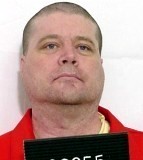 Shawn Windsor
Murderer · USA · 2003
Shawn Windsor (DOB 11-29-63) was sentenced to death on November 17, 2006. Shawn…
2 victims
Shawn Windsor
Murderer · USA · 2003
Shawn Windsor (DOB 11-29-63) was sentenced to death on November 17, 2006. Shawn…
2 victims
- Gender
- male
- Country
- USA
- Location
- Kanox County, Tennessee, USA
- Date of birth
- February 26, 1952
- Age at first offence
- 44
- Characteristics
- domestic violence, rape, drugs
- Victim profile
- Patricia Gail Rhodes, 44 (his former girlfriend)
- Method of murder
- Stabbing and slashing with knife
- Date(s) of murder
- March 13, 1996
- Years active
- 1996
- Date of arrest
- Same day
- Status
-
Sentenced to death
Sentenced to death on November 4, 1997
Case overview
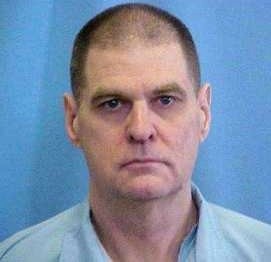
Dennis Wade Suttles was convicted of premeditated first degree murder and sentenced to death after killing his estranged girlfriend, Patricia Gail Rhodes, 44, in the presence of her 15-year-old daughter and the daughter’s friend in the parking lot of a fast food restaurant in Knoxville, Tennessee.
Timeline
- April 29, 2011 — Dennis Wade Suttles v. State of Tennessee was decided by the Court of Criminal Appeals of Tennessee at Knoxville.
- March 13, 1996 — Suttles killed Patricia Gail Rhodes in the presence of her daughter and the daughter’s friend in the parking lot of a fast food restaurant in Knoxville, Tennessee.
- 1996 (year stated; Taco Bell parking lot incident) — Suttles chased down Patricia Gail Rhodes, then stabbed and slashed her to death in front of her 15-year-old daughter.
- November 1997 — Suttles was convicted of premeditated first degree murder and sentenced to death.
- 2000 — The Tennessee Supreme Court affirmed Suttles’s conviction and sentence on direct appeal; certiorari was denied (531 U.S. 967).
- November 22, 2010 — Stephen Michael West & Billy Ray Irick v. Gayle Ray (Davidson County Chancery Court) entered an order granting declaratory judgment in relation to lethal injection protocol.
- March 2, 2011 — Stephen Michael West & Billy Ray Irick v. Derrick D. Schofield (Davidson County Chancery Court) held Tennessee’s revised lethal injection protocol constitutional.
Background
Suttles and Patricia Gail Rhodes met and began dating in April 1995. The relationship progressed, and in October 1995 Suttles asked Rhodes to marry him. Rhodes’s divorce was not final at that time, so the engagement was delayed. In December 1995, Suttles purchased a house, and he, Rhodes, and her fifteen-year-old daughter, Christina, moved into the house together. At Christmas, Suttles gave Rhodes an engagement ring.
In February 1996, Rhodes moved out after the two argued. Around the time of this argument, Rhodes’s co-workers noticed deep bruises on Rhodes’s neck that looked like fingerprints. During his testimony, Suttles admitted that during the argument he tried to take the engagement ring from Rhodes’s finger and broke Rhodes’s necklace.
After the breakup, Suttles was distraught. He repeatedly sought to convince Rhodes to return to him. He called her repeatedly at work, sometimes waited for her at work, left cards on the windshield of her car, and attempted to speak with her whenever he saw her in public. Rhodes appeared afraid of him and tried to avoid him. She did not speak with him on the telephone when he called, and her co-workers escorted her to her vehicle in the evening. Rhodes kept secret the location of her new residence and carried important personal papers, including a deed to her burial plot, in her purse so they could be easily located if something happened to her.
Rhodes knew that in 1986 Suttles had pled guilty to one count of felonious assault with bodily injury and three counts of assault with intent to commit first degree murder. She knew these convictions arose from an incident in which Suttles attempted to force his estranged former wife and his three-year-old son to return home with him. When his former father-in-law intervened, Suttles shot him. Suttles also assaulted a police officer who tried to apprehend him during that episode. Rhodes knew the circumstances of the previous convictions because she accompanied Suttles on his monthly visit to his parole office on October 3, 1995. The parole officer told Rhodes the circumstances of the offenses and advised her to call if “anything unusual occurred.”
Suttles worked his regular job on March 13, 1996. His co-workers testified he was not angry or upset that day and did not make threatening remarks about Rhodes.
The offence
On March 13, 1996, Suttles was driving home from work when he saw Rhodes drive by in her car with her daughter and her daughter’s friend, Arlisa Tipton, but he lost her car when she drove into a residential neighborhood. He drove to his mother’s house, where he was invited to eat supper. He accepted the invitation but decided he would go to his own home first to shower and change clothes before supper. He left his mother’s home around 5:30 p.m. and did not appear angry or upset at the time he left, nor did he say anything about Rhodes.
Suttles’s step-father operated a small engine repair shop and had repaired the motor in a piece of equipment (a leaf blower) that Suttles used on his roofing jobs. Suttles loaded the leaf blower in his car when he left and told others he intended to use it on his roofing job the next day.
Meanwhile, Rhodes drove to a nearby Taco Bell to eat with Christina and Arlisa. Christina testified Rhodes parked the car in the back of the restaurant so Suttles would not see the car if he drove past the front on Chapman Highway. Suttles stopped at Wal-Mart on Chapman Highway, in the same shopping mall area as the Taco Bell, to purchase roofing supplies but left after he could not find what he needed.
As he drove away from Wal-Mart toward Chapman Highway, he drove past the back of the Taco Bell and pulled into the restaurant when he noticed Rhodes’s car. Parking beside Rhodes’s vehicle, Suttles went inside and attempted to speak with Rhodes. The two argued. Suttles followed Rhodes and the girls outside. The argument continued beside Rhodes’s automobile. Suttles then grabbed Rhodes to prevent her from getting into her car. He placed one arm around Rhodes’s neck and held a lock blade pocket knife to her throat. When Christina approached, Suttles said, “Get back or I’ll kill her.” Christina stepped back, and Rhodes told Suttles to put the knife away and she would go with him. Suttles put the knife in his pocket, apologized, and released Rhodes.
When Rhodes fled toward the restaurant, Suttles followed, tackled her, pulled out his knife, slashed her throat, and stabbed her multiple times. Christina witnessed the attack and testified:
He cut her on her neck. He slit her neck all to pieces. And he stabbed her in the face and cut her lip and he cut her hair and he cut her body; he stabbed her. And I saw him flip her over and he stabbed her in the back. I was about three feet back because she kept telling me to get back and she kept screaming. When he was finished, the defendant arose, wiped off his knife, returned it to his pocket, nonchalantly got into his car, and drove away. Christina testified that the defendant smiled at her as he drove by.
Taco Bell employee Amanda Reagan and Shawn Patrick Kane also witnessed the stabbing. They testified that after stabbing Rhodes, Suttles nonchalantly got into his car and drove away as if nothing of any great import had occurred. Reagan and Kane noticed Suttles’s license plate number and gave it to police.
While they waited for an ambulance, Reagan, Kane, and an unidentified nurse tried to help Rhodes. They attempted to stop or slow the bleeding by applying pressure using towel and napkin compresses. Rhodes complained of choking. When she tried to move, witnesses testified the wound on her neck gaped open and she started gurgling blood. Reagan testified that as she held the stretcher while Rhodes was loaded onto the ambulance, she heard Rhodes call out her daughter’s name and saw Rhodes stretch out her hand as she was placed in the ambulance. Rhodes arrived by ambulance at the hospital at 6:26 p.m. and was pronounced dead at 6:35 p.m.
Less than one hour after the assault, Suttles called a friend, Donna Rochat. He told Rochat that he thought he had killed Rhodes after an argument in the Taco Bell parking lot. He told Rochat that he had stabbed Rhodes in the back, cut her throat, and stabbed her in the chest. Rochat advised Suttles to surrender to police, but he said he could not do that. Rochat testified Suttles seemed calm but commented that he would kill himself if he had a gun.
Suttles also called his mother and asked her to drive to the Taco Bell and determine if he had killed Rhodes. Later that same evening, police arrested Suttles as he approached his house on foot. Police described Suttles as cooperative and unemotional when apprehended. Suttles had parked his car at a church parking lot about one mile from his home. A knife with a wooden handle and approximately a three inch blade was found in Suttles’s pocket at the time of his arrest.
Medical findings
Dr. Sandra K. Elkins, the Knox County Medical Examiner and a forensic pathologist, testified Rhodes suffered twelve major wounds inflicted with a sharp instrument such as a knife. The wounds included:
- three stab wounds to the left side of her neck;
- a large gaping slash wound to the right neck;
- one stab wound just beneath her left breast;
- one stab wound to her left front shoulder;
- six stab wounds in her back.
Elkins testified Rhodes also sustained an incise wound to the left side of her lips, defensive wounds to both hands and her right wrist, and superficial wounds underneath her chin.
Elkins opined the cause of death was multiple knife stab wounds. The immediate cause of death was bleeding from the jugular vein and external carotid artery, cut by the slash wound to the right neck. Elkins testified the other major wounds would also have potentially caused death given enough time and no medical treatment.
Elkins also opined Rhodes was alive when the wounds were inflicted, that she remained able to speak because the injury to her larynx from the slash wound to the right side of her neck did not damage her vocal cords, that she would have fallen unconscious in about five to six minutes, and that she would have bled to death within ten minutes as a result of the slash wound to the right side of her neck. Elkins opined application of pressure to the wound on the right side of Rhodes’s neck may have extended consciousness and delayed the time of death by five minutes.
Trial
A Knox County Criminal Court jury convicted Suttles of premeditated first degree murder and sentenced him to death.
Defence case and testimony
Suttles testified at trial. He admitted he put a knife to Rhodes’s throat but denied intent to hurt her. He claimed he was reacting to Rhodes’s threat. Suttles testified that while he and Rhodes were talking beside her car, Rhodes told him that if he did not stay away she would have him killed. He testified that when he released Rhodes and apologized, Rhodes told him he was a dead man. He testified he did not remember anything that happened after the victim threatened him the second time and claimed he did not regain his memory until weeks after the murder.
During his testimony it was revealed he had previously pled guilty to one count of felonious assault with bodily injury and three counts of assault with intent to commit first degree murder.
Suttles’s stepfather testified he had never seen Suttles angry or upset and described Suttles as calm and easygoing.
Dr. Jerry Matthews, a clinical psychologist who evaluated Suttles on three separate occasions (1991 and 1993 for the Tennessee Board of Paroles, and in 1996 for the defense), testified about Suttles’s mental condition. Matthews testified Suttles was a “blue baby” when he was born; an older brother died of suffocation at age five; and the father left when Suttles was four. Matthews testified Suttles was raised by paternal grandparents, who were strict and religious. Matthews testified Suttles dropped out of school in tenth grade and went to work, and that his one marriage lasted twelve years and produced one child.
Matthews concluded in 1991 that Suttles presented a substantial risk of violent behavior if released on parole, particularly if he was involved in a heterosexual relationship. Matthews described Suttles as acting impulsively without thought or reflection and becoming anxious and potentially violent when unable to control his environment. Matthews attributed the behavior to the oxygen deprivation Suttles suffered as a “blue baby” and to abandonment as a child. Matthews testified Suttles attended anger management classes in prison between 1991 and 1993. Suttles was released on parole in 1994.
Matthews opined that at the time of the homicide Suttles was in a state of heightened emotional arousal, that he put the knife to Rhodes’s throat to convince her to come back to him, and that he released her when she reassured him. Accepting Suttles’s version of the offence, Matthews testified Rhodes’s threat to have Suttles killed was “the straw that broke the camel’s back.” Matthews opined the killing was not premeditated and was instead “an impulsive and explosive act of violence” caused by “basic, primitive emotions of anger and fear and hurt, all mixed together.”
In rebuttal, the State recalled Christina to testify her mother did not threaten Suttles before he stabbed her.
Based on this proof, the jury found Suttles guilty of premeditated first degree murder.
Sentencing
During sentencing, the State relied on the proof from the guilt phase and offered the indictments and judgments from Suttles’s four previous convictions for assault. The evidence included that on January 6, 1986, in Sevier County, Tennessee, Suttles pleaded guilty to one count of felonious assault with bodily injury and enhancement for use of a firearm (sentence 30 years plus 5 years for enhancement) and to three counts of assault with intent to commit first degree murder by use of a firearm (three 5-year concurrent sentences).
Suttles presented records from his imprisonment in the Department of Correction to show he had been a model inmate. The records showed that at the time of his parole, he received recommendations from twenty-nine staff members, and the warden and associate warden recommended parole. The records also showed he worked during his entire imprisonment, was not violent, and reached “trusty” status. During incarceration, he received two write-ups: one for contraband (tools) in his cell and another for violating policy by possessing a fan with the inmate number and name scrubbed.
Suttles’s mother, Lois Evelyn Napier, testified Suttles was born breach and was a “blue baby.” She testified that after the father left, Suttles lived with paternal grandparents because his mother was working two jobs and could not care for him. Napier testified Suttles was not involved in any trouble as a child and that she visited weekly while he was imprisoned. She testified that after parole he lived with his mother and her husband and caused no trouble.
Suttles called Napier on the night of the murder and asked if she would go to Taco Bell to see if Rhodes was alive. Napier testified she loved her son.
Suttles was forty-four years old at the time of the murder.
The jury found two aggravating circumstances supporting the death penalty:
- Suttles was previously convicted of prior violent felonies; and
- the murder was especially heinous, atrocious, and cruel.
Post-conviction proceedings
Suttles timely filed a petition for post-conviction relief. The trial court denied relief after an evidentiary hearing. The Court of Criminal Appeals of Tennessee affirmed the trial court’s judgment, holding the trial court did not err in finding he received effective assistance of counsel at all stages and that his challenges against the death penalty were without merit. The judgment was affirmed.
Evidentiary hearing
The court appointed the Office of the Post-Conviction Defender, and amended petitions were filed. The evidentiary hearing included testimony from Brandt Davis and Leslie M. Jeffress, trial counsel; Glori Shettles, mitigation specialist; Barry Rice, investigator; and Julie Fenyes, jury expert. The Petitioner also presented Dr. Pamela Auble, Dr. Peter Irvin Brown, and multiple witnesses.
Trial counsel testimony
Jeffress testified there was not much pretrial publicity and there was no discussion about requesting a change of venue. He testified counsel filed numerous pretrial motions. He testified about a disagreement with the supreme court’s interpretation of premeditation based on the victim’s daughter’s testimony about Suttles putting the knife in his pocket and then pulling it out again.
Jeffress testified about the defence’s efforts to investigate family background. He testified that family members suggested the Petitioner’s father choked a brother to death, but counsel did not obtain the brother’s death certificate. He testified Suttles’s mother had no independent knowledge of her husband killing their son and that he threatened her with a knife when she tried to leave with Suttles.
Jeffress testified Suttles was prescribed Paxil, Tranzene, and Pepcid before the murder. He testified counsel’s expert, Dr. Ben Bursten, was asked whether these drugs could have affected Suttles’s behavior, and Bursten assured them otherwise. Jeffress testified Suttles complained of headaches while driving around after committing the crime and did not believe the victim was dead even after he was shown autopsy photographs. Jeffress testified he said he would kill himself if he thought she were dead, which prompted evaluation for organic brain damage.
Jeffress testified counsel performed a sleep-deprived EEG that did not reveal brain damage. He testified counsel did not request a PET, MRI, or CAT scan and that Suttles was not evaluated by a neuropsychologist. Jeffress testified he was aware Suttles scored an IQ of sixty-nine and seventy-eight on two Beta II tests but did not investigate whether he was mentally retarded because he saw no signs. He testified the defence strategy at trial was to explain that Suttles did not act with premeditation but “exploded” when he committed the murder.
Jeffress testified that Dr. Bursten refused to continue working because he perceived Suttles to be a liar and malingerer, and counsel then chose Dr. Matthews. Jeffress testified they chose Matthews because he knew Suttles, had evaluated him twice before, and could not, in their view, premeditate the killing. Jeffress testified Matthews opined the victim’s threat was the straw that broke the camel’s back, and that the killing was impulsive and explosive.
Jeffress testified he learned the night before Suttles testified of the claim that the victim threatened his life in the Taco Bell parking lot, and he immediately informed Matthews. He testified counsel discussed not excluding the knife from evidence because Suttles normally carried a pocket knife and counsel believed that suggested he did not arrive intending to kill the victim. He testified the State made an offer of life without parole and counsel advised acceptance.
Jeffress testified about handling of witnesses and cross-examination. He testified he did not want to prolong Donna Rochat’s presence on the stand and did not want extensive cross-examination with the victim’s daughter. Jeffress testified Suttles’s testimony decision belonged to Suttles.
Jeffress also testified about mitigation strategy at sentencing and why childhood mitigation was not emphasized. He testified they introduced prison records to show model behavior and argued the jury should spare Suttles’s life because he could function in controlled conditions. Jeffress testified he did not know why certain information in presentence materials was not redacted.
Mitigation specialist testimony
Glori Shettles testified her role was to investigate the Petitioner’s background and prepare a report for use in sentencing. She testified she first interviewed Suttles in October 1996 and learned Suttles’s older brother died at age five. She testified Suttles lived with his grandparents but that no one in the family discussed why. She testified Suttles took more than prescribed dosage of medication before the murder and that he was forgetting things around that time. She testified the defence attempted to locate a neuropharmacologist. She investigated possible side effects and passed findings to counsel.
Shettles testified she did not think Suttles was lying about his disbelief that Rhodes was dead. She testified she later learned trial counsel obtained information suggesting Suttles remembered more than he told her. She testified she only interviewed Suttles’s mother and stepfather. She explained she believed the case should plead guilty and that mitigation investigation therefore “never went outward,” and it stayed directed by that strategy.
Shettles testified she was based in Memphis and did not frequently travel to East Tennessee. She testified she only met with Brandt Davis two or three times and that during those meetings they discussed convincing Suttles to plead guilty. She testified the prison records were favorable and that prison-record evidence was introduced to demonstrate good behavior.
She testified she obtained prison records reflecting two Beta II IQ test scores of sixty-nine and seventy-eight and could not find documentation of any IQ score below seventy before his eighteenth birthday. She testified neuropsychological testing was not performed.
She testified hypnosis was not employed because she learned hypnosis would not help someone recall missing memories.
Expert testimony at post-conviction
Dr. Pamela Auble, a clinical neuropsychologist, testified for Suttles at the post-conviction hearing. Auble performed neuropsychological evaluation, determined Suttles was not malingering, and reported Halstead-Reitan impairment index score 0.9 in the fifth percentile. She described results on multiple tests and testified he performed poorly on tasks involving mental flexibility, tactual performance, and speech-sounds perception.
Auble testified on Wechsler Memory Scale III tests, and that Suttles performed well remembering information with meaning. She testified he had difficulty remembering things that did not make sense or have meaning. She administered Wechsler Adult Intelligence Scale III and testified Suttles’s full scale IQ was seventy-seven, with seventy-seven verbal and eighty-one performance/non-verbal, and that the full scale was in the sixth percentile for his age. She testified Suttles read at a third-grade level, spelled at a second-grade level, and performed math skills at a fifth-grade level.
Auble testified about the Delis-Kaplan Executive Functioning System test and that Suttles performed consistently poorly on verbal tasks requiring conceptual or abstract thinking. She testified he was a concrete or literal thinker. She testified emotional stress caused deterioration in functioning, and brain damage could cause dysfunction. She testified because Suttles was a “blue baby,” he likely had a loss of oxygen that could have caused brain damage depending on duration.
Auble testified she would have administered a full Luria-Nebraska battery even with knowledge of Suttles’s higher IQ score, but the battery was not done. She testified Dr. Matthews’s evaluation included a personality test but no neuropsychological tests. Auble testified Suttles cooperated during testing and that his test score deficiencies implied difficulty in relationships because relationships required linking information and understanding impacts of behavior. She testified he would tend to overwhelm a woman in pursuits and act impulsively toward her. She acknowledged an EEG would not necessarily reveal the type of deficits she found but would reveal brain injury. She testified Suttles was not mentally retarded as defined by Tennessee’s death penalty statute and she could not identify any brain damage.
Dr. Peter Irvin Brown testified as a psychiatrist for Suttles. He interviewed Suttles twice for approximately five hours and testified Suttles could have suffered long-term and permanent brain damage from breech birth. Brown testified Suttles’s chaotic childhood and abandonment by parents led to depression and anxiety. Brown testified there was a strong presumption that based on stories of abuse of other children, Suttles was sexually abused as well, but he admitted no definitive evidence existed. Brown testified Suttles did not say he had been abused.
Brown testified about Suttles’s failure in school, his low self-esteem, and functioning in structured situations after quitting school. Brown testified Suttles’s marriage began well and that Suttles lacked coping skills as difficulties developed. Brown testified the prior incarceration incident indicated a “recurrent pattern” of exposure to separations associated with threats of violence or experiences of violence.
Brown testified Suttles’s IQ was borderline mental retardation but that he did not meet the legal definition. Brown testified his IQ combined with brain deficits significantly impaired handling situations in relationships. Brown testified Suttles’s model behavior in prison did not negate his conclusions. Brown testified about the requirement of anger management classes and described Suttles’s view that it was a “joke.”
Brown testified Suttles’s treatment after release “completely abandoned the awareness that Mr. Suttles has many more difficulties than he's able to articulate and often has more difficulties than he's aware of.” He testified the therapist relied on Suttles’s report of doing fine.
Brown testified Suttles met Rhodes shortly after the death of a previous girlfriend and “plung[ed] into another almost instantly.” Brown testified the relationship progressed too quickly due to immaturity. Brown testified Suttles reacted extremely adversely to Paxil, experiencing intense motor restlessness and feeling like “jumping out of his skin.” Brown testified medical literature suggested Paxil could cause agitation and violent behavior and that side effects information existed at the time of trial. Brown testified Tranzene could lose inhibitions because of its sedative nature.
Brown testified that Suttles’s chasing Rhodes after she fled demonstrated the ability to inhibit behavior did not exist at that moment. Brown testified prescription drug effects would have contributed to an inability to stop once he started. Brown testified Suttles was in a state of intense emotional distress during the attack and then exhausted afterward. Brown testified there was no indication Suttles was taking Paxil or Tranzene during his prior crimes. Brown testified he found a history of mental retardation and other psychiatric problems in Suttles’s extended family.
Brown testified he diagnosed a cognitive disorder, major depressive disorder, and a medication-induced disorder, as well as possible post-traumatic stress disorder and delusional disorder. Brown testified that because the cognitive and medication-induced disorders were present at the time of the offense, Suttles was unable to premeditate. Brown testified his use of “premeditation” was medical, not legal. Brown testified Suttles’s behavior after the murder was extremely disorganized.
Brown testified trial counsel should not have relied on Dr. Matthews due to conflict of interest based on previous contact, and that Matthews’s evaluation was inadequate due to lack of standardized testing. Brown testified Suttles did not meet criteria for intermittent explosive disorder and did not meet criteria for anti-social personality disorder. Brown testified he believed Suttles was not untruthful during interviews but could not explain why Suttles believed Rhodes was still alive, characterizing it as “unresolved.” Brown testified no MRI, CAT, or PET scans showed brain damage. Brown testified Suttles did not remember witnessing parental acts of violence and described his grandmother as strict but loving.
Outcome
The Court of Criminal Appeals held the trial court properly denied post-conviction relief. It held:
- the trial court did not err in finding Suttles received effective assistance of counsel at all stages; and
- Suttles’s challenges against the constitutionality of the death penalty and procedures used in Tennessee were without merit.
The judgment of the trial court was affirmed.

Spotted an error, or have more information about this case?