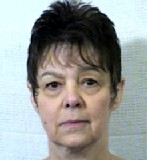
Mary Ellen Samuels
Murderer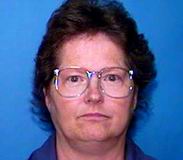 Bobbie Sue Terrell
Murderer · USA · 1984
Bobbie Sue Dudley Terrell was a Pinellas County nurse and worked as the night s…
12 victims
Bobbie Sue Terrell
Murderer · USA · 1984
Bobbie Sue Dudley Terrell was a Pinellas County nurse and worked as the night s…
12 victims
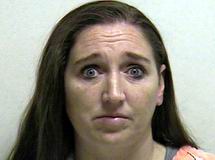 Megan Huntsman
Murderer · USA · 1996
Megan Huntsman was 40 at sentencing. She was a mother of three children who wer…
6 victims
Megan Huntsman
Murderer · USA · 1996
Megan Huntsman was 40 at sentencing. She was a mother of three children who wer…
6 victims
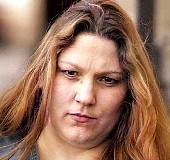 Angela Johnson
Murderer · USA · 1993
Angela Jane Johnson was convicted in federal court of aiding and abetting the m…
5 victims
Angela Johnson
Murderer · USA · 1993
Angela Jane Johnson was convicted in federal court of aiding and abetting the m…
5 victims
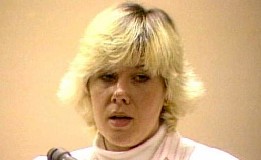 Catherine May Wood
Murderer · USA · 1987
Catherine May Wood was an American caregiver who worked at the Alpine Manor Nur…
5 victims
Catherine May Wood
Murderer · USA · 1987
Catherine May Wood was an American caregiver who worked at the Alpine Manor Nur…
5 victims
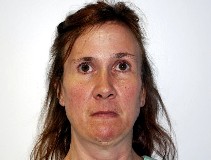 Michele Kalina
Murderer · USA · 1996
Michele Kalina pleaded guilty to murder for one of five infants she initially w…
5 victims
Michele Kalina
Murderer · USA · 1996
Michele Kalina pleaded guilty to murder for one of five infants she initially w…
5 victims
 Wolfgang Schmidt
Serial killer · Germany · 1989
Wolfgang "Beate" Schmidt was also known as The Beelitz murderer and The Pink Gi…
6 victims
Wolfgang Schmidt
Serial killer · Germany · 1989
Wolfgang "Beate" Schmidt was also known as The Beelitz murderer and The Pink Gi…
6 victims
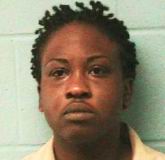 Anjail Muhammad
Murderer · USA · 2003
Anjail Muhammad was a 27-year-old woman at the time of sentencing. She was late…
1 victim
Anjail Muhammad
Murderer · USA · 2003
Anjail Muhammad was a 27-year-old woman at the time of sentencing. She was late…
1 victim
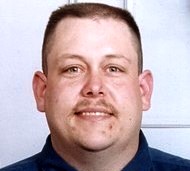 Charles Dalton
Murderer · USA · 2009
Charles L. Dalton Sr. (38) killed his wife, his teenage son, and his young daug…
3 victims
Charles Dalton
Murderer · USA · 2009
Charles L. Dalton Sr. (38) killed his wife, his teenage son, and his young daug…
3 victims
 Crystal Wagner
Murderer · USA · 2005
Crystal Mae Wagner (also referred to as Crystal Wagner), 29, was accused of kil…
1 victim
Crystal Wagner
Murderer · USA · 2005
Crystal Mae Wagner (also referred to as Crystal Wagner), 29, was accused of kil…
1 victim
 Vince Weiguang Li
Murderer · Canada · 2008
Vince Weiguang Li (simplified Chinese: 李伟光 ; traditional Chinese: 李偉光 ; pinyin:…
1 victim
Vince Weiguang Li
Murderer · Canada · 2008
Vince Weiguang Li (simplified Chinese: 李伟光 ; traditional Chinese: 李偉光 ; pinyin:…
1 victim
- Gender
- female
- Country
- USA
- Location
- Northridge/Ventury Counties, California, USA
- Date of birth
- September 3, 1947
- Age at first offence
- 41
- Characteristics
- parricide, murder-for-hire
- Victim profile
- Robert Samuels, 40 (her husband) / James Bernstein, 27 ( her husband's killer)
- Method of murder
- Shooting (shotgun) / Strangulation
- Date(s) of murder
- December 8, 1988 / June 27, 1989
- Years active
- 1988–1989
- Date of arrest
- —
- Status
-
Sentenced to death
Sentenced to death on September 16, 1994
Case overview
Mary Ellen Samuels was convicted of arranging the murders of her husband, Robert Samuels, and James Bernstein, the man she hired to arrange the husband’s killing. She was also convicted of soliciting and conspiring to murder. The jury found special circumstances of multiple murder and killing for financial gain. The trial court imposed a death sentence on September 16, 1994, and the California Supreme Court later affirmed the judgment in its entirety.
Timeline
- October 31, 1986 — Mary Ellen Samuels filed for divorce from Robert Samuels.
- 1987 — Samuels solicited people to murder Robert Samuels on numerous occasions.
- Late 1979 — Samuels met Robert Samuels again, after her failed first marriage.
- 1980 — Samuels married Robert Samuels.
- 1986 — Samuels and Robert Samuels separated; Samuels moved out on October 3, 1986, and testified that her marriage was stormy.
- October 31, 1988 — Robert Samuels went to his divorce attorney, Elizabeth Kaufman, and signed a document seeking changes to his divorce agreement.
- December 7, 1988 — Samuels told Anne Hambly that Robert Samuels was dead and that she planned to “discover” his body in two days.
- December 8, 1988 — Robert Samuels was killed at close range by a shotgun blast fired into his head from close range; he suffered blunt force trauma to his head.
- December 9, 1988 — The Los Angeles Fire Department responded to a call from Robert Samuels’s home.
- December 8, 1988 (after the killing) — The suspected hit man took out a $25,000 life insurance policy naming Samuels’s daughter, Nicole, as beneficiary, according to testimony.
- June 26, 1989 — Bernstein told his older brother that he was frightened and that he was the only person who could “burn Mary Ellen.”
- June 27, 1989 — James Bernstein was killed by strangulation.
- June 28, 2005 — The California Supreme Court unanimously affirmed the death sentence.
- September 16, 1994 — The trial court formally sentenced Samuels to death.
- June 27, 2005 — The California Supreme Court’s opinion in People v. Samuels was issued.
The parties and relationships
- Mary Ellen Samuels was married to Robert Samuels.
- Robert Samuels was the victim of a first-degree murder conviction for the killing on December 8, 1988.
- James Bernstein was the victim of a first-degree murder conviction for the killing on June 27, 1989.
- Samuels’s daughter was Nicole Samuels, later referred to as Nicole Samuels-Moroianu.
- Susan Conroy was Robert Samuels’s younger sister.
- Anne Hambly was Samuels’s friend.
- Paul Gaul and Darrell Ray Edwards were the men who killed James Bernstein and testified for the prosecution under plea agreements.
- David Navarro was Nicole Samuels’s friend, and he also met with James Bernstein in February 1989 as described in trial testimony.
- Mike Silva was the “hit man” referenced in connection with Bernstein’s efforts to arrange Robert Samuels’s death.
- Elizabeth Kaufman was Robert Samuels’s divorce attorney.
- Charles Mandel was Bernstein’s employer, mentioned in testimony about Bernstein’s statements after Robert Samuels’s murder.
- Charles Mandel provided Bernstein with the phone number of Mike Silva, according to testimony.
The offence
Solicitation and murder of Robert Samuels
Beginning in 1987, Samuels solicited people to murder Robert Samuels on numerous occasions. She was convicted of soliciting the murder of Robert Samuels and conspiring to murder Robert Samuels.
The prosecution evidence described that Samuels plotted to have Robert Samuels killed after she realized “he was worth more to her dead than alive.” The defense testimony centered on claims that Samuels was abused and never intended to kill him.
On December 8, 1988, Robert Samuels was found dead. Trial testimony described that he was killed by a shotgun blast fired into his head from close range. The prosecution stated he suffered a blunt force trauma to his head that contributed to his death.
Investigators found that Samuels and Nicole Samuels were present when police arrived, and Samuels told police she discovered Robert Samuels’s body while dropping off the family’s dog. The prosecution introduced evidence that Samuels collected on several insurance policies after Robert Samuels’s death. The total amount of these policies exceeded $240,000. The prosecution also introduced evidence that a sandwich shop owned by Robert Samuels and Samuels was sold in early 1989, and Samuels kept proceeds of approximately $70,000. Additional evidence described how Samuels benefited further by keeping a car owned by Robert Samuels, receiving approximately $6,000 in uncashed payroll checks, and refinancing the family home after Robert Samuels’s death to gain an additional $160,000.
At trial, the prosecution also introduced incriminating statements made after Robert Samuels’s death. For example:
- When asked by Anne Hambly who Mike Silva was, Samuels told Hambly that Silva was hired by Bernstein to kill Robert Samuels.
- Samuels told a friend, Marsha Hutchinson, that if she were not careful in her divorce proceedings, then Hutchinson’s husband might decide to put a hit on her.
- Bernstein’s older brother and sister-in-law believed Samuels had Robert Samuels killed, according to testimony summarized in the appellate opinion.
Solicitation and murder of James Bernstein
Samuels was convicted of soliciting the murder of James Bernstein and conspiring to murder James Bernstein. James Bernstein was killed on June 27, 1989.
According to trial testimony and the appellate opinion:
- David Navarro and James Bernstein met in February 1989.
- Navarro testified they sold drugs together until Bernstein disappeared in June 1989.
- Bernstein became friends with Navarro through Nicole Samuels, who was a friend of Navarro’s girlfriend.
- Navarro testified that he met Bernstein when Bernstein received a page and then went to meet Mike Silva. Bernstein referred to Silva as the “hit man.”
- An anonymous call to police was described as identifying the phone number Bernstein received via the page and naming Mike Silva.
- Police received Navarro’s information and served search warrants.
After Robert Samuels’s murder:
- Bernstein told Navarro that he and Mike Silva had killed Robert Samuels and that Samuels had paid them for it.
- Bernstein repeatedly said that Samuels had solicited him to murder Robert Samuels.
- Bernstein told Navarro that Samuels wanted Robert Samuels killed for insurance money and described that one person had been paid but did not do the job so she approached Bernstein to see if he would do it.
Samuels also was described as wanting Bernstein killed because she thought he would go to the police and disclose her involvement in Robert Samuels’s murder.
In March or April of 1989, Anne Hambly introduced Paul Gaul to Samuels; Gaul was Hambly’s live-in boyfriend. Hambly believed Gaul could help with Samuels’s trouble with Bernstein. The appellate opinion described conversations between Samuels and Gaul about Robert Samuels’s death, including that Samuels received insurance money from Robert Samuels’s death and that Bernstein was blackmailing her for involvement, and that Samuels wanted Robert Samuels killed because he abused Nicole and she wanted insurance money. The appellate opinion also described a failed attempt to kill Robert Samuels.
The appellate opinion described that Samuels told Gaul that she would pay for Bernstein to be killed, and that she spoke with Gaul five to 10 times about killing Bernstein, with discussions of payment. The appellate opinion further described that Gaul agreed to kill Bernstein for $5,000, and that another form of payment was that Samuels would forgive a loan made to Anne Hambly. To assist him, Gaul solicited Darryl Ray Edwards, and Edwards agreed to kill Bernstein for $5,000.
On June 27, 1989, Paul Gaul and Darryl Ray Edwards killed James Bernstein:
- The plan described in the appellate opinion involved getting Bernstein to go to an area near Frazier Park, where Gaul, Edwards, and Bernstein would rob drug dealers in that area.
- Gaul was the driver in Samuels’s car. After approximately 40 minutes, they ended up on an isolated dirt road that turned out to be a private driveway with dogs running at the car.
- Edwards instructed Gaul to immediately get out of the driveway, after which Gaul placed the car in reverse and drove away.
- After about five to 10 minutes, Edwards yelled “Now” or something similar. Gaul slammed on the car’s brakes, put the car in park, and turned off the headlights.
- Edwards grabbed Bernstein’s neck from behind and began to choke him. Bernstein began to scream; Gaul twice hit him in the side of the head or neck to keep him quiet.
- Gaul accidentally hit Edwards, loosening Edwards’s grip. Bernstein opened the car door and jumped out. Edwards and Gaul chased after Bernstein.
- Edwards caught Bernstein and wrestled him to the ground. Gaul held Bernstein’s legs while Edwards choked him.
- Bernstein asked, “Why?,” and Gaul said that it was because he talked too much.
- Bernstein struggled for three to five minutes, then stopped. Gaul put his ear to Bernstein’s chest to listen for a heartbeat and did not hear one.
- An autopsy confirmed Bernstein had been strangled to death.
The appellate opinion described disposal of Bernstein’s body:
- Gaul and Edwards placed Bernstein’s body in the backseat.
- Edwards drove to a dark and isolated area. During the drive, Gaul took off Bernstein’s belt, which had the name “James” on it, and threw it over a cliff, and Gaul threw Bernstein’s pager over an embankment.
- When Edwards stopped the car, both men pulled Bernstein’s body out of the backseat and put it over an embankment.
- Gaul and Edwards drove back to Anne Hambly’s house.
- Gaul, Edwards, and Hambly discussed what had happened, and Gaul and Edwards told Hambly that they had killed Bernstein.
- Hambly called Samuels in Cancun, Mexico, and used an agreed-upon “code” to let Samuels know Bernstein was dead.
Trial
Charges and verdicts
A jury convicted Samuels of:
- First-degree murder of Robert Samuels and first-degree murder of James Bernstein.
- Soliciting the murders of Robert Samuels and James Bernstein.
- Conspiring to murder Robert Samuels and James Bernstein.
The jury found true:
- The financial gain special circumstance as to the murder of Robert Samuels.
- The multiple-murder special circumstance.
- The allegation that a principal in the murder of Robert Samuels had used a firearm.
The jury returned a death verdict for each murder.
In a separate description of the trial proceedings, the jury deadlocked on two other counts: attempted murder and solicitation, and on a special circumstance that the hit man was slain for financial gain, resulting in mistrials on those counts.
Jury and deliberations
The jury was described as having deliberated before returning its verdicts. During the penalty phase, a juror identified as Audrey W. was removed after expressing inability to follow her oath regarding consideration of the death penalty. In a letter to the court, Audrey W. wrote:
“I have come to realize that I have serious questions about my ability to vote for the death penalty should I become convinced of its appropriateness in this case. I have not been able to resolve this conflict to my own satisfaction.”
The questioning described in the appellate opinion included statements:
- Audrey W. said she lacked “courage” to impose the ultimate punishment and feared she “couldn’t act; on her obligation.”
- The appellate opinion described that after inquiry, the trial court credited Audrey W.’s expressions of her state of mind and determined there was a demonstrable reality that she was unable to perform as a juror.
Defence case
The defense case centered on Samuels’s testimony and the testimony of her daughter, Nicole. Samuels testified her marriage to Robert Samuels had been stormy and claimed he developed a drinking problem and was abusive when he drank. She testified she moved out of her residence with Robert Samuels on October 3, 1986.
With respect to Robert Samuels’s murder, Samuels testified she never wanted to kill Robert Samuels and never asked anyone else to do so. She denied involvement in any physical attacks on Robert Samuels, including an incident where she allegedly struck him with a pipe.
Nicole Samuels testified denying involvement in a plot to murder Robert Samuels, and testified that Robert Samuels physically and sexually abused her. She testified she moved out of the family home because of this abuse.
Nicole also testified that she did not report the abuse to law enforcement officials. The defense also denied Samuels’s concern that Bernstein would threaten or blackmail her and denied wanting Bernstein dead.
Sentencing
Superior Court Judge Michael R. Hoff sentenced Samuels to death on September 16, 1994.
The appellate opinion described the death verdicts as being affirmed, and the California Supreme Court reviewed and affirmed the judgment in its entirety.
During sentencing-related proceedings described in the accounts:
- Samuels declined to speak with the probation officer who prepared her sentencing report, except to make a single point.
- The record described in the account included Samuels’s statement that she had continually refused to tell her story to the tabloids, as written in the report by Deputy Probation Officer Richard A. Richardson.
In the independent review described in the accounts, Judge Hoff characterized the jury’s guilty and death verdicts as “clearly supported by the evidence,” and described the evidence as “overwhelming . . . extensive, vivid, graphic and most compelling.”
Judge Hoff also stated:
“It clearly demonstrated that the defendant planned the murders for a long time, and had the ability to convince others to do her dirty work. . . . The defendant involved many people, even her own teen-age daughter and her daughter's friends.”
The accounts also described family and character evidence presented during the penalty phase, including testimony from Susan Conroy and other witnesses supporting Samuels’s character and circumstances in custody.
Appeals
California Supreme Court review
Samuels’s death sentence was appealed automatically. The California Supreme Court affirmed the judgment in its entirety.
The appellate opinion identified multiple issues addressed on appeal. Those issues included:
- Denial of Pitchess motions for discovery of personnel records.
- A claim about failure to conduct individual sequestered voir dire.
- Removal of a prospective juror identified as Robert P. for cause.
- Alleged error in admitting evidence of Samuels’s bad character.
- Alleged judicial bias based on evidentiary and procedural rulings.
- Alleged hearsay errors.
- Alleged errors in admitting photographs.
- Alleged prosecutorial misconduct in questioning witnesses and closing argument.
- Alleged improper exclusion of taped conversations.
- Alleged instructional error.
- Penalty phase issues including removal of juror Audrey W. and other claims about jury instructions and verdict forms.
- Constitutional claims regarding the death penalty law and the narrowing process.
The appellate disposition concluded:
- The court affirmed the judgment in its entirety.
Outcome
Samuels’s death sentence was affirmed by the California Supreme Court, and the judgment was affirmed in its entirety.
Other details
Victim information and statements described in the accounts
Robert Samuels was described as a 40-year-old motion picture camera assistant. He was shot in the back of the head with a shotgun in his Northridge home on December 8, 1988, according to the accounts.
The accounts described James Bernstein as 27 years old and as a reputed drug dealer. He was strangled to death in June 1989, beaten and dumped along the highway in an isolated Ventura County canyon, according to the accounts.
Insurance and proceeds described
The accounts and appellate opinion described:
- Insurance proceeds totaling in excess of $240,000.
- Approximately $70,000 in proceeds from sale of a sandwich shop.
- Approximately $6,000 in uncashed payroll checks.
- An additional $160,000 by refinancing the family home.
- A $25,000 life insurance policy naming Nicole as beneficiary, according to testimony summarized in the accounts.
Named witnesses and participants
Witnesses and participants named across the record included:
- Justice Janice Rogers Brown, writing for the court, and other justices referenced as concurring.
- Deputy District Atty. Jan Maurizi (described in accounts as the prosecutor).
- Deputy Probation Officer Richard A. Richardson (probation report author, as referenced).
- Deputy District Atty. Janice Maurizi was described in accounts as having stated the plea bargaining context.
- Jurors named or quoted included Karen Hudson and Nick Catran-Whitney, and juror Audrey W. (removed).
- Defence counsel named in the accounts included Philip Nameth and Josh Groshan.
- Other named individuals in the appellate and account narrative included George Daley, John Birrer, Paul Edwin Gaul, Darrell Ray Edwards, Dave (as referenced within disputed testimony context), Susan Conroy, Gloria Pina, Dean Groover, and multiple character witnesses in the penalty phase described in the appellate opinion.
Specific quotations preserved from the record
The record included the following verbatim statements attributed in context:
Juror Audrey W., as quoted in the appellate opinion:
Judge Hoff’s statements in the independent review described in the accounts:
Gaul’s statement to Bernstein during the killing of Bernstein, as described in the appellate opinion:
“Why?,” and Gaul said that it was because he talked too much.
- The account included a quote attributed to Susan Conroy:
“Why did she do it? For the love of money,”

Spotted an error, or have more information about this case?