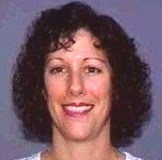
Jennifer San Marco
Mass murderer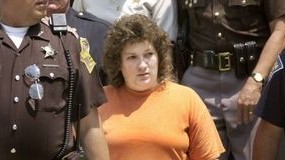 Judy Kirby
Mass murderer · USA · 2000
Judy Kirby was found guilty of murder for intentionally causing a head-on crash…
7 victims
Judy Kirby
Mass murderer · USA · 2000
Judy Kirby was found guilty of murder for intentionally causing a head-on crash…
7 victims
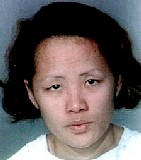 Khoua Her
Mass murderer · USA · 1998
Khoua Her pleaded guilty and received a sentence of 50 years in prison with no…
6 victims
Khoua Her
Mass murderer · USA · 1998
Khoua Her pleaded guilty and received a sentence of 50 years in prison with no…
6 victims
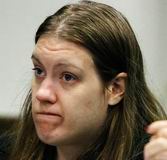 Michele Anderson
Mass murderer · USA · 2007
Michele Kristen Anderson was charged in connection with the Carnation Massacre,…
6 victims
Michele Anderson
Mass murderer · USA · 2007
Michele Kristen Anderson was charged in connection with the Carnation Massacre,…
6 victims
 Mary Ann Holder
Mass murderer · USA · 2011
Mary Ann Holder carried out a shooting spree and committed suicide by shooting…
5 victims
Mary Ann Holder
Mass murderer · USA · 2011
Mary Ann Holder carried out a shooting spree and committed suicide by shooting…
5 victims
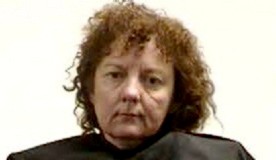 Susan Hendricks
Mass murderer · USA · 2006
Susan Hendricks was accused of killing four members of her own family in order…
5 victims
Susan Hendricks
Mass murderer · USA · 2006
Susan Hendricks was accused of killing four members of her own family in order…
5 victims
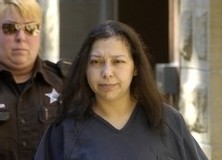 Angelica Alvarez
Mass murderer · USA · 2006
Angelica Alvarez was 27 years old. She was described as an Elkhart County mothe…
4 victims
Angelica Alvarez
Mass murderer · USA · 2006
Angelica Alvarez was 27 years old. She was described as an Elkhart County mothe…
4 victims
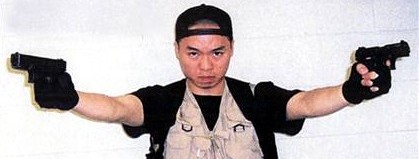 Seung-Hui Cho
Mass murderer · USA · 2007
Seung-Hui Cho was a mass murderer who shot and killed 32 people and wounded man…
32 victims
Seung-Hui Cho
Mass murderer · USA · 2007
Seung-Hui Cho was a mass murderer who shot and killed 32 people and wounded man…
32 victims
 Linda Shimer
Murderer · USA · 2004
Linda Shimer was an Indianapolis woman convicted of arranging for Kenneth Kelly…
1 victim
Linda Shimer
Murderer · USA · 2004
Linda Shimer was an Indianapolis woman convicted of arranging for Kenneth Kelly…
1 victim
- Gender
- female
- Country
- USA
- Location
- Goleta, Santa Barbara County, California, USA
- Date of birth
- December 6, 1961
- Age at first offence
- 45
- Characteristics
- shooting spree, revenge, drugs
- Victim profile
- Beverly Graham, 54 (her one-time neighbor) / Ze Fairchild, 37 / Maleka Higgins, 28 / Nicola Grant, 42 / Guadalupe Swartz, 52 / Dexter Shannon, 57 / Charlotte Colton, 44
- Method of murder
- Shooting
- Date(s) of murder
- January 30, 2006
- Years active
- 2006
- Date of arrest
- —
- Status
-
Died in custody
Committed suicide by shooting herself the same day Jennifer San Marco (December 6, 1961 – January 30, 2006) (aged 44) killed seven people in Goleta, California
Case details
Jennifer San Marco (December 6, 1961 – January 30, 2006) was a former US Postal Service employee and mass murderer who killed seven people in Goleta, California. She died aged 44 on January 30, 2006, after committing suicide by shooting herself.
San Marco previously worked as a dispatcher for the Santa Barbara Police Department in the mid-1990s. She underwent a background check and psychological evaluation for that job and left the job after several months. Later, she worked for the postal service as a clerk and left on psychological disability following a 2003 incident in which she was removed from her workplace by police.
San Marco moved to a small town in New Mexico sometime in 2004. Colleagues said she had a history of making racially charged statements, and she once attempted to start a publication entitled "The Racist Press".
Timeline
- July 2004 — San Marco applied for a business license in Milan, New Mexico, to start a publication called "The Racist Press".
- February 5, 2001 — Sheriff’s deputies removed San Marco from the mail-sorting center and took her to a mental health facility in Ventura for three days of assessment.
- 2003 — San Marco left the postal job on retirement disability/medical leave for psychological reasons and was removed by police during an incident at her workplace.
- 2004 — San Marco moved to New Mexico and lived in Milan; she applied for a business license related to "The Racist Press".
- December 6, 1961 — Jennifer San Marco was born.
- January 30, 2006 — San Marco shot and killed Beverly Graham at her condominium in Santa Barbara and then drove to the mail processing plant in Goleta, where she shot and killed six employees before taking her own life.
The offence
On January 30, 2006, San Marco shot and killed her one-time neighbor, Beverly Graham.
She then drove to the mail processing plant where she previously worked in Goleta, California. She entered the plant by driving through a gate behind another car. She gained entry by taking an employee’s identification badge at gunpoint. The worker whose identification badge she took was not hurt.
Authorities said that only about 80 of the approximately 300 people who worked at the mail-sorting center were on hand when San Marco arrived. Many fled to a fire station across the street when the shooting began.
San Marco shot and killed six employees of the plant with a pistol. Authorities said she reloaded at least once during the rampage. She then took her own life at the Santa Barbara Processing and Distribution Center.
During the rampage, authorities believed that San Marco apparently targeted the conspiracy she believed involved people at the Goleta postal facility, according to writings recovered from her house in New Mexico.
Victims
San Marco killed seven people. The victims named in the material were:
- Beverly Graham, 54 — found dead in her condominium; shot after San Marco entered her condominium and opened fire.
- Ze Fairchild, 37 — shot and killed at the postal plant.
- Maleka Higgins, 28 — shot and killed at the postal plant; had just returned from maternity leave about a month earlier and left behind a baby girl and her husband.
- Nicola Grant, 42 — shot and killed at the postal plant.
- Guadalupe Swartz, 52 — shot and killed at the postal plant; emerging from a dark period after losing her husband, Donald, three years earlier to cancer.
- Dexter Shannon, 57 — shot and killed at the postal plant.
- Charlotte Colton, 44 — died after being hospitalized in critical condition; described as the last victim to die in the rampage and died Wednesday.
One report said the death toll including San Marco was eight; another report described that the rampage killed six postal employees and one person at the condominium before including San Marco among the fatalities.
Investigation and background
Investigators recovered writings from San Marco’s house in New Mexico that alluded to a vague plot involving the Goleta mail-sorting plant where she once worked, a local medical facility and the Santa Barbara County Sheriff’s Department. Sheriff’s Sgt. Erik Raney said the writings were “several different writings” described as ramblings that “alluded to a conspiracy.” Raney said San Marco “obviously felt that the post office was out to get her in one way or another,” and said, “That establishes as good of a motive (for the killings) as we can determine at this point.”
Authorities said it was unclear whether San Marco targeted specific employees at the postal center. U.S. Postal Inspector Randy DeGasperin said “chances are” she knew and chose the victims.
A psychiatric history was described. San Marco had been placed on retirement disability for psychological reasons in 2003. Employees described her behavior as increasingly more bizarre; she sometimes talked or argued with herself and made racist comments, though she never made threats to employees. In February 2001, deputies were called to remove her from the plant due to strange behavior. She was sent to a Ventura psychiatric hospital for three days of assessment, and Raney said he did not know the diagnosis.
Raney said the hospital was not the medical facility mentioned in San Marco’s writings. He also said it might have been a place where she had regular doctor’s visits, and that the 2001 incident may have prompted her to place the sheriff’s department in her conspiracy, but it was unclear whether it specifically motivated the killing spree.
Arrest / gun purchase and access
San Marco managed to buy the gun and ammunition used in the killings from two New Mexico pawn shops.
Raney said she bought the 15-round, 9 mm Smith & Wesson model 915 last August from a pawn shop in Grants, New Mexico, and an unspecified amount of ammunition from a pawn shop in Gallup, New Mexico. Raney said, “How she managed to purchase it is ‘the million-dollar question yet’.”
Paul Castillo, owner of Ace Pawn and Antiques, told the Santa Barbara News-Press that San Marco bought the gun for $325 without saying why she needed it. She filled out an application for a background check that did not turn up any problems. Castillo said she picked up the gun two days later. Raney said the gun had originally been purchased by another person in San Jose and later sold to the pawn shop.
Authorities said San Marco went through screenings and there were “no prior indications” of problems.
Mental health and described behaviour
Authorities said San Marco had a long history of mental problems. She was placed on a medical leave from her postal job for psychological problems.
In New Mexico, she was described as acting increasingly bizarrely after losing her job. In Milan, New Mexico, village manager Carlos Montoya said, “We felt she was unbalanced.” He said violent thoughts crossed his mind but described it as possible that she might “slash a window or damage property or something.”
Several incidents were described in New Mexico: Police were contacted after she was accused of harassing an office worker and appearing naked at a gas station. She was dressed when officers arrived. A deputy clerk, Terri Gallegos, said San Marco applied for a business license in 2004 for a publication she said she planned to launch called "The Racist Press," and said she also wanted to register a cat food business. Gallegos said San Marco carried on a conversation with herself “like she was arguing with someone but there was no one there.” Gallegos said she became rude in what she described as allegations about an employee and said San Marco would come in and stare at one employee.
A police chief, Marty Vigil, said that in June police talked to her after someone at a gas station called to complain of nudity, and that she was dressed when officers arrived. Vigil said, “We stopped her on a complaint of nudity and warned her about state law. ... We basically told her not to be doing that and sent her on her way.”
Writings and publication
Authorities said San Marco distributed a publication called "The Racist Press". The newsletter included error-laden explanations of various religions and a confusing theory linking the U.S. government to “Son of Sam” killer David Berkowitz, the Ku Klux Klan and racist murders. One passage in the material included the newsletter’s statement: “I don’t advocate crime, and it is not my intention to sound sympathetic to it,” and “Most people do not want to be the victim of crime.”
Raney said San Marco had a check for cash with the notation “will,” indicating she left a will and that it “may shed more light on what’s happened here.”
Locations and method
In Santa Barbara, authorities said San Marco sneaked into a Santa Barbara condominium and shot to death her first victim, Beverly Graham. Neighbors said they heard the sound of gunfire between 7:15 p.m. and 8:15 p.m. Monday night.
At the Goleta mail-processing plant, San Marco arrived at about 9 p.m. Authorities said she entered the sprawling facility by driving through a gate behind another car and gained entry by taking an employee’s identification badge at gunpoint. She used a pistol.
A postal worker, Alger Busante, 56, described hearing gunshots: “I was dumping mail on a belt when the gunshots suddenly (went) 'Boom! Boom! Boom! Boom!'”
Funerals and aftermath
Charlotte Colton, 44, of Santa Barbara, was described as having been hospitalized in critical condition and then dying Wednesday. A funeral Mass for Colton overflowed a church, with more than 1,200 mourners. Colton’s niece, Katrina Baggao de la Cruz, told mourners at St. Raphael’s Catholic Church: “If there was anything she did it, was love boldly and fearlessly,” and “You simply wanted to be a better person around her.”
Colton was survived by her husband, Jim, and three sons. She was buried at Calvary Cemetery. The last victim to die in the rampage was described as the first buried Friday.
Investigators searched San Marco’s rural New Mexico home for clues on Thursday.
Authorities said San Marco’s family connections included a brother in New York described as being “pretty much in shock” when told of the events by Sheriff’s Department Sgt. Erik Raney, and that a cousin in Santa Barbara had not had contact with San Marco for more than a year.
Quotes
Sheriff’s Sgt. Erik Raney, in a telephone interview:
“There was several different writings that were described to me as kind of just ramblings, not anything specific, but they alluded to a conspiracy,”
“She obviously felt that the post office was out to get her in one way or another,” Raney said.
“That establishes as good of a motive (for the killings) as we can determine at this point.”
“How she managed to purchase it is ‘the million-dollar question yet,’”
Paul Castillo, owner of Ace Pawn and Antiques, described San Marco’s purchase:
“She bought the gun for $325 without saying why she needed the weapon.”
Deputy clerk Terri Gallegos:
“We weren’t sure what she was going to do next,”
“We weren’t sure what she was going to do next,” said Gallegos.
“like she was arguing with someone but there was no one there.”
Police Chief Marty Vigil:
“We stopped her on a complaint of nudity and warned her about state law. ... We basically told her not to be doing that and sent her on her way,”
Postal worker Alger Busante, 56:
“I was dumping mail on a belt when the gunshots suddenly (went) 'Boom! Boom! Boom! Boom!'”
Village manager Carlos Montoya:
“We felt she was unbalanced.”
“I could see her making gestures and just acting oddly. We never saw her with anybody. She was always alone.”
Sheriff Jim Anderson:
“The shell casings found match those found at the postal distribution center,” and
“It wasn’t clear if the killings were racially motivated.”
U.S. Postal Inspector Randy DeGasperin:
“chances are” she knew the people she was shooting at.
Colton’s niece Katrina Baggao de la Cruz:
“If there was anything she did it, was love boldly and fearlessly,”
“You simply wanted to be a better person around her.”
The newsletter "The Racist Press" included:
“I don't advocate crime, and it is not my intention to sound sympathetic to it,”
“Most people do not want to be the victim of crime.”
Other details
- San Marco was described as white.
- The shootings were described as the deadliest workplace shooting by a woman in nearly 20 years, and compared to an earlier workplace shooting in 2003 at a Lockheed Martin aircraft parts plant in Meridian, Miss., involving Doug Williams.
- A former plant worker, Jeff Tabala, said San Marco seemed particularly hostile to Asians while working for the Postal Service and said all of the dead were minorities: Three were black, one was Chinese-American, one was Hispanic and one was Filipino.
- A colleague and friend, Lexi Bushnell, said about Maleka Higgins: “She was a talker. There was not a moment she was quiet,” and “She loved to lighten things up.”
- A friend, Darlene Skura, said about Guadalupe Swartz: “She was becoming more active, starting to get on with her life,”
- A friend and neighbor, Leslie Brown, said about Nicola Grant: “She was such a joy,” and “When you talked to her, she just glowed.”
- Graham’s boyfriend, Eddie Blomfield, said arguments between the women involved San Marco singing loudly outside.
- Graham’s brother, Les Graham Jr., said his sister had complained about a woman who “used to come out and rant and rave in front of her building.”
- The material stated that witnesses believed she believed she was the target of a conspiracy centered at the Goleta postal facility, according to writings recovered from her house in New Mexico.
- The material described that San Marco left no will or suicide note in one place, while another portion described a check with “will” notation found in her home.
Spotted an error, or have more information about this case?