Suchnam Singh Sandhu
 Michael Zabawa
Murderer
Michael Zabawa was a Minnesota man who lived in Matawan, and he worked at a hog…
2007 victims
Michael Zabawa
Murderer
Michael Zabawa was a Minnesota man who lived in Matawan, and he worked at a hog…
2007 victims
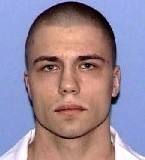 Clinton Lee Young
Murderer · USA
Clinton Lee Young (born July 19, 1983) was convicted of murdering two men in No…
2001 victims
Clinton Lee Young
Murderer · USA
Clinton Lee Young (born July 19, 1983) was convicted of murdering two men in No…
2001 victims
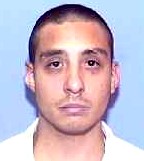 Ivan Abner Cantu
Murderer · USA
Name: Ivan Abner Cantu · TDCJ number: 999399 · Date of birth: 06/14/1973 · Age…
2000 victims
Ivan Abner Cantu
Murderer · USA
Name: Ivan Abner Cantu · TDCJ number: 999399 · Date of birth: 06/14/1973 · Age…
2000 victims
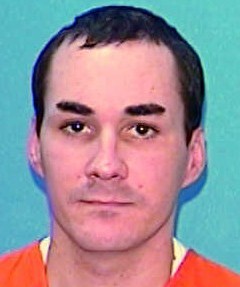 John Chamberlain
Murderer
John Chamberlain was sentenced in Florida in connection with a triple murder at…
1998 victims
John Chamberlain
Murderer
John Chamberlain was sentenced in Florida in connection with a triple murder at…
1998 victims
 Michael John Yowell
Murderer · USA
Name: Michael John Yowell · TDCJ number: 999334 · Date of birth: 01/25/1970 · P…
1998 victims
Michael John Yowell
Murderer · USA
Name: Michael John Yowell · TDCJ number: 999334 · Date of birth: 01/25/1970 · P…
1998 victims
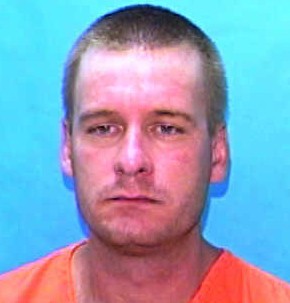 Michael Duane Zack
Murderer · USA
Michael Duane Zack was convicted and sentenced to death for the 06/13/96 murder…
1996 victims
Michael Duane Zack
Murderer · USA
Michael Duane Zack was convicted and sentenced to death for the 06/13/96 murder…
1996 victims
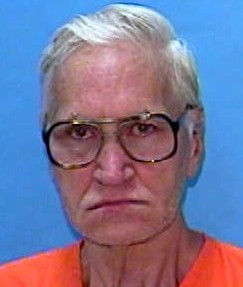 Jerry Michael Wickham
Murderer · USA · 1986
Jerry Michael Wickham was sentenced to death for the 1986 murder of Morris “Ric…
1 victim
Jerry Michael Wickham
Murderer · USA · 1986
Jerry Michael Wickham was sentenced to death for the 1986 murder of Morris “Ric…
1 victim
 Jessica Blackwell
Murderer · USA · 2011
Jessica Francis Blackwell was a Roanoke woman accused of stabbing a Roanoke man…
1 victim
Jessica Blackwell
Murderer · USA · 2011
Jessica Francis Blackwell was a Roanoke woman accused of stabbing a Roanoke man…
1 victim
 Andrew Mickel
Murderer · USA · 2002
Andrew “Andy” Mickel was convicted of one count of first-degree murder in April…
1 victim
Andrew Mickel
Murderer · USA · 2002
Andrew “Andy” Mickel was convicted of one count of first-degree murder in April…
1 victim
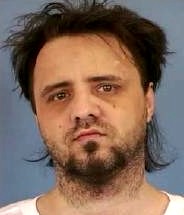 Dale Leo Bishop
Murderer · USA · 1998
Dale Leo Bishop was a death row inmate in Mississippi. He was convicted in 2000…
1 victim
Dale Leo Bishop
Murderer · USA · 1998
Dale Leo Bishop was a death row inmate in Mississippi. He was convicted in 2000…
1 victim
 Roger Thorson
Murderer · USA · 1987
Roger Eric Thorson was sentenced to death in 1988 in Harrison County for the mu…
1 victim
Roger Thorson
Murderer · USA · 1987
Roger Eric Thorson was sentenced to death in 1988 in Harrison County for the mu…
1 victim
- Gender
- male
- Country
- —
- Location
- —
- Date of birth
- —
- Characteristics
- torture, dismemberment, murder-suicide
- Victim profile
- —
- Method of murder
- —
- Date(s) of murder
- —
- Years active
- —
- Date of arrest
- —
- Status
-
Condenado a cadena perpetua en 1968
Background
Suchnam Singh Sandhu was a Sikh man from the Punjab who was 39 years old. He worked in a chemical company as an operative.
On 4 April 1968, he asked for a day of permission at his workplace. On that morning, he spent time at home on Fanshawe Avenue, Baking, going from one place to another wearing his pyjamas. His two young daughters were at school and his wife also went out for the day. The only other person at the home that morning was his elder daughter, Sarabjit Kaur, who was 19 years old.
Sarabjit Kaur had attended a Nursing School in Delhi and was the main reason Suchnam Singh had brought the family to England in September 1967 to seek more opportunities for her to study. Before leaving India, Sarabjit Kaur had fallen in love with her cousin, who belonged to an inferior caste and was married. After arriving in England, Sarabjit Kaur enrolled at East Ham Technical College but continued illicit contact with her lover by sending letters to India.
Suchnam Singh discovered the secret and became frustrated with what he considered Sarabjit Kaur’s disreputable conduct. He began physically mistreating her, including hitting her, and on one occasion he tried to strangle her. Sarabjit Kaur left the family home and, in November 1967, moved to a flat on Uphall Road, Ilford. She visited a local doctor, Dr Gabriel Merriman, who told her she was pregnant. Sarabjit Kaur was sent to the prenatal unit of Barking Hospital.
Sarabjit Kaur attended the hospital only once, on 20 November, and the diagnosis was that she was 20 weeks pregnant. After that, she returned to the family home. The account stated that Suchnam Singh likely arranged for an illegal abortion, as there was no official record indicating that there had been a birth or other later medical treatment. After the abortion, Sarabjit Kaur stayed living at Fanshawe Avenue as another member of the family.
The offence
On the morning of 4 April, a strong dispute took place between Suchnam Singh and his daughter, at least according to Singh’s version. Sarabjit Kaur left her bedroom, went downstairs, and told her father that she had taken a substantial overdose of phenobarbitone tablets and had written a suicide note claiming she was taking her own life because her father refused to let her live with the man she loved.
Suchnam Singh lost control, and picked up a coal-splitting hammer. He struck his daughter twice on the head, causing her to fall unconscious to the floor with the appearance of being dead.
Afterwards, Suchnam Singh dressed and walked for 15 minutes to an ironmongers shop on Ilford High Road. He bought a special metal saw, returned home, and again put on his pyjamas. He put Sarabjit Kaur’s limp body into a large plastic bag to protect the room from blood spillage and began dismembering his elder daughter.
Sarabjit Kaur regained consciousness while he sawed through her neck and tried to grab the saw, which cut off her thumb. Singh continued: he completed the decapitation and then sawed through the torso at the level of the stomach and the legs at the level of the knees.
The torso, still dressed in a pink sweater, a blue pullover, a blue Hindu-style dress with white embroidery, a cotton jacket, and a brassière, with four metal bracelets around the left arm, was wrapped in green canvas and placed into an olive-green suitcase. The lower part of the torso, including trousers and feet, was wrapped in green and black cloth and put into a brownish-red suitcase. The head was wrapped in an old towel and placed into a cotton bag padded with a financial page from the Daily Telegraph dated 27 March. The cotton bag was put into a blue canvas bag.
Suchnam Singh poured the considerable accumulated blood into the bathroom, and put his blood-stained pyjamas and the metal saw into the dustbin. He would later throw the hammer somewhere in Barking.
He then went to central London that same afternoon using public transport and took the olive-green suitcase with him. When he arrived at Euston station, he checked the departure board and saw that a train bound for Wolverhampton was scheduled to leave at 10 minutes to 11 at platform 7. He bought a ticket and waited for the train to arrive before crossing the barrier. He entered a carriage when the train still had its lights switched off and put the suitcase under a table. After he got off the train, he crossed the barrier again and returned home, breaking up his ticket into pieces during the journey and throwing them away. He then took the other suitcase and carried it to Ilford High Road. Singh later stated he intended to surrender himself at the Ilford police station, but he left the building and continued until he reached the bridge crossing the River Roding, from where he threw the second suitcase and then returned home.
The next morning, he placed the canvas bag containing his daughter’s head into the metal basket of his motor scooter and set off for work as usual. He stopped at Wanstead Flats, left the canvas bag among shrubs less than three metres from the road, and continued.
Investigation
After the Euston-to-Wolverhampton train arrived at Wolverhampton at 12:52 a.m. on 5 April, two train drivers who had finished their shift saw a green suitcase left abandoned in an empty carriage. They fulfilled their duty by taking it to the lost property office and handing it to the duty employee, Leslie Stevens, to open it, and they called the police.
Detective Sergeant Leslie Whitehouse of the Wolverhampton police handled the first inquiries, but the case required Scotland Yard’s resources. Chief Superintendent Roy Yorke and Sergeant George Atterwill went to the Midlands that night. The torso was taken to the Royal Hospital in Wolverhampton, where pathologist Dr Richard Marshall began examining it. The police searched the carriage for fingerprints and questioned British Rail employees in an attempt to find out how the suitcase had ended up there.
The agents had luck because British Rail had carried out a passenger census at each stop on that night and the convoy was not too full. The agents soon established that the suitcase had been on the train since Euston. The Euston guard remembered that “a coloured man” had crossed the barrier carrying a suitcase and had crossed again shortly afterwards without it.
The next major development came at lunchtime the following day when a woman saw the second suitcase under the Ilford bridge. Sergeant Stephenson arrived, opened the suitcase, and found a foot protruding from the folds of the cloth. The suitcase had been seen for the first time at 11:15 a.m. the previous day. Chief Superintendent Emlyn Howells of Ilford contacted the Yard men in Wolverhampton immediately.
Examination and comparison of the fragments by Professor Robert Warwick, Department of Anatomy, Guy’s Hospital School of Medicine, revealed that they belonged to the same body; only the head was missing. The inquiry then addressed identity and cause of death. Warwick deduced that the victim was an Asian woman aged between 18 and 30, that she was not a virgin, and that she had recently suffered some gynaecological operation performed by unskilled hands. He stated that she had taken a lethal dose of barbiturates, but that this was not the immediate cause of death. The body had been dismembered with a blue metal saw on one side and a yellow metal saw on the other.
After consulting Hindu experts, the report said the style of clothing and where she likely came from, plus the fact that the woman did not shave, indicated she was probably a Sikh. A petition to the Hindu community provided additional information: the drawing on the pullover found on the torso was used in the areas around Jullundor in the Punjab. Foot impressions and calluses suggested the woman had only recently started wearing European shoes and therefore had recently emigrated to Great Britain.
Police investigation proceeded along two tracks. One was a search operation for the head, using helicopters to follow the route of the railway line between Euston and Wolverhampton, and several divers searched the bed of the River Roding. Those operations produced no results. The second track involved a tedious process of examining hospital and clinic records to find Hindu women with recent gynaecological problems.
On Wednesday 8 May, Howard Perry was cycling across Wanstead Flats when he got stuck due to a traffic jam. He saw a canvas bag among the bushes that seemed to be in better condition than his and picked it up. The head was inside the bag. Police were alerted, and Sergeant Stephenson again had the “dubious privilege” of transporting the head to the Ilford mortuary.
Investigators already had an identity and cause of death: two strong blows delivered with a blunt instrument.
Meanwhile, hospital inquiries produced results. A young Hindu woman, Sarabjit Kaur, had been treated at Barking Hospital. Police followed the trail to Dr Gabriel Merriman and, with the help of a photo of the head, he was able to establish a provisional identification. Police then followed the victim’s trail to the flat in Ilford, and her former landlady gave them the name of her father and provided an old address in Sibley Grove, Bow.
On Saturday 11 May, police visited Fanshawe Avenue to question Suchnam Singh. At first he denied having a daughter called Sarabjit Kaur, but after a search of the house found two photographs of the young woman, he changed his story. He then claimed his daughter had left the home in February and that since then he had received no news and had no idea where she was.
He also claimed he did not know that Sarabjit had been pregnant. Suchnam Singh was taken to Ilford police station for questioning. During the first day he stuck to his story, although at one point, without anyone mentioning the matter, he said he could be dead. On the second day Singh asked to see Superintendent Yorke and made a full confession. He said his daughter took a phenobarbitone overdose and accidentally hit her head with a sewing machine as she fell to the floor.
The confession also stated that Singh discovered his daughter’s body and went out with the intention of informing the police. He was in shock and almost got run over by a car, and he then went to his cousin’s home, who persuaded him that if he went to the police he could get into a lot of trouble. After that, the cousin, Hardyal Singh Sandhu, helped him dispose of the body.
Hardyal Singh was questioned and denied any knowledge or involvement, and police were inclined to believe him.
The dismemberment was corroborated by bloodstains found in the bath plumbing.
Soon afterwards, Sarabjit Kaur’s body was identified beyond doubt by fingerprints found on her factory time card and by a physics text found during the search of the home on Fanshawe Avenue.
Trial
Suchnam Singh was tried at the Old Bailey in November 1968. The suicide story of his daughter was not believed, and the jury needed 90 minutes to find him guilty. He was sentenced to life imprisonment.
During the proceedings, discussion took place about the old Sikh custom that the bodies of those who die in disgrace must be dismembered and the fragments scattered afterwards to expiate shame.
The account included that it was not possible to answer whether this relapse into an ancient Hindu cultural practice was the true motive for Suchnam Singh’s actions or whether it could be considered a mere false lead used by a desperate defence advocate.
The confession was generally accepted, but certain facts suggested the acts had been considerably more premeditated than he admitted. His workplace, from which he had taken a day off permission—significantly—gave him access to the large plastic bag used as the container for dismembering the body, and it also gave him access to phenobarbitone tablets that had never been prescribed to Sarabjit by any doctor.
Outcome
Suchnam Singh was sentenced to life imprisonment in November 1968.
Other details
The account referred to the victim’s favourite status, explaining that Sarabjit was considered the favourite child of her father, with his ambition to see her become a doctor. It stated that she attended East Ham Technical College and sent letters to India to maintain contact with her lover. It also described her move to a flat on Uphall Road, Ilford, in November 1967, and her visit to Dr Gabriel Merriman.
It noted that Singh stated he had intended to surrender himself at the Ilford police station, but that he left the building and continued to the bridge over the River Roding where he threw the second suitcase and then returned home.
It stated that after the train arrived in Wolverhampton, the suitcase was taken to lost property and opened by the duty employee Leslie Stevens, after which they called the police. It also recorded the pathologist Dr Richard Marshall’s examination.
The account included the statement that it was not possible to answer who administered the fatal overdose, raising the question of whether it was “a desperate daughter” or “an irritated, humiliated and disappointed father”.
The account ended with “Brian Lane - ‘Carniceros’”.
Explore related records
Spotted an error, or have more information about this case?