
Christine Schürrer
Murderer Peter Mangs
Murderer · Sweden · 2003
Peter Mangs was sentenced to life in prison for murder and attempted murder con…
3 victims
Peter Mangs
Murderer · Sweden · 2003
Peter Mangs was sentenced to life in prison for murder and attempted murder con…
3 victims
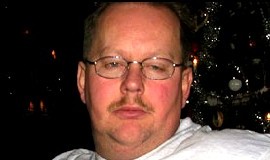 Anders Eklund
Murderer · Sweden · 2000
Anders Eklund (born August 6, 1965) was a Swedish murderer and rapist. He was c…
2 victims
Anders Eklund
Murderer · Sweden · 2000
Anders Eklund (born August 6, 1965) was a Swedish murderer and rapist. He was c…
2 victims
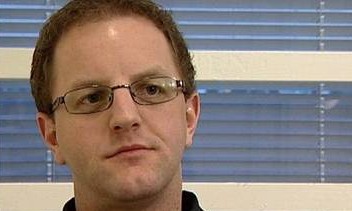 Helge Fossmo
Murderer · Sweden · 1999
Helge Arnold Fossmo (1971-) was a Pentecostal pastor. He was involved in the Kn…
2 victims
Helge Fossmo
Murderer · Sweden · 1999
Helge Arnold Fossmo (1971-) was a Pentecostal pastor. He was involved in the Kn…
2 victims
 Jackie Arklöv
Murderer · Sweden · 1999
Jackie Arklöv was sentenced to life imprisonment. Jackie Arklöv (born June 6, 1…
2 victims
Jackie Arklöv
Murderer · Sweden · 1999
Jackie Arklöv was sentenced to life imprisonment. Jackie Arklöv (born June 6, 1…
2 victims
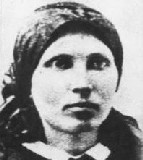 Anna Mansdotter
Murderer · Sweden · 1889
Anna Månsdotter was executed by beheading with an axe in Kristianstad on August…
1 victim
Anna Mansdotter
Murderer · Sweden · 1889
Anna Månsdotter was executed by beheading with an axe in Kristianstad on August…
1 victim
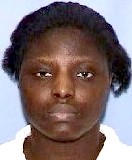 Lisa Ann Coleman
Murderer · USA · 2004
Lisa Ann Coleman was a Black female born on 10/06/1975. She was 30 when her cas…
1 victim
Lisa Ann Coleman
Murderer · USA · 2004
Lisa Ann Coleman was a Black female born on 10/06/1975. She was 30 when her cas…
1 victim
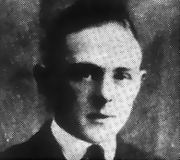 Ernest Brown
Murderer · 1933
Ernest Brown was executed by hanging at Armley prison in Leeds on February 6, 1…
1 victim
Ernest Brown
Murderer · 1933
Ernest Brown was executed by hanging at Armley prison in Leeds on February 6, 1…
1 victim
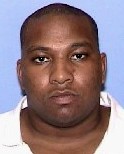 Marcus Druery
Murderer · USA · 2002
Marcus Druery (Marcus Ray Tyrone Druery) was assigned TDCJ Number 999464. His d…
1 victim
Marcus Druery
Murderer · USA · 2002
Marcus Druery (Marcus Ray Tyrone Druery) was assigned TDCJ Number 999464. His d…
1 victim
 Sarah Dutra
Murderer · USA · 2001
Sarah Dutra (defendant) · Larry McNabney (victim; Sacramento, California attorn…
1 victim
Sarah Dutra
Murderer · USA · 2001
Sarah Dutra (defendant) · Larry McNabney (victim; Sacramento, California attorn…
1 victim
 Leonard Keith Lawson
Murderer · Australia · 1961
Leonard Keith Lawson (b. 16 August 1927) was a commercial artist and photograph…
2 victims
Leonard Keith Lawson
Murderer · Australia · 1961
Leonard Keith Lawson (b. 16 August 1927) was a commercial artist and photograph…
2 victims
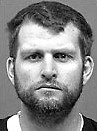 Keith Jesperson
Serial killer · USA · 1990
Name: Keith Jesperson · Also known as: “Happy Face Killer” · Born: April 6, 195…
8 victims
Keith Jesperson
Serial killer · USA · 1990
Name: Keith Jesperson · Also known as: “Happy Face Killer” · Born: April 6, 195…
8 victims
- Gender
- female
- Country
- Sweden
- Location
- Arboga, Västmanland County, Sweden
- Date of birth
- June 30, 1976
- Age at first offence
- 32
- Characteristics
- jealousy, rape?, torture, serial rapist, the bodies were never found
- Victim profile
- Max, 3, and his sister Saga, 1 (attempting to kill the children’s mother, Emma Jangestig, 23, with 15 blows to the head with a hammer)
- Method of murder
- Hitting with a hammer
- Date(s) of murder
- March 17, 2008
- Years active
- 2008
- Date of arrest
- 3 days after (in Germany)
- Status
-
Life imprisonment
Sentenced to life in prison on October 14, 2008
Case overview
Christine Schürrer (born June 30, 1976, in Hanover) was a German citizen who murdered two Swedish children and seriously injured their mother with 15 blows to the head with a hammer after attacking them in their home in Arboga, Sweden, on March 17, 2008. The motive for the murders was identified as jealousy.
Victims
Emma Jangestig was the mother of the two children. She was 23 years old and was seriously injured after being struck over the head 15 times with a hammer. Max was three years old. Saga was one year old.
Timeline
- March 17, 2008 — Schürrer attacked the children and their mother in their home in Arboga, Sweden.
- March 12 and March 14 — Schürrer visited Arboga two times before the attack.
- March 18 — Schürrer left Sweden and headed home to Germany.
- March 20, 2008 — A 31-year-old woman from Stockholm suspected in the case was arrested in Germany.
- March 22, 2008 — Schürrer was arrested in Germany.
- March 24, 2008 — German police sent DNA samples from the suspect to Swedish police for testing.
- March 30, 2008 — Schürrer was arrested by German police on the day after an arrest warrant had been signed.
- April 7, 2008 — Police planned to dive in the waters of the Arboga River to search for a weapon; investigations continued and extradition efforts continued.
- April 30, 2008 — Schürrer arrived at Arlanda airport at 9pm and was sent directly to a detention centre in Västerås in central Sweden.
- May 24, 2008 — Police gained access to a laptop, mobile phone and clothing belonging to the prime suspect for analysis.
- August 1, 2008 — Torgny Hellgren and Niklas Jangestig gave testimony during trial.
- August 5, 2008 — Schürrer took the stand for the first time in Västmanland District Court.
- August 6, 2008 — Schürrer admitted in court that she lied or withheld the truth during questioning to keep details from police.
- August 11, 2008 — A friend testified that he did not believe Schürrer had given birth to a child as claimed.
- August 12, 2008 — Witnesses testified they did not believe Schürrer gave birth last September as she had claimed; questions continued about pregnancy and shoes.
- August 13, 2008 — Witnesses testified about a hammer that was suspected as the murder weapon.
- August 20, 2008 — Experts testified that forensic evidence was limited because people entered the house before forensic tests could be carried out.
- August 26, 2008 — A Swedish court ordered a psychiatric evaluation and continued detention until verdict; Schürrer was later found guilty of the murders and assault.
- September 25, 2008 — A psychiatric assessment found Schürrer was sane and did not suffer from a serious psychiatric disorder; there was no medical reason for psychiatric care.
- October 14, 2008 — Schürrer was sentenced to life in prison.
- September 11, 2008 — The Pirate Bay press contact Peter Sunde participated in a debate program; later events involved press contacts being suspended.
- February 16, 2009 — Schürrer’s appeal was rejected by the Court of Appeal.
- March 2012 — Schürrer was transferred to a womens prison in Vechta, Germany to serve out the remaining time of her sentence.
Background
Schürrer was born in Hanover, Germany. When she was 11 years old, her father left the family for good; Schürrer had very little contact afterwards. She went to New York as an exchange student and lived with relatives in Manhattan, and during her stay in the United States she studied in Oklahoma. After she moved back to Germany she settled in Göttingen, where she studied history for six years before traveling to Athens, Greece. In Athens, Schürrer got a job at a hostel and also worked as a historian. After one year, she moved back to her hometown in Germany to work, but she was soon back in Greece, this time on the island of Crete, where she met and had a romantic relationship with a Swedish man: the stepfather of her future victims.
The offence
Police believed Schürrer arrived in Arboga by train on the afternoon of March 17, 2008. She went to the victim’s house and knocked on the door. When the mother, 23-year-old Emma Jangestig, answered the door, Schürrer snuck inside and struck her over the head 15 times with a hammer. She then attacked the woman’s two children: 3-year-old Max and 1-year-old Saga, causing fatal trauma to their heads. Schürrer had visited Arboga two times before on March 12 and March 14, possibly to get more information on where to locate the mother who she would attack days later.
Investigation
The mother began to wake up from her coma in a hospital around that time and could identify Christine as the attacker. Swedish investigators examined a surveillance camera from the railway station in Arboga, and a witness identified Christine, proving that she had been in Arboga on the day of the murder. The investigation included efforts to locate a hammer and further forensic testing.
Forensic and evidence
No DNA evidence linking Schürrer to the house in Arboga was presented as part of the trial coverage. A hair found in Emma Jangestig’s hand did not belong to Christine Schürrer; the analysis concluded it most probably belonged to the victim herself. Cat hair found on Schürrer’s clothing did not come from the cats who lived with Jangestig and her family in Arboga. The strongest forensic evidence discussed publicly was a pair of footprints believed to be from shoes she was alleged to have owned, but the shoes had not been found.
Crime scene issues
Experts testified that at least 14 people unwittingly spoiled the crime scene. Healthcare workers and police entered the house before forensic tests could be carried out, making it impossible to find DNA to compare with a suspected perpetrator. Forensic expert Weine Drotz calculated that, apart from the two dead children, seriously injured mother Emma Jangestig, and her boyfriend Torgny Hellberg, a further 14 people—including ambulance staff and police officers—made it almost impossible to gather evidence. An expert said that such a crime scene did not lend itself to finding small, invisible traces such as a speck of saliva unless there was a clear glob of spit.
Items seized and further analysis
Police gained access to a laptop, mobile phone and clothing belonging to the prime suspect; the laptop was described as the computer used to update her Facebook page and surf the internet. Police said the mobile phone was of particular interest because Schürrer claimed she used it to photograph rune stones in the town. The clothing items were sent to the Swedish National Laboratory of Forensic Science (SKL) for analysis. Finger-nail scrapings were reported to have no DNA matching the victims.
Prosecution statements on motive and planning
Prosecutor Frieda Gummesson said in court that Schürrer was planning the murder for more than two months and argued the motive for the murders was jealousy. Gummesson also argued that Schürrer attempted to tone down latent feelings for Jangestig’s boyfriend after their relationship ending. Gummesson referred to the disappearance of a hammer from the Stockholm-area apartment where Schürrer lived in January. Gummesson said the landlord discovered the hammer was missing early in the year. Gummesson stated that the fact the hammer was missing in January showed Schürrer had been planning the murder several weeks before it was carried out, and that she had already then planned to use it on the children and their mother.
Arrest and extradition
Police believe Schürrer traveled to Germany after the murders. She was arrested in Germany on March 22, 2008, but was released again the same day. She was arrested in Germany again on March 30, 2008.
On March 20, 2008, a 31-year-old woman from Stockholm suspected in the case was arrested in Germany after handing herself over to police around 5pm following an international warrant. She was being held for questioning in Hanover, and a decision was to be taken the next day as to extradition to Sweden. Prosecutors and police statements indicated she had not confessed.
Swedish police traveled to Hanover on an unsuccessful first attempt to meet the suspect; they returned home empty-handed. Further steps continued to extradite her so they could question her.
On April 30, 2008, Schürrer arrived at Arlanda airport at 9pm and was sent directly to a detention centre in Västerås in central Sweden.
Trial
Court and charges
The case was tried in Västmanland District Court in Sweden. The trial involved accusations that Schürrer attacked the children and attempted to kill their mother.
On July 23, 2008, the charges were described as charging her with the murder of three-year-old Max and his two-year-old sister Saga and attempted murder of their mother, Emma Jangestig, on March 17, 2008. The charges were described as stating that she “with a hammer or hammer-like instrument repeatedly beat the children and their mother on their heads and bodies.”
Public prosecutors called for a conviction for murder and attempted murder. It was stated publicly that the case relied largely on circumstantial evidence, as technical evidence such as DNA was lacking completely.
The prosecutor called an unusually large number of witnesses—56 in total—to testify in the trial.
Psychiatric evaluation and sanity
On August 26, 2008, the court ordered a psychiatric evaluation and continued detention until a verdict was given. The court described “overwhelming evidence” that Schürrer was guilty of murder and attempted murder in accordance with the charges. The psychiatric evaluation was expected to take four to six weeks, after which prosecutors and defence counsel would present closing arguments. If Schürrer was found to suffer from serious psychiatric problems, the court would not be able to award a prison sentence and would recommend secure psychiatric care.
A psychiatric assessment later stated that “Christine Schürrer does not suffer from a serious psychiatric disorder,” and that she was not “under the influence of a serious psychiatric disorder when she committed the crimes for which she has been charged.” It added there was “therefore no medical reason to commit Christine Schürrer to psychiatric care.”
Defence positions and Schürrer’s responses
Schürrer denied wrongdoing during the trial. Her defence attorney Per-Ingvar Ekblad said he would take the case to the court of appeals. In statements reported during the trial, Ekblad argued for acquittal, stressing the lack of physical evidence and stating there was “no motive, just an incorrect identification.”
On August 5, 2008, Schürrer took the stand for the first time. She discussed her relationship with Torgny Hellberg and described her reaction to news that Hellberg decided to end their relationship in the spring of 2007. On that day, she also discussed her suicide attempt in March 2007, describing that she swallowed pills in an attempt to take her life, and when she awoke the following day she discovered her wallet was missing and called Hellberg again.
On August 6, 2008, during questioning, Schürrer admitted in court that she lied or withheld the truth during interrogation to keep details from police. She also refused to talk about a child she claimed was fathered by Hellberg and given up for adoption.
During August 6 reporting, prosecutor Johan Fahlander asked: “So what you said during police questioning could have been lies?” and Schürrer responded: “Yes, for example the colour of my bicycle pump. At the time I answered that I didn’t know, except that I did know exactly. Or why I was at Stockholm South General Hospital.” In the same exchange, Fahlander asked: “When you were asked about private matters, such as your pregnancy, earlier you said you wouldn’t answer. Why not simply do that in this case?” and Schürrer responded: “Maybe to give another answer.”
Witness testimony and disputed credibility
Emma Jangestig testified that when the trial began she immediately recognized Schürrer as the woman who stood outside her door. Jangestig said: “When I looked at the accused, I broke up completely. Because I recognize her as the woman who stood outside my door,” and later that when Schürrer opened the door she said, “Hi, I’m Tine.” Jangestig identified Schürrer’s voice and nose as well.
A memory expert, Sven Å. Christiansson, testified that Jangestig was suffering from aggravated memory loss and questioned whether she had memory from the time of the murder or whether she was backing up her memory from reflections. Another neurologist, Jörgen Borg, supported the memory expert’s testimony.
Emma Jangestig said the discrepancies in her story and recollection were due to feeling scared in police interviews and that support from family and friends helped her to “allow herself to remember” the events of March 17.
The appellate court later considered certain memory fragments to be reliable, including Jangestig’s belief that she had been attacked by a woman.
Hammer and pregnancy-related testimony
Multiple witnesses testified about a hammer. One German male friend testified that Schürrer told him she was forced to leave a hammer at Skavsta airport. Another witness said Schürrer’s friends and witnesses testified she could not have been pregnant last year as she claimed, and evidence including photos was used to cast doubt on Schürrer’s statements about pregnancy.
Several witnesses testified that Schürrer claimed she gave a baby away. Witness testimony also disputed Schürrer’s claim about the timing of any pregnancy.
Crime scene conduct and number of visitors
Experts testified that the lack of forensic evidence was due to people entering the house before forensic testing. This was addressed during trial, including testimony about the number of people who entered the property.
Sentencing
On August 26, 2008, Schürrer was found guilty of the murders and assault on the mother. She underwent a psychological evaluation to determine fitness for prison or psychiatric treatment. She refused to cooperate in the tests, and it was not possible to make a correct assessment on her psychological health. However, on October 14, 2008, she was sentenced to life in prison as the evaluation showed she suffered from no mental illness “as defined in Swedish law.”
The sentence was accompanied by compensation orders: in addition to a lifetime prison sentence, Schürrer was ordered to pay 457,892 kronor to Jangestig and a total of 131,329 kronor to other plaintiffs in the case.
Appeals
Schürrer appealed to the Svea Court of Appeal for a new trial. Her sentence was finalised on February 16 when her appeal was rejected. The Court of Appeal upheld her life sentence and served her with a permanent deportation order. It also ordered damages of 100,000 kronor each to the children’s parents.
The appellate court determined that the overall evidence was sufficient to secure a conviction. It considered Schürrer’s lies about her reasons for visiting Arboga the night of the murders and her access to a hammer that had not been found. It also considered incorrect information supplied about a missing pair of shoes whose soles matched patterns on footprints found at the scene of the crime.
Other details
Early life and suicide attempts
During the period in Sweden, Schürrer tried for a third time to commit suicide. She was admitted to Södersjukhuset hospital and was later released with only minor cuts on her arms. It was stated she had earlier tried to commit suicide after feeling betrayed by the Swedish man leaving her after a two-week romance in Greece.
Contact and geography during the case narrative
It was stated that Schürrer arrived in Sweden during the summer of 2007, settled in Södermalm in central Stockholm, and later found a new apartment in Skarpnäck, a suburb of Stockholm. Police believed she arrived in Arboga by train on the afternoon of March 17. It was also stated that she left Sweden and headed home to Germany on March 18, and she was arrested by German police on March 30.
Compensation and deportation
The Court of Appeal also issued a permanent deportation order and damages to the children’s parents.
Pirate Bay and autopsy photos
In September 2008, Swedish media reported that public preliminary investigation protocols concerning Schürrer’s murder trial had been made available through a torrent on The Pirate Bay, described as a Swedish website providing magnet links. The document included pictures from the autopsy of the two murdered children, which caused their father Nicklas Jangestig to urge the website to have the pictures removed. The Pirate Bay refused to remove the torrent, and the number of downloads increased to about 50,000 a few days later.
On 11 September 2008, The Pirate Bay’s press contact Peter Sunde participated in the debate program Debatt on the public broadcaster SVT, agreeing to participate on the condition that the father Nicklas Jangestig would not take part in the debate. Jangestig ultimately participated by telephone, making Sunde feel betrayed by SVT. This caused The Pirate Bay to suspend all of its press contacts the following day.
The Pirate Bay’s spokesperson Peter Sunde was quoted on TV4 saying: “I don’t think it’s our job to judge if something is ethical or unethical or what other people want to put out on the internet,” said The Pirate Bay’s spokesperson Peter Sunde to TV4.
Statements at trial and evidence described
During trial reporting, defence counsel Per-Ingvar Ekblad stated: “Why would my client, who has a clean criminal record and who has a functioning social life, want to kill two small children,” and also said the prosecution’s theory of a crime of passion was “only a hypothesis.” He also said there were no DNA traces linking her to the scene of the crime and that the murder weapon had not been found.
When the court ordered continued detention until verdict, the court decision included that “overwhelming evidence has been produced” to show that Schürrer “is guilty of murder and attempted murder in accordance with the charges”.
During psychiatric evaluation reporting, the assessment was quoted as saying: “Christine Schürrer does not suffer from a serious psychiatric disorder” and “therefore no medical reason to commit Christine Schürrer to psychiatric care.”
People mentioned
Torgny Hellgren was described as the live-in companion of Emma Jangestig at the time of the murders. Niklas Jangestig was described as the father of the murdered children and an earlier suspect who was arrested, interrogated and later released shortly after the March 17 murders. Frieda Gummesson was described as a prosecutor in the case. Johan Fahlander was described as a prosecutor during trial reporting. Per-Ingvar Ekblad was described as Schürrer’s defence attorney. Peter Sunde was described as The Pirate Bay’s press contact. Dr Lars Eriksson and forensic expert Weine Drotz testified during the trial. Sven Å. Christiansson and neurologist Jörgen Borg testified about memory. Court chair Per Kjellson and three member panel of judges were described as agreeing in the August 26 decision.


Spotted an error, or have more information about this case?