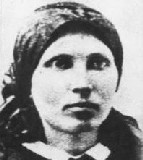
Anna Mansdotter
Murderer Christine Schürrer
Murderer · Sweden · 2008
Christine Schürrer (born June 30, 1976, in Hanover) was a German citizen who mu…
2 victims
Christine Schürrer
Murderer · Sweden · 2008
Christine Schürrer (born June 30, 1976, in Hanover) was a German citizen who mu…
2 victims
 Sarah Makin
Murderer · Australia · 1892
Sarah Makin was also known as Sarah Jane Makin. John Makin (14 February 1845 –…
12 victims
Sarah Makin
Murderer · Australia · 1892
Sarah Makin was also known as Sarah Jane Makin. John Makin (14 February 1845 –…
12 victims
 Ralph Swan
Murderer · USA · 1996
Ralph E. Swan was a White male born on 03/25/1971. He was sentenced to death on…
1 victim
Ralph Swan
Murderer · USA · 1996
Ralph E. Swan was a White male born on 03/25/1971. He was sentenced to death on…
1 victim
 Jeffery Allen Barney
Murderer · USA · 1981
Jeffery Allen Barney was executed by lethal injection in Texas on April 16, 198…
1 victim
Jeffery Allen Barney
Murderer · USA · 1981
Jeffery Allen Barney was executed by lethal injection in Texas on April 16, 198…
1 victim
 Terry Lyn Short
Murderer · USA · 1995
Terry Lyn Short was convicted in Oklahoma County of first-degree murder and fiv…
1 victim
Terry Lyn Short
Murderer · USA · 1995
Terry Lyn Short was convicted in Oklahoma County of first-degree murder and fiv…
1 victim
 Judy Kirby
Mass murderer · USA · 2000
Judy Kirby was found guilty of murder for intentionally causing a head-on crash…
7 victims
Judy Kirby
Mass murderer · USA · 2000
Judy Kirby was found guilty of murder for intentionally causing a head-on crash…
7 victims
- Gender
- female
- Country
- Sweden
- Location
- Yngsjö, Skåne County, Sweden
- Date of birth
- December 28, 1841
- Age at first offence
- 48
- Characteristics
- incest, jealousy
- Victim profile
- Hanna Johansdotter (her daughter-in-law)
- Method of murder
- Strangulation
- Date(s) of murder
- March 28, 1889
- Years active
- 1889
- Date of arrest
- —
- Status
-
Executed
Executed by beheading with axe in Kristianstad on August 7, 1890
Case record: Anna Månsdotter
Outcome
Anna Månsdotter was executed by beheading with an axe in Kristianstad on August 7, 1890. Her execution made her the last woman in Sweden to be executed.
Background
Anna Månsdotter was 48 years old and was a widow. She lived in the south of Sweden with her grown son Per.
Anna had a sexual relationship with her son Per since his early youth, and the sexual relationship even continued after Per had married. Anna was jealous of Per’s bride.
Anna married Nils Nilsson, who was 13 years older than her. She had arranged the marriage between Per and Hanna Johansdotter. The marriage arrangements and circumstances were linked to rumours and debts: Anna expected a wealthy future but they became poor and afflicted with debts. Nils Nilsson died in 1883.
Anna had three children, of which only her son Per lived to adulthood.
Hanna Johansdotter (born 1867) complained to her father that her mother-in-law, Anna Månsdotter, was the cause of her unhappy marriage. The marriage was described as not a happy one. Anna had not moved in with her own mother, which had been the initial plan.
The offence
Anna and Per killed Per’s young wife, Hanna Johansdotter. The murder was later associated with jealousy and incest, and during the trial it came to light that Anna had a sexual relationship with her son. It was believed that Anna murdered her daughter-in-law because of jealousy, with her son’s consent.
There were multiple accounts of how the murder was carried out. One summary said they beat Hanna with a piece of wood, after which Anna strangled her. They dressed her and placed her as if she had fallen down the stairs.
Circumstances of the murder were described as not entirely clear, because both Månsdotter and her son gave several different explanations for it. In later years it had been suggested that Anna carried out the murder alone.
One suggestion was that Hanna discovered the sexual relationship between her husband and his mother, and that Hanna and Per together murdered her to prevent her from being able to tell anyone.
Investigation
During the trial it came to light that Anna had a sexual relationship with her son. Several different explanations were given by Anna and her son regarding the murder.
Arrest
Per and Anna were tried for the murder. Both were sentenced to death for the murder.
Trial
Per Nilsson and Anna Månsdotter were sentenced to death for the murder.
Per received a life sentence rather than execution. Anna was sent to the scaffold.
It came out during the trial that Anna had a sexual relationship with her son and that it eventually led to the murder.
Sentencing
Anna Månsdotter was sent to the scaffold.
Per Nilsson was pardoned from his death sentence and was instead sentenced to hard labour for the rest of his life.
Execution
Anna’s execution took place on August 7, 1890 in Kristianstad by executioner Albert Gustaf Dahlman.
On August 6, 1890 at 8:00 a.m., Anna was led to the low block. She was dressed like she was going to a party, in a white dress that fell over her slim figure. Her steps were unsecure and her big eyes looked around nervously.
Anna made no resistance as she walked to the scaffold. She kneeled down at the block and looked for the last time at her executioner, who hid the axe behind his back. An assistant blindfolded her. Anna laid down with her head on the block sobbing like a child.
Just before the blow she moaned and lifted her head. The assistant had to press her head back into position. The sound of the blow could be heard. Anna’s blindfolded head rolled forward and a jet of blood sprayed from her neck.
After the execution, a medical student examined Anna’s head for one minute. Her eyes seemed blank and “alive” as if they could see.
The blade stroke her right under her ears, cleaved her tungue and went through her mouth, leaving her chin with the body.
Her body was quickly removed and undresed for scientific experiments. Her heart was removed while it was still beating. Her head was assigned to an artist, who made a death mask for the Wax Museum “Panoptikum” in Stockholm.
Outcome (related person)
Per Nilsson was pardoned from his death sentence and was sentenced to hard labour for the rest of his life. He was released in 1913 and died of consumption in 1918.
Aftermath
Månsdotter was described as the most infamous female murderer in 19th century Sweden, together with Sofia Maria Ekwall.
The Yngsjö murder was named as one of Sweden’s most notable murder cases and was said to have occurred on March 28, 1889 in Yngsjö, Skåne.
Anna Månsdotter became known as Yngsjömörderskan (in English: The Yngsjö Murderess).
In media
The Yngsjö Murder was portrayed in movies and books.
In 1966, a full-length feature film, Yngsjömordet, was made about the murder. It was directed by Arne Mattsson and had Gösta Ekman (as Per Nilsson), Gunnel Lindblom (as Anna Månsdotter) and Christina Schollin (as Hanna Johansdotter).
In 1986, a part of the mini-series, Skånska mord, also entitled “Yngsjömordet,” was made. It was directed by Richard Hobert.

Spotted an error, or have more information about this case?