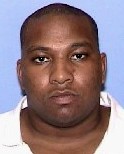
Marcus Druery
Murderer Robert Martines Perez
Murderer · USA · 1994
Name: Robert Martines Perez · Other name used in proceedings: Robert Martinez P…
15 victims
Robert Martines Perez
Murderer · USA · 1994
Name: Robert Martines Perez · Other name used in proceedings: Robert Martinez P…
15 victims
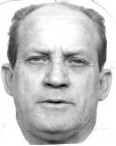 Billy Frank Vickers
Murderer · USA · 1993
Billy Frank Vickers Vickers was executed by lethal injection in Texas on Januar…
14 victims
Billy Frank Vickers
Murderer · USA · 1993
Billy Frank Vickers Vickers was executed by lethal injection in Texas on Januar…
14 victims
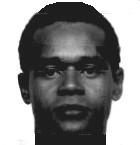 Darryl Elroy Stewart
Murderer · USA · 1980
Darryl Elroy Stewart was 38 at the time of his execution and had an education l…
1 victim
Darryl Elroy Stewart
Murderer · USA · 1980
Darryl Elroy Stewart was 38 at the time of his execution and had an education l…
1 victim
 Scott Allen Hain
Homicide · USA · 1987
Scott Allen Hain was executed by lethal injection in Oklahoma on April3, 2003.…
2 victims
Scott Allen Hain
Homicide · USA · 1987
Scott Allen Hain was executed by lethal injection in Oklahoma on April3, 2003.…
2 victims
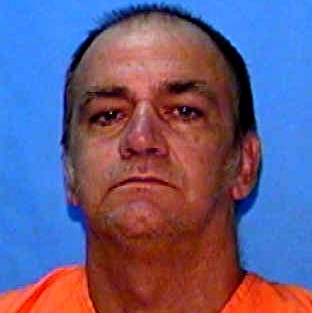 Gary Lawrence
Murderer · USA · 1994
Gary Lawrence (DOB: 06/29/57) was tried in the First Judicial Circuit, Santa Ro…
1 victim
Gary Lawrence
Murderer · USA · 1994
Gary Lawrence (DOB: 06/29/57) was tried in the First Judicial Circuit, Santa Ro…
1 victim
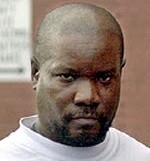 Ronald Taylor
Murderer · USA · 2000
Ronald Taylor was a 39-year-old man from Wilkinsburg who went on a racially mot…
3 victims
Ronald Taylor
Murderer · USA · 2000
Ronald Taylor was a 39-year-old man from Wilkinsburg who went on a racially mot…
3 victims
- Gender
- male
- Country
- USA
- Location
- Brazos County, Texas, USA
- Date of birth
- November 20, 1979
- Age at first offence
- 23
- Characteristics
- robbery, drugs
- Victim profile
- Skyyler "Rome" Browne, 20
- Method of murder
- Shooting
- Date(s) of murder
- October 31, 2002
- Years active
- 2002
- Date of arrest
- —
- Status
-
Sentenced to death
Sentenced to death on December 5, 2003
Case identification
Marcus Druery (Marcus Ray Tyrone Druery) was assigned TDCJ Number 999464. His date of birth was 11/20/1979.
Background
Marcus Druery received a 12/05/2003 entry with an age of 24. His education level was 12.
At the time of the offense, Druery was 22 years old. He was from Brazos County, Texas. He was Black, male, with black hair, brown eyes, and a height of 05'10" and weight of 286. He had worked as a tire repairman, ranch hand, and laborer. His prior prison record was none.
The offence
On October 31, 2002, in Brazos County, Texas, Marcus Druery and co-defendants Pitts and Harris drove a 20 year old black male to a pasture owned by Druery's family. Druery forced the victim to exit the vehicle and shot him repeatedly at close range.
After shooting the victim, Druery took the victim's cash, cell phone, pager, and a bag of Marijuana. Druery set his body on fire. The co-defendants included Pitts and Harris. The victim was described as Black/Male.
Investigation and witness accounts
On October 30, 2002, Druery went to Skyyler Browne's apartment on the Texas State Technical College campus in Waco, where both were students. Browne was commonly known by his nickname "Rome." Druery asked Rome to travel with him to Bryan; Rome hesitated but eventually agreed to go.
Rome, who was known to have sold marijuana, took his cell phone, $400 to $500, his gun, and some marijuana. No one at the school ever saw him again.
Druery later told a Texas Ranger that, after he and Rome had traveled from Waco to Bryan, they partied into the night, but Rome wanted to go home. Druery recounted to the Ranger that Rome called a girlfriend, and the girlfriend picked him up from the Contiki Club in an orange Cadillac. Law enforcement was never able to locate an orange Cadillac.
Joquisha Pitts and Marcus Harris told a different story. Pitts was Druery's former girlfriend, and Harris was Druery's younger friend who was still in high school. Pitts recounted at trial that she had known Rome for only a couple of days when she witnessed his murder. She accompanied Druery and Rome to the Contiki Club. On the way, the group picked up Harris, as well as some ecstasy tablets and some embalming fluid, which is put on cigarettes and smoked to produce a high.
Harris recounted at trial that this was his first meeting with Rome. Around 1:00 to 1:30 a.m., at Druery's suggestion, Druery, Rome, Pitts, and Harris left the Contiki Club to go to rural property owned by the Druery family. Pitts drove Druery's car as Druery navigated because she had never been there before. Neither Pitts nor Harris was aware of Druery's plans.
During the drive to the country, Druery claimed that someone was following them, and he repeatedly asked Rome for his gun so he could shoot whomever it was. Rome refused.
Once at the property, Druery unlocked the gate and drove the group the rest of the way to a stock pond. Using the vehicle's headlights for illumination, each member of the group took turns shooting Rome's gun at bottles they had thrown into the water.
Druery called Pitts to the car and told her he was going to kill Rome, saying he wanted Rome's "stuff." Pitts reminded Druery that Druery had a two-year-old son, and she ultimately believed that Druery was "just playing."
After he shot the gun, Druery claimed that the ammunition had run out, and he returned to the driver's seat of the car. Pitts saw that Druery was taking bullets from the car's console, wiping them clean with a rag, and placing them in the pistol's magazine.
Druery then called Harris to the vehicle, telling him that he planned to shoot Rome, but Harris believed that Druery was "tripping" on embalming fluid that he had smoked. Druery then ordered both Pitts and Harris to sit in the car.
Standing near the pond, Rome pulled his jacket or a hood over his head to block the wind as he attempted to light a pipe or cigar filled with marijuana. Druery skulked toward Rome under the cover of darkness, held the gun within six inches of Rome's head, and fired. As Rome's body fell, Druery fired a second shot into Rome's neck, and then he fired a third shot into Rome's body as it lay on the ground.
Pitts and Harris began to cry and scream, and both saw Druery kneel over Rome's body. Druery returned to the vehicle with Rome's cellular phone, money, marijuana, and gun. He attempted to calm his hysterical companions by giving each forty dollars.
Soon thereafter, Druery obtained some gasoline (perhaps with Harris's assistance) and poured it on Rome's body. He set it ablaze, and the three left as the body burned.
During the drive, Druery instructed Pitts and Harris on how to respond to questions about Rome. He told them to say that Rome's girlfriend picked him up in an orange Cadillac to take him to get his sister in Washington D.C. and that they didn't see him again.
The next day, Druery returned to the pond with Pitts and two others, burned the body a second time, and threw the body into the pond. Later, Harris assisted Druery in disposing of the murder weapon.
Pitts eventually went to the police and told them that she was scared and wanted to get it off her chest. Harris told authorities that he thought he would die because he believed Druery would not want to leave any witnesses to the killing.
Trial
Direct appeal and judges
The case reached the Court of Criminal Appeals of Texas as Marcus Druery, Appellant, v. The State of Texas.
The delivered opinion was by Keasler, J. Meyers, Price, Womack, Hervey, Holcomb, and Cochran JJ. joined. Johnson, J. concurred in point of error fourteen and otherwise joined the opinion. Keller, P.J. filed a concurring opinion.
Conviction and sentencing
In December 2003, a jury convicted Marcus Druery of a capital murder committed on October 31, 2002.
Based on the jury's answers to the special issues set forth in Texas Code of Criminal Procedure Article 37.071, Sections 2(b) and 2(e), the trial judge sentenced Druery to death.
Direct appeal was automatic. The court reviewed Druery's twenty-one points of error and found them to be without merit. Accordingly, the judgment and sentence of death were affirmed.
Appellate issues: accomplice-witness rule
Druery asserted that evidence was insufficient to prove that he committed the underlying predicate felony offense of robbery during the course of the commission of murder. He argued that the only evidence he committed robbery came from Pitts and Harris, which he maintained were accomplice witnesses as a matter of law. He argued that because of the accomplice witness rule, corroboration of an accomplice's testimony by other non-accomplice evidence that tends to connect the defendant to the charged offense was required, and that corroborating evidence concerning the underlying robbery was wholly lacking.
Druery urged the court to overrule its previous holding in Holladay v. State that the accomplice witness rule does not require non-accomplice testimony to corroborate the defendant's connection to the specific element that raises the offense from murder to capital murder. Here, Druery contended, the specific element was the underlying robbery, which he claimed was not corroborated.
Druery contended that the trial judge erred when he refused to instruct the jury that Pitts and Harris were accomplices as a matter of law. He also contended the instruction allowing jurors to determine whether Pitts and Harris were accomplice witnesses as a factual matter was constitutionally inadequate and constituted an improper comment on the weight of the evidence.
The court determined that Pitts and Harris were neither accomplices as a matter of law nor accomplices as a matter of fact. It stated that a trial judge had no duty to instruct the jury that a witness was an accomplice witness as a matter of law unless there existed no doubt the witness was an accomplice. It concluded that neither Pitts nor Harris had affirmative acts to assist in the commission of the capital murder or a lesser-included offense of the capital murder.
The court considered testimony elicited regarding their actions before, during, and immediately after the murder and found that it did not indicate affirmative acts that would make them accomplices for the charged offense or a lesser-included offense. It also addressed arguments about assistance after the fact in disposing of a body and the gun, and the receipt of forty dollars each, concluding these facts did not transform the witnesses into accomplice witnesses for the capital murder prosecution.
It held that points of error one through nine were overruled.
Admission of letter into evidence at punishment
Druery challenged State's Exhibits 116A, 116B, and 116C, which were admitted into evidence by the State at punishment to rebut Druery's evidence of good character. Exhibit 116A was described as a letter purportedly written by Druery, and Exhibit 116C as the letter's envelope. Exhibit 116B was described as a copy of the letter and the envelope made before the original Exhibits 116A and 116C were damaged extracting latent finger prints.
The letter was said to contain admissions by Druery concerning his violent acts and to indicate a lack of remorse for Rome's murder.
Druery argued that the trial judge erred in admitting the exhibits because they were not sufficiently authenticated, because the chain of custody was broken, rendering the exhibits irrelevant, and because the trial judge failed to instruct the jury that it must make a handwriting comparison to determine if the letter was written by him.
Letter handling and authentication details
The letter was initially mailed from the Brazos County jail to Jamesia Idlebird, but it was returned due to insufficient postage. The return address written on the envelope identified Ronnie Taylor, another inmate at the jail, rather than Druery as the sender and listed the address for the jail as the sender's address. By the time the letter was returned to the jail, Idlebird had been arrested and was also incarcerated there. The returned letter was intercepted by jail staff for security reasons because it was addressed from one inmate to another.
Jail staff forwarded the letter to the jail administrator, who forwarded it to the chief deputy of the sheriff's department. The chief deputy delivered the letter to Kenny Elliott, an investigator with the sheriff's office working on Druery's case. Elliott received the letter the day after general voir dire had begun. Only Elliott testified at punishment about how the letter was intercepted.
The letter consisted of five handwritten pages and five pages of attachments. The attachments were described as copies of the first page of the typewritten transcriptions of police interviews with LaKeisha Green, Charles Kennard, Marcus Harris, Joquisha Pitts, and Chasiti Hall.
In the first handwritten page, the writer identified himself as "Marky D," Druery's nickname, and identified Green, Kennard, Harris, Pitts, and Hall as snitches. Each of these witnesses testified for the State at the guilt stage, and Idlebird testified as a State witness during punishment.
The writer explained that he was forwarding only the first pages of the transcribed interviews because he had to study the remaining portions to prepare for trial. The writer also explained that he had to put a different name as the sender in the return address to attempt to circumvent inspection by jail authorities.
A latent fingerprint examiner testified that eleven fingerprints on the exhibits belonged to Druery. These latent prints were located on three of the handwritten pages and one of the typewritten interview pages. The examiner also testified that four other latent fingerprints found on the letter did not match Druery's fingerprints.
Druery objected to admission on authentication and chain-of-custody grounds. He did not request an instruction for handwriting comparison and did not object to the failure to include an instruction regarding Texas Code of Criminal Procedure Article 38.27 concerning evidence of handwriting.
The court found the exhibits were properly admitted and that the lack of a handwriting-comparison instruction was not error. It overruled points of error ten through twelve.
Other jury instruction rulings
Druery requested an instruction on the offense of abuse of corpse. The court overruled his related point because Druery conceded abuse of corpse was not a lesser-included offense of capital murder.
Druery complained about the trial court failing to instruct sua sponte at guilt on the lesser-included offense of first-degree murder. The court held Druery was estopped because, through counsel, he affirmatively advised the trial judge that he did not desire the instruction. It described the charge conference exchange including:
THE COURT: Has the State had an adequate opportunity to review the proposed charge?
[STATE]: We have, Your Honor.
THE COURT: And are there any objections?
[STATE]: No, Your Honor.
THE COURT: I want to be sure the State is not requesting a lesser-included offense of murder.
[STATE]: That's correct.
THE COURT: Very well. [Defense counsel], do you have any objections?
[DEFENSE]: Yes, Your Honor, I have [three] that I will memorialize Monday morning. I'm -- oh, I'm sorry. I have no objections to the Court's charge as presented to us at -- at 12:40 today. * * *
THE COURT: All right. Court will overrule those three objections [which concern an instruction on the use of illegally obtained evidence, an instruction on the lesser-included offense of abuse of corpse, and an instruction on accomplice as a matter of law rather than of fact] with the understanding that I expect you to memorialize those in writing on Monday before we begin. Are there any other objections?
[DEFENSE]: Not on behalf of Mr. Druery, Your Honor.
THE COURT: Be sure y'all are not asking for a lesser-included offense of murder.
[DEFENSE]: We are not, Your Honor.
The court overruled point of error fourteen.
Sentencing and future dangerousness
Druery argued that the evidence was legally insufficient to support the jury's finding that he would be a continuing threat to society. The state had the burden of proving the punishment issue of future dangerousness beyond a reasonable doubt.
The court described factors for determining continuing threat and found that a rational jury could have found beyond a reasonable doubt that Druery would be a continuing threat. It referenced evidence including the circumstances of the capital offense, Druery's attempts to obtain the gun, the manner of the shooting (including holding the gun within six inches of Rome's head and firing shots to the head, neck, and body), taking personal items, and attempting to destroy evidence by twice burning the body and throwing it into the stock tank. It also referenced instructions given to Pitts and Harris about explaining Rome's disappearance and regret expressed only for killing in front of them, along with giving each forty dollars to calm them.
The court also referenced evidence of prior violent behavior and other conduct described as including: five prior marijuana possession charges; physically violent behavior toward a former girlfriend causing severe injury; pointing a gun at another person when confronted about a coat; physically assaultive behavior toward a roommate; hostile and violent reactions when angered or frustrated; threats with a knife to commit physical violence upon pawn shop employees who would not refund money; throwing a chair and table toward two people and swinging a mop at one of them, hitting her; beating on a door, yelling that he wanted his CD's and that he was going to kill someone; shooting a pistol and a shotgun on separate occasions; head-butting Pitts, hitting and kicking her, choking her, and threatening to kill her while she was his girlfriend; heavy drug use and constant possession of weapons; breaking into an apartment where a gun was later found to be missing; chasing Pitts with a rifle when she refused to make him something to eat; threats to kill several people; threatening his father, grandfather, and grandmother with a hammer; attempts to kick down a door of a house because he wanted to use the phone; destroying property as an inmate at the county jail and making threats while at the jail that he was going to hurt someone; and a letter sent from the jail containing his DNA in which he wrote: "Shit if I saw him again before I came in here I would have 2 murder cases. Fuck em all cause Im ball when I get out."
The court concluded that point of error twenty-one was overruled.
Appeals: constitutionality of Article 37.071
Druery argued multiple constitutional challenges related to the Texas Code of Criminal Procedure Article 37.071.
- He argued that omission of a burden of proof in the mitigation special issue was unconstitutional; he sought revisiting prior rejection. The court declined and overruled point of error fifteen.
- He argued that prohibition on informing the jury that failure to agree on a special issue would result in life rather than death was unconstitutional; he requested reconsideration. The court declined and overruled point of error sixteen.
- He asserted that failure to define terms "probability," "continuing threat to society," and "criminal acts of violence" for future-dangerousness was unconstitutional. The court acknowledged prior holdings and declined reconsideration, overruling points of error seventeen, eighteen, and nineteen.
- He argued that failure to define "moral blameworthiness" for the mitigation special issue was unconstitutional, asserting the question was already decided adversely. The court declined to revisit and overruled point of error twenty.
The court affirmed the trial court's judgment.
Other details: described statements and witness-related testimony
The court recited additional testimony and context regarding witness perceptions and post-murder statements.
The court listed testimony elicited including:
- Druery told Pitts he was going to kill Rome.
- Druery told Harris: "Right now I'm going to kill this nigger, this dude";
- Pitts believed Druery was "just playing".
- Harris believed Druery was "tripping" on embalming fluid that he had smoked.
- Druery told Pitts and Harris to sit in the car.
- Druery later told Angela Minor that he "I killed somebody" and explained he and others were at the trailer where he used to live and that they were shooting a gun; he stated that while Rome had his back turned, he shot Rome; and he said the two people with him were Pitts and Harris.
- Druery later told Lakeisha Green that Rome had been trying to light a cigarette and had placed his jacket over his head to block the wind; Druery stated, "Say Rome," and Rome replied "What?"; and Druery said he shot Rome in the head and that Pitts and Harris ran to the car screaming.
- Harris lied to Druery and told him he was all right.
- Druery asked Pitts and Harris if they wanted money; neither responded; he gave forty dollors to each.
Outcome
The Court of Criminal Appeals of Texas affirmed the trial court's judgment and sentence of death. The opinion was delivered on April 4, 2007. The court published the decision.
Timeline
- 10/31/2002 — Marcus Druery shot a 20 year old black male repeatedly at close range in Brazos County, took his cash, cell phone, pager, and a bag of Marijuana, and set the body on fire.
- 12/05/2003 — A jury convicted Marcus Druery of capital murder and the trial judge sentenced him to death.
- 04/04/2007 — The Court of Criminal Appeals of Texas delivered the opinion affirming the judgment and sentence of death.

Spotted an error, or have more information about this case?