
Larissa Schuster
Murderer Miranda Barbour
Murderer · USA · 2013
Miranda Barbour, 19, defendant. · Elytte Barbour, 22, defendant and husband of…
100 victims
Miranda Barbour
Murderer · USA · 2013
Miranda Barbour, 19, defendant. · Elytte Barbour, 22, defendant and husband of…
100 victims
 Megan Huntsman
Murderer · USA · 1996
Megan Huntsman was 40 at sentencing. She was a mother of three children who wer…
6 victims
Megan Huntsman
Murderer · USA · 1996
Megan Huntsman was 40 at sentencing. She was a mother of three children who wer…
6 victims
 Angela Johnson
Murderer · USA · 1993
Angela Jane Johnson was convicted in federal court of aiding and abetting the m…
5 victims
Angela Johnson
Murderer · USA · 1993
Angela Jane Johnson was convicted in federal court of aiding and abetting the m…
5 victims
 Michele Kalina
Murderer · USA · 1996
Michele Kalina pleaded guilty to murder for one of five infants she initially w…
5 victims
Michele Kalina
Murderer · USA · 1996
Michele Kalina pleaded guilty to murder for one of five infants she initially w…
5 victims
 Tiffany Hall
Murderer · USA · 2006
Tiffany Hall was 24 when she was charged in September 2006. She later entered a…
5 victims
Tiffany Hall
Murderer · USA · 2006
Tiffany Hall was 24 when she was charged in September 2006. She later entered a…
5 victims
 Banita Jacks
Murderer · USA · 2007
Banita Jacks was a Washington, DC resident convicted of murdering her four daug…
4 victims
Banita Jacks
Murderer · USA · 2007
Banita Jacks was a Washington, DC resident convicted of murdering her four daug…
4 victims
 Heliberto Chi
Murderer · USA · 2001
Heliberto Chi (TDCJ Number: 999437). Heliberto Chi was executed by lethal injec…
1 victim
Heliberto Chi
Murderer · USA · 2001
Heliberto Chi (TDCJ Number: 999437). Heliberto Chi was executed by lethal injec…
1 victim
 Johan Kotze
Murderer · South Africa · 2012
Johan Kotze was sentenced to life in prison on July 16, 2013. · Johan Kotze — c…
1 victim
Johan Kotze
Murderer · South Africa · 2012
Johan Kotze was sentenced to life in prison on July 16, 2013. · Johan Kotze — c…
1 victim
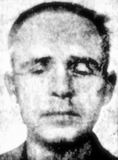 James Rodgers
Murderer · USA · 1957
James W. Rodgers (August 3, 1910 – March 30, 1960) was an American who was sent…
1 victim
James Rodgers
Murderer · USA · 1957
James W. Rodgers (August 3, 1910 – March 30, 1960) was an American who was sent…
1 victim
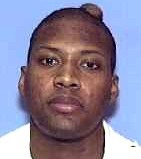 Christopher Coleman
Murderer · USA · 1995
December 14, 1995 — A man approached the passenger side of a car occupied by fo…
3 victims
Christopher Coleman
Murderer · USA · 1995
December 14, 1995 — A man approached the passenger side of a car occupied by fo…
3 victims
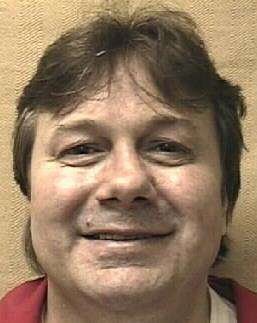 Ronald Wayne Frye
Murderer · USA · 1993
Ronald Wayne Frye was convicted on November 15, 1993 of first-degree murder and…
1 victim
Ronald Wayne Frye
Murderer · USA · 1993
Ronald Wayne Frye was convicted on November 15, 1993 of first-degree murder and…
1 victim
- Gender
- female
- Country
- USA
- Location
- Fresno, California, USA
- Date of birth
- 1960
- Age at first offence
- 43
- Characteristics
- parricide, financial gain
- Victim profile
- Timothy Schuster (her estranged husband)
- Method of murder
- B y submerging his body in hydrochloric acid
- Date(s) of murder
- July 9, 2003
- Years active
- 2003
- Date of arrest
- 7 days later
- Status
-
Life imprisonment
Sentenced to life in prison without parole on May 16, 2008
Case details
Larissa Schuster was an American woman who was convicted of first-degree murder of her husband, Timothy Schuster, for financial gain. She was sentenced to life in prison without parole on May 16, 2008. She served her sentence at Valley State Prison for Women in Chowchilla, California.
Timeline
- June 13, 2003 — Court discussion in the record described internet searches conducted on the office computer for terms “acid digestion tissues,” “acid digestion animal tissues,” and “sulfuric acid.”
- July 4, 2002 — Timothy Schuster moved out of the family residence into a condominium.
- August 8, 2002 — Larissa Schuster had Leslie Fichera rent a storage unit at Security Public Storage; Fichera rented unit A-182 in her own name and then provided the entry code and instructions to Schuster.
- August 10, 2002 — Timothy returned home from a trip to find his residence ransacked and items he had shared with Schuster gone, and a report he had been using for custody purposes was missing.
- April 30, 2003 — A blue 55-gallon barrel was purchased and sent to CCRL; Schuster said it was for yard clippings, and she asked a lab employee if he thought a body would fit in it.
- June 13 to July 2, 2003 — CCRL purchased, through orders placed by Schuster, three cases of hydrochloric acid and one case of sulfuric acid; each case contained six 2.5-liter bottles.
- July 9, 2003 (night; stated as Thursday night) — Larissa Schuster and James Fagone lured Timothy Schuster from his home; the events described in the record included use of chloroform and a stun gun to incapacitate Timothy, disposal in a 55-gallon barrel, and attempted dissolution using hydrochloric acid.
- July 10, 2003 (morning) — The record described issues beginning with the missing-person concern and actions taken by police after an initial 24-hour period.
- July 11, 2003 (Friday) — A missing person report was filed with the Clovis Police Department; Officer John Willow went to Timothy’s house, found a gun under a cushion on a chair near the front door, located a cell phone, and called numbers to see if anyone had contact; detectives investigated and interviewed Schuster the same period.
- July 12, 2003 — Schuster possessed receipts showing purchases after 7:30 p.m. on Saturday, July 12, including Lysol and other air fresheners; the defense evidence described a check dated July 8 and signed by Schuster.
- July 14, 2003 — Search warrants were obtained for the storage unit, the lab, and Schuster’s house; human remains were found in the blue 55-gallon barrel in the storage unit and identified as Timothy’s through DNA testing.
- July 16, 2003 — Schuster was arrested.
- October 18, 2007 — The jury was sworn.
- October 22, 2007 — The evidentiary portion of trial began.
- December 12, 2007 — The jury found Larissa Schuster guilty of first-degree murder with a special circumstance of financial gain.
- February 20, 2007 — An abstract of judgment dated February 20, 2007 described James Fagone being convicted of first degree murder and residential burglary and being sentenced to life in prison without the possibility of parole.
- May 16, 2008 — Larissa Schuster was given the mandatory sentence of life in prison without parole.
- February 28, 2011 — The California Court of Appeal, Fifth District affirmed the judgment, stating “The judgment is affirmed.”
- 2009 — The murder of Timothy Schuster was featured on Snapped and Dateline NBC.
- 2011 — The murder of Timothy Schuster was featured on Deadly Women.
- 2012 — The murder of Timothy Schuster was featured on Sins and Secrets.
Background
Larissa Schuster resided in Clovis with her husband and their son, T., during early 2002. Her daughter was sent, or soon would be sent, to live with Schuster’s parents in Missouri.
Schuster owned Central California Research Laboratories (CCRL) in Fresno. Timothy Schuster worked as a manager in the cardiology department at Saint Agnes Medical Center (Saint Agnes). Schuster and Timothy separated acrimoniously in 2002 and for a time maintained separate living quarters in the family residence. Schuster complained about that arrangement. From the time of the separation on, Schuster acted as if the house and business were hers and did not want Timothy to have custody of T. or a relationship with him. She said she would like to see Timothy dead.
Around July 4, 2002, Timothy moved out of the house and into a condominium. Schuster was enraged that he left and took items from the house while she was on a trip. The record described that Schuster sometimes told others she thought she should just kill Timothy and be done with it. She twice asked someone who came to her house to work on a barbecue if he would help her enter Timothy’s residence and retrieve some property.
After the break-in at Timothy’s condominium in August 2002, their relationship deteriorated further. Timothy moved to a house in Clovis equipped with an alarm system and motion sensors. He expressed concern about Schuster and obtained a handgun and a concealed weapon permit.
The record described Schuster as repeatedly expressing prayers that Timothy would die. The record also described her asking a church choir fellow member that she would do everything in her power to keep Timothy from getting the business and asking a barbecue repairman if he would stun Timothy with a stun gun when he answered the door and flag her down.
Schuster’s statements and actions were presented as part of a narrative of anger and conflict surrounding the divorce, custody issues, and ownership of the business and assets.
The offence
Victim
Timothy Schuster was murdered. The record described his death as being carried out for financial gain. The record also described that the remains were found in a blue 55-gallon barrel.
Conduct described
The record described that, on the night of July 9, 2003, Timothy was incapacitated and disposed of in a 55-gallon barrel. The pair disposed of the unconscious body in a 55-gallon barrel and attempted to dissolve the body with hydrochloric acid. The forensic findings described in the appellate record included that only the lower half of the body remained, placed into the barrel head down and floating in fluid containing hydrochloric acid. The record described early decomposition and that the time of death possibly was July 9 through 11. Tissue samples tested positive for chloroform, and the cause of death was described as the probable combined effects of acute chloroform exposure and hydrochloric acid immersion, with it also being very possible that death resulted solely from chloroform. The record stated it could not be determined whether Timothy was alive when placed in the barrel.
The record further described chloroform as an anesthetic type substance that can cause rapid loss of consciousness and incapacitation.
Financial gain special circumstance
The prosecution presented evidence that the killing was carried out for financial gain because Schuster did not want to share family property in a divorce settlement. The record described the financial structure of the divorce and assets, including the lab business and the home.
Investigation
A missing person report was not accepted until Timothy had been missing for a full 24 hours. After the report, Officer John Willow went to Timothy’s house and found a gun underneath a cushion on a chair near the front door. A cell phone in the bedroom was found and the officer called numbers to determine whether anyone had had contact with Timothy. Schuster was contacted and she said she had not heard from Timothy.
Detectives Vincent Weibert and Larry Kirkhart later entered Timothy’s house and found damage to the “pony wall” behind the chair where the gun was found. Inside a briefcase in the same room was a microcassette recorder and tape. Caller ID records for the telephone in the master bedroom showed only one call received at 2:02 a.m. from Schuster’s cell phone number.
Police interviewed Schuster at the Clovis Police Department. During the interview, Schuster related details about her communications with Timothy and a call she said she made around 2:00 a.m. that she initially denied making and later admitted after the discovery of her cell phone in her car. The record described that Schuster said the call was less than 30 seconds and related to custody and the pickup time for T. for an impending trip.
After further investigation, search warrants were obtained for the storage unit, the lab, and Schuster’s house. In the storage unit, investigators found a blue 55-gallon barrel containing human remains identified as those of Timothy through DNA testing. The record stated that tissue samples tested positive for chloroform and that the body was in early decomposition. The record also described that Lysol air freshener was found inside CCRL, and a case of six empty bottles of hydrochloric acid was found toward the bottom of a dumpster in a locked enclosure behind the lab.
Forensic analysis of Schuster’s office computer showed internet searches conducted on June 13 for terms “acid digestion tissues,” “acid digestion animal tissues,” and “sulfuric acid.”
Arrest
Schuster was arrested on July 16. The record described that in her possession were two receipts from a store about halfway between CCRL and Security Public Storage, showing purchases made just after 7:30 p.m. on Saturday, July 12, including Lysol and other air fresheners. It also described a card with the storage facility entry instructions and a code number.
Trial
Separate trials
The record described that James Fagone and Larissa Schuster were tried separately.
The record described James Fagone’s trial and outcome as including conviction of first-degree murder with a life sentence without parole, and acquittal of kidnapping. The appellate record also described Fagone’s convictions and sentencing and stated that Fagone’s case was not before the appellate court.
Larissa Schuster’s trial
Schuster’s trial began after a venue change from Clovis, California to Los Angeles due to pre-trial publicity. The record described the jury as consisting of nine women and three men at the start of trial.
Prosecutors alleged to the jury that Schuster attempted to solicit Timothy’s murder before. The record also described that prosecutors played graphic and berating phone messages from Schuster to Timothy saved on his answering machine, and presented evidence including Schuster’s access to chemicals and her role as a biochemist.
Schuster did not have James Fagone testify in her trial. Schuster decided to take the witness stand in her own defense. She denied killing Timothy and testified that she could not believe her ears when Fagone confessed on July 12: “I heard him say something like 'there had been an accident and Tim is dead.' I thought he was joking.” She admitted helping move Timothy’s body. When confronted over the phone messages on Timothy’s answering machine, she replied: “It is something I'm really ashamed about. You have to realize that is something... a result of many accumulative things.” She also testified that the large amounts of chemicals at her laboratory were for cleaning laboratory items.
The appellate record quoted one of the trial communications: “We the jury in the above and entitled action found the defendant Larissa Schuster, Guilty of First degree murder of Timothy Schuster.”
Juror issues during trial
The record described an incident in which Juror No. 001 was seen giving Schuster a thumbs-up sign; the prosecutor moved to have the juror removed over the defense objection; Judge Wayne Ellison questioned the juror, who stated she wanted to let Schuster know she had done a great job under difficult circumstances and insisted she had not formulated an opinion on guilt or innocence. Ultimately, Juror No. 001 remained.
The record also described that near closing arguments, complaints arose about another juror and that the court dismissed Juror No. 001 near the end of trial after further reports of misconduct and after a hearing in which Juror No. 119 provided detailed allegations about Juror No. 001’s behavior and attitude.
Juror No. 119 made the following statement: “It's not what you say, it's what you do. And there are five or six of us wondering why Juror 001 is still here after so many complaints that * * * *121 ․ and I made yesterday as well. You folks are not in the jury room and we are. So we know of a hell of a lot more what's going on than what is expressed within here. I'm sorry for my language. But several of us are angry and feel that this hampers the jury.”
Juror No. 119 also stated: “Monday we were presented with the pictures of the deceased. And I take that tremendously seriously and many of us do. And, um, her attitude all along has been oh, she's not a bad person. But she's lackadaisical and not serious about this entire procedure. And I know that when you present this to her she will promise to be [a] good girl and everything. But what you say is not what you do.”
When asked to specify conduct, Juror No. 119 stated: “It was previous to Tuesday[, December 4]. Because when it came to a head on Tuesday it was because she had drunk two cans of Red Bull at lunch and was sitting back there scribble, scribble, scribble. She'd shift the page, scribble, scribble, scribble. The court reporter has several times looked back. I've seen the judge look back.”
Juror No. 119 further stated: “I cannot tell you that it is specifically something that she has said, but her manner of behavior is extremely distracting. And I can't speak for others but oh, boy, she's a distraction. And I personally-I don't trust her to be fair.”
Juror No. 119 also said: “People's eyes are going or rolling or something like that. Okay? Um, so I can't tell you that it's specific. We have been together for two months now. And it's become sort of like a little family. And we do not discuss the proceedings that go on in here. Period. End of statement. Because everyone takes this tremendously seriously. This is incredibly serious. And we all know it. And to have somebody acting like that really pisses me off.”
The trial court found good cause under section 1089 and discharged Juror No. 001.
Sentencing
On May 16, 2008, the trial court sentenced Larissa Schuster to life in prison without parole. The record described that the mandatory sentence was imposed because the jury found first-degree murder with the special circumstance of financial gain.
At sentencing, the record described a victim’s impact statement by Schuster’s daughter, Kristin Schuster: “You've given up all rights as a mother, wife, daughter, friend and woman. You're a disgrace to this family-a pitiful excuse for a human. I pray you're continually haunted at night by the sight and sound of my father fighting for his last breathing moments on this earth. I hope you toss and turn and have horrible nightmares visualizing the horrific act of violence you have committed.”
At sentencing, the appellate record also described a victim’s impact statement by Timothy Schuster’s mother, Shirley Schuster: “I can't even imagine his last hours and the pain he must of gone through. How I wish I could have been there to help him with his pain.”
The record further described that Schuster’s defense attorney Roger Nuttall summarized her state of mind for the media after the hearing: “I'm not going to say she's up or down. She's accepting what she knew would happen today.”
The record also stated that Schuster was ordered to pay for the victim’s burial expenses.
The record described that Kristin Schuster had waited several years to confront her mother and that it had been five years since Kristin and her mother had seen each other face-to-face.
Appeals
California Court of Appeal (Fifth District)
In February 2011, the Fifth District Court of Appeal affirmed the judgment.
The appellate court described the appeal as raising various claims of error, including:
- denial of Schuster’s motion to suppress her statements to police prior to trial,
- the discharge of Juror No. 001 during trial,
- jury instruction issues including an instruction defining accessory,
- claims related to battered spouse syndrome evidence and instructions,
- issues related to the financial gain special circumstance instructions,
- claims related to CALCRIM No. 220,
- and cumulative error.
The appellate court concluded: “The judgment is affirmed.”
Miranda suppression issue
The appellate record described that Schuster sought to suppress statements made to police during the interview conducted July 11 through July 12 as having been taken in violation of Miranda v. Arizona. The appellate court held that a reasonable person in Schuster’s position would have felt free to terminate the interview and leave and that the interview was not custodial; therefore, Miranda warnings were not required.
Juror discharge issue
The appellate record described the trial court’s handling of juror misconduct and concluded there was no abuse of discretion in discharging Juror No. 001 and denying a motion for a new trial. The appellate court concluded that Juror No. 001’s repeated willful violation of the court’s instructions constituted serious misconduct and supported discharge.
Accessory instruction
The appellate court addressed Schuster’s claim that the trial court erred by refusing to give a pinpoint instruction defining accessory. The appellate court concluded the instruction was properly refused and stated that defendants do not have a right to instructions on lesser related offenses unless agreed by both parties under California law.
Outcome
Larissa Schuster was convicted of first-degree murder of her husband Timothy Schuster and found guilty with the special circumstance of financial gain. The California Court of Appeal, Fifth District, affirmed the judgment in February 2011.
Other details
People and relationships
Timothy Schuster was Schuster’s estranged husband. They had a daughter, Kristin Schuster, and a son, Tyler (also described in the appellate record as T.).
The record also named:
- James Fagone, who was jointly charged in the matter and tried separately
- Leslie Fichera, a chemist at CCRL who rented storage unit A-182
- Tami Belshay, Schuster’s best friend and co-worker who reported atypical behavior to authorities
- Terri Lopez, a manicurist and friend
- Mary Solis, a friend and colleague of Timothy Schuster
- Victor Uribe, Jr., who checked on Timothy
- Robert Solis, who filed a missing person report
- Bob Solis, who had dinner with Timothy and later reported disappearance
- Anthony Fagone and Mrs. Fagone, referenced in testimony around retrieval of T.’s bicycle
Quotes preserved
- Larissa Schuster told a friend Terri Lopez: “Well, I want [my husband] dead. You don't understand. I could do it and get away with it”.
- In Schuster’s testimony on the stand: “No, I did not kill my husband.”
- Schuster testified about Fagone’s confession: “I heard him say something like 'there had been an accident and Tim is dead.' I thought he was joking.”
- Schuster replied when confronted about the phone messages: “It is something I'm really ashamed about. a result of many accumulative things.”
- Defense attorney Roger Nuttall summarized after sentencing: “I'm not going to say she's up or down.
Trial evidence and forensic points
The record described that the blue 55-gallon barrel found in unit A-182 contained human remains identified as Timothy’s through DNA testing. The remains were described as being early in decomposition and floating in hydrochloric-acid-containing fluid, with tissue samples positive for chloroform. It also described that it could not be determined whether Timothy was alive when placed in the barrel.
The record described that CCRL purchased acid in large quantities in the relevant period, including purchases between June 13 and July 2. It also described that CCRL typically used very little hydrochloric acid in the prior period.
The record described that Schuster used or purchased cleaning and air freshening products and that a case of six empty bottles of hydrochloric acid was found in a locked dumpster enclosure behind the lab.
Media features
The murder of Timothy Schuster was featured on Snapped and Dateline NBC in 2009, Deadly Women in 2011, and Sins and Secrets in 2012.


Spotted an error, or have more information about this case?