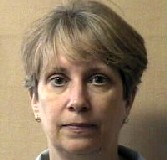
Barbara Stager
Murderer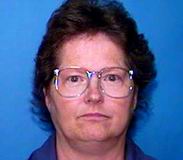 Bobbie Sue Terrell
Murderer · USA · 1984
Bobbie Sue Dudley Terrell was a Pinellas County nurse and worked as the night s…
12 victims
Bobbie Sue Terrell
Murderer · USA · 1984
Bobbie Sue Dudley Terrell was a Pinellas County nurse and worked as the night s…
12 victims
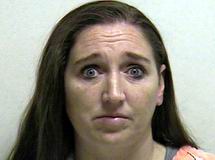 Megan Huntsman
Murderer · USA · 1996
Megan Huntsman was 40 at sentencing. She was a mother of three children who wer…
6 victims
Megan Huntsman
Murderer · USA · 1996
Megan Huntsman was 40 at sentencing. She was a mother of three children who wer…
6 victims
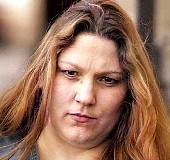 Angela Johnson
Murderer · USA · 1993
Angela Jane Johnson was convicted in federal court of aiding and abetting the m…
5 victims
Angela Johnson
Murderer · USA · 1993
Angela Jane Johnson was convicted in federal court of aiding and abetting the m…
5 victims
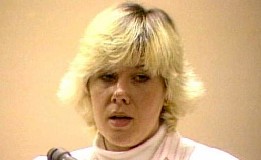 Catherine May Wood
Murderer · USA · 1987
Catherine May Wood was an American caregiver who worked at the Alpine Manor Nur…
5 victims
Catherine May Wood
Murderer · USA · 1987
Catherine May Wood was an American caregiver who worked at the Alpine Manor Nur…
5 victims
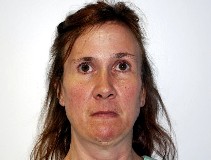 Michele Kalina
Murderer · USA · 1996
Michele Kalina pleaded guilty to murder for one of five infants she initially w…
5 victims
Michele Kalina
Murderer · USA · 1996
Michele Kalina pleaded guilty to murder for one of five infants she initially w…
5 victims
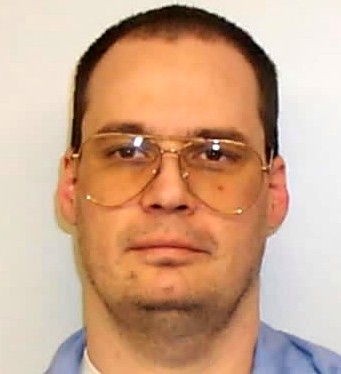 Darrell Edward Payne
Murderer · USA · 2000
Darrell Edward Payne was 36 and of Nampa at the time of the July 2000 murder of…
1 victim
Darrell Edward Payne
Murderer · USA · 2000
Darrell Edward Payne was 36 and of Nampa at the time of the July 2000 murder of…
1 victim
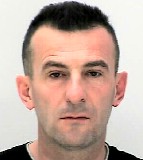 Ibrahim Shkupolli
Mass murderer · Finland · 2009
31 December 2009 — The Sello mall shooting occurred in the morning shortly afte…
5 victims
Ibrahim Shkupolli
Mass murderer · Finland · 2009
31 December 2009 — The Sello mall shooting occurred in the morning shortly afte…
5 victims
 Charles Severance
Serial killer · USA · 2003
Charles Severance was sentenced to life in prison plus 48 years on January 20,…
3 victims
Charles Severance
Serial killer · USA · 2003
Charles Severance was sentenced to life in prison plus 48 years on January 20,…
3 victims
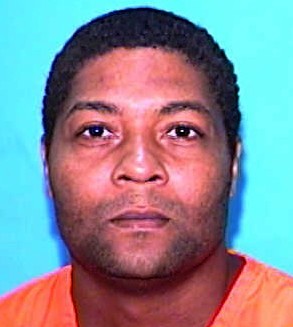 Kenneth Hartley
Murderer · USA · 1991
Name: Kenneth Hartley Date of birth: 01/27/67 Court: Fourth Judicial Circuit, D…
1 victim
Kenneth Hartley
Murderer · USA · 1991
Name: Kenneth Hartley Date of birth: 01/27/67 Court: Fourth Judicial Circuit, D…
1 victim
 David Hicks
Murderer · USA · 1988
David Hicks was executed by lethal injection in Texas on January 20, 2000. Ocol…
1 victim
David Hicks
Murderer · USA · 1988
David Hicks was executed by lethal injection in Texas on January 20, 2000. Ocol…
1 victim
- Gender
- female
- Country
- USA
- Location
- Durham, Monroe County, North Carolina, USA
- Date of birth
- October 30, 1948
- Age at first offence
- 40
- Characteristics
- murder for hire, motive unclear, dismemberment
- Victim profile
- Allison Russell Stager III, 41 (her husband)
- Method of murder
- Shooting ( .25 caliber Beretta pistol)
- Date(s) of murder
- February 1, 1988
- Years active
- 1988
- Date of arrest
- April 15, 1988
- Status
-
Life imprisonment
Sentenced to death on May 17, 1989; resentenced to life in prison in August 1993
Case information
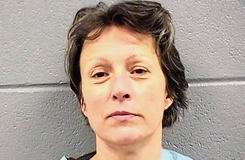
Barbara Stager (born October 30, 1948) was an American woman convicted in 1989 of murdering her husband, Russell Stager, in 1988.
Stager was suspected of the earlier murder of her first husband, Larry Ford, who died in nearly identical circumstances.
Timeline
- 1 February 1988, 6:08 a.m. — Jason Stager telephoned the 911 emergency operator from his home and told the operator that his father had suffered a gunshot wound and that his mother had asked him to call for an ambulance.
- 1 February 1988 (shortly after 6:15 a.m.) — Deputy Sheriff Clark Green arrived on the scene.
- 3 February 1988 — An autopsy was conducted on Russell Stager by Dr. Thomas Clark.
- 15 February 1988 — Doris Stager testified about a conversation with the defendant at Doris’ home.
- March 1978 (22 March 1978, shortly after midnight) — Emergency medical services personnel were called to the home of Larry Ford; Ford was dead when an ambulance arrived.
- 22 March 1978 — An autopsy was conducted on Larry Ford by Dr. Brad Randolph.
- 18 April 1989 — Police received a cassette tape from Evans and his mother.
- 19 May 1989 — A judgment imposing a sentence of death was entered by Allen (J.B.), Jr., J., in Superior Court, Lee County.
- 30 August 1989 — The conclusion of her trial for first-degree murder; the jury deliberated for 44 minutes to reach a guilty verdict.
- 8 May 1989 — Presentation of evidence commenced on the 1 May 1989 criminal session call for trial at the 1 May 1989 Criminal Session of Superior Court, Lee County.
- 15 May 1989 — The State offered the tape into evidence.
- October 1987 — Doris Stager’s testimony described a conversation after supper regarding the defendant asking Russell to move and the defendant holding Russell’s hand while looking directly at Doris.
- 27 June 1988 — The defendant filed a motion in limine to prohibit the State from presenting evidence about the death of Larry Ford.
- 16 December 1988 — A hearing was held on the motion in limine; the trial court denied it.
- 16 December 1988 — Hearing date for the motion in limine.
- 20 April — The State provided a copy of the tape recording to the defendant.
- 24 April — The trial court ordered that funds be provided to the defendant for purposes of investigating the tape recording.
- 1 May — The trial court ordered the State to provide the date the tape was discovered and to name the persons who discovered the tape.
- 17 March 1979 — The defendant and Allison Russell Stager III were married.
- 17 March 1979 — Marriage date repeated in the opinion.
- August 1989 (next day after 30 August 1989) — Stager was sentenced to death the next day.
- May 17, 1989 — Sentenced to death on May 17, 1989.
- August 1993 — Resentenced to life in prison in August 1993.
- March 2009 — A parole hearing occurred.
- June 1, 2013 — Next parole date was set for June 1, 2013.
- February 2013 — She was moved in February 2013.
Background
The State’s evidence tended to show that in the fall of 1978 the defendant and the victim, Allison Russell Stager III, met and began dating. On 17 March 1979, they were married.
On 1 February 1988, the defendant and Russell Stager resided in Durham. Jason and Brian Stager, the defendant’s sons from her previous marriage, had been adopted by Russell approximately eight years earlier. Fourteen-year-old Jason lived with his parents.
The State’s evidence also tended to show that in the fall of 1978 the defendant met and began dating Russell Stager.
The offence
Russell Stager’s death (1 February 1988)
At 6:08 a.m. on 1 February 1988, Jason Stager telephoned the 911 emergency operator from his home. Jason told the operator that his father had suffered a gunshot wound and that his mother had asked him to call for an ambulance.
A volunteer unit from the Lebanon Fire Department (the “Lebanon First Responders”), an Emergency Medical Services unit, and three deputies from the Durham County Sheriff’s Department were dispatched to the residence.
Douglas Griffin of the Lebanon First Responders was the first person to arrive. Jason Stager directed Griffin to a bedroom. The bedroom door was open approximately two inches. When the door opened, the light came on in the darkened bedroom and the defendant appeared at the door. Griffin recalled that she showed “a slight indication of crying but very little.” The defendant backed up and motioned toward the bed as Griffin entered.
Russell Stager was lying with his left side on the right side of the bed. He was not lying “cleanly on his shoulder,” but was turned slightly toward the pillow with his face in the pillow and his left eye somewhat covered by the pillow. There was a twelve to eighteen inch blood stain on the pillow behind Russell’s head, and blood was coming from his nose and mouth. There also was blood on the hair on the back left side of his head. His body was normal in color, but his face was ashen and his eyes were rolled back in his head.
Griffin pivoted Russell so that his face would be out of the pillow and his breathing would be easier. As Griffin was taking Russell’s blood pressure and pulse, Doug Wingate, another member of the Lebanon First Responders, entered the room and began to help. In the process of reading Russell’s vital signs, they turned his head. This caused the pillow to shift around, thereby exposing a .25 caliber Beretta pistol. Beyond the pistol, and further underneath the pillow, lay a spent shell casing. Noticing that the hammer on the pistol was cocked, Griffin did not move the pistol.
The defendant commented that she had already moved the pistol. When Wingate asked the defendant what had happened, she said that the gun had discharged as she was pulling it out from under the pillow. She said that she had heard her son get up, and she had been trying to remove the gun in case her husband awoke and thought someone was in the house. The defendant told Wingate that they kept a gun because they had heard noises at night and were concerned about burglars.
Deputy Sheriff Clark Green was the first law enforcement officer to arrive. When he arrived shortly after 6:15 a.m., the defendant was sitting on the edge of the bed and had changed into blue jeans, a sweat shirt, and tennis shoes. Her appearance was neat. Deputy Green secured the area and, together with Deputy Sheriff Paul Ernest Hornbuckle, interviewed the defendant. Before they began the questioning, the defendant repeatedly said, “I kept telling him about those damn guns.”
The officers asked the defendant for general information such as the victim’s full name and age, and she answered without difficulty. The officers asked her about the gun, and the defendant stated that her husband was “in a stage about guns” and occasionally slept with a pistol. At that time, her son Jason came up and she directed Jason to tell the officers “about him having these stages about guns, he carries guns in the cars, leaves them under the pillow, he is scared [sic] about somebody coming into the house.” Both Jason and the defendant said that the victim occasionally slept with a gun under his pillow. Deputy Green asked the defendant if there were marital problems, and she said no.
While the officers were questioning the defendant, one of the emergency medical technicians interrupted to ask if one of the officers would remove the gun from the bedroom. Deputy Hornbuckle removed the gun from beneath the pillow; the gun pointed toward the victim. The shell casing was also removed from under the edge of the pillow.
Michael Kevin Wilson arrived after Deputy Hornbuckle removed the gun. The defendant became such a distraction to medical personnel that they asked Deputy Hornbuckle to remove her from the room. Wilson described the defendant repeatedly making statements such as:
- “I’m scared of these things, my God I wish we didn’t have them. . . . I wish he wouldn’t have these things under there, I’m scared of guns, guns are not safe, you know, there are kids in the house.”
Wilson described the repetitious nature of these statements as like a “chant.” Wilson was a member of the same church as Barbara and Russell Stager and Russell’s parents.
After Russell was treated at the Stager residence and transported to Duke Medical Center, Wilson told the defendant that he would be happy to contact her husband’s parents or their pastor and drive them to the hospital. The defendant responded that she did not want Russell’s father called and told Wilson not to call anyone.
Wilson testified that the defendant’s response startled him. He later asked Douglas Griffin to go home and immediately prepare a report about what he had observed. Griffin’s report indicated that the defendant had stated to emergency medical personnel that her husband had been hearing sounds outside of the house during the night and had placed the pistol under his pillow. The next morning, upon hearing her son awake in the house, the defendant reached under the pillow to remove the pistol and it fired.
Russell Stager was treated at the Stager residence and transported to Duke Medical Center. Doris Stager testified that on 1 February 1988 at approximately 8:45 a.m., Doris received a telephone call from the defendant’s mother, Marva Terry. She told Doris that the victim was in the emergency room at Duke Hospital and that the defendant wanted Doris there.
As Doris walked into the room at the hospital, the defendant began saying, “I’m sorry, I didn’t mean to do it, forgive me.” Russell Stager died around noon that day.
Statements and conduct following the shooting
Phyllis Hunnicutt Cagle, secretary to the principal at Durham High School, testified that the defendant telephoned her at home around 7:00 a.m. on 1 February 1988 and informed her that the victim would not be at work that day. When Cagle asked if the victim was sick, the defendant hesitated and then said “yes.”
Doris Stager testified she last saw the victim alive on 31 January 1988. She recalled that after supper they were sitting around and the defendant asked Russell to move from a chair at the end of the couch to a chair across from Doris. After Russell moved, the defendant sat on the floor beside the chair, reached up and held his hand, and looked directly at Doris. Russell did not respond to the defendant’s display of affection.
On 2 February 1988, Doris Stager and her husband were at the funeral home assisting the defendant with funeral arrangements when Doris heard the defendant speaking with the funeral director about drawing Social Security on the two boys.
On 5 February, the defendant called Doris and informed her that she had been to the Veterans Administration. The defendant wanted to know if Russell had ever been in the regular Army. Doris responded that he had been in the Army Reserves and the National Guard. On the following Tuesday, 9 February 1988, the defendant told Doris that she had given all of Russell’s clothes to two churches.
On 15 February 1988, the defendant and Doris had another conversation at Doris’s home. The defendant again told Doris that the shooting was an accident and that she wanted forgiveness. The defendant also said she was not going to be able to make her monthly house payment and that it would take her entire salary. She also indicated that after she received insurance payments from the National Guard and the school where the victim had worked, she would be able to make the house payment.
On 15 February 1988, Doris received a conversation described above.
Dr. Franklin Honkanen testified that the defendant told him the victim kept a large number of guns in the house and that many had been loaded. She stated that they were concerned over break-ins and that the victim previously had slept with a pistol under the pillow. She stated she did not like this practice and that the victim had said he would not do it again.
The defendant also told the doctor that on the morning of the shooting she awakened around 6:00 a.m. and stretched out on her stomach. As her right hand reached underneath the victim’s pillow she felt something hard. When she pulled it out she realized it was a gun and started to get out of bed. She told Honkanen she was backing off of the bed when the gun fired and hit the victim.
Honkanen asked about distance and how the gun discharged. The defendant replied she did not know how the gun went off but that it was in her hand, and she thought she was between three and five feet away from the victim. She told him she was not yet standing when the gun discharged and that she was not holding the gun up when it fired but was dragging it across the bed. She said the victim usually did not sleep with a gun but that he had slept with one on at least one prior occasion. She stated they argued about it and that the victim had promised not to do it again. She stated she was surprised that morning to find a gun under the pillow and that she thought the shooting was a terrible accident.
Honkanen examined Russell at the hospital and found a single bullet wound approximately in the middle of the back of Russell’s head. The wound had been cleaned and sutured, and a small circle of hair had been removed from around the wound. Honkanen did not see any powder deposits or evidence of burning or singeing. He opined that powder marks could have been present if the weapon had been fired within eighteen inches and burning or singeing if fired within one foot.
R.D. Buchanan, Homicide Detective with the Durham County Sheriff’s Department, testified he learned of the victim’s death at 12:45 p.m. on 1 February 1988 and met the defendant at her parents’ home later that day. The defendant told Buchanan she was in the bed that morning when the alarm clock went off in her son’s room. She reached over to her husband and felt an object underneath the pillow. When she stuck her hand under the pillow and pulled the pistol out, the pistol discharged. She said she had told her husband in the past not to place guns under the pillow and that on this morning she did not know the gun was there.
Buchanan testified that the defendant went to her residence with Buchanan. They went into the bedroom and the defendant demonstrated the positions they were in when the gun discharged. Buchanan observed a shotgun in the corner of the bedroom. On 5 February 1988 Buchanan asked about a reenactment, which the defendant agreed to do; it was preserved by video recording. After the reenactment, the defendant told Buchanan that she kept asking herself why Russell would have kept a gun ready to fire under his pillow. She stated she did not know anything about guns and did not like guns. She asked how the insurance company would know the shooting was accidental.
On 15 February 1988 the defendant called Buchanan and wanted to know about the pending listing on the death certificate and whether the case was closed out as accidental. On 5 April Buchanan sought information regarding the pistol used in the shooting. The defendant told him the gun had been purchased from a business in Durham.
On 15 April 1988, Buchanan and Agent Steve Myers of the State Bureau of Investigation interviewed the defendant at her residence. She stated she and Russell purchased the pistol at least two years earlier. Buchanan testified she stated it was for her protection but that she did not know how to use it and Russell moved it to an unknown location. She stated Russell had done a lot of shooting and had been on the National Guard Pistol Team. She stated she accompanied Russell to an underground shooting range once and shot approximately two clips in the pistol that day, but she also stated she had never shot the .25 caliber pistol that killed Russell.
Buchanan testified the defendant said she had a tremendous fear of guns. She stated she was unable to form an opinion whether Russell was careless with guns because she knew so little about them. She said Russell told her not to point a gun at anyone unless she intended to use it, which she found funny because she did not know how to use a gun. She said Russell told her he would confront and shoot anyone who broke into their house, and she found this odd because Russell was a heavy sleeper. She stated Russell occasionally slept with different weapons under his pillow.
Buchanan testified the defendant said she had never purchased a .25 caliber pistol before. She also stated her first husband had died from a pistol wound after she purchased the pistol that killed him. She claimed Larry Ford had asked her to obtain a gun. She contacted her preacher and had him go with her to sign the gun permit. Another individual accompanied her to a gun shop to purchase the pistol. She stated she shot the pistol three to four times.
Buchanan testified the defendant believed it was “a small .22 caliber pistol.” The defendant said on the day she purchased the gun Larry Ford returned from a karate class where he had been kicked in the groin. Because he was in pain, she decided to sleep on the couch. After falling asleep she awoke to a noise, went upstairs, and heard Larry gasping for breath. He had been shot by the gun she had purchased earlier and was lying on the bed. She stated a medical examiner later told her he could find no residue on Larry’s hands and believed Larry dropped the gun causing it to fire accidentally.
Buchanan testified the defendant told him she was going to receive over $100,000 in life insurance proceeds from Russell’s death. She also stated there was credit life insurance that would pay balances owed on a vehicle and balances owed on two other accounts once the defendant received the supplemental death certificate. She told Buchanan she was not prepared for Russell’s death. She said the two had prepared wills the year before with Russell leaving property and checking accounts to her.
Forensic evidence and related testimony
Master Sergeant Graham Lee testified Russell Stager was a sergeant in the National Guard and a member of his company’s pistol team; he opined Russell was orderly, safe and cautious.
Dr. Thomas Clark conducted an autopsy on Russell on 3 February 1988. Clark determined from examination and recovery of metal fragments that the bullet was a small caliber copper-jacketed bullet consistent with firing from a .25 caliber pistol bullet. The point of entry was about the level of the ears just to the right of the midline of the back of the head. The bullet traveled forward, to the left and across the brain and hit the left side of the front part of the skull, then bounced back and was recovered from the front part of the brain. Clark testified there was no powder stippling in or around the wound and concluded the gunshot was fired from a distance of more than two feet. Clark testified that if the victim was lying on his left side when shot, “the bullet would necessarily have come from above the midline part of the head.”
Chris Wagoner testified he received a telephone call from the defendant the day after Russell’s funeral. She asked that he and some other players bring Russell’s belongings from his office at school to the house. She also asked for assistance with his personal belongings at their home. Wagoner took the items from Russell’s office to the Stager home, removed Russell’s clothes and belongings from the attic, placed them on a truck, and gave them to charity.
Sergeant A.C. Webster testified about firearms training and examined the .25 caliber Beretta pistol that killed Russell. Webster testified the Beretta was a magazine fed .25 caliber semi-automatic pistol, that if fired it ejects the spent casing and moves another round into the firing chamber, and that it automatically cocks itself for the second round. Webster testified about a safety near the rear of the weapon and that engaged safety prevents firing. Webster fired the Beretta eight times and found spent casings ejected to the right and rear on each occasion. He testified the safety on the grip had to be manually engaged. Both safety and weapon were functioning properly on the day he tested the gun.
Eugene Bishop testified he tested the Beretta. Bishop concluded the bullet and bullet fragments from the victim’s brain were fired from the Beretta pistol. He testified the Beretta could be loaded in two ways and described another safety mechanism including “quarter cock.” Bishop testified it was difficult to push the thumb safety up into a full safety position and it took a definite movement to push it down or off to allow firing. He testified about ejection patterns including that on at least one occasion the spent casing came straight back or back to the left. Bishop testified spent casings traveled two to six feet when ejected. He testified a trigger pull of four and one-half pounds was required before firing and the Beretta was in proper working condition.
Special Agent Michael Creasy testified about gunshot residue examinations. He examined the mattress cover, blanket, sheets, and pillow cases to determine whether they bore tears or burning associated with discharge. He testified he would have expected to find singe marks or actual damage if the gun discharged within six inches. He testified his examination failed to reveal such marks or burning.
Sandra Biddle testified she knew Russell Stager and the defendant and recalled a conversation with the defendant in October 1987. The defendant told her Russell taught her to shoot a small handgun for protection.
Gilly Boaz testified he shared an interest in handguns with Russell Stager and they were on the rifle team together. Boaz testified he observed Russell safely handle firearms, and that Boaz could not recall an instance when Russell did not have the slide back on a semi-automatic pistol when not in use. Boaz testified both he and Russell attended a pistol coaching course the year prior to Russell’s death and that safety was number one priority. Boaz testified he accompanied Russell and the defendant to an indoor pistol range at an armory in fall 1984. Boaz testified he observed the defendant using Russell’s pistol, a .22 caliber semi-automatic Ruger Mark 3, which was similar to the .25 Beretta. Boaz testified the defendant fired the Ruger Mark 3 and hit the paper target, which he characterized as “no small feat.” Boaz testified the defendant did not appear scared or uncomfortable firing.
Patty Boaz testified she too was at the firing range. She testified the defendant told her she did not like guns, though “the more she was with them the more she became familiar or comfortable with them.”
The State also presented evidence that the defendant was the sole beneficiary of more than $164,000 in life insurance proceeds resulting from Russell’s death. The State presented evidence that the defendant had engaged in a pattern of borrowing money prior to Russell’s death without his knowledge, including forging his name on loan applications and on a motor vehicle title to secure a loan. The State presented evidence that the defendant had bills mailed to her parents’ home to keep the activity secret. The pattern began in January 1987 and concluded with a $10,000 loan obtained nine months later. The State presented evidence the defendant missed payments on a $10,000 bank loan and began forging checks on Russell’s accounts. When the defendant missed the second payment, the bank informed her Russell had to be contacted if she did not make the payment. The State presented evidence that the defendant asked the bank not to call Russell because they were having problems and another female was involved.
Alma Mae Smith testified she notarized a purported will around March 1987. Smith testified that no witnesses signed the will, and when the will was admitted to probate the names of Mary Terry, Alton Terry, and Marva Terry appeared.
Smith testified she went to the defendant’s home on the night of Russell’s death and observed the defendant “was very calm to have gone through what had happened during the day.”
The State also presented evidence that in December 1988 Frederick Evans, a Durham High School student, found a cassette tape in a school locker room about twenty feet from Russell’s office under one of the stalls. Evans took it home, and gave it to his mother. His mother kept it until April 1989, and Evans listened in April 1989 for the first time. Evans recognized the victim’s voice on the recording expressing serious concerns about the defendant’s behavior. Evans and his mother decided to turn the tape over to the police. The police received the tape from Evans and his mother on 18 April 1989.
The State introduced additional evidence concerning Larry Ford’s death, described below.
Investigation
At 6:08 a.m. on 1 February 1988, emergency services were dispatched as a result of Jason Stager’s call.
Wilson described the defendant making repeated statements described as a “chant.” Wilson and others documented her statements.
Buchanan testified about interviews on 1 February 1988 and later dates. On 5 February the defendant agreed to reenact the shooting, preserved by video recording. Buchanan and others also documented later statements regarding the gun’s purchase and insurance.
Sergeant Webster examined the Beretta pistol.
Bishop and Creasy conducted firearms and gunshot residue examinations.
Trial
Charges and proceedings
The defendant was tried on a true bill of indictment at the 1 May 1989 Criminal Session of Superior Court, Lee County. She was convicted of one count of murder in the first degree. The jury recommended and the trial court entered a sentence of death.
The defendant appealed.
Guilt phase ruling
The Supreme Court of North Carolina concluded the guilt-innocence determination phase was free from prejudicial error, but found errors during sentencing required the sentence of death be vacated and remanded for a new sentencing proceeding complying with McKoy v. North Carolina.
The defendant raised numerous assignments of error including evidentiary issues and sufficiency.
The court addressed her contention that the trial court committed reversible error by admitting evidence concerning the death of her first husband, Larry Ford. The trial court denied her motion in limine after a hearing on 16 December 1988. The Supreme Court concluded there was no error.
The Supreme Court described that the trial court found the evidence concerning Ford’s death was admissible under N.C.G.S. Rule 404(b) for intent, plan, preparation, or absence of accident, after voir dire hearings. The Supreme Court discussed relevance, admissibility standards, and the doctrine of chances.
The Supreme Court also addressed the defendant’s contention that it was error to admit an audiotape purportedly made by Russell Stager three days before he died. The court addressed authentication and confrontation arguments, and concluded the tape recording was properly authenticated and admissible, and did not violate confrontation rights.
The Supreme Court also addressed the defendant’s contention that it was error to admit the defendant’s videotaped reenactment of the shooting. The opinion stated the defendant did not object at trial and her failure to object constituted waiver.
The Supreme Court also addressed defendant’s contention regarding sufficiency of evidence to dismiss. It concluded the trial court did not err in denying her motion to dismiss and stated there was substantial circumstantial evidence tending to show she intentionally killed the victim with malice after premeditation and deliberation.
Sentencing phase ruling (McKoy error)
The trial court gave the jury instructions requiring unanimity in finding mitigating circumstances before considering them, which was constitutionally defective under McKoy.
The Supreme Court held the McKoy error required vacating the death sentence and remanding for new capital sentencing proceeding. The Supreme Court held the State did not demonstrate harmlessness beyond a reasonable doubt.
The opinion described the trial court’s written “Issues and Recommendation as to Punishment” form:
- Issue One asked whether the jury unanimously found the aggravating circumstance beyond a reasonable doubt; the aggravating circumstance submitted was “whether this murder was committed for pecuniary gain?” The jury found it existed.
- Issue Two asked whether the jury unanimously found one or more of five mitigating circumstances. The five mitigating circumstances were:
- “The defendant has raised two fine children?”
- “The defendant is an active and helpful church member?”
- “The defendant is and has been a good friend to many people?”
- “The defendant has no significant criminal record?”
- “Any other circumstance or circumstances arising from the evidence which you the jury deem to have mitigating value.” The jury found circumstances one through four to exist and rejected the fifth/catchall.
- Issue Three asked whether the jury unanimously found beyond a reasonable doubt that the mitigating circumstances found were insufficient to outweigh the aggravating circumstances; the jury answered affirmatively.
- Issue Four asked for final balance and stated “each juror may consider any circumstances in mitigation that the juror determined to exist by the preponderance of the evidence whether or not that circumstance is found to exist unanimously by the jury in Issue 2.” The jury answered affirmatively and recommended death.
The Supreme Court concluded substantial evidence supported a juror reasonably finding the fifth or catchall statutory mitigating circumstance to exist, including evidence such as babysitting and acting like a mother to children besides her own, testimony from church member Carol Galloway and student Gretta Burch, and evidence tending to show her cooperation with law enforcement officials including reenactment on videotape.
The Supreme Court rejected the State’s harmless-error argument based on modifications to Issue Four instructions, citing Huff and that the erroneous unanimity instructions used “unanimously” and its derivatives at least twenty-three times.
Separate opinions
Meyer, J., concurring in part, dissenting in part. Meyer concurred as to guilt phase but dissented from the majority’s conclusion that sentencing-phase error required a new sentencing proceeding, stating he would have found McKoy error harmless beyond a reasonable doubt.
Meyer described the jury’s findings: unanimity on aggravating circumstance of pecuniary gain and unanimity on four mitigating circumstances, and non-unanimity on the fifth/catchall mitigating circumstance. Meyer disagreed with the majority’s finding that there was substantial evidence to support the catchall.
Meyer also stated he found “little or no evidence” by which a reasonable juror could find the catchall mitigating circumstance and disagreed that any different result would have been reached.
Outcome
The Supreme Court of North Carolina held:
- GUILT PHASE: NO ERROR.
- DEATH SENTENCE VACATED AND CASE REMANDED FOR NEW CAPITAL SENTENCING PROCEEDING.
Aftermath
Resentencing and parole
After the procedural reversal, the death sentence was changed to life imprisonment due to a technicality in the first proceeding. The opinion stated that Stager was given the possibility of parole in 20 years as required by law.
Stager had a parole hearing in March 2009 and was denied parole at that time. She was given a new parole review date for 2012.
She was incarcerated at the Ralaigh CCW and was moved in February 2013. Her next parole date was June 1, 2013.
Media and book adaptations
“Till Death Do Us Part: The Barbara Stager Story” was a 2003 episode of A&E’s American Justice that profiled the case.
Jerry Bledsoe wrote a book in 1994 about the case entitled Before He Wakes: A True Story of Money, Marriage, Sex and Murder. The book was later made into a TV movie in 1998 with the same title starring Jaclyn Smith.
A&E’s City Confidential presented its perspective on the case in the 2003 episode “Durham: Dangerous Housewife”.
Investigation Discovery’s Deadly Women portrayed the story in the 2010 “Fortune Hunters” episode, and their Scorned: Love Kills revisited the case in its own “Till Debt Do Us Part,” in 2012.
Other details: evidence regarding Larry Ford (first husband)
The State introduced evidence concerning the death of Larry Ford.
The State’s evidence tended to show that shortly after midnight on 22 March 1978, emergency medical services personnel were called to the home of Larry Ford. Ford was dead when an ambulance arrived.
Robert Perry, an emergency medical technician, testified he arrived in Trinity, North Carolina on 22 March 1978, accompanied by partner Jim Owens. Perry testified Barbara Ford (now the defendant Barbara Stager) met them in the kitchen and said her husband was upstairs and had been shot and that she believed he was dead. Perry found Larry Ford lying on the bed with eyes closed. Perry testified there were blood stains on the front of Ford’s pajama top and that he turned back the bedding and found a clip from a gun in the bed with Ford. Perry testified the gun was lying on the right side of the bed near Ford’s hip or waist area, and Ford’s right foot was hanging off the bed on the floor. Perry testified there was a gunshot entrance wound just to the right of the sternum along the line of Ford’s nipple. Perry concluded Ford had been dead for at least five minutes based on skin temperature and color and dried blood.
Perry went downstairs and informed the defendant and testified he observed she was very calm and did not display emotion that corresponded to the situation. Perry testified the defendant volunteered something to the effect that “Ford had bought her a gun for her protection,” but did not say anything else.
Perry testified he saw the box the gun came in on top of a chest in Ford’s bedroom and that it had a small push rod, but no oil or rags. Perry and Owens diagrammed the room and bagged Ford’s hands for a gunshot residue test. Perry testified the defendant never came upstairs while he was on the premises.
Perry testified at some point the defendant told him she was downstairs because Ford had been struck in the groin at karate practice and that she decided to sleep downstairs to avoid hurting him.
Jim Owens testified that when he and Perry arrived they met the defendant, who said her husband had been shot and she thought he was dead. Owens testified that what stuck with him was she “wasn’t exactly very upset about the whole situation.” Owens testified that her statement was that: “He had shot himself or accidentally shot himself, the gun went off.” Owens also testified his best recollection of her first statement was that Ford shot himself cleaning the gun and that she was pretty sure he was dead, and that those statements were made before the emergency medical technicians went upstairs. Owens testified the defendant stated the gun had been purchased at Ford’s insistence a few days earlier for her protection and that Owens observed the receipt, gun case, and brush on a dresser near the bed. Owens testified the clip was somewhere beneath the covers. Owens testified the last thing he recalled was the defendant offering coffee or something to drink.
Larry Allen testified he arrived at the Ford residence around midnight on 22 March 1978 and that the defendant told him her husband had come from karate class where he had been kicked in the groin; she chose to sleep downstairs because he was uncomfortable; she heard a noise; went upstairs; saw Ford lying gasping for breath; and he apparently had been shot. Allen testified the bed covers were turned back but not “messed up,” and testified a clip for a .25 caliber automatic pistol was lying in the bed and a receipt dated 21 March 1978 at 3:35 p.m. for purchase of the .25 caliber automatic pistol was found.
Joseph E. Hoover testified he went to the Ford residence on 22 March 1978 and along with Allen discovered the pistol ejected shells to the right and back.
Dr. Brad Randolph conducted an autopsy on Larry Ford and concluded the cause of death was a gunshot wound to the chest which passed through the main artery from the heart to the lungs. Randolph opined Ford would have been conscious for one to two minutes and would have bled to death in ten to fifteen minutes.
John Bueheller testified he took handwipings for a gunshot residue test to determine if Ford had fired a weapon. Michael Creasy testified he examined the handwipings and concluded no gunshot residue was present and Ford had not fired a weapon. Creasy testified that when he test fired the pistol found at Ford’s bed, it left significantly high concentrations of gunshot residue.
Special Agent Eugene E. Bishop testified that when the .25 caliber automatic pistol found with Ford’s body was dropped from a distance of at least five feet on a tile floor, it would fire; when dropped from a distance of less than five feet, the pistol would not fire. Bishop testified he did not believe the gun would fire if dropped from five feet on carpeted floor.
Doris Ford testified she arrived at the Ford residence around 3:00 a.m. on 22 March 1978. Doris lived twenty minutes away but arrived at the same time as the defendant’s parents. Doris Ford testified she arrived on the day of Larry Ford’s funeral and that the defendant gave his clothes away.
Doris Stager testified the defendant told her on the night of Ford’s death she was downstairs hanging up clothes, and Ford was upstairs cleaning his gun when it accidentally fired.
Barbara Landrum testified that approximately one week prior to Larry Ford’s death, the defendant told her she had come home and found Ford in bed with another woman and that she had been sleeping downstairs.
Frank Green testified that in March 1978 he was a coworker and that the defendant asked him on 21 March 1978 if he would assist her in purchasing a handgun from a local gun shop and what type of gun to purchase to carry in her pocketbook; Green recommended a .25 caliber automatic after she asked for an automatic.
Green testified that after the defendant purchased the .25 caliber automatic pistol, Green accompanied her to the edge of the county and spent fifteen to thirty minutes showing her how to fire, load, and unload the gun and demonstrating safety steps. Green testified the defendant fired the pistol on that occasion and that Green told her to be careful even when the clip was out because the gun could fire with the clip out if there was a bullet in the chamber.
Representatives from two insurance companies testified the defendant received in excess of $46,000 in insurance proceeds as a result of Larry Ford’s death. The opinion states Ford’s holographic will, filed for probate on 29 March 1978, devised the house and furnishings to the defendant, with the house valued at $40,000.

Spotted an error, or have more information about this case?