
Charles Severance
Serial killer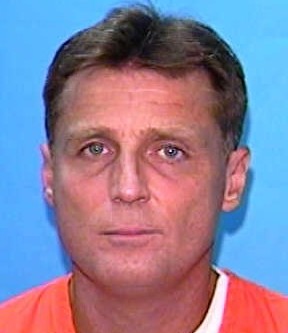 Glen Edward Rogers
Serial killer · USA · 1993
Glen Edward Rogers was a spree killer whose cross-country rampage in 1994-95 le…
70 victims
Glen Edward Rogers
Serial killer · USA · 1993
Glen Edward Rogers was a spree killer whose cross-country rampage in 1994-95 le…
70 victims
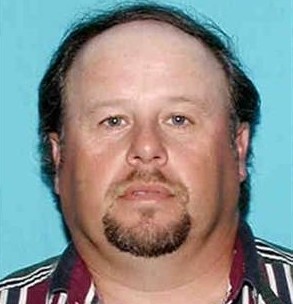 Ronald Dominique
Serial killer · USA · 1997
Ronald Joseph Dominique (born 1964) was an American serial killer from the Bayo…
23 victims
Ronald Dominique
Serial killer · USA · 1997
Ronald Joseph Dominique (born 1964) was an American serial killer from the Bayo…
23 victims
 Desmond Jennings
Serial killer · USA · 1993
Desmond Jennings declined to make a last statement. Texas Attorney General John…
20 victims
Desmond Jennings
Serial killer · USA · 1993
Desmond Jennings declined to make a last statement. Texas Attorney General John…
20 victims
 Maury Troy Travis
Serial killer · USA · 2001
Maury Troy Travis (born October 25, 1965; died June 10, 2002) was an American s…
17 victims
Maury Troy Travis
Serial killer · USA · 2001
Maury Troy Travis (born October 25, 1965; died June 10, 2002) was an American s…
17 victims
 Andre Crawford
Serial killer · USA · 1993
Andre Crawford was convicted of rapes and murders of 11 women committed between…
11 victims
Andre Crawford
Serial killer · USA · 1993
Andre Crawford was convicted of rapes and murders of 11 women committed between…
11 victims
 Anthony Sowell
Serial killer · USA · 2007
Anthony Edward Sowell (born August 19, 1959) was an American serial killer iden…
11 victims
Anthony Sowell
Serial killer · USA · 2007
Anthony Edward Sowell (born August 19, 1959) was an American serial killer iden…
11 victims
 Robert Alan Shields
Murderer · USA · 1994
Robert Alan Shields Jr. was convicted of capital murder and sentenced to death…
1 victim
Robert Alan Shields
Murderer · USA · 1994
Robert Alan Shields Jr. was convicted of capital murder and sentenced to death…
1 victim
 Jack Harry Smith
Murderer · USA · 1978
Jack Harry Smith was sentenced to death on October 9, 1978. Jack Harry Smith ar…
1 victim
Jack Harry Smith
Murderer · USA · 1978
Jack Harry Smith was sentenced to death on October 9, 1978. Jack Harry Smith ar…
1 victim
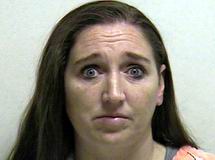 Megan Huntsman
Murderer · USA · 1996
Megan Huntsman was 40 at sentencing. She was a mother of three children who wer…
6 victims
Megan Huntsman
Murderer · USA · 1996
Megan Huntsman was 40 at sentencing. She was a mother of three children who wer…
6 victims
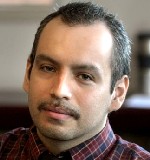 Ramon Torres Hernandez
Murderer · USA · 1994
Ramon Torres Hernandez was convicted in Bexar County, Texas, and sentenced to d…
3 victims
Ramon Torres Hernandez
Murderer · USA · 1994
Ramon Torres Hernandez was convicted in Bexar County, Texas, and sentenced to d…
3 victims
 Linda Charbonneau
Murderer · USA · 2001
Linda Lou Charbonneau was 53 at the time of the crimes and later was 56 at sent…
2 victims
Linda Charbonneau
Murderer · USA · 2001
Linda Lou Charbonneau was 53 at the time of the crimes and later was 56 at sent…
2 victims
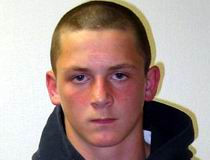 Brandon McInerney
Homicide · USA · 2008
Lawrence “Larry” Fobes King was born on January 13, 1993 at the Ventura County…
1 victim
Brandon McInerney
Homicide · USA · 2008
Lawrence “Larry” Fobes King was born on January 13, 1993 at the Ventura County…
1 victim
- Gender
- male
- Country
- USA
- Location
- Alexandria, Virginia, USA
- Date of birth
- 1960
- Age at first offence
- 43
- Characteristics
- serial rapist, shooting spree
- Victim profile
- Nancy Dunning, 62 / Ronald Kirby, 69 / Ruthanne Lodato, 59
- Method of murder
- Shooting
- Date(s) of murder
- December 5, 2003 / November 11, 2013 / February 6, 2014
- Years active
- 2003–2014
- Date of arrest
- March 12, 2014
- Status
-
Life imprisonment
Sentenced to life in prison plus 48 years on January 20, 2016
Case record: Charles Severance
Status
Charles Severance was sentenced to life in prison plus 48 years on January 20, 2016. A Fairfax County Circuit Court judge imposed a punishment of three life terms plus 48 years.
Timeline
- November 2015 — A Fairfax County jury found Charles Severance guilty of murder in three slayings in Alexandria.
- January 20, 2016 — Severance was sentenced to life in prison plus 48 years.
- January 21, 2016 — The sentence was described as three life terms plus 48 years, after a last opportunity to speak before sentencing.
- November 2, 2015 — A Fairfax County jury found Charles Severance guilty of all 10 counts.
- October 20, 2015 — Prosecutors read excerpts from Severance’s writings during trial.
- October 16, 2015 — Jurors heard testimony about Nancy Dunning being shot at close range.
- October 15, 2015 — Testimony included the son of Nancy Dunning describing a 911 call played for the jury.
- October 14, 2015 — Testimony addressed Ron Kirby’s fatal shooting and the forensic pathologist’s account of when he died after being shot.
- October 13, 2015 — Secret Service agents and a former ex-girlfriend testified about interactions with Severance and his asylum-seeking attempt.
- October 8, 2015 — Trial opened with emotional testimony from survivor Dorcas Franco.
- September 8, 2014 — A grand jury indicted Charles Severance for murdering Ruthanne Lodato, Ron Kirby and Nancy Dunning.
- February 6, 2014 — Police responded to the shooting of Ruthanne Lodato and connected the case to other killings as a possible link.
- March 14, 2014 — Charles Severance was arrested on a gun charge while police questioned his possible relationship to the three killings.
Other details
Charles Severance was a former candidate for Alexandria mayor known for erratic behavior and was convicted in November in the fatal shootings of three people in Alexandria.
Victims and ages
- Ruthanne Lodato (59) — a music teacher; she was shot in February 2014 at her home.
- Ronald Kirby (69) — a regional transportation planner; he was shot in November 2013.
- Nancy Dunning — she was killed in December 2003; she was a real estate agent and the wife of then-Alexandria Sheriff Jim Dunning.
Numbers of convictions and counts
- The Fairfax County jury found Severance guilty of 10 counts including murder charges for the deaths of Nancy Dunning, Ron Kirby and Ruthanne Lodato.
- The convictions included:
- two capital murder charges for the shootings of Ron Kirby and Ruthanne Lodato; and
- one first-degree murder charge for the shooting of Nancy Dunning.
- The jury recommended three life sentences for the murder charges and another 48 years for the gun and malicious wounding charges, and a $400,000 fine.
Sentencing details
Judge Randy I. Bellows stuck with the jury’s recommended three life sentences in prison plus 48 years and a $400,000 fine. The three life sentences were to be served consecutively, so that even if some of the murder convictions were reversed on appeal or the prison sentences reduced, he could still serve the remainder of his life behind bars. Virginia does not offer the chance for parole to convicted felons. Bellows said he found no mitigating factors that would offset what he called Severance’s “cruel” acts, and he spoke about blood-soaked and bullet riddled bodies left for the victim’s family members to find, about grandchildren who won’t know their grandparents, and about lives cut short.
Appeals-related decision at sentencing
Severance pledged to appeal. The judge agreed to appoint lawyer James Hundley to represent Severance on appeal, noting that Severance’s current attorneys had asked to be removed because of a communication breakdown between Severance and his client. Defense attorney Christopher Leibig declined to comment after the hearing. Severance’s attorneys suggested charging him with two counts of capital murder equated to double jeopardy, asked the judge to toss one of the capital murder convictions, and Judge Bellows denied the motion.
People present and prosecution team references
Family members of each victim and Severance’s parents were in court for the hearing. Former Virginia governor Robert F. McDonnell attended. State Attorney General Mark R. Herring attended. Alexandria Commonwealth’s Attorney Bryan Porter spoke at the sentencing hearing. Two attorneys from Herring’s office assisted Porter. Senior Assistant Commonwealth’s Attorney David Lord prosecuted the case alongside Porter.
Courtroom statements and quotes
Judge Randy I. Bellows said:
“He condemned each of these family members to bear witness to a nightmare,” Bellows said.
In sentencing remarks, Bellows said:
Porter said:
“Violence does not win,” Porter said.
Porter also said:
“In the end, flying in the face of the senseless violence [and] despair that has been exhibited in this case, it is an incontrovertible fact that love wins.”
Porter also urged legislators to consider gun-control reform, including background checks for those who purchase weapons from gun shows, and said Severance’s case could have been prevented if someone close to him had reported his anger to authorities earlier or if a girlfriend had not purchased a gun for him.
After sheriff’s deputies brought Severance into the courtroom in a wheelchair, Severance leaned into the microphone and said:
“sadism, sadism.”
Severance said:
“I don’t want to be represented by people who make statements against my interests,” he said.
He also said:
“It’s unusual punishment.”
Severance argued that the sentencing had been moved from Friday to Thursday and asked for it to be postponed. Bellows rejected Severance’s requests.
Defense position at sentencing and during trial
Defense attorney Christopher Leibig said during the sentencing that Severance had significant, undiagnosed mental health problems and was not truly evil. Defense counsel in the trial blamed the killings on Severance’s mental health, pointing to a prior schizophrenia diagnosis. The defense said Severance was not truly evil, and it also argued that Severance had significant, undiagnosed mental health problems and that he was not responsible.
The offences
Nature and pattern of the killings
The three victims were killed in similar manner at their front doors, at the same time of day, without evidence of a break-in, and using the same type and brand of .22-caliber bullets. Prosecutors said Severance motivated the killings with bitterness over a child-custody battle he lost and a general hatred of Alexandria’s elite, and that the victims were apparently strangers to him.
Ruthanne Lodato (February 2014)
Ruthanne Lodato was a music teacher and was fatally wounded during the daylight attack on her home in February 2014. The killing was described as occurring when a man knocked on her door and she answered. In the trial, a sketch was released publicly that resembled Severance.
Ronald Kirby (November 2013)
Ronald Kirby was shot in November 2013 at the front door of his home. A forensic pathologist testified that Kirby did not die instantly after he was shot at least three times on Nov. 11, 2013. Kirby was shot twice in the chest and one bullet pierced both of his lungs. Another bullet hit his hips. His fingers were also injured in the shooting. The pathologist testified that it was unclear how the finger injuries happened. Police recovered two additional bullets at the house and recovered five bullets total. Prosecutors said the wounds were caused by .22-caliber ammunition and the same type of ammunition and gun were used across the three crimes.
Nancy Dunning (December 2003)
Nancy Dunning was shot in December 2003 at her home. Prosecutors said she was shot at close range. Jurors heard testimony about her death and about surveillance footage showing her shopping before being killed. The medical examiner testimony included:
- She was shot in the back of her head at close range; the bullet traveled through her brain and became lodged there, and she was also shot near her collarbone, with the bullet hitting her lung, windpipe, and a major artery, causing internal bleeding.
- Another bullet went through her arm and struck her in the chest, leaving an abrasion behind.
- Soot marks left on Dunning’s clothes and skin indicated the barrel of the gun was, at most, 2 inches away from Dunning each time the gun was fired.
Investigators found blood splatter on the family’s front door, indicating Dunning was shot there, and no forensic evidence that tied Severance to the scene, including no hair or fibers, no DNA, and no fingerprints.
Investigation
Connections between cases
Police described ballistic links across the three cases, saying the same type of ammunition and the same type of gun were used in all three crimes. The trials and investigative reporting described investigations linking Lodato, Kirby and Dunning based on similarities including bullet fragments, the manner of killing, and the timing and location at the victims’ front doors.
Indictment and charges
A grand jury indicted Charles Severance for murdering Ruthanne Lodato, Ron Kirby and Nancy Dunning. Alexandria Police Chief Earl Cook said the grand jury returned the indictment on Monday and described the indictment as formal charging. Cook said investigators uncovered evidence tying Severance to the crimes but no weapon had been recovered.
Cook said he did not know whether Severance targeted his three victims or chose them randomly, and declined to say whether Severance knew his victims.
Cook said Severance faced charges connected to Dunning’s death including first-degree murder and use of a firearm in the commission of a felony. For Kirby’s death, Severance was charged with capital murder, use of a firearm in the commission of a felony and possession of a firearm by a felon. For Lodato’s death, Severance was charged with capital murder, two counts of use of a firearm in the commission of a felony, possession of a firearm by a felon and malicious wounding for killing Lodato and for shooting and injuring another woman in the home at the time.
Prosecutors said they would not seek the death penalty in the killings.
Police identified Severance after the Lodato killing
Police identified Lodato’s killer as a bearded man based on a sketch, and tips led to Severance. Police said the bullets that killed Lodato were similar to bullets that killed Kirby and Dunning. Police arrested Severance on a gun charge and questioned him about ties to the killings.
Expert testimony and ballistic analysis
Testimony included ballistic analysis providing a common link between the three cases. Police and witnesses also discussed that the guns used had not been found, and prosecutors offered an explanation in court about a mini revolver being destroyed under court order in 2006.
Arrest and custody
Charles Severance was arrested on a gun charge while police questioned his possible relationship to the three killings. He was described as a fugitive on a weapons charge. He was arrested at the Ohio County Library in Wheeling, Virginia, at 2 p.m. on a Thursday, and was wanted for possession of a firearm by a felon in Loudoun County, Virginia on March 6. The reports described him as bearded and balding.
Virginia State Police Sgt. John Murphy testified he found the guns and arrested Severance 11 years earlier during a traffic stop near Harrisonburg in February 2004. Severance was found with three guns in his red Ford Escort wagon, including:
- a .22 long rifle mini revolver hidden under a hat on his lap;
- the .22 long rifle mini revolver stashed between the car seats; and
- a third handgun on the backseat. The mini revolver confiscated by police was never tested to determine if it had been used in previous crimes.
Severance had been extradited from West Virginia to Loudoun County where he was indicted on a weapons charge earlier that year, and he was in the Loudoun County Adult Detention Center.
Trial
Jury deliberation and verdict
A 12-person Fairfax County jury deliberated for more than two days and reached a verdict finding Severance guilty of all 10 counts. The verdict was read in court late Monday morning.
Evidence presented
Severance’s writings read to jurors
Commonwealth’s attorney Bryan Porter led investigators through excerpts from Severance’s writings seized in search warrants. Prosecutors presented binders containing police, social workers, and “elites” described with disdain. The writings included references to violence and revenge. On June 12, 2013, Severance wrote using his Disqus.com account:
“I feel like discharging a firearm,” and, “scalping privileged members of the enforcement class, honoring family, settling old scores.”
Porter read email and online postings dated July 2013 through mid-September of that year:
“I’ve been nudging and trolling for over a decade and no one has noticed. Violence wins.” “No self respecting patriarch would not murder an adversary who crosses the family.” “Violence wins. Let that be a lesson to all members of the enforcement class.”
A handwritten note inside a composition book dated roughly a month before Kirby was killed read:
“Introduce murder into a safe and secure neighborhood. It shudders with horror. Do it again and again and again.”
The prosecutors said Porter chose to deliver writings one by one in succession to the jury, closing with “the parable of the knocker,” describing:
“Knock. Talk. Enter. Kill. Exit.”
The defense pointed out that none of the 2,000 pages of writings named a victim, a victim’s family member, or seemed to target a specific group, and that the writings included loving passages about Severance’s son, details and notes for games he developed, and historical references and research.
Eyewitness survivor testimony
Dorcas Franko survived injuries during the Lodato attack and described her attacker. Franko cared for Lodato’s mother. She was shot two times in the arm and ran into her attacker, who knocked her backwards. She testified to running out of the house for help and returning to find Lodato on the floor, bleeding. Franko broke into tears while being questioned about a sketch depicting her attacker. Porter said Franko identified Severance as her attacker despite attempts by the defense to point out discrepancies. Porter praised Franko’s bravery:
“She really stepped up to the plate and showed a bravery that is really uncommon,” Porter said.
Defense attorneys questioned witnesses about beard length and bushiness, including an emphasis that Severance wore his long, gray beard the same length for some time. A neighbor testified she saw an older white man with a beard wearing a tan jacket three times in the days and weeks before Lodato’s murder.
Surveillance footage and medical testimony
For Nancy Dunning, prosecutors played Target surveillance footage showing Dunning pushing a cart of merchandise through the store as a man in jeans and a dark jacket followed her and exited into the parking lot. Police believed the man in the video was Charles Severance. Investigators said there was no footage of Dunning leaving, and there was no forensic evidence linking Severance to the scene, including no hair or fibers, DNA or fingerprints. Prosecutors also described that the gun used to kill Dunning was not found and explained that a mini revolver was destroyed under court order in 2006.
Forensic pathologist testimony
A forensic pathologist testified that Ron Kirby did not die instantly after being shot multiple times on Nov. 11, 2013. The pathologist described the injuries and bullet trajectories and stated there was uncertainty about how the finger injuries occurred.
Sentencing
Statements by prosecutors at sentencing
Porter said Severance was driven by the same “anger and hatred and proclivity for violence” that fuels mass shootings. Porter contrasted the good done by the victims with Severance’s rage and said Severance would soon be transported to a maximum-security prison and spend the rest of his life “wallowing in the anger and loathing that mark his time on Earth.”
Porter said:
Porter said:
Porter also characterized Severance as:
“been held accountable and exposed for what he really is — a clever but cowardly murderer.”
Statements by judge at sentencing
Judge Bellows talked at length about victims’ family members and the horror they endured because of Severance’s crimes, and he rejected requests to postpone sentencing. Family members cried and hugged in the gallery.
Statements by attorneys and defense at sentencing
He had said during sentencing that Severance had significant, undiagnosed mental health problems and was not truly evil.
Outcome
Severance was found guilty in November and sentenced on January 20, 2016 to three life terms plus 48 years.
Aftermath
Family members of each victim and Severance’s parents were in court during sentencing. A Lodato family neighbor, John Kelly, said:
“I think the families want to move on, as they always have.”
Attorney General Mark R. Herring praised the prosecutors for “excellent work” and said Severance’s crimes “shattered the sense of peace and security that folks here have.” Seventeen years after the start of these investigations, the three killings had been addressed by the indictment, trial, and sentencing described above.
Spotted an error, or have more information about this case?