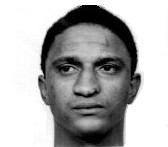
David Hicks
Murderer Brian Kevin Rosenfeld
Murderer · USA · 1985
Brian Kevin Rosenfeld Brian Kevin Rosenfeld was sentenced to three concurrent l…
23 victims
Brian Kevin Rosenfeld
Murderer · USA · 1985
Brian Kevin Rosenfeld Brian Kevin Rosenfeld was sentenced to three concurrent l…
23 victims
 Yahweh ben Yahweh
Murderer · USA · 1980
Yahweh ben Yahweh was born and legally named Hulon Mitchell Jr. (October 27, 19…
23 victims
Yahweh ben Yahweh
Murderer · USA · 1980
Yahweh ben Yahweh was born and legally named Hulon Mitchell Jr. (October 27, 19…
23 victims
 Russell Ellwood
Murderer · USA · 1991
Russell Ellwood was a former taxi driver. Authorities suspected him of killing…
20 victims
Russell Ellwood
Murderer · USA · 1991
Russell Ellwood was a former taxi driver. Authorities suspected him of killing…
20 victims
 Robert Martines Perez
Murderer · USA · 1994
Name: Robert Martines Perez · Other name used in proceedings: Robert Martinez P…
15 victims
Robert Martines Perez
Murderer · USA · 1994
Name: Robert Martines Perez · Other name used in proceedings: Robert Martinez P…
15 victims
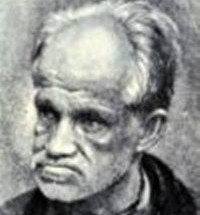 Charles Peace
Murderer · United Kingdom · 1876
Charles Peace was executed by hanging in Leeds on February 25, 1879. Charles Pe…
2 victims
Charles Peace
Murderer · United Kingdom · 1876
Charles Peace was executed by hanging in Leeds on February 25, 1879. Charles Pe…
2 victims
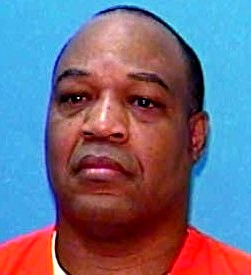 Robert Dwayne Morris
Murderer · USA · 1994
Robert Dwayne Morris was sentenced to death on April 13, 1999. His Florida Supr…
1 victim
Robert Dwayne Morris
Murderer · USA · 1994
Robert Dwayne Morris was sentenced to death on April 13, 1999. His Florida Supr…
1 victim
 Cynthia Galens
Murderer · USA · 2009
Cynthia Galens was convicted in Ontario County Court of first-degree manslaught…
1 victim
Cynthia Galens
Murderer · USA · 2009
Cynthia Galens was convicted in Ontario County Court of first-degree manslaught…
1 victim
 Andrea Volpe
Murderer · Italy · 2004
The Beasts of Satan were a suspected satanic cult in Italy. Members of this gro…
3 victims
Andrea Volpe
Murderer · Italy · 2004
The Beasts of Satan were a suspected satanic cult in Italy. Members of this gro…
3 victims
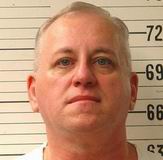 Donnie Edward Johnson
Murderer · USA · 1984
Donnie Edward Johnson was convicted in Tennessee. Connie Johnson was his wife a…
1 victim
Donnie Edward Johnson
Murderer · USA · 1984
Donnie Edward Johnson was convicted in Tennessee. Connie Johnson was his wife a…
1 victim
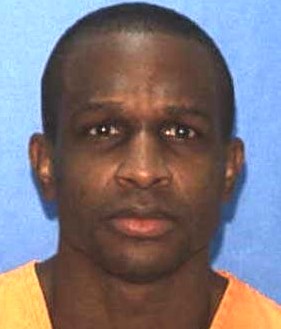 Jason Stephens
Murderer · USA · 1996
Jason Stephens was sentenced to death for the murder of 3-year-old Robert Sparr…
2 victims
Jason Stephens
Murderer · USA · 1996
Jason Stephens was sentenced to death for the murder of 3-year-old Robert Sparr…
2 victims
- Gender
- male
- Country
- USA
- Location
- Freestone County, Texas, USA
- Date of birth
- January 15, 1962
- Age at first offence
- 26
- Characteristics
- rape, robbery
- Victim profile
- Ocolor Hegger, 88 (his grandmother)
- Method of murder
- Beating with a hammer
- Date(s) of murder
- April 25, 1988
- Years active
- 1988
- Date of arrest
- Same day
- Status
-
Executed
Executed by lethal injection in Texas on January 20, 2000
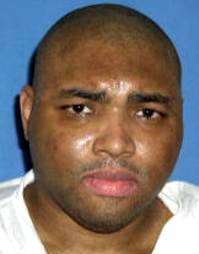
Case record: David Hicks
Status
David Hicks was executed by lethal injection in Texas on January 20, 2000.
Background
Ocolor Hegger was eighty-eight years old and lived in a home outside of Teague, Texas. She was found dead in her kitchen lying in a pool of blood at approximately 9:15 a.m. on April 26, 1988. A neighbor found her.
David Hicks was Mrs. Hegger’s grandson. He visited Mrs. Hegger the night before her body was found.
Hicks was unemployed in 1988, was released from jail, and was hanging around the rural community where he grew up. There was a highway nearby and not much else.
Lester Busby was Hicks’s cousin and visited Mrs. Hegger with Hicks on the night before the murder.
Eddie Branch was another grandson who had been visiting Mrs. Hegger and was leaving after his daily visit when Hicks talked with him before entering Mrs. Hegger’s house.
Hugh Whitaker was a Deputy Sheriff for Freestone County.
Bob Gage was the Freestone County District Attorney.
The offence
Ocolor Hegger died from blows to the head and neck. Her head had been hit by repeated blows with a blunt instrument. At least eight blows were indicated.
In addition to the blunt force injuries, there was a superficial stab wound to the neck, and there were numerous abrasions and contusions to the body. Evidence showed that she had been sexually assaulted.
The sexual assault occurred at or near the time of death, which was placed at approximately 8:00 p.m. to midnight on April 25, 1988.
The doctor who performed the autopsy testified that, from the condition of the body and an examination of the crime photographs, it was possible that Mrs. Hegger was initially attacked in her bedroom and left unconscious for a couple of hours. The doctor testified that during that time the attacker could have returned and delivered the fatal blows.
Timeline
- April 25, 1988 — The sexual assault occurred at or near the time of death, which was placed at approximately 8:00 p.m. to midnight.
- April 26, 1988 (approximately 9:15 a.m.) — Ocolor Hegger was found dead in her kitchen by a neighbor.
- May 8, 1988 — Busby found the missing hammer in his yard.
- August 1988 — David Hicks was arrested on an outstanding misdeamenor warrant for theft.
- January 30, 1989 — Hicks was convicted on a charge of capital murder; the trial court sentenced Hicks to death on February 1, 1989.
- March 31, 1993 — The Texas Court of Criminal Appeals affirmed the conviction and sentence in a published opinion.
- June 20, 1994 — The United States Supreme Court denied Hicks’s petition for writ of certiorari.
- March 26, 1997 — The Court of Criminal Appeals denied Hicks’s request for state habeas relief.
- September 2, 1997 — Hicks filed his second application for federal habeas relief.
- January 11, 1999 — The district court denied the writ.
- February 12, 1999 — The district court denied permission to appeal.
- January 20, 2000 — Hicks was executed by lethal injection in Texas.
- January 19, 2000 — The Texas Attorney General media advisory was issued about David Hicks scheduled to be executed after 6 p.m. on January 20.
- February 1, 1989 — The trial court sentenced Hicks to death.
- March 31, 1993 — The Court of Criminal Appeals affirmed the conviction and sentence.
Investigation
Police conducted a thorough search of the area and gathered evidence after Mrs. Hegger’s body was found.
A hammer was missing. Family members knew it hung on the inside door of Mrs. Hegger’s kitchen cabinet. Subsequent forensic tests on the hammer revealed blood, but the blood could not be typed as either human or animal.
Presumptive testing revealed blood on clothes taken from Hicks’s car.
DNA testing excluded all suspects except Hicks.
Three inmates who were in the Freestone County Jail while Hicks was awaiting trial testified for the State. Two of them, Patrick Comalander and Roger Dale Johnson, testified that Hicks had asked them if they knew how to get blood out of clothes and how many times clothes had to be washed to get all traces of blood out.
Carter Kirven testified that he had asked Hicks if he had killed his grandmother. Hicks told Kirven that he had, and threatened to hurt Kirven if he told anyone.
Carter Kirven also testified that Hicks told him he had used a knife during the murder, a fact not commonly known at that time.
The murder remained unsolved until August 1988, when Hicks was arrested on an outstanding misdeamenor warrant for theft. Blood was found on clothing taken from Hicks’s car. A DNA sample matched the semen found in the victim’s body.
Arrest
Hicks was arrested in August 1988 on an outstanding misdeamenor warrant for theft.
Trial
Hicks was indicted in the 87th Judicial District Court of Freestone County, Texas, for the murder of Ocolor Hegger, his grandmother, while in the course of committing and attempting to commit aggravated sexual assault, a capital offense.
Hicks pleaded not guilty to a jury but was convicted on January 30, 1989.
The trial court sentenced Hicks to death on February 1, 1989.
On death row, Hicks continued to insist he was innocent, including statements that he had “to get my name back.”
Freestone County District Attorney Bob Gage made remarks about the case’s nature and severity, including:
"It's the most vicious case I've ever tried,'' said Freestone County District Attorney Bob Gage. "It was absolutely sickening.''
Sentencing
Because Hicks was sentenced to death, appeal to the Texas Court of Criminal Appeals was automatic.
Appeals
The Texas Court of Criminal Appeals affirmed the conviction and sentence in a published opinion on March 31, 1993.
Hicks’s petition for writ of certiorari was denied by the United States Supreme Court on June 20, 1994.
After a first federal application for writ of habeas corpus was dismissed for failure to exhaust state remedies, Hicks filed his state habeas petition. The Court of Criminal Appeals denied Hicks’s request for state habeas relief on March 26, 1997, before the trial court entered any findings of fact and conclusions of law.
Hicks filed his second application for federal habeas relief on September 2, 1997. The district court ordered additional DNA testing of remaining available evidentiary samples at the request of Hicks.
On January 11, 1999, the district court denied the writ, and then denied permission to appeal on February 12, 1999. The United States Court of Appeals for the Fifth Circuit likewise denied permission to appeal.
Hicks then filed a petition for writ of certiorari which was pending before the Supreme Court.
Hicks’s case was denied in the 5th Circuit on 8/23/99. Hicks learned of that news from another prisoner.
Outcome
Hicks was executed by lethal injection in Texas on January 20, 2000, in Huntsville, Texas.
He was pronounced dead at 7:29 p.m. after the lethal injection was started.
Execution was delayed for about 75 minutes because of a last-minute appeal to the U.S. Fifth Circuit Court of Appeals.
Just before his execution, Hicks released a written statement proclaiming his innocence. In his last statement, he expressed love to his family.
Prior criminal history
Hicks’s criminal record included felony convictions for aggravated assault with a deadly weapon in 1979, false imprisonment with substantial risk of serious bodily injury in 1984, burglary of a vehicle in 1986, and burglary of a habitation in 1986.
There was evidence of several unadjudicated offenses, including numerous assaults (both in and out of the penitentiary), resisting arrest, two escapes, fleeing from a peace officer, evading arrest, and misdemeanor thefts.
Hicks had been on parole for just 8 months when he raped and murdered his own grandmother.
Hicks served nine months for the former offense from 1982 to 1983.
He began serving the 10-year sentence in May 1986 and was paroled in August 1987. Early release was described as common in Texas due to strict prison population caps imposed by U.S. District Judge William Wayne Justice.
Drugs and/or alcohol
There was evidence of possible alcohol use connected with the instant offense.
Hicks spent an evening drinking beer with his cousin and three friends.
Other details
A hammer had been missing after the police search and was later found in a neighbor’s yard. Busby found the missing hammer in his yard two weeks later on May 8, 1988. Busby and police testified that they were positive the hammer was not in Busby’s yard on the day of the search.
The police search included Busby’s yard, but did not find the hammer.
DNA match discussions included scientific journals and arguments about DNA inconclusiveness that were silenced and later reevaluated, resulting in a more conclusive DNA match.
At the time of Hicks’s trial, introducing genetic material as courtroom evidence was described as revolutionary in 1989.
Hicks complained about his court-appointed attorneys on death row, saying they were indifferent and unresponsive.
Hicks also said that other potential evidence was found, including a second bloody hammer, that was never introduced at trial.
Hicks implied that his cousin Eddie Branch had a motive to kill his grandmother in the form of an insurance policy and said that Branch was never made to give a DNA sample.
Hicks released statements and wrote letters while on death row. In one set of statements he asked for visits and described difficulty contacting his lawyer, including:
"I'm a death row prisoner in Texas with about 6 weeks to live. My execution date is set for 1/20/00. I learned of my execution date in September from the Unit Chaplain. I learned of my 5th Circuit Appeal being denied in August from another prisoner here. I do not have a lawyer, and the lawyer "of record" has not been in contact with me now for over six months. No letters, no phone calls, nothing! I am unable to contact him by any means, even in light of my serious date for next month. Six months, six months without any word at all from the lawyer "of record". I phoned the Texas Defender Service and made this matter known to Jim Marcus and several other individuals at that particular office. I phoned them three times, the last resulting in them simply telling me that there is nothing they can do. Now I read this essay in your paper about how much they care, etc. Well, I'm a living example that people are using the suffering and pain of death row prisoners for their own personal gains. The lawyer who has vanished from my connection does not give a damn about my life. This is obvious. Certain people don't want to consider claims of innocence anymore. Even some lawyers. Evidence found at the crimes scene over ten years ago that establishes my innocence is constantly being neglected and ignored. Witnesses with testimony that corroborates the evidence found at the crime scene and helps establish my innocence in a concrete manner are being intimidated and threatened by the very people who committed the crime. The latest series or brutal assaults, threats, and intimidations were inflicted upon my wife, who is a valuable witness in this case. The police aren't going to do anything because they think I'm guilty anyway. She's had her throat cut, teeth knocked out, she's been beaten against the head with the butt of a gun, her jaw sliced, and her lips busted. All of this is taking place by members of the "Branch" family to keep her from testifying on my behalf. I have made these facts known to all that I possibly know, but does anyone care? Hardly not, because with the testimony she has that helps prove my innocence, why isn't someone doing something to preserve it? Why hasn't this evidence located at the crime scene been tested and entered into my appeal? this is exactly why Texas is able to get away with executing so many people so swiftly. Here I sit on death row with evidence of my innocence but can't find anyone caring enough to take out the time to look into my claims, not a lawyer anyway. I have been pleading and pleading for someone who cares, especially a caring lawyer, to look into my claims so they can establish for themselves whether or not I'm innocent. No one cares, regardless of what their pre-formed speeches may indicate. I have not been able to find one Texas organization to help me, or to even look into my allegations. It's a sad day when Texas lawyers can go to other countries and talk about how horrible the justice system is when they refuse to even help those with concrete proof on their innocence. In their own backyard. Because no one cares for or about me, David Hicks, evidence of my innocence is going to die right along with me."
Hicks also described his age and race in those letters, stating:
"I am 36 years old, black, and a guy who loves the outdoors."
He also submitted an original penpal request, including:
"Is there anyone out there with the time and resources who would be willing to come and visit me? I have struggled this ordeal for over ten years alone and without family support, and now it seems that the end to my life has come."
In another letter he claimed that evidence found at the crime scene during the time he was in jail included a hammer with traces of blood, a large size syringe containing traces of human bodily fluids, and foreign body hair, and stated:
"Evidence found at the crime scent during the time I was in jail that consists of a hammer with traces of blood on it, a large size syringe containing traces of human bodily fluids, and foreign body hair, all to this very day have been overlooked and ignored by those representing me."
He further stated:
"DNA evidence and DNA alone is what has linked me to this crime. And since that seems to be the case, everyone has stopped there."
He also wrote:
"My family has been trying to contact the lawyer but he will not return any of their calls. It has been 6 months now since the lawyer has been in contact with me and my constant efforts of trying to reach him by phone have all been fruitless."
Hicks claimed an attorney had not been in contact and described learning of denial of his appeal from another prisoner and the prison chaplain.
A San Antonio Express-News account stated that the death chamber was equipped with two witness rooms, one for the family of the condemned killer and one for the family of the murder victims, and that only one family would be present at Hicks’s scheduled execution.
People
- David Hicks — grandson of Ocolor Hegger; defendant
- Ocolor Hegger — victim; grandmother of David Hicks
- Lester Busby — cousin of Hicks; visited Mrs. Hegger with Hicks
- Eddie Branch — grandson; left after daily visit before Hicks talked with him
- Hugh Whitaker — Deputy Sheriff for Freestone County; testified about searching Busby’s yard
- Patrick Comalander — inmate witness for the State
- Roger Dale Johnson — inmate witness for the State
- Carter Kirven — inmate witness for the State
- Bob Gage — Freestone County District Attorney
- Jim Marcus — Texas Defender Service contact mentioned by Hicks
- William Wayne Justice — U.S. District Judge mentioned in connection with early release described as common in Texas due to strict prison population caps
- John Cornyn — Texas Attorney General mentioned in connection with a media advisory scheduled execution
- United States Supreme Court — court that denied certiorari mentioned in procedural history
- Texas Court of Criminal Appeals — court that affirmed conviction and sentence; denied state habeas relief
- United States Court of Appeals for the Fifth Circuit — court that denied permission to appeal mentioned in procedural history

Spotted an error, or have more information about this case?