
Lois Ann Thacker
Murderer Bobbie Sue Terrell
Murderer · USA · 1984
Bobbie Sue Dudley Terrell was a Pinellas County nurse and worked as the night s…
12 victims
Bobbie Sue Terrell
Murderer · USA · 1984
Bobbie Sue Dudley Terrell was a Pinellas County nurse and worked as the night s…
12 victims
 Angela Johnson
Murderer · USA · 1993
Angela Jane Johnson was convicted in federal court of aiding and abetting the m…
5 victims
Angela Johnson
Murderer · USA · 1993
Angela Jane Johnson was convicted in federal court of aiding and abetting the m…
5 victims
 Catherine May Wood
Murderer · USA · 1987
Catherine May Wood was an American caregiver who worked at the Alpine Manor Nur…
5 victims
Catherine May Wood
Murderer · USA · 1987
Catherine May Wood was an American caregiver who worked at the Alpine Manor Nur…
5 victims
 Amy Bishop
Murderer · USA · 1986
Amy Bishop — biology professor and perpetrator · James Anderson — Bishop’s husb…
4 victims
Amy Bishop
Murderer · USA · 1986
Amy Bishop — biology professor and perpetrator · James Anderson — Bishop’s husb…
4 victims
 Debra Sue Tuggle
Murderer · USA · 1974
Debra Sue Tuggle was an African American woman born in Arkansas. She had a hist…
4 victims
Debra Sue Tuggle
Murderer · USA · 1974
Debra Sue Tuggle was an African American woman born in Arkansas. She had a hist…
4 victims
 Theodore Wafer
Murderer · USA · 2013
The case concerned the shooting of Renisha McBride, a 19-year-old African-Ameri…
1 victim
Theodore Wafer
Murderer · USA · 2013
The case concerned the shooting of Renisha McBride, a 19-year-old African-Ameri…
1 victim
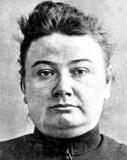 Jeanne Weber
Serial killer · France · 1905
Jeanne Weber (born 7 October 1874) was a French child-care provider and serial…
10 victims
Jeanne Weber
Serial killer · France · 1905
Jeanne Weber (born 7 October 1874) was a French child-care provider and serial…
10 victims
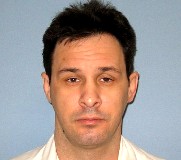 Christopher Thomas Johnson
Murderer · USA · 2005
Christopher Thomas Johnson was convicted of capital murder and sentenced to dea…
1 victim
Christopher Thomas Johnson
Murderer · USA · 2005
Christopher Thomas Johnson was convicted of capital murder and sentenced to dea…
1 victim
 Juan Velazquez
Murderer · USA · 2001
Juan Velazquez moved in with Virginia Venegas and her two young children, 3-yea…
1 victim
Juan Velazquez
Murderer · USA · 2001
Juan Velazquez moved in with Virginia Venegas and her two young children, 3-yea…
1 victim
- Gender
- female
- Country
- USA
- Location
- Orange County, Indiana, USA
- Date of birth
- January 27, 1958
- Age at first offence
- 26
- Characteristics
- parricide, murder for hire, attempt to collect insurance money
- Victim profile
- John E. Thacker, 31 (her husband)
- Method of murder
- Shooting (shotgun)
- Date(s) of murder
- November 2, 1984
- Years active
- 1984
- Date of arrest
- —
- Status
-
Sentenced to death
Sentenced to death on June 27, 1985; sentence of death vacated; remanded with instructions to enter the maximum prison sentence for murder provided for by law
Case identification
Lois Ann Thacker
Status
Thacker was sentenced to death on June 27, 1985. The sentence of death was vacated on appeal, and the cause was remanded with instructions to enter the maximum prison sentence for murder provided for by law.
Timeline
- November 5, 1984 — Count II, death penalty, was filed with the original information.
- February 7, 1985 — The case was set for trial to commence on April 30.
- February 15, 1985 — The State took Buchanan’s deposition.
- February 20, 1985 — The State continued Buchanan’s deposition for a second session.
- April 18, 1985 — The State continued Buchanan’s deposition for a third session to completion.
- April 30, 1985 — Voir dire examination of prospective jurors commenced.
- May 2, 1985 — The State filed its amended version of Count II during the midst of voir dire.
- May 9, 1985 — Voir dire examination of prospective jurors was completed.
- June 27, 1985 — Thacker was sentenced to death.
Background
Thacker was charged in Count I pursuant to I.C. 35-42-1-1(1) with the knowing killing of her husband, John E. Thacker, by shooting.
In a separate Count II, the prosecution sought the sentence of death by alleging pursuant to I.C. 35-50-2-9(b)(3) the aggravating circumstance that the killing had been accomplished while lying in wait. The trial court permitted Count II to be amended by adding a second aggravating circumstance pursuant to I.C. 35-50-2-9(b)(5) that the killing had been done by one Donald Ray Buchanan, Jr., who had been hired by Thacker to do so.
The offence
Thacker’s husband, John Thacker, was killed by shooting.
The State presented evidence that during a period of several weeks Thacker spoke with three young men, Buchanan, Music and Hart, expressing her desire to have John Thacker killed and encouraging and challenging each to do so.
The evidence showed that John Thacker had a life insurance policy of which Thacker was beneficiary, and that there was conflict between husband and wife. Thacker formulated a plan and guided its execution:
- Thacker demanded that John Thacker be killed by shooting with a shotgun loaded with deer slugs.
- Thacker provided ammunition.
- Thacker picked out a location along a road near their residence on which John Thacker drove and where he might be stopped and killed without notice.
- Thacker directed that John Thacker’s wallet be taken following the assault because it contained an important paper.
One night, the three joined Thacker at her trailer. Thacker requested that her husband be killed that night, and one of the three said that it would be done. The trio then left Thacker’s trailer and drove from it up a hill to the site along the road pointed out by Thacker, where:
- Armed men put a log across the road,
- hid,
- and waited for John Thacker to come along.
John Thacker drove up in his truck and stopped to remove the log. He was then shot and killed by Music. Buchanan removed his wallet.
Two of the men returned to Thacker’s trailer, reporting to Thacker their act and delivering the wallet. Thacker then received some shotgun shells from them, which she put into the trash. She provided one of the men with a change of clothing and put his mud-stained clothes into her washing machine.
Investigation
The State filed Count II as death penalty and later amended Count II during voir dire. The prosecution deposition practice for Buchanan occurred before voir dire began.
Trial
Parties
For appellant Linley E. Pearson, Atty. Gen., Cheryl L. Greiner, Deputy Atty. Gen., Indianapolis; for appellee DeBRULER, Justice.
Verdict and penalty phase
A trial by jury resulted in a verdict of guilty as charged in Count I. A judgment of conviction was entered on the verdict.
The following day, the jury reconvened for the penalty phase. After the presentation of evidence, the jury retired and returned a verdict recommending that the death penalty be imposed.
At sentencing, the trial court expressly found that the State had proved both aggravating circumstances beyond a reasonable doubt, concluded that the mitigating circumstances were outweighed by the two aggravating circumstances, and ordered death.
Jury selection and voir dire
During voir dire, the trial court excused for cause several jurors because of their views on the death penalty. The Witherspoon doctrine was discussed, including the standard that prospective jurors barred from jury service because of their views about capital punishment on any broader basis than inability to follow the law or abide by their oaths could not have the death sentence carried out.
The questioning included jurors’ statements about whether they could consider administering or recommending the death penalty, and the trial court sustained challenges by the prosecution for cause over defense objection.
Two quoted exchanges were included verbatim:
Judge Songer: ... . The key question then is can you consider administering [the death penalty]?
A: I could consider it, I'm answering truthfully, I guess I could.
Judge Songer: ... . "Under no circumstances could I recommend to the judge that the death penalty be imposed?"
A. I lean toward that direction. I feel under no circumstances. That's what I would have to answer truthfully.
Judge Songer: ... . You're saying that under no circumstances could you consider recommending the death penalty?
A: Right. In all instances, the trial court received such responses and sustained a challenge by the prosecution for cause over objection of defense counsel.
Evidence of prior shooting of Phillip Huff
Thacker made pre-trial and in-trial objections to testimony of prosecution witnesses that Thacker and the victim Thacker had shot and killed Thacker’s first husband, Phillip Huff, in 1983 about two years before the 1984 shooting death of Thacker.
The trial court overruled the objections, ruling that the challenged evidence was admissible as part of the res gestae of the charged crime of killing Thacker.
The trial court also instructed the jury not to consider such matters pertaining to the death of Huff as evidence of Thacker’s guilt of the charged crime, and the opinion described the relevance of incriminating statements attributed to Thacker as outweighing prejudicial value.
Witness testimony included details:
- Connie Busick testified that when charting the plan to kill Thacker, Thacker said she wanted Buchanan to kill Thacker with a deer slug, the same means she and Thacker had used to kill Huff.
- Matthew Music testified that on the night of the shooting of Thacker, Thacker asked him whether he was going to help kill Thacker and, when he said no, she told him that Thacker had killed Huff, who had been Music’s best friend.
Photographs of fatal wounds
State’s exhibits 4 and 5 were color photographs depicting two fatal gunshot wounds to Thacker’s body after it had been cleaned in preparation for an autopsy.
Exhibit 4 depicted the upper portion of the back of the victim, showing an oval hole measuring one and one-half inch by one inch.
Exhibit 5 depicted the head of the victim in frontal view against a clean, white porcelain background. The opinion described:
- the left eye, left temple, and upper left side of the head and skull as missing,
- little blood or internal structures of the skull showing,
- no part of the brain visible,
- and no autopsy marks.
Thacker objected to admission of exhibit 5. The objection was overruled. On appeal, the argument was that admission was error because it was cumulative of pathologist testimony using a model of the head and because its relevance was outweighed by tendency to inflame and impassion the jury.
The appeal analysis concluded that exhibit 5 was properly admitted, describing its restraint, relevance to identification, and lack of signs of cutting or alteration or instruments present.
Jury instructions on guilt stage
The defense proffered proposed final instruction No. 6 for the guilt-innocence stage. The instruction included admonitions that the jury “should not be swayed by any undue demand for conviction by the State” and that it should “put aside any consideration of public approval or disapproval.” The trial court rejected the instruction as sufficiently covered by other instructions.
The defense proffered proposed final instructions Nos. 7, 8, 9, 10, 11, and 12 for the guilt-innocence stage. Those instructions aimed to permit a finding of guilt for assisting a criminal rather than murder. The trial court refused, ruling that assisting a criminal was not a lesser included offense of murder.
The defense argued related notice issues based on Thacker’s notice of alibi and the theory used to convict her. The jury instructions Nos. 3 and 4 were described as instructing that Thacker could be guilty of murder if she aided, induced or caused others to kill.
Sufficiency of evidence arguments
Thacker challenged the sufficiency of evidence to support the jury verdict, arguing that the evidence was insufficient. The appellate opinion described the standard of review, stating that the court did not weigh evidence or resolve credibility, but looked for evidence and reasonable inferences supporting the verdict beyond a reasonable doubt.
The opinion summarized evidence provided by:
- Thacker’s sister, Busick,
- and Buchanan, Hart, and Music, all described as testifying pursuant to plea agreements or expectation of leniency.
The opinion also described challenges to witness credibility, including that all testified previously lied, made inconsistent statements, and were drug abusers.
Sentencing
The trial court ordered death after finding both aggravating circumstances proved beyond a reasonable doubt and concluding mitigating circumstances were outweighed by the two aggravating circumstances.
On appeal, the sentence of death was vacated.
Appeals
Claim I: Amendment to Count II during voir dire
Thacker contended the trial court erred in permitting the State to amend Count II death penalty by adding murder by hire as a second aggravating circumstance, alleging Buchanan was hired.
The appellate discussion reviewed the standards for notice and amendment. It noted that the amendment was filed during voir dire and that Thacker claimed prejudice to her right to peremptory challenges because she was required to exercise some without knowledge of the second allegation.
The court found that there was no sufficient showing that substantial rights were prejudiced and concluded there was no error.
Claim II: Excusal for cause of jurors due to death penalty views
Thacker claimed jurors were improperly excluded during voir dire due to views on the death penalty. The appellate discussion applied the Witherspoon doctrine and concluded the challenges were sustained in a manner consistent with Sixth Amendment requirements.
Claim III: Admission of evidence about prior killing of Phillip Huff
Thacker challenged admission of evidence suggesting she and John Thacker shot and killed Phillip Huff in 1983 as part of res gestae.
The appellate discussion upheld the trial court’s decision, noting that incriminating statements attributed to Thacker were relevant to the plan to kill John Thacker and that the trial court instructed the jury not to consider Huff’s death as evidence of guilt of the charged crime.
Claim IV: Admission of exhibit 5 photographs
Thacker challenged admission of exhibit 5 photographs. The appellate analysis concluded exhibit 5 was properly admitted and not unduly gruesome or prejudicial.
Claim V: Refusal of proposed final instruction No. 6
The appellate analysis held that the tendered instruction’s substance was covered by other instructions, and therefore there was no error in refusal.
Claim VI: Refusal of instructions for assisting a criminal as lesser offense
The appellate discussion rejected the claim that assisting a criminal was a lesser included offense of murder as charged and therefore the trial court properly refused proposed instructions. The discussion also referenced Beck v. Alabama.
Claim VII: Notice and theory of accessory liability
Thacker argued the charge did not provide due notice of the nature of the accusation in violation of the Sixth Amendment and Article 1, § 13 of the Indiana Constitution.
The appellate analysis concluded that Thacker had notice through pre-trial proceedings, including arraignment reading of the murder statute and I.C. 35-41-2-4 and the amendment adding hiring Buchanan to the death count, so there was no error in giving instruction Nos. 3 and 4.
Claim VIII: Sufficiency of evidence for conviction
The appellate court concluded the evidence was sufficient to convict.
The opinion described the legal rule under I.C. 35-41-2-4 and identified elements required to prove murder under vicarious liability theory. It then summarized how the evidence supported inferences that Thacker created the plan, recruited Buchanan, Hart, and Music, offered incentives, and that the trio agreed and executed the plan.
The opinion described further that Buchanan was offered money and later offered money again, Buchanan agreed, participated in the ambush, and took the victim’s wallet. Hart showed agreement by procuring a shotgun, drove the three to the crime scene, helped place the log, and stood by during the ambush. Music refused initially, later agreed after Thacker taunted him as “chicken shit,” and then shot Thacker from concealment and again at close range.
The appellate opinion further described Thacker’s role in choosing shotgun shells, buying them, giving them to Buchanan, and choosing the road location.
The opinion rejected the credibility challenges on the basis that they did not amount to inherently improbable or uncorroborated testimony of incredible dubiosity, and it held the evidence in accord.
Claim IX: Sufficiency of evidence for penalty of death
Count II aggravator (b)(3): Murder by lying in wait
The appellate opinion addressed whether Thacker was properly placed in the death-sentencing sub-class due to the lying-in-wait aggravator.
It described the special elements as watching, waiting and concealment with the intent to kill or inflict bodily injury.
The appellate analysis concluded the evidence showed appellant inside her trailer at the moment of the killing and that while the three concealed themselves with intent to kill and acted when the victim arrived, Thacker was not at the crime scene and did not make the required choice to participate in the attack upon the arrival of the victim.
The appellate court concluded that evidence of this aggravator was insufficient.
Count II aggravator (b)(5): Murder by hiring another person to kill
The appellate opinion addressed whether the evidence supported the aggravator that Thacker committed the murder by hiring another person to kill.
It described the trial court’s finding that the aggravator was proved beyond a reasonable doubt, and it evaluated evidence of offers of compensation.
The opinion described Buchanan’s testimony of contacts with Thacker:
- Buchanan described a first contact in which Thacker asked if he knew anybody who would kill her husband.
- Buchanan described a later second contact where Thacker said, “If I found somebody that she'd pay them and she would buy a rig for me to drive.”
- Buchanan described a meeting in a city park on November 1 where Thacker asked if he would do it and would give both Buchanan and James Hart a thousand dollars each if they did it.
The opinion also included Hart’s testimony at trial:
- Q. Now if D.J. [Buchanan] says you were offered a thousand dollars to kill John Thacker, would that be right or wrong? A. I hear[d] Lois talking about money but as far as her coming to me and saying, "I'll give you money to kill him", no.
- Q. Did D.J. ever offer you money to help? A. No.
The appellate opinion then described that on the night of the shooting of John Thacker, there was no evidence that Music was offered money or compensation or that money was mentioned on that occasion. It also stated that on the following night, no mention of money or compensation was made, and Thacker hazed the three again and told Music that Thacker had killed her first husband, Huff.
The appellate court discussed Norton v. State’s interpretation of the prior homicide statute regarding being hired to kill, and it concluded that the evidence was insufficient to support the allegation that Thacker hired Buchanan or either of the other two to kill.
The appellate court reasoned that:
- Hart’s expectation of compensation was insufficient based on his testimony and the details described.
- The appellate opinion stated that the evidence that Music was motivated because of an offer of compensation from Thacker was non-existent.
- It concluded that finding that Thacker committed the murder by hiring Buchanan or either of the other two would stretch the aggravating circumstance beyond its intended meaning.
Outcome
The judgment of conviction was affirmed.
The sentence of death was vacated.
The cause was remanded with instructions to enter the maximum prison sentence for murder provided for by law.
Aftermath
In the Supreme Court disposition, Shepard, C.J., and Dickson, J., concurred. GIVAN, J., dissented with a separate opinion, and PIVARNIK, J., dissented and joined in the opinion of GIVAN, J.
The dissent included the following reasoning:
I respectfully dissent from the majority opinion in the setting aside of the death penalty. The first reason given by the majority opinion is that there is insufficient proof that appellant was guilty of lying in wait to kill the decedent. The majority cites the fact that appellant was in her trailer during the attack. However, the majority decision on this question is diametrically opposed to the correct findings in the early part of the opinion, which correctly hold that it is not necessary for appellant to have taken part directly in the murder as long as she planned and directed the execution of the same. It is unnecessary for this dissent to reiterate the authority for that proposition of law as it is amply contained in the majority opinion. That evidence alone is sufficient to sustain the death penalty. However, the majority proceeds to find that there is no evidence that appellant hired the actual perpetrators of the murder but simply persuaded them to so act. As observed by the majority opinion, there is direct evidence that Buchanan was offered money to accomplish the killing. There is ample circumstantial evidence in this record from which the jury could have determined that all three men understood that there was to be compensation for the killing. For the majority now to hold this evidence to be insufficient is purely a matter of weighing the facts which was the exclusive prerogative of the jury. Even if it is to be conceded that there is insufficient evidence that money was to be paid to the perpetrators the evidence of lying in wait to commit the killing is without contradiction and correctly set forth in the majority opinion. I cannot join in the rationalization of the majority to set aside the death penalty. I would affirm the trial court in all things.
Other details
Thacker was described as beneficiary of a life insurance policy held by John Thacker.
The opinion included references to the trial court instructing the jury not to consider sympathy for the victim and prejudice against the defendant.
The appellate opinion also included discussion of:
- Witherspoon v. Illinois,
- Adams v. Texas,
- Davis v. State,
- Burris v. State,
- Lockhart v. McCree,
- Maldoando v. State,
- Randolph v. State,
- McCormick on Evidence,
- Kiefer v. State,
- New v. State,
- Reynolds v. State,
- Beck v. Alabama,
- Hammers v. State,
- Harris v. State,
- Lawson v. State,
- Smith v. State,
- Bruce v. State,
- Kappos v. State,
- Rodgers v. State,
- Lowery v. State,
- Cooper v. State,
- Norton v. State.

Spotted an error, or have more information about this case?