William Shelley
Murderer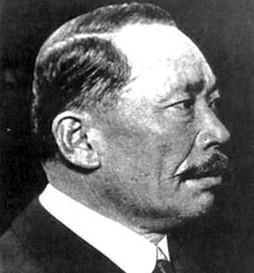 Lock Ah Tam
Murderer · United Kingdom · 1925
Lock Ah Tam was 54 when he killed his wife and two daughters. He had been a suc…
3 victims
Lock Ah Tam
Murderer · United Kingdom · 1925
Lock Ah Tam was 54 when he killed his wife and two daughters. He had been a suc…
3 victims
 Buck Ruxton
Murderer · United Kingdom · 1935
Buck Ruxton (21 March 1899, Bombay – 12 May 1936, Manchester) was also known as…
2 victims
Buck Ruxton
Murderer · United Kingdom · 1935
Buck Ruxton (21 March 1899, Bombay – 12 May 1936, Manchester) was also known as…
2 victims
 Walter Graham Rowland
Murderer · United Kingdom · 1934
Defendant: Walter Graham Rowland Age: 39 (labourer) Residence/Origin: from Mell…
2 victims
Walter Graham Rowland
Murderer · United Kingdom · 1934
Defendant: Walter Graham Rowland Age: 39 (labourer) Residence/Origin: from Mell…
2 victims
 Louise Peete
Murderer · USA · 1912
Louise Peete (born Lofie Louise Preslar; September 20, 1880; Bienville, Louisia…
3 victims
Louise Peete
Murderer · USA · 1912
Louise Peete (born Lofie Louise Preslar; September 20, 1880; Bienville, Louisia…
3 victims
 Florence Maybrick
Murderer? · United Kingdom · 1899
Florence Elizabeth Maybrick (Florence Maybrick) was an American woman convicted…
1 victim
Florence Maybrick
Murderer? · United Kingdom · 1899
Florence Elizabeth Maybrick (Florence Maybrick) was an American woman convicted…
1 victim
 John Manuel Quintanilla
Murderer · USA · 2002
John Manuel Quintanilla · 11/24/2002 — Quintanilla and two male co-defendants e…
1 victim
John Manuel Quintanilla
Murderer · USA · 2002
John Manuel Quintanilla · 11/24/2002 — Quintanilla and two male co-defendants e…
1 victim
 Ronnie Lee Bowling
Murderer · USA · 1989
Ronnie Lee Bowling was sentenced to death on December 9, 1992. Bowling was from…
2 victims
Ronnie Lee Bowling
Murderer · USA · 1989
Ronnie Lee Bowling was sentenced to death on December 9, 1992. Bowling was from…
2 victims
 Billi Jo Smallwood
Murderer · USA · 2007
Billi Jo Smallwood was sentenced to 25 years in prison on December 12, 2012, af…
2 victims
Billi Jo Smallwood
Murderer · USA · 2007
Billi Jo Smallwood was sentenced to 25 years in prison on December 12, 2012, af…
2 victims
 Robert Consalvo
Murderer · 1991
Defendant: Robert Consalvo Victim: Lorraine Pezza · 09/27/91 — Date of offense.…
1 victim
Robert Consalvo
Murderer · 1991
Defendant: Robert Consalvo Victim: Lorraine Pezza · 09/27/91 — Date of offense.…
1 victim
- Gender
- male
- Country
- United Kingdom
- Location
- Scratchwood, London, England, United Kingdom
- Date of birth
- 1876
- Age at first offence
- 55
- Characteristics
- retaliation
- Victim profile
- Herbert William 'Pigsticker' Ayres, 45
- Method of murder
- Beating with an axe
- Date(s) of murder
- June 1, 1931
- Years active
- 1931
- Date of arrest
- —
- Status
-
Executed
Executed by hanging on August 5, 1931
Timeline
- 1 June 1931 — A man walking past a rubbish tip at Scratchwood railway sidings noticed a human arm sticking out of a pile of smouldering rubbish.
- 5 August 1931 — William Shelley was executed by hanging.
Background
William Shelley, described as “Moosh” and aged 57, lived rough in the shacks by the sidings at Scratchwood railway sidings, north-west London. The victim was 45-year-old Herbert William “Pigsticker” Ayres, described as a casual labourer who had lived in a group of shacks by the sidings.
The offence
On 30 May (as stated), Ayres was attacked by two men known as “Tiggy” and “Moosh”. Shelley and Oliver Newman said they had caught Ayres stealing food and had beaten him up to teach him a lesson. When they realised that they had killed him, they buried the body and covered it with rubbish, then set the dump alight. In court, Shelley and Newman claimed that Ayres had grabbed a weapon, and that his hand must have been bruised when they tried to knock the implement from his grasp. Sir Bernard Spilsbury told the court that Ayres’s fractures had been caused not by fists, but by a weapon or kicks, and that if Ayres had been holding a weapon it would have taken more than one blow to cause the bruises on the back of his hand; Spilsbury said the bruises had more probably been inflicted when Ayres placed his hand on his head to protect himself from a rain of blows.
Investigation
On 1 June 1931, a man walking past the rubbish tip at Scratchwood railway sidings noticed a human arm sticking out of a pile of smouldering rubbish. When Sir Bernard Spilsbury examined the body, he concluded it was the body of a middle-aged man who had been dead for two or three days. Spilsbury concluded that death had been caused by a rectangular-shaped object that had fractured the man’s skull. From a tattoo on the forearm, the corpse was identified as that of 45-year-old Herbert William “Pigsticker” Ayres. Another worker, John Armstrong, who lived rough in the shacks, told police that he had seen Ayres attacked by two men known as “Tiggy” and “Moosh” on 30 May. A search of the shacks revealed a bloodstained axe under the floor of Oliver Newman’s abode. The shape of the back of the axe matched the impression in Ayres’s skull.
Arrest
“Tiggy” was Oliver Newman, aged 61, and “Moosh” was William Shelley, aged 57. They were quickly arrested following the identification of the attackers as “Tiggy” and “Moosh”.
Trial
Shelley and Newman were tried at the Old Bailey in June 1931. At trial, Shelley and Newman claimed Ayres grabbed a weapon and that his bruises resulted when they tried to knock the implement from his grasp. Sir Bernard Spilsbury addressed the court on the cause of the fractures and the bruises on the back of Ayres’s hand. Shelley and Newman were found guilty of murder. Before Shelley’s execution, Shelley boasted that there were five more bodies buried in the rubbish tip.
Sentencing
Shelley and Newman were executed after being found guilty in June 1931.
Outcome
William Shelley was executed by hanging on 5 August 1931. Oliver Newman was also executed on 5 August 1931.
Other details
Detectives learned that Ayres had not been seen for two days after an inquiry into whether one of the tramps and down-and-outs in nearby shacks was missing. The body was described as having obvious fractures to the nose, left temple, and jaws. It was stated that the killers thought they had disposed of the body by covering it with rubbish and setting the dump alight, but the heat contracted the muscles, extending a tell-tale hand before rigor mortis set in.


Spotted an error, or have more information about this case?