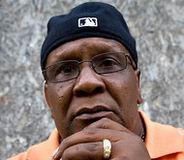
Donnie Andrews
Murderer Brian Kevin Rosenfeld
Murderer · USA · 1985
Brian Kevin Rosenfeld Brian Kevin Rosenfeld was sentenced to three concurrent l…
23 victims
Brian Kevin Rosenfeld
Murderer · USA · 1985
Brian Kevin Rosenfeld Brian Kevin Rosenfeld was sentenced to three concurrent l…
23 victims
 Yahweh ben Yahweh
Murderer · USA · 1980
Yahweh ben Yahweh was born and legally named Hulon Mitchell Jr. (October 27, 19…
23 victims
Yahweh ben Yahweh
Murderer · USA · 1980
Yahweh ben Yahweh was born and legally named Hulon Mitchell Jr. (October 27, 19…
23 victims
 Russell Ellwood
Murderer · USA · 1991
Russell Ellwood was a former taxi driver. Authorities suspected him of killing…
20 victims
Russell Ellwood
Murderer · USA · 1991
Russell Ellwood was a former taxi driver. Authorities suspected him of killing…
20 victims
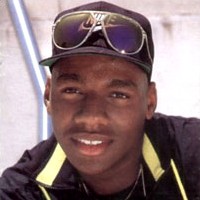 Christopher Roney
Murderer · USA · 1996
Christopher Roney (born December 15, 1969 in Philadelphia, Pennsylvania), known…
1 victim
Christopher Roney
Murderer · USA · 1996
Christopher Roney (born December 15, 1969 in Philadelphia, Pennsylvania), known…
1 victim
 James Glenn Robedeaux
Murderer · USA · 1978
James Glenn Robedeaux was charged with and convicted of first degree murder inv…
2 victims
James Glenn Robedeaux
Murderer · USA · 1978
James Glenn Robedeaux was charged with and convicted of first degree murder inv…
2 victims
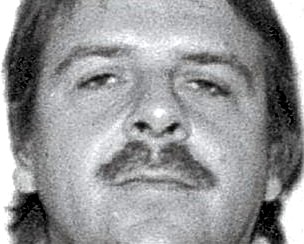 Ronald Lee Hoke
Murderer · USA · 1985
Ronald Lee Hoke Sr. was executed by lethal injection in Virginia on December 16…
1 victim
Ronald Lee Hoke
Murderer · USA · 1985
Ronald Lee Hoke Sr. was executed by lethal injection in Virginia on December 16…
1 victim
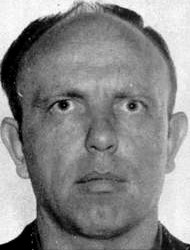 Harvey Carignan
Serial killer · USA · 1949
Harvey Louis Carignan (born May 18, 1927) was an American serial killer serving…
5 victims
Harvey Carignan
Serial killer · USA · 1949
Harvey Louis Carignan (born May 18, 1927) was an American serial killer serving…
5 victims
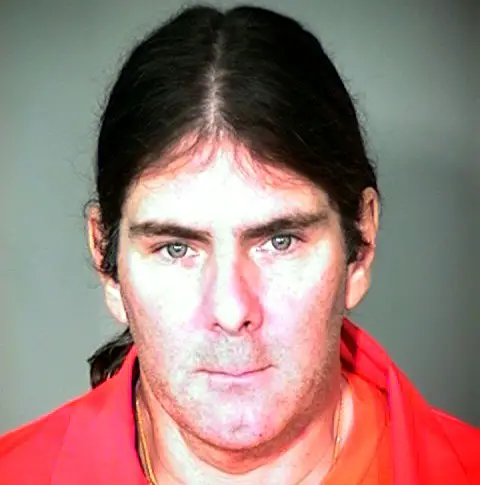 Frank Jarvis Atwood
Murderer · USA · 1984
Frank Jarvis Atwood was a 28-year-old pedophile, a drifter from California who…
1 victim
Frank Jarvis Atwood
Murderer · USA · 1984
Frank Jarvis Atwood was a 28-year-old pedophile, a drifter from California who…
1 victim
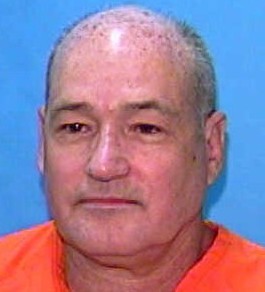 Roy Clifton Swafford
Murderer · USA · 1982
Roy Swafford was convicted and sentenced to death for the 02/14/82 murder of Br…
1 victim
Roy Clifton Swafford
Murderer · USA · 1982
Roy Swafford was convicted and sentenced to death for the 02/14/82 murder of Br…
1 victim
- Gender
- male
- Country
- USA
- Location
- Baltimore, Maryland, USA
- Date of birth
- April 29, 1954
- Age at first offence
- 32
- Characteristics
- abduction, abuse, convicted rapist, escape attempt
- Victim profile
- Zachary Roach and Rodney "Touche" Young
- Method of murder
- Shooting
- Date(s) of murder
- September 26, 1986
- Years active
- 1986
- Date of arrest
- —
- Status
-
Died in custody
Sentenced to life in prison for the two murders in 1987; released in 2005; died on December 13, 2012
Background
Larry Donnell Andrews (April 29, 1954 – December 13, 2012) was an American criminal and anti-crime advocate.
Andrews grew up in Baltimore and became a stickup artist. He grew up in a housing project in West Baltimore. He was physically abused by his mother. At the age of 10, he witnessed a man being beaten to death over 15 cents. Andrews became known to police for armed robbery and drug dealing in the 1970s and early 1980s in Baltimore.
Andrews robbed drug dealers but avoided involving innocent bystanders. He followed a code that included never involving women or children.
The offence
In 1986, Andrews committed a double murder for a local drug kingpin. The victims were Zachary Roach and Rodney “Touche” Young.
Andrews later surrendered to the police after committing the double murder in 1986. He confessed to the murders.
Investigation
Local drug kingpin Warren Boardley convinced Andrews, needing to support his heroin addiction, and Reggie Gross to take on the contract killing of Zachary Roach and Rodney “Touche” Young.
Andrews surrendered to Ed Burns, a homicide detective with the Baltimore Police Department. Working with Burns, Andrews agreed to wear a covert listening device, which he used to implicate Boardley and Gross in the killings.
Arrest
Andrews surrendered himself to Ed Burns after the murders.
Trial
In 1987, Andrews was sentenced for the two murders he committed in 1986.
Sentencing
Andrews was sentenced to life in prison for the two murders in 1987. He was denied parole on his first attempts.
Appeals
By 1998, a lobbying effort for Andrews’ release involved Burns, David Simon, and the lead prosecutor who obtained Andrews’ conviction.
Outcome
Andrews was released in 2005.
Andrews continued to study while incarcerated. He ended his addiction to heroin and helped other inmates with an anti-gang workshop.
Aftermath
After his release, Andrews began counseling inmates to avoid gang life and continued anti-gang outreach. He performed youth outreach after his release. His foundation, “Why Murder?”, attempted to steer children away from a life of crime.
While Andrews was in prison, David Simon sent him copies of the newspaper and Andrews gave Simon information about crimes taking place in Baltimore. Simon named Andrews a consultant on The Wire, an HBO series about crime in Baltimore. Simon used Andrews as an inspiration for the character of Omar Little, a stickup artist who never targeted innocent bystanders. Andrews appeared on screen as one of Omar’s crew.
Andrews also became connected to The Corner: A Year in the Life of an Inner-City Neighborhood through Fran Boyd. Burns introduced Andrews to Fran Boyd while Andrews was in prison. Boyd was the inspiration for the character of the same name on The Corner. The first conversation between Andrews and Boyd came in January 1993, when Boyd was still using drugs. Andrews encouraged Boyd to get clean. Andrews and Boyd married on August 11, 2007. Wedding guests included Simon and The Wire cast members Dominic West, Sonja Sohn, and Andre Royo.
Andrews suffered from an aortic dissection and died as a result on December 13, 2012 in Manhattan at the age of 58.
Other details
- Andrews became an electrician, took a college course by mail, and began mentoring younger inmates while incarcerated.
- Michael Millemann, an attorney who represented Andrews, recalled meeting him while he was still behind bars and that he was counseling younger inmates.
- Andrews was described as working on efforts to promote a non-profit outreach foundation and as being involved in a project to have greenhouses for an urban farming initiative in the Oliver neighborhood.
- Andrews was said to have been around violence most of his life, with his mother physically abusing him.
- Ed Burns and David Simon were described as having relationships with Andrews, including mentoring and collaborative work.
- Joan Jacobson was quoted with a passage beginning: “From what he told me, he had few epiphanies. His decision to transform his life came over many years, even decades.”
- Donnie Andrews was referenced as inspiring the fictional character Omar Little on The Wire, portrayed by Michael K. Williams, and Andrews’ real-life leap from a building was discussed in connection with his appearance in a shootout scene in which Omar escapes by leaping from a four-story building.
Spotted an error, or have more information about this case?