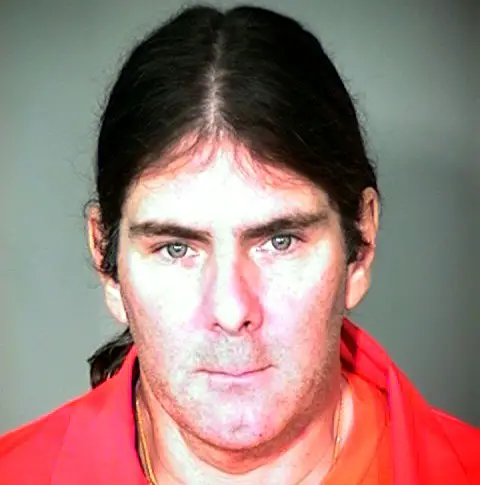
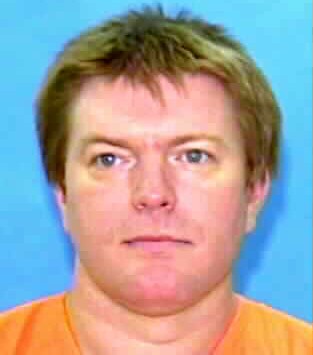
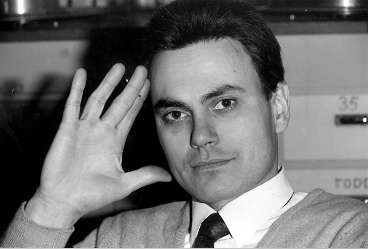
Frank Jarvis Atwood
Murderer Brian Kevin Rosenfeld
Murderer · USA · 1985
Brian Kevin Rosenfeld Brian Kevin Rosenfeld was sentenced to three concurrent l…
23 victims
Brian Kevin Rosenfeld
Murderer · USA · 1985
Brian Kevin Rosenfeld Brian Kevin Rosenfeld was sentenced to three concurrent l…
23 victims
 Marvin Gray
Murderer · USA · 1975
Marvin Gray was convicted killer who claimed responsibility for 23 slayings and…
23 victims
Marvin Gray
Murderer · USA · 1975
Marvin Gray was convicted killer who claimed responsibility for 23 slayings and…
23 victims
 Yahweh ben Yahweh
Murderer · USA · 1980
Yahweh ben Yahweh was born and legally named Hulon Mitchell Jr. (October 27, 19…
23 victims
Yahweh ben Yahweh
Murderer · USA · 1980
Yahweh ben Yahweh was born and legally named Hulon Mitchell Jr. (October 27, 19…
23 victims
 Russell Ellwood
Murderer · USA · 1991
Russell Ellwood was a former taxi driver. Authorities suspected him of killing…
20 victims
Russell Ellwood
Murderer · USA · 1991
Russell Ellwood was a former taxi driver. Authorities suspected him of killing…
20 victims
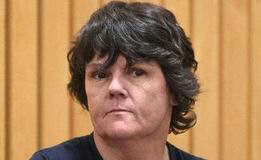 Gwenda Sloane
Murderer · New Zealand · 2012
Gwenda Leigh Sloane, also known as Pluss, was a Rotorua process worker aged 44…
1 victim
Gwenda Sloane
Murderer · New Zealand · 2012
Gwenda Leigh Sloane, also known as Pluss, was a Rotorua process worker aged 44…
1 victim
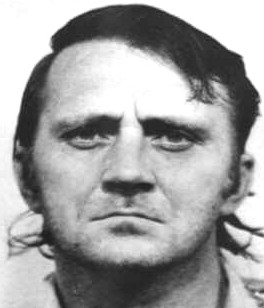 William Vandiver
Murderer · USA · 1983
William E. Vandiver was a White male. His date of birth was 08-26-1948. His exe…
1 victim
William Vandiver
Murderer · USA · 1983
William E. Vandiver was a White male. His date of birth was 08-26-1948. His exe…
1 victim
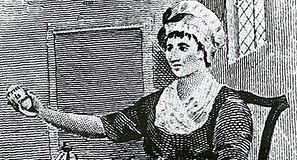 Mary Bateman
Murderer · United Kingdom · 1807
Mary Bateman (1768–1809) was known as the Yorkshire Witch. She was associated w…
1 victim
Mary Bateman
Murderer · United Kingdom · 1807
Mary Bateman (1768–1809) was known as the Yorkshire Witch. She was associated w…
1 victim
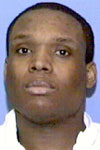 Lamont Reese
Murderer · USA · 1999
Lamont D. “Mont” Reese was a 28-year-old black male. He was scheduled to be exe…
3 victims
Lamont Reese
Murderer · USA · 1999
Lamont D. “Mont” Reese was a 28-year-old black male. He was scheduled to be exe…
3 victims
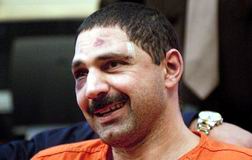 Elias Abuelazam
Serial killer · USA · 2009
Elias Abuelazam (born August 28, 1976) was an Israeli convicted murderer and su…
5 victims
Elias Abuelazam
Serial killer · USA · 2009
Elias Abuelazam (born August 28, 1976) was an Israeli convicted murderer and su…
5 victims
- Gender
- male
- Country
- USA
- Location
- Pima County, Arizona, USA
- Date of birth
- December 9, 1956
- Age at first offence
- 28
- Characteristics
- kidnapping, rape, paedophile
- Victim profile
- Vicki Lynne Hoskinson (female, 8)
- Method of murder
- St abbing with knife
- Date(s) of murder
- September 17, 1984
- Years active
- 1984
- Date of arrest
- —
- Status
-
Sentenced to death
Sentenced to death on May 8, 1987
Case record: Frank Jarvis Atwood
Background
Frank Jarvis Atwood was a 28-year-old pedophile, a drifter from California who lived off his parents. He had been convicted of lewd and lascivious acts and kidnapping an 8-year-old boy in California.
Atwood was sent to a mental health facility after he was busted in 1974 for lewd and lascivious conduct with a 14-year-old girl. In May 1984, he was paroled from the kidnapping sentence.
After Atwood came to Tucson in September 1984, he did so in violation of his California parole.
Atwood was described as living on Arizona’s death row and remained alive on death row for nearly 17 years after sentencing.
Atwood married on Dec. 17, 1991 to Rachel Lee Tenny, 29, of Tucson. The marriage was witnessed by Atwood’s mother and was performed inside the old prison.
Atwood studied enough to earn a degree in comparative religion.
The offence
Vicky Lynn Hoskinson was an 8-year-old girl. On September 17, 8-year-old Vicky Lynn Hoskinson was riding her bicycle home from mailing a letter. Atwood kidnapped the girl and killed her. He left her body in the desert and fled to Texas.
Atwood used his 9-year-old Datsun 280Z to get Vicki Lynne, striking her bike with the car's bumper that bore telltale pink paint. The bike lay on Pocito Place near Root Lane. Atwood asked the boy for directions and then knocked down the boy's bike and forced the boy to fellate him in relation to the earlier 8-year-old boy conviction.
Vicky Lynne's family received 911 contact after her sister found the bike and her mother rushed down the street to retrieve it. Two teenage boys saw the young girl in the black Z. A Homer Davis teacher also saw the car, along with scruffy Atwood, and took down the license plate number.
Atwood returned later that day—Sept. 17, 1984—to his transient pals who were hanging out in De Anza Park on East Speedway Boulevard at Stone Avenue. He had blood on his hands and cactus needles on his pants. He boasted to his friends, including one who was coincidentally struck and killed by lightning four days later, that he stabbed a guy after a drug deal went awry. Atwood and his friend Jack McDonald visited with another man and went to a bar to play pool. Atwood's buddies noticed that he was spending time sanding his knife.
Investigation
Ten days after Vicki Lynne Hoskinson disappeared, Atwood was charged with kidnapping "with the intent to inflict death, physical injury or a sexual offense on the victim."
Nearly seven more months passed before Vicki Lynne Hoskinson's remains were found.
The FBI had already called Atwood's parents. Atwood's parents told agents that their son was getting his car fixed at Ken Stoepel Ford in Kerrville.
After Atwood was apprehended, agents searched his car and arranged for it to be carted to San Antonio, where it was searched again.
Arrest
Atwood fled to Texas after killing Vicky Lynne Hoskinson. He was apprehended in Texas.
Atwood was arrested at Ken Stoepel Ford in Kerrville, and his car was searched there.
Trial
The trial was moved because of overwhelming coverage.
The trial did not begin until January 1987. The jury convicted Atwood on March 26, 1987.
The proceedings included a presiding judge and a prosecutor: Presiding Judge John Hawkins; Prosecutor John Davis.
Stanton Bloom was described as a defense lawyer who took over the case for Lamar Couser. Lamar Couser was mentioned as the lawyer for whom Bloom took over the case. John Davis was described as rule-flouting but effective and was mentioned as prosecutorial lead at trial.
Sentencing
Atwood was sentenced on May 8, 1987.
The aggravating circumstances included a prior conviction punishable by life imprisonment. The mitigating circumstances were described as none sufficient to call for leniency.
Appeals
The case was published as State v. Atwood, 171 Ariz. 576, 832 P.2d 593 (1992).
Atwood had only one appeal, which was rejected not long after Arizona resumed executions after a 29-year hiatus caused by changing laws and orders from the U.S. Supreme Court. Larry Hammond handled Atwood's new appeal.
Larry Hammond was described as a lawyer who clerked for U.S. Supreme Court Justices Lewis Powell and Hugo Black.
Outcome
Atwood was sentenced to death on May 8, 1987.
He began his time on Arizona's death row the next day after sentencing. Atwood remained alive on death row and had traveled from the old Cell Block 6 at the Florence prison to the Eyman Unit east of Florence.
Aftermath
Don Eugene Harding was described in connection with Arizona’s gas chamber method changes, and the state Legislature moved to allow voters to change the method to lethal injection.
The narrative stated that Harding overpowered and killed two salesmen at the La Quinta (now a Ramada) just off Interstate 10 at St. Mary's Road, and described details of Harding's gas chamber death.
It was stated that, in 12 years, there had been only 22 executions and that nine were executed for murders committed in Pima County. The last execution was in November 2000. The narrative also stated that the U.S. Supreme Court's Ring decision placed a number of death cases in limbo.
Timeline
- May 1984 — Atwood was paroled from the kidnapping sentence.
- September 1984 — Atwood came to Tucson in violation of his California parole.
- September 17, 1984 — Atwood kidnapped 8-year-old Vicky Lynn Hoskinson; he later returned to transient pals in De Anza Park with blood on his hands and cactus needles on his pants.
- April 1985 — Vicky's body was found.
- Ten days after Vicki Lynne Hoskinson disappeared — Atwood was charged with kidnapping "with the intent to inflict death, physical injury or a sexual offense on the victim."
- January 19, 1987 — Start of trial.
- March 26, 1987 — Verdict.
- May 8, 1987 — Sentencing to death.
- Dec. 17, 1991 — Atwood married Rachel Lee Tenny, 29, of Tucson.
- April 6 (year not specified in the case summary narrative) — Don Eugene Harding was killed in the gas chamber in the narrative context.
- March 1963 (narrative context) — Manuel Silvas died in the gas chamber, in the narrative context.
- November 2000 — The last execution (narrative context).
Other details
The presiding judge at trial was John Hawkins, and the prosecutor was John Davis.
The narrative stated that Vicki Lynn Hoskinson had completed her day at Homer Davis Elementary School and that she was heading back from dropping a birthday card into a nearby mailbox.
The narrative described community and prosecutorial response in Tucson after the murder.
The narrative stated that defense lawyers and death-penalty abolitionists feared Harding's execution would open the floodgates, and that many death-penalty opponents evolved their approach over time.
Stanton Bloom was described as briefly hospitalized due to being drained.
The narrative included an attribution to Larry Hammond regarding press coverage, including the quotation:
"like Charles Manson."
The narrative included quotations attributed to Larry Hammond, including:
"This case has been treated as if it is the most clear example of a horrific crime in history. " "There is tremendous hatred for Frank," "Why on Earth would I want to talk to the arrogant, ignorant press?" "He adds that he would rather run through a path of rattlesnakes than discuss Atwood's case with a reporter."
Vicky Lynne Hoskinson's case included the detail that her body was not found until April 1985.
Atwood's travel included Interstate 10 on the way to New Orleans.
The narrative stated that the Z broke down in Kerrville, Texas, less than an hour from San Antonio.
The narrative included a quote attributed to McDonald about Atwood phoning home for help:
"Even if I did do it, you have to help me."
Spotted an error, or have more information about this case?