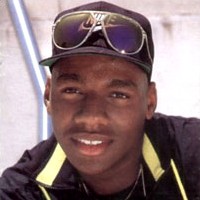
Christopher Roney
Murderer Russell Ellwood
Murderer · USA · 1991
Russell Ellwood was a former taxi driver. Authorities suspected him of killing…
20 victims
Russell Ellwood
Murderer · USA · 1991
Russell Ellwood was a former taxi driver. Authorities suspected him of killing…
20 victims
 Robert Martines Perez
Murderer · USA · 1994
Name: Robert Martines Perez · Other name used in proceedings: Robert Martinez P…
15 victims
Robert Martines Perez
Murderer · USA · 1994
Name: Robert Martines Perez · Other name used in proceedings: Robert Martinez P…
15 victims
 Billy Frank Vickers
Murderer · USA · 1993
Billy Frank Vickers Vickers was executed by lethal injection in Texas on Januar…
14 victims
Billy Frank Vickers
Murderer · USA · 1993
Billy Frank Vickers Vickers was executed by lethal injection in Texas on Januar…
14 victims
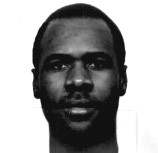 Kenneth Bernard Harris
Murderer · USA · 1986
Kenneth Bernard Harris (also written as Kenneth B. Harris) was executed by leth…
1 victim
Kenneth Bernard Harris
Murderer · USA · 1986
Kenneth Bernard Harris (also written as Kenneth B. Harris) was executed by leth…
1 victim
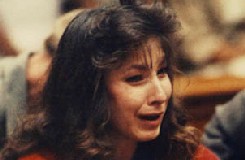 Cynthia Coffman
Serial killer · USA · 1986
Name: Cynthia Coffman · Race: White · Date of birth: 1962 · Age at crime: 24 ·…
4 victims
Cynthia Coffman
Serial killer · USA · 1986
Name: Cynthia Coffman · Race: White · Date of birth: 1962 · Age at crime: 24 ·…
4 victims
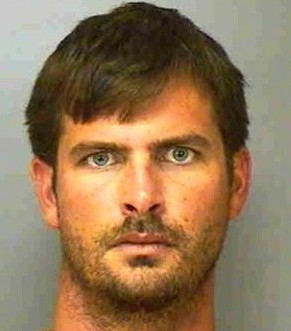 Thomas Rigterink
Murderer · USA · 2003
Thomas Rigterink was adopted son of Polk Community College professors James and…
2 victims
Thomas Rigterink
Murderer · USA · 2003
Thomas Rigterink was adopted son of Polk Community College professors James and…
2 victims
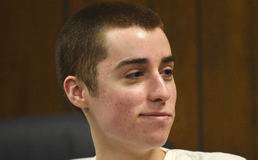 Thomas Lane
Homicide · USA · 2012
Thomas Michael “T. J.” Lane III was a 17-year-old juvenile when he shot student…
3 victims
Thomas Lane
Homicide · USA · 2012
Thomas Michael “T. J.” Lane III was a 17-year-old juvenile when he shot student…
3 victims
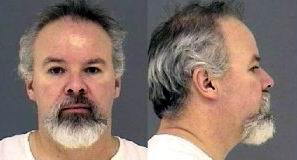 Scott Lee Kimball
Serial killer · USA · 2003
Scott Lee Kimball was a convicted serial killer. He pleaded guilty to two count…
4 victims
Scott Lee Kimball
Serial killer · USA · 2003
Scott Lee Kimball was a convicted serial killer. He pleaded guilty to two count…
4 victims
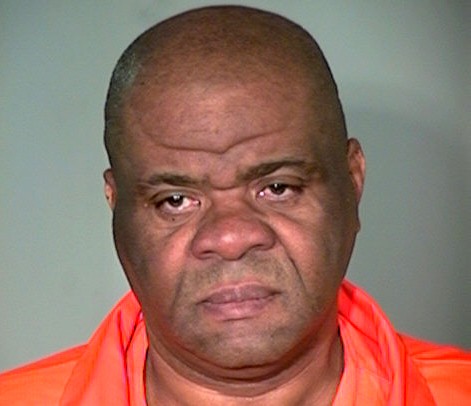 Fred Robinson
Murderer · USA · 1987
Fred Robinson and Susan Hill lived together for a number of years. Beginning in…
1 victim
Fred Robinson
Murderer · USA · 1987
Fred Robinson and Susan Hill lived together for a number of years. Beginning in…
1 victim
- Gender
- male
- Country
- USA
- Location
- Philadelphia, Pennsylvania, USA
- Date of birth
- December 15, 1969
- Age at first offence
- 27
- Characteristics
- bank robbery, rape?, drugs
- Victim profile
- Lauretha Vaird, 43 (Philadelphia Police officer)
- Method of murder
- Shooting
- Date(s) of murder
- January 2, 1996
- Years active
- 1996
- Date of arrest
- October 30, 1996
- Status
-
Sentenced to death
Sentenced to death on December 13, 1996
Background
Christopher Roney (born December 15, 1969 in Philadelphia, Pennsylvania), known by the stage name Cool C, was an American rapper whose musical career peaked in the late 1980s.
In the mid-1980s, Roney was an original member of the Philadelphia-based Hilltop Hustlers hip hop crew. His 1987 debut single, "Juice Crew Dis," took aim at the New York-based hip hop crew run by influential rap producer Marley Marl, a group that included Kool G. Rap and Big Daddy Kane.
Roney released two full-length solo albums on Atlantic Records: his debut I Gotta Habit in 1989 (including the hit title track and "Glamourous Life") and Life in the Ghetto in 1990.
In 1991, Roney put his solo career aside to join the hardcore rap group C.E.B., which stood for "Countin' Endless Bank." C.E.B. included fellow Philadelphia rappers Warren McGlone (Steady B) and Ultimate Eaze. The trio released their only album, Countin' Endless Bank, on Ruffhouse Records in 1993, to disappointing sales and reviews.
The offence
On January 6, 1996, around 8:30 in the morning, Christopher Roney and accomplice Mark Canty entered a Philadelphia bank dressed as utility construction workers and forced several employees to open the bank vault at gunpoint. Canty went into the vault with two of the women while Roney held a third at gunpoint.
Canty shouted to Roney, "Here comes the heat," and Roney replied, "Don't worry; I'll take care of them."
When Police Officer Lauretha Vaird, described as the first officer to respond to the silent alarm, approached the front door of the bank building and entered the bank, Roney fatally shot Lauretha in the abdomen and then ran past her through the front door. Canty fled from the bank through a side entrance, leaving his gun behind.
Outside the bank, Roney exchanged gunfire with the second officer to arrive on the scene. After escaping the shootout, Roney jumped into a getaway vehicle, a green minivan driven by another accomplice, Warren McGlone, and the vehicle sped away.
Later that morning, the three men met at McGlone's home to discuss the robbery. Police found the abandoned getaway vehicle and various pieces of the robbers' disguises, and they recovered two weapons lying on the ground outside the bank. One weapon was traced to a relative of Canty, who had discovered the weapon had been stolen; it had last been seen in Canty's possession. The other gun was traced to a friend of McGlone, who had purchased the weapon for McGlone.
During the botched heist, Roney shot and killed Philadelphia Police Officer Lauretha Vaird, who responded to the bank's silent alarm. As he exited the bank, Roney exchanged fire with another police officer before he and Canty dropped their weapons at the scene and fled in a stolen minivan driven by McGlone.
Vaird was described as an African-American woman and a single mother of two children, and as the first female Philadelphia Police officer killed in the line of duty. Lauretha was 43 years old and had served for 9 years. A song named "Slipped Away, The Ballad of Lauretha Vaird" was written in honor of the fallen officer.
Investigation
Police found the abandoned getaway vehicle and various pieces of the robbers' disguises. They recovered two weapons lying on the ground outside the bank.
After being taken in for questioning, Canty and McGlone confessed to participating in the robbery.
Arrest
Roney was arrested.
Trial
Roney was arrested and, on October 30, 1996, convicted of first degree murder.
Sentencing
At the subsequent sentencing hearing, Roney was sentenced to death by lethal injection.
Roney was sentenced to death and the two accomplices received life sentences.
Appeals
Roney steadfastly maintained his innocence throughout the trial and appeals process, despite the testimony of three eyewitnesses who placed him at the scene of the robbery, as well as ballistic and forensic evidence that linked him to the murder.
Outcome
On December 13, 1996, Roney was sentenced to death by lethal injection.
On January 10, 2006, his death warrant was signed by Pennsylvania Governor Ed Rendell and his execution date was set for March 9, 2006. On February 1, 2006, Pennsylvania Judge Gary Glazer granted a stay of execution until all post-conviction litigation is resolved.
Roney was currently incarcerated in a Pennsylvania state prison awaiting execution, and he was an inmate at Pennsylvania’s State Correctional Institution at Greene.
Other details
Roney and accomplice Mark Canty attempted a bank robbery at a PNC bank branch in Philadelphia, described as occurring during the same time period that he was recording a comeback EP.
Roney was described as known for notoriety surrounding his involvement in the murder of a Philadelphia Police officer in a bank robbery in January 1996.
Roney was to have been put to death on March 9, 2006, but his execution had been stayed.
Spotted an error, or have more information about this case?