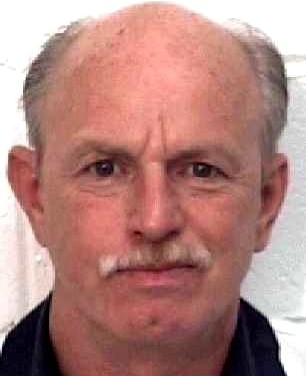
Robert Newland
Murderer Brian Kevin Rosenfeld
Murderer · USA · 1985
Brian Kevin Rosenfeld Brian Kevin Rosenfeld was sentenced to three concurrent l…
23 victims
Brian Kevin Rosenfeld
Murderer · USA · 1985
Brian Kevin Rosenfeld Brian Kevin Rosenfeld was sentenced to three concurrent l…
23 victims
 Yahweh ben Yahweh
Murderer · USA · 1980
Yahweh ben Yahweh was born and legally named Hulon Mitchell Jr. (October 27, 19…
23 victims
Yahweh ben Yahweh
Murderer · USA · 1980
Yahweh ben Yahweh was born and legally named Hulon Mitchell Jr. (October 27, 19…
23 victims
 Russell Ellwood
Murderer · USA · 1991
Russell Ellwood was a former taxi driver. Authorities suspected him of killing…
20 victims
Russell Ellwood
Murderer · USA · 1991
Russell Ellwood was a former taxi driver. Authorities suspected him of killing…
20 victims
 Phillip Stroud
Murderer · USA · 2000
Phillip A. Stroud was approximately age 21 at the time of the murders. He had a…
3 victims
Phillip Stroud
Murderer · USA · 2000
Phillip A. Stroud was approximately age 21 at the time of the murders. He had a…
3 victims
 Kenneth Chad Charm
Murderer · USA · 1993
Kenneth Chad Charm was tried and convicted for the 1993 rape and murder of 14-y…
1 victim
Kenneth Chad Charm
Murderer · USA · 1993
Kenneth Chad Charm was tried and convicted for the 1993 rape and murder of 14-y…
1 victim
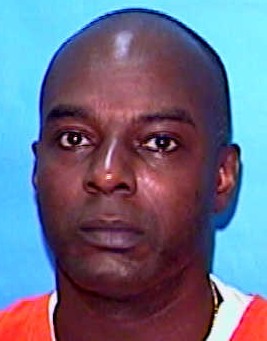 Clarence James Jones
Murderer · USA · 1988
Clarence James Jones Clarence Jones was a known escapee from a Maryland prison…
1 victim
Clarence James Jones
Murderer · USA · 1988
Clarence James Jones Clarence Jones was a known escapee from a Maryland prison…
1 victim
 Joan Vila Dilme
Serial killer · Spain · 2009
Joan Vila Dilme was a security guard and care-home worker at the La Caritat hom…
11 victims
Joan Vila Dilme
Serial killer · Spain · 2009
Joan Vila Dilme was a security guard and care-home worker at the La Caritat hom…
11 victims
 Dixie Shanahan
Murderer · USA · 2002
Dixie Lynn Shanahan (also known as Dixie Duty; formerly Shanahan; later Shanaha…
1 victim
Dixie Shanahan
Murderer · USA · 2002
Dixie Lynn Shanahan (also known as Dixie Duty; formerly Shanahan; later Shanaha…
1 victim
 Sharon Flanagan
Murderer · USA · 2012
Name: Sharon Flanagan · Role: Mother of the victim · Legal outcome: Found guilt…
1 victim
Sharon Flanagan
Murderer · USA · 2012
Name: Sharon Flanagan · Role: Mother of the victim · Legal outcome: Found guilt…
1 victim
- Gender
- male
- Country
- USA
- Location
- Glynn County, Georgia, USA
- Date of birth
- April 1943
- Age at first offence
- 43
- Characteristics
- domestic violence, rape, drug addict, alcohol, mentally ill
- Victim profile
- Carol Beatty (female, 27)
- Method of murder
- St abbing with knife
- Date(s) of murder
- May 30, 1986
- Years active
- 1986
- Date of arrest
- Next day
- Status
-
Executed
Executed by lethal injection in Georgia on March 10, 2009
Case details
Robert Newland (male) was convicted and sentenced to death in Georgia for the killing of Carol Sanders Beatty, a 27-year-old woman. Newland was executed by lethal injection in Georgia on March 10, 2009.
Background
Newland lived with his girlfriend, Margaret Beggs, in Glynn County, Georgia. They moved to Glynn County in February 1984 and lived at 230 Broadway Street on St. Simon’s Island. Beatty lived across the street in a duplex at 231 Broadway Street. Over the two years they were neighbors, Beggs and Beatty increasingly socialized with each other. Newland had infrequent social contact with Beatty, although they were on friendly terms.
Beggs was employed as a social worker in a local mental health clinic. Newland was self-employed as a drywall construction contractor.
Newland was 54 at the time he was sentenced to death in August 1987. The record also described Newland as 65 at the time of the execution and stated he was born in April 1943. He was described as white, male, 6'00", 185 pounds, with blue eyes and blonde hair. His most recent institution was listed as “GA DIAG & CLASS PRIS-PERM,” with GDC ID: 0000436424 and DOB: 04/1943.
The offence
On May 30, 1986, Newland and Beggs visited Beatty after drinking. After Beatty refused Newland’s sexual advances, he scratched and slapped her and then used a pocket knife to slash her neck and stab her repeatedly. Beatty screamed and called for help. When she collapsed, Newland ran home, discarded the knife while running, washed himself off with a hose in his backyard, put on a new pair of jeans, and entered his house.
Victim
Carol Sanders Beatty was 27 years old. She lived in the duplex at 231 Broadway Street. She was described as a former state and national amateur diving champion.
Injuries and death
After police found Beatty in her backyard laying in the garden and still alive, paramedics transported her to Glynn-Brunswick Memorial Hospital. Treating surgeon Dr. Irwin Berman testified that Beatty had a slash wound in her neck exposing the entire cross section of her windpipe. Berman also testified Beatty had multiple wounds of her great vessels of neck, smaller wounds of the flank, and a stab wound of the abdomen through which some organs of the abdomen were protruding.
Beatty died from excessive blood loss caused by her injuries at 9:35 p.m. on May 31.
The description of injuries included: four slash wounds to the throat, including a four-inch gash exposing her windpipe and leaving her unable to speak, and multiple stab wounds to the abdominal area exposing her intestines.
Beatty lived for 22 hours after the attack and shortly before her death identified Newland as her attacker.
Investigation and arrest
Initial reports and police response
At 11:22 p.m., Glynn County Police Department detectives Barry Moore and James Brundage received a report of a woman screaming in the Broadway Street neighborhood. While responding, they received a call from Bonnie Smith that a woman was screaming in Smith’s backyard behind her residence at 231 Broadway Street. Police drove to that address, heard someone run through the backyard, and gave chase.
During the pursuit, Brundage discovered Newland’s pick-up truck parked nearby on Forest Drive. The truck matched the description of the vehicle involved in a hit and run reported by Donald Sanders, who had witnessed a collision.
Unable to find the person they were chasing, the detectives returned to Beatty’s residence. Brundage found Beatty in the backyard laying in the garden and still alive. Paramedics were summoned and Beatty was transported to Glynn-Brunswick Memorial Hospital.
Beatty’s identification
At around 12:15 a.m., Dr. Berman noticed Beatty mouthing words, apparently in an attempt to communicate. He notified Detective Greg McMichael, who came to her bedside.
The Georgia Supreme Court related what followed:
McMichael . . . asked the victim who had attacked her and read her lips to say the name, ‘Bob.’ He then sounded out the name, ‘Bob’ and asked the victim if this was correct. She nodded her head affirmatively. When asked the last name of her assailant, the victim mouthed a word McMichael could not understand. He then asked the victim if the name began with an ‘A.’ She shook her head negatively. McMichael proceeded in this manner through the alphabet until he asked about the letter ‘N.’ The victim ‘nodded her head vigorously’ and squeezed his hand. By this procedure McMichael was able to elicit affirmative shakes of the head from the victim to the letters, ‘N E W L A.’ McMichael then asked the victim if the last name was ‘Newland.’ The victim ‘nodded her head again very vigorously,’ and squeezed McMichael’s hand. 258 Ga. 172, 366 S.E.2d 689, 692-93 (Ga. 1988).
In like manner, Beatty was able to give McMichael Newland’s phone number and the name of the street where he lived.
Dispatch and arrest
Relying on that information, the Glynn County Police Department dispatched several officers, including Detectives Bill Williams and Dennis Krauss, to Newland’s residence. Officers arrived at 1:10 a.m. and found Newland sitting up in his bed and pulling on a pair of jeans, as if he had just awakened.
Officers placed Newland under arrest for aggravated assault and transported him to police department headquarters in nearby Brunswick.
Search warrant and physical evidence
At some point early on May 31, police obtained a search warrant for Newland’s residence. Officers found a blood-stained shirt and a pair of socks on the back porch, and a pair of blood-stained blue jeans in a shed in the backyard.
Questioning and blood alcohol test
At 1:30 a.m., Detective Williams questioned Newland in an interview room at police headquarters. Williams was the only officer present. Newland smelled of alcohol but his speech was not impaired. Williams informed Newland of his Miranda rights.
Newland told Williams that his truck had broken down early in the afternoon and that he had left it on Forest Park Drive. He stated he had gone to the Sandpiper bar with Beggs, had three glasses of beer, picked up Chinese food at Ping’s Restaurant, and gone home for dinner. He said that after dinner, they went across to Beatty’s place, where he and Beggs had several Bloody Marys, and at around 8:30 p.m. they left Beatty’s to go home. He stated that on the way home he stumbled because he had been drinking “quite a bit” and fell in some bushes, accounting for scratches on his face. He said once home he went to bed and fell asleep.
Williams asked Newland whether he had gotten drunk that evening; Newland replied he had been drinking but was not drunk. The interrogation lasted about half an hour.
Around 2:00 a.m., police had Newland’s blood alcohol content tested. Officer Richard Strickland performed the test, revealing a .12 percent BAC.
After the BAC test, Newland was placed in a holding cell.
Confessions and Miranda waivers
Newland provided multiple statements to police, including inculpatory confessions after Beatty died and after questioning. Officers informed Newland of his Miranda rights during interrogations and he signed waiver forms as described.
Statements before Beatty’s death
After Newland was arrested, he denied knowing anything about the attack in his initial statements. He later stated he had no memory of assaulting Beatty and claimed his inability to remember was related to intoxication.
Statements after Beatty’s death
On June 1, at around 10:00 a.m., Detectives Krauss and Putnam went to the detention center to inform Newland that Beatty had expired and that he was now being charged with murder. Newland was escorted out of his cell to a holding cell to meet with the detectives.
Before Krauss began speaking, Newland stated:
“I just want to plead guilty and get out of town.”
Krauss instructed Newland not to say anything else and advised him of his Miranda rights. Newland signed a form waiving those rights. Krauss asked Newland to tell what happened the night of May 30. Newland initially did not make inculpatory statements and instead said he did not remember assaulting Beatty and did not want to continue talking. Krauss informed him that Beatty had died and that he was being charged with murder. Newland then became upset and started to cry.
As Newland was escorted out, he asked Krauss about Beggs’s status. Krauss told him Beggs was in the detention center and that she also was about to be informed she was being charged with murder. Newland then confessed to killing Beatty.
Krauss’s account of Newland’s confession included:
“tried to kiss her that, that she pushed him away, and they got into a struggle, and he got very angry about it. He . . . hit her and then threw her to the ground. He . . . pulled out his knife and just started cutting her.”
Krauss asked where the knife was; Newland said he could not remember.
The confession lasted ten to fifteen minutes and was not recorded because the recorder malfunctioned.
Williams later visited Newland with Detective McMichael and armed with a recorder; during that interaction at 1:05 p.m. Newland again confessed to the murder, but the recorder batteries had expired. Williams went to speak with Newland again on June 2 with a functioning tape recorder at 11:10 a.m. and obtained a recorded statement.
In that June 2 recorded statement, Newland repeated that he lost control and attacked Beatty because he was intoxicated. He stated that after stabbing Beatty he ran home, washed himself off in his backyard, changed clothes, entered the house, and spoke with Beggs. He told Beggs nothing had happened. He stated Beggs then went next door and that “the next thing I remember I was being arrested.” He claimed he did not remember getting into an accident with his pick-up truck and what he had done with the knife, and he expressed remorse throughout the interrogation.
Blood type and forensic findings described
Evidence at trial included that Newland’s clothes bore blood stains matching the victim’s blood type. Forensic serology included that Newland had Type A blood, Beatty had Type O blood, and blood found on Newland’s jeans and shirt was Type O blood.
Trial
Charges and counts
Newland was indicted in the Superior Court of Glynn County, Georgia on June 11, 1986 for the murder and aggravated assault with the intent to rape of Carol Sanders Beatty.
The Georgia Supreme Court opinion described charges presented at trial:
- Petitioner was charged in separate counts with murder in violation of O.C.G.A. § 16-5-1(a) (1982).
- Felony murder predicated on aggravated assault with a deadly weapon in violation of O.C.G.A. § 16-5-1(c).
- Felony murder predicated on aggravated assault with intent to rape in violation of O.C.G.A. § 16-5-1(c).
- Aggravated assault with intent to commit rape in violation of O.C.G.A. § 16-5-21(a)(1).
- Aggravated assault with a deadly weapon in violation of O.C.G.A. § 16-5-21(a)(2).
The jury did not return a verdict on the felony murder counts because the court instructed the jury it could find guilty of either malice murder or felony murder for the death of a single victim. Because the jury convicted on malice murder, the felony murder counts were dismissed. The court also dismissed the aggravated assault with a deadly weapon count as merged with the malice murder conviction.
Dates and verdicts
Trial began on Monday, August 10, 1987 and lasted five days. The trial court described the defendant’s trial as August 10 through August 15, 1987. The jury returned its verdict on guilt on August 14, 1987 at 2:39 p.m., finding Newland guilty of:
- murder,
- aggravated assault with intent to rape,
- and aggravated assault with a deadly weapon.
After a short recess, the trial entered the penalty phase. The jury recommended the death sentence on August 15, 1987 at 10:22 a.m. (after deliberations that began August 14 and continued on August 15). The trial court adopted the recommendation and imposed a death sentence for the murder.
Newland’s sentence included an additional twenty-year prison term for the conviction of aggravated assault with intent to commit rape, to run consecutively to the death sentence.
Newland’s motion for new trial was denied on September 2, 1987.
Evidence described during trial
The evidence at trial included the identification process at the hospital where Beatty communicated “Bob” and then “N E W L A” and affirmed the last name was “Newland.” Beatty was described as having a face so caked with blood that a police officer could not tell what she looked like. Emergency surgery was performed, and Beatty lived for 22 hours before succumbing to death due to loss of blood.
A police officer testified Beatty screamed and called for help during the assault and that when she collapsed Newland ran home, discarding the knife, washed himself off, and changed clothes before entering the house.
The State introduced evidence of petitioner's BAC extrapolation and several witness accounts about Newland’s drinking and behavior.
Photographs and testimony rulings described
Newland objected to admission of photographs taken of Beatty’s throat wounds after emergency tracheotomy; he argued the wounds had been changed by authorities. The trial court admitted the photographs to identify and show the location of the wounds. The Georgia Supreme Court held the trial court did not err in admitting the photographs for the purposes stated.
Newland appealed the denial of his motion in limine to exclude testimony of Detective Greg McMichael on hearsay grounds. The Georgia Supreme Court found any error harmless because other evidence, including Newland’s confession, overwhelmingly established identity.
Jury findings on statutory aggravating circumstances
The jury found that the offense of murder was committed while Newland was engaged in the commission of the offense of aggravated battery. The jury also found that the offense of murder was “outrageously and wantonly vile, horrible and inhuman” in that it involved torture and an aggravated battery to the victim, and depravity of mind of the defendant. The Georgia Supreme Court held the evidence supported these aggravating circumstances beyond a reasonable doubt.
The Georgia Supreme Court found the sentence of death was not imposed under impermissible influence of passion, prejudice, or other arbitrary factor, and it found the sentence was not excessive or disproportionate compared to similar cases generally.
Sentencing
The trial court sentenced Newland to twenty years for aggravated assault with intent to rape, to run consecutively to the death sentence.
Appeals
Direct appeal
The Georgia Supreme Court affirmed Newland’s convictions and death sentence unanimously on April 14, 1988. Newland v. State, 258 Ga. 172, 366 S.E.2d 689.
Newland filed a petition for writ of certiorari in the United States Supreme Court, which was denied on November 28, 1988. Newland v. Georgia, 488 U.S. 975.
State habeas corpus
Newland filed a petition for a writ of habeas corpus in the Superior Court of Butts County, Georgia on January 2, 1991. He filed an amended petition on November 12, 1997. An evidentiary hearing was held on March 3-4, 1998. On December 20, 2001, the state habeas corpus court entered an order denying Newland state habeas relief.
Newland’s application for a certificate of probable cause to appeal in the Georgia Supreme Court was denied on October 1, 2002.
Federal habeas corpus
Newland filed a petition for writ of certiorari in the United States Supreme Court, which was denied on May 5, 2003. Newland v. Turpin, 538 U.S. 1015.
Newland filed a federal habeas corpus petition in the United States District Court for the Southern District of Georgia, Brunswick Division, on September 19, 2003. He filed an amendment on March 11, 2004.
On January 27, 2005, the United States Magistrate Judge entered a report and recommendation recommending denial. On June 15, 2005, the United States District Judge adopted the recommendation and denied the petition. The district court denied a motion to alter and amend judgment on August 31, 2005 and denied a certificate of appealability on November 2, 2005.
The Eleventh Circuit granted a certificate of appealability on November 29, 2005. The case was orally argued on June 8, 2006. On May 14, 2008, the Eleventh Circuit issued an opinion denying relief. Newland v. Hall, 527 F.3d 1162 (11th Cir. 2008). Newland’s petition for panel rehearing was denied on July 9, 2008.
United States Supreme Court
Newland filed a petition for writ of certiorari in the United States Supreme Court on December 5, 2008. The Supreme Court denied certiorari on February 23, 2009. Newland v. Hall, 2009 LEXIS 1348 (Case No. 08-7672).
Outcome
Georgia Supreme Court and Eleventh Circuit holdings noted
The Georgia Supreme Court affirmed Newland’s convictions of malice murder and aggravated assault with intent to rape and affirmed the death sentence, holding among other issues that evidence was sufficient to support malice murder and aggravated assault with intent to rape, that photographs depicting the victim’s wounds after emergency surgery were properly admitted, and that any hearsay error regarding nonverbal identification by the victim was harmless.
The Eleventh Circuit affirmed denial of federal habeas relief. It held that trial and appellate attorneys were not constitutionally ineffective concerning the admissibility of the confession and that trial counsel was not ineffective in failing adequately to search for and present mitigating evidence during the penalty phase of the trial.
Aftermath
Final meal and final words
Newland declined a special last-meal request and was served the regular meal tray consisting of chicken and rice, carrots, collard greens, rolls, bread, putting, and iced tea.
Newland expressed remorse for killing his “good friend.” His final statement included:
"I'm sorry this happened. I wish I could go back to that day. I have no grudges against anybody. I still don't remember what happened, but what happened happened."
After the final statement, Newland continued talking again after the death chamber’s microphone had been turned off. His words were heard only by the warden, security officers, and medical staff behind the soundproof glass window.
Other details
Evidence of Beggs’s charge and affidavit
Beggs was initially charged with murder along with Newland, but the murder charge against Beggs was reduced to giving a false statement during a police investigation. The charge was eventually dropped. On June 3, Beggs provided an affidavit describing Newland’s behavior on May 30-31; in exchange, the state reduced her charge from murder to giving a false statement to law enforcement officials, and that charge was eventually dropped.
Remarks and interrogation fragments included
During the May 31 interrogation, Williams confronted Newland about the possibility that Beggs could be charged as an accessory to murder. In one exchange, Williams stated:
“You remember enough to lie about it. You remember enough to lie about it and you don’t even care enough about Peggy, her ass is going to jail.”
Newland responded:
“I do care about Peggy.”
Williams added:
“… her ass is going to jail, too.”
Newland asked:
“For what?”
Williams said:
“For accessory.”
Newland asked:
“Accessory to what?”
Williams replied:
“To murder.”
In a second exchange, the record described Williams’s statement that Newland was in bed when y’all came and that Williams thought Peggy carried the knife off and hid it for him because the knife had disappeared. The exchange included:
“No, I think that she, you know, and my boss wants to charge her as an accessory, so you know, if you know where the knife is, if you don’t want her to go to jail . . .”
and Newland’s response:
“… I have no idea, I have no idea, I’m just being straight with you, I just don’t know.”
Property and location details
Beatty lived in a duplex at 231 Broadway Street on St. Simon’s Island. Newland and Beggs lived in a house at 230 Broadway Street on St. Simon’s Island. Police found Newland’s pick-up truck on Forest Park Drive and later found it parked on Forest Drive during the pursuit. Newland entered his house through the backyard.
Employment and personal history included
The record included mitigation-related narrative describing Newland’s upbringing in extreme poverty in Springfield, Ohio, being raised by violently alcoholic parents, experiencing daily beatings, and experiencing sexual abuse by an uncle starting around age 12, along with later head injuries and severe alcohol and drug abuse. It also stated Newland asked his attorneys not to trouble his family or involve them in his case and that his attorneys made no effort to investigate his life for mitigating evidence, based on his instruction. It further stated Newland expressed remorse for his crime and had a spotless disciplinary record since his imprisonment.
Prior conviction history narrative included
The record described a prior indictment in Tennessee in December 1978 for aggravated assault, burglary, and criminal sexual conduct in the first degree involving a woman. It stated Manning objected to the prosecutor’s use of the indictment and the court sustained his objection. It also stated that Manning successfully persuaded the court not to allow this indictment to be used at the sentencing hearing.
Spotted an error, or have more information about this case?