
Gary Black
Murderer Russell Ellwood
Murderer · USA · 1991
Russell Ellwood was a former taxi driver. Authorities suspected him of killing…
20 victims
Russell Ellwood
Murderer · USA · 1991
Russell Ellwood was a former taxi driver. Authorities suspected him of killing…
20 victims
 Robert Martines Perez
Murderer · USA · 1994
Name: Robert Martines Perez · Other name used in proceedings: Robert Martinez P…
15 victims
Robert Martines Perez
Murderer · USA · 1994
Name: Robert Martines Perez · Other name used in proceedings: Robert Martinez P…
15 victims
 Billy Frank Vickers
Murderer · USA · 1993
Billy Frank Vickers Vickers was executed by lethal injection in Texas on Januar…
14 victims
Billy Frank Vickers
Murderer · USA · 1993
Billy Frank Vickers Vickers was executed by lethal injection in Texas on Januar…
14 victims
 Ramon Jay Rogers
Serial killer · USA · 1993
March 14, 1996 — Ramon Jay Rogers pleaded not guilty to a charge of murder conn…
3 victims
Ramon Jay Rogers
Serial killer · USA · 1993
March 14, 1996 — Ramon Jay Rogers pleaded not guilty to a charge of murder conn…
3 victims
 Susan Eberhart
Murderer · USA · 1872
Susan Eberhart was a white woman aged between 17 and 21. She served as the hous…
1 victim
Susan Eberhart
Murderer · USA · 1872
Susan Eberhart was a white woman aged between 17 and 21. She served as the hous…
1 victim
 Byron Smith
Murderer · USA · 2012
Byron Smith, 65, was involved in the killings of two teenage intruders in his h…
2 victims
Byron Smith
Murderer · USA · 2012
Byron Smith, 65, was involved in the killings of two teenage intruders in his h…
2 victims
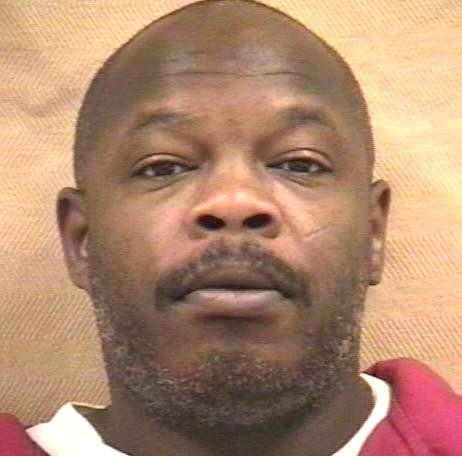 Glen Edward Chapman
Murderer? · USA · 1992
Defendant: Glen Edward Chapman Legal case references: In the Supreme Court of N…
2 victims
Glen Edward Chapman
Murderer? · USA · 1992
Defendant: Glen Edward Chapman Legal case references: In the Supreme Court of N…
2 victims
 Joseph M. Harris
Spree killer · USA · 1991
Joseph M. Harris committed a series of attacks after he was fired from his Post…
4 victims
Joseph M. Harris
Spree killer · USA · 1991
Joseph M. Harris committed a series of attacks after he was fired from his Post…
4 victims
- Gender
- male
- Country
- USA
- Location
- Jasper County, Missouri, USA
- Date of birth
- J uly 19, 1950
- Age at first offence
- 48
- Characteristics
- alcohol
- Victim profile
- Jason O. Johnson
- Method of murder
- St abbing with knife
- Date(s) of murder
- October 2, 1998
- Years active
- 1998
- Date of arrest
- —
- Status
-
Sentenced to death
Sentenced to death on January 6, 2000; reversed and remanded by the Supreme Court of Missouri (June, 2007; opinion handdown 05/29/2007) for a new trial.
Case record: Gary Black
Background
Gary W. Black was convicted of first-degree murder and sentenced to death in 1999 for the October 1998 death of Jason Johnson following an altercation between the two men in Joplin. His conviction and death sentence were affirmed on direct appeal in State v. Black, 50 S.W.3d 778 (Mo. banc 2001), and then reversed and remanded after postconviction relief in Black v. State, 151 S.W.3d 49 (Mo. banc 2004). On remand in 2006, Black was again convicted of first-degree murder and sentenced to death. He appealed.
The Supreme Court of Missouri had exclusive jurisdiction of the appeal. The judgment was reversed and the case was remanded.
The offence
On October 2, 1998, Black drove with his girlfriend, Tammy Lawson, to a Snak-Atak convenience store in Joplin, Missouri. Lawson went inside to shop while Black stayed in the car. When Lawson returned, she told Black she was upset because she felt that a man in the store, Jason Johnson, had acted inappropriately towards her.
Black followed Johnson’s vehicle with his own, an altercation ensued, and Johnson was killed.
A more detailed account of the facts surrounding Johnson’s death was provided in a prior decision. For purposes of this appeal, the following facts were described: Black drove with Tammy Lawson to the Snak-Atak convenience store in Joplin on October 2, 1998; Lawson went inside while Black stayed in the car; on return Lawson told Black she was upset because she felt Johnson had acted inappropriately towards her; Black then followed Johnson’s vehicle and an altercation ensued that resulted in Johnson’s death.
Additional trial facts included in the case summary
On the evening of October 2, 1998, Andrew Martin and Mark Wolfe and victim Jason O. Johnson met at a Joplin restaurant. After eating dinner and drinking beer, they decided to go to a downtown nightclub. Martin and the victim got into Martin’s 1996 Ford F-150 pickup, while Wolfe followed in his Camaro. En route, they stopped at a convenience store. Martin and Wolfe remained in their vehicles while the victim entered the store and purchased a 40-ounce bottle of beer and a can of chewing tobacco.
While in line, the victim stood behind Tammy S. Lawson. The jury viewed a tape of the victim and Lawson together in line. Lawson was the girlfriend of defendant Gary W. Black, who was also parked outside the store. When the victim exited the store, Lawson pointed him out to the defendant. During the penalty phase, Lawson testified that she was upset and told defendant that the victim made “a pass” at her.
The victim and Martin then left the store in the pickup, with Wolfe following in his Camaro. Defendant and Lawson were in defendant’s car, close behind the Camaro. When Martin stopped at the stoplight at 5th and Joplin, defendant pulled alongside in the right lane. Defendant began to “exchange words” with the victim. Defendant got out of his car, reached through the passenger window of the pickup, and stabbed the victim in the neck, nearly severing his carotid artery and completely severing his jugular vein. Defendant immediately returned to his car.
The victim left the pickup, staggered over to defendant’s car, and threw the bottle of beer at him. It was unclear whether the bottle struck defendant. During the penalty phase it became clear that leaving the scene, defendant commented, “One nigger down,” and threw the knife out the car window.
The stab wound was 4.5 to 6 inches deep and bled profusely. Bystanders attempted to slow the bleeding with clothing and towels. Paramedics arrived to find the victim unresponsive, from massive blood loss. Blood drained into the victim’s airway, depriving him of oxygen. The victim died three days later.
Defendant fled to Oklahoma. Defendant was arrested in Oklahoma on a Missouri warrant. During inventory, police found an empty knife sheath in his car. Based on a statement by Tammy Lawson, an officer found the knife in a grassy area near a cemetery, about 20 blocks from the crime scene.
Investigation
Police conducted an inventory after Black’s arrest in Oklahoma and found an empty knife sheath in his car.
Arrest
Trial
Prior proceedings mentioned in the decision
In 1999, Gary W. Black was convicted of first-degree murder and sentenced to death. Black, 50 S.W.3d 778 (Mo. banc 2001).
On appeal from the denial of Rule 29.15 postconviction relief, this Court reversed in Black v. State, 151 S.W.3d 49 (Mo. banc 2004).
He appealed his conviction after the remand trial.
Retrial and representation issue
The appeal concerned the trial court’s handling of Black’s repeated, timely, and unequivocal requests to proceed pro se, and whether that denial deprived him of his right to self-representation and to present his defense.
On January 5, 2005, Black’s case was re-opened after being remanded. The first document filed after remand was a handwritten motion by Black requesting that he be allowed to represent himself “pursuant to Faretta v. California , 422 U.S. 806 (1975).” Along with the motion, he filed a pro se motion for discovery.
Five days later, he filed a more detailed motion requesting again to proceed without counsel. In this motion, he alleged that he “unequivocally, intelligently, and voluntarily desired to represent himself.” He alleged he understood the case, the consequences of self-representation, and that he would be bound to the same rules as an attorney. He cited Faretta for the proposition that his right to represent himself was fundamental.
On February 16, 2005, the trial court overruled these motions as “moot,” to be raised after the appointment of counsel.
On February 23, Black wrote a letter emphasizing that he did not request or want counsel appointed, desired to proceed pro se, and asserted that his right to proceed was fundamental under Faretta.
On March 15, he filed another motion requesting dismissal of appointed counsel and permission to represent himself. In that motion he asserted: “does not request, apply for, desire, or even wish to be represented by legal counsel.” He alleged he “fully understands the legal consequences of self-representation.” He alleged his request was timely and voluntary.
He again asserted that his right to represent himself was fundamental, citing Faretta, and that denial denied him meaningful access to the court, citing Bittick v. State, 105 S.W.3d 498, 503-504 (Mo. App. 2003).
The trial court overruled this motion the following day without explanation.
Sometime prior to October 15, Black filed a sworn complaint with the Office of Chief Disciplinary Counsel regarding appointed counsel’s handling of his case. On October 15, he filed a motion to dismiss his assigned counsel, alleging that the resulting investigation created a conflict of interest that his counsel failed to report to the court, and he requested an evidentiary hearing.
On October 18, the trial court overruled his motion, and the following colloquy occurred:
COURT: . . . Mr. Black, it appears to me that assigned counsel are working diligently on your behalf. They have the benefit of law degrees and experience in criminal cases. It seems to the Court that you're much better served by having counsel than not having counsel. And so for that reason I'm going to overrule the motion. If you want to retain counsel of your choosing, why the Court would permit you to do that. But in the absence of retained counsel, the Court thinks you're better served by having capable counsel. The Court will make a docket entry simply overruling that motion.
MR. BLACK: In other words, you don't think I'm qualified to represent myself, Your Honor?
COURT: That's true. I think you're less qualified than your attorney. As far as I know you have not been to law school and have not defended criminal cases, you're not licensed to practice law, and so I would assume that assigned counsel is more capable than you of representing you.
On April 18, 2006, during a pretrial hearing, Black asked to make a record:
BLACK: At this time I'd like to renew my motion for leave to proceed pro se and inform the Court that I'm fully aware that I won't receive no special treatment, that I'm bound to the same rules and policies that would apply to appointed counsel. That by doing so that I waive my right to the appointment of counsel. And in doing so I waive any right I might have to a claim of ineffective assistance of counsel during the course of this trial.
The court responded:
COURT: The record will so note. The Court is of the firm opinion that because you're not a practicing attorney and because you have capable and experienced counsel available at no expense to you that your request will be denied.
On May 1, 2006, Black’s trial began. He was convicted of first degree murder under section 565.020.
Sentencing
In 1999, Black was sentenced to death. On remand, after a retrial in May 2006, he again was sentenced to death.
The status also recorded that he was sentenced to death on January 6, 2000.
Appeals
Direct appeal and postconviction history mentioned
Black’s conviction and death sentence were affirmed on direct appeal in State v. Black, 50 S.W.3d 778 (Mo. banc 2001). This Court reversed on postconviction relief in Black v. State, 151 S.W.3d 49 (Mo. banc 2004), remanding for a new trial.
Current appeal: reversal and remand
In this appeal, Black asserted that the trial court erred by appointing counsel and by summarily overruling his repeated, timely, and unequivocal requests to proceed pro se, depriving him of his right to self-representation and to present his defense guaranteed by the Sixth and Fourteenth Amendments to the United States Constitution and Article I, Sections 10 and 18(a) of the Missouri Constitution. He argued that he made a knowing, voluntary, and intelligent waiver of the right to counsel and should have been allowed to proceed pro se.
The Supreme Court of Missouri reversed and remanded, holding that (1) the trial court had no discretion to force an attorney on a competent defendant who made a timely, unequivocal, voluntary and informed waiver of the right to counsel; an error as to such a waiver was structural, requiring remand for a new trial. (2) The record left no doubt Black asserted his right both unequivocally and timely; he did not need to make further fruitless motions or forego cooperation with defense counsel to preserve the issue for appeal; the record also failed to establish that his waiver was not intelligent and knowing. (3) When a defendant makes a timely and unequivocal request to proceed pro se, the trial court should explore areas of inquiry to ensure the waiver is knowingly and intelligently made, including ensuring the defendant is not acting under duress, does not suffer from mental incapacity, is literate, and is minimally familiar with trial process including elements and possible defenses, trial phases, and objection procedure; ensuring the defendant understands possible penalties if convicted; ensuring understanding of the right to counsel including appointed counsel if indigent; and warning about dangers and repercussions of proceeding without a lawyer, with standby counsel usually appointed in capital cases where the defendant insists on representing himself.
Opinion author was William Ray Price, Jr., Judge. The opinion vote was REVERSED AND REMANDED. All concur.
Procedural and case identifiers included
The current appeal was styled State of Missouri, Respondent, v. Gary W. Black, Appellant. Supreme Court of Missouri case number was SC87785. Handdown date was 05/29/2007. Appeal From was Circuit Court of Jasper County, Hon. Jon A. Dermott.
Other details
During the penalty phase, Lawson testified she was upset and told defendant that the victim made “a pass” at her. The jury deliberated less than two hours and found defendant guilty of first degree murder. The jury later recommended the death penalty, finding two statutory aggravators—prior serious assaultive convictions and depravity of mind. The trial court sentenced the defendant to death.
The court described that on remand Black filed motions seeking to proceed pro se citing Faretta, and that the trial court overruled them as “moot” and later repeatedly denied his requests. The Supreme Court found the trial court erred in refusing to honor the requests for self-representation and remanded for a new trial.

Spotted an error, or have more information about this case?