
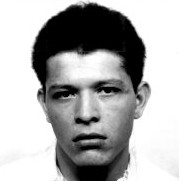
John Richard Baltazar
Murderer Russell Ellwood
Murderer · USA · 1991
Russell Ellwood was a former taxi driver. Authorities suspected him of killing…
20 victims
Russell Ellwood
Murderer · USA · 1991
Russell Ellwood was a former taxi driver. Authorities suspected him of killing…
20 victims
 Robert Martines Perez
Murderer · USA · 1994
Name: Robert Martines Perez · Other name used in proceedings: Robert Martinez P…
15 victims
Robert Martines Perez
Murderer · USA · 1994
Name: Robert Martines Perez · Other name used in proceedings: Robert Martinez P…
15 victims
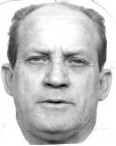 Billy Frank Vickers
Murderer · USA · 1993
Billy Frank Vickers Vickers was executed by lethal injection in Texas on Januar…
14 victims
Billy Frank Vickers
Murderer · USA · 1993
Billy Frank Vickers Vickers was executed by lethal injection in Texas on Januar…
14 victims
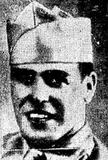 Clarence Bertucci
Mass murderer · USA · 1945
Clarence V. Bertucci was an American soldier, Private Clarence V. Bertucci, who…
9 victims
Clarence Bertucci
Mass murderer · USA · 1945
Clarence V. Bertucci was an American soldier, Private Clarence V. Bertucci, who…
9 victims
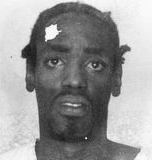 Askari Abdullah Muhammad
Murderer · USA · 1974
Askari Abdullah Muhammad, previously known as Thomas Knight, was convicted of t…
4 victims
Askari Abdullah Muhammad
Murderer · USA · 1974
Askari Abdullah Muhammad, previously known as Thomas Knight, was convicted of t…
4 victims
 Michael Monert
Serial killer · USA · 1989
Michael Monert was a serial killer who was convicted for killing three women in…
3 victims
Michael Monert
Serial killer · USA · 1989
Michael Monert was a serial killer who was convicted for killing three women in…
3 victims
 Jeffrey Hill
Murderer · USA · 1991
Jeffrey Hill was born in 1964 and grew up in Cincinnati with his mother and bro…
1 victim
Jeffrey Hill
Murderer · USA · 1991
Jeffrey Hill was born in 1964 and grew up in Cincinnati with his mother and bro…
1 victim
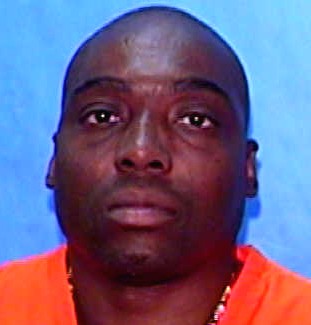 Johnny Hoskins
Murderer · USA · 1992
Johnny Hoskins (AKA Jamil Alle, DOB: 10/31/1963) was convicted in the Eighth Ju…
1 victim
Johnny Hoskins
Murderer · USA · 1992
Johnny Hoskins (AKA Jamil Alle, DOB: 10/31/1963) was convicted in the Eighth Ju…
1 victim
- Gender
- male
- Country
- USA
- Location
- Nueces County, Texas, USA
- Date of birth
- May 9, 1972
- Age at first offence
- 25
- Characteristics
- revenge
- Victim profile
- Adriana Marines (female, 5)
- Method of murder
- Shooting ( .22-caliber revolver)
- Date(s) of murder
- September 27, 1997
- Years active
- 1997
- Date of arrest
- Same day
- Status
-
Executed
Executed by lethal injection in Texas on January 15, 2003
Case details
John Richard Baltazar was executed in Texas.
Timeline
- September 27, 1997 — John Baltazar set out to avenge the beating of his mother by her boyfriend; he kicked down the door of the boyfriend’s sister’s house and shot at a couch where the boyfriend usually slept, where five-year-old Adriana Marines was killed by two shots to her head and 10-year-old Vanessa was shot in the chest and survived; Baltazar then went to the sister’s bedroom and shot her husband twice, and the husband survived.
- September 27, 1997 — A capital murder occurred in Corpus Christi, Texas; Baltazar was involved with Johnny Gonzalez at the home.
- November 30, 1992 — Baltazar pleaded guilty to burglary of a building and burglary of a habitation in Nueces County and received imprisonment for five years in each case.
- March 10, 1994 — Baltazar pleaded guilty to burglary of a building and unauthorized use of a motor vehicle in Nueces County and received imprisonment for eight years in each case.
- Between 1989 and 1993 — Baltazar pleaded either guilty or nolo contendere to 10 misdemeanor charges in Nueces County: four charges of marijuana possession, three charges of evading detention, and one each of theft, fleeing the police, and inhalant abuse; he received jail sentences ranging from 30 to 100 days.
- October 6, 1997 — Grant Roberts and others discussed appointment timing later; in the habeas findings it states counsel for petitioner was appointed on October 6, 1997 and began jury selection on February 2, 1998.
- December 4, 1997 — Johnny Gonzales was sentenced to 80 years in prison for Adriana’s death.
- February 2, 1998 — Trial began with jury selection.
- March 9, 1998 — Baltazar was found guilty of killing Adriana Marines.
- March 11, 1998 — A 12-member jury deliberated for about three hours before sentencing Baltazar, 25, to death.
- March 11, 1998 — Baltazar was sentenced to death for capital murder of Adriana Marines; trial sentencing occurred in the 148th District Court of Nueces County, Texas.
- Sept. 15, 1999 — The Texas Court of Criminal Appeals affirmed Baltazar’s conviction and sentence on direct appeal.
- January 26, 2000 — The Court of Criminal Appeals denied Baltazar’s state habeas petition.
- Nov. 20, 2000 — Baltazar initiated federal habeas corpus proceedings by filing his petition in the district court.
- Sept. 27, 2001 — The court entered final judgment denying habeas relief.
- March 18, 2002 — The United States Court of Appeals for the Fifth Circuit denied a certificate of appealability.
- Oct. 7, 2002 — The U.S. Supreme Court denied Baltazar’s petition for writ of certiorari.
- Jan. 15, 2003 — Baltazar was executed by lethal injection in Texas; the lethal dose began at 6:08 p.m. and he was pronounced dead at 6:16 p.m.
Background
John Baltazar set out to avenge the beating of his mother by her boyfriend. Since the boyfriend was known to stay at his sister’s house, Baltazar went there.
Baltazar had two prior convictions for burglary. He had been released on parole two months before the murder and was wearing an electronic monitoring bracelet at the time of the murder.
Baltazar had pleaded guilty to felony burglary charges in Nueces County on Nov. 30, 1992, and was sentenced to imprisonment for five years. He later pleaded guilty again to charges of burglary and auto theft on March 10, 1994, and was sentenced to eight years in prison.
Baltazar also pleaded either guilty or nolo contendere to 10 misdemeanor charges in Nueces County between 1989 and 1993: four charges of marijuana possession, three charges of evading detention, and one each of theft, fleeing the police, and inhalant abuse, with jail sentences ranging from 30 to 100 days.
The offence
On Sept. 27, 1997, Baltazar went to the boyfriend’s sister’s house. He kicked down the door and shot up the couch where the boyfriend usually slept.
The couch was occupied by five-year-old Adriana Marines, who was killed by two shots to her head, and 10-year-old Vanessa, who survived a shot to her chest. The children were watching a videotape of “Sleeping Beauty.”
Baltazar then went to the sister’s bedroom where he shot her husband twice; the husband survived. The boyfriend was not in the house.
During the trial, five people identified Baltazar as the gunman. Police recovered a footprint on the kicked-in door that matched the black Nike sneakers Baltazar was wearing when he was arrested hours after the shooting.
Jurors heard that Baltazar had threatened to kill Cuellar if he ever broke up with Baltazar’s mother. Home surveillance equipment at Baltazar’s home showed that he left the home before the shooting and returned shortly thereafter. Baltazar had been drinking since 9 a.m. the morning of the shootings.
Baltazar said he went to the house looking for Adriana’s uncle, Narciso “Ted” Cuellar, who reportedly beat up Baltazar’s mother earlier that day. Baltazar said firing at the two girls was accidental and that “It might have been just reflex,” and that “It was dark. I don’t know. I really don’t.”
There were also statements attributed to Baltazar about his memory and motivation:
“I remember going to the house.
Then the next thing I remember is the dude jumping out of his bed, and I shot him.”
“He was a male coming at me,” he said. “He was pretty close to me when I shot him.”
“I’m sorry for Adriana. There’s not even enough words for me to say how sorry I am for the little girl. If I wasn’t sorry I’d be one sorry dude.”
Investigation
At the time of the murder, Baltazar was on parole after being released from prison on a burglary conviction and was wearing an electronic ankle bracelet that monitored his whereabouts.
A footprint matching Baltazar’s shoes was recovered on the kicked-in door. Baltazar was arrested hours after the shooting.
Arrest
The arrest occurred hours after the shooting, and it involved a footprint match between the kicked-in door and Baltazar’s black Nike sneakers.
Trial
Baltazar was convicted of capital murder and sentenced to death in the 148th District Court of Nueces County, Texas, in March 1998.
The Texas Court of Criminal Appeals affirmed Baltazar’s conviction and sentence on Sept. 15, 1999.
The jury deliberated less than five hours before delivering guilty verdicts on:
- one count of capital murder for the death of Adriana Marines;
- two counts of aggravated assault for the shooting of her father, Jose Arturo Marines, and her cousin, 11-year-old Vanessa Marines.
During sentencing, defense attorney Grant Jones tried to persuade jurors not to sentence Baltazar to death and planned to delve into his social background, including participation in educational programs during past stays in prison and in juvenile detention facilities.
Assistant District Attorney Diana McNeill said she and Chief Prosecutor Gail Sadoskas would go through Baltazar’s criminal history and present witnesses about his behavior in prison.
McNeill asked jurors to send a message with a guilty verdict and made a closing argument that included:
“In Nueces County, we do not tolerate people like him - people who kick in doors and kill a little girl watching `Sleeping Beauty,' ' ”
After the verdicts were returned, McNeill described the death penalty’s appropriateness using language attributed to her:
“the devil” who haunts Adriana's family's dreams.
And she asked:
“If it's not for people like him, who do you use it for?”
Defense counsel at trial included Grant Jones and co-counsel Mickey Kolpack.
A trial testimony theme included an issue about whether the shooter could have been a backup accomplice or another person:
- The defense argued the shooter could have been Baltazar’s backup, Johnny Gonzales, or a 14-year-old who testified that he waited outside in a car while Baltazar shot inside.
During trial proceedings in the habeas corpus findings, it was described that:
- there was an issue about admission into evidence of expert testimony concerning shoe prints found at the scene, where such shoes had been obtained from Baltazar as a result of an illegal arrest; the court findings state that “no motion to suppress was filed by trial counsel,” and that trial counsel admitted Baltazar personally asked him to file such a motion to suppress.
Sentencing
The jury sentenced Baltazar to death in March 1998 after deliberating for about three hours on March 11, 1998.
Baltazar was also convicted of aggravated assault and given 2 life sentences for shooting Vanessa Marines and Arturo Marines.
Johnny Gonzales was sentenced to 80 years in prison for Adriana’s death, and additional sentences for other convictions were reported as:
- 40 years for burglary of a habitation;
- 60 years for aggravated assault on Arturo Marines;
- 80 years in prison for aggravated assault on Vanessa Marines.
The habeas proceedings described the Texas Court of Criminal Appeals’ review affirming conviction and sentence.
Appeals
The conviction and sentence were affirmed by the Texas Court of Criminal Appeals on Sept. 15, 1999.
On Jan. 26, 2000, the Court of Criminal Appeals denied Baltazar’s state habeas petition.
Baltazar initiated federal habeas corpus proceedings by filing in the district court on Nov. 20, 2000. The court entered final judgment denying habeas relief on Sept. 27, 2001. Baltazar appealed.
On March 18, 2002, the U.S. Court of Appeals for the Fifth Circuit denied a certificate of appealability.
On Oct. 7, 2002, the U.S.
Habeas corpus and other legal proceedings
Baltazar filed a petition for writ of habeas corpus. The habeas proceedings included:
- An order dated October 11, 1999, determining there were no unresolved fact issues requiring an evidentiary hearing.
- A conclusion that no evidentiary hearings were necessary.
The habeas court listed grounds for habeas relief including:
- deprivation of fundamental constitutional rights under the Fourth and Fourteenth Amendments when subjected to illegal arrest and search and seizure and where crucial evidence was seized;
- deprivation under Article 1, Section 10, Texas Constitution on illegal arrest and search and seizure and seizure of crucial evidence;
- denial of effective assistance of counsel at trial under the Sixth and Fourteenth Amendments to the United States Constitution;
- denial of effective assistance of counsel at trial under Article I, Section 10, Texas Constitution;
- suppression of evidence of co-defendant Ramsey Gonzales’ “negotiated deal” with the state in violation of the Fifth, Sixth and Fourteenth Amendments to the United States Constitution;
- suppression of evidence of co-defendant Ramsey Gonzales’ “negotiated deal” with the state in violation of Articles I, Section 10, and Articles 14 and 19, Texas Constitution;
- denial of due process by failure to correct false testimony of Ramsey Gonzalez made before the jury, with reference to whether the witness had been “charged” and denied deals, and with reference to juvenile probation and possible revocation concerns, citing Davis v. Alaska and Giglio v. United States;
- denial of due process under Article I, Sections 14 and 19, Texas Constitution with similar claims and citations to Davis v. Alaska and Giglio v. United States;
- application of “transferred intent” doctrine denying due process and subjecting petitioner to cruel and unusual punishment under the Fifth, Sixth, Eighth and Fourteenth Amendments to the United States Constitution;
- application of “transferred intent” doctrine denying due process and subjecting petitioner to cruel and unusual punishment under Article I, Sections 10,13,14, and 19, Texas Constitution;
- denial of effective assistance of counsel on appeal under the Sixth and Fourteenth Amendments;
- denial of effective assistance of counsel on appeal under Article I, Section 10, Texas Constitution;
- trial counsel not qualified and certified as competent to do death penalty trial work under Article 26.052, V.A.C.C.P., and orders of administrative judges (including Judge Darrell Hester), rendering trial attorneys presumptively disqualified;
- similar claim under the Sixth and Fourteenth Amendment guarantees.
The habeas findings of fact included multiple numbered determinations. Examples of numbered findings included:
- “no objection was made during the trial on the grounds of illegal arrest, search or seizure, and therefore, this complaint has been ‘waived’” for habeas purposes;
- discussion that counsel was appointed on October 6, 1997 and began jury selection on February 2, 1998, with “No motion for continuance was requested”;
- findings that trial counsel did not request investigator or expert witnesses to review and challenge state evidence, including expert testimony concerning shoe prints and identification;
- findings describing that trial counsel raised issues of identification procedure but waived reliability complaints;
- findings describing that deputy Silva testified in the punishment phase that he had talked to petitioner and that petitioner admitted being a member of the Texas Syndicate prison gang, with no objection to the evidence;
- findings that counsel did not consider having petitioner interviewed by a mental health expert;
- findings that counsel did not use provocation evidence during the punishment phase.
The habeas findings also included determinations on issues regarding “negotiated deal” and witness testimony, including:
- that Ramsey Gonzales testified for the State and provided substantial incriminating evidence;
- that the record reflected Ramsey Gonzales was arrested on October 6, 1997 and charged with capital murder;
- that the habeas findings attributed certain negotiation circumstances to attorney Kevin Hanna, including statements about the prosecutor’s intent to “keep the charge on him” so Gonzales could be kept in protective custody prior to testimony.
The habeas findings included a statement of circumstances recounted from attorney Kevin Hanna:
“Sometime in October, 1997, Mr. Hanna was appointed by one of the local judges to represent Ramsey Gonzales, who had been detained in the local juvenile facility, and who was charged with the offense of capital murder.”
“According to Mr. Hanna, prosecutor Deanie King informed him that even though the state did not have sufficient evidence to prosecute Gonzales on a capital murder case, that they were still going to ‘keep the charge on him,’ so they could keep him in ‘protective custody,’ prior to his testimony against petitioner.”
“Hanna made clear that these capital murder charges would be ‘dropped’ against Ramsey Gonzales if he testified”
In the habeas court’s conclusions of law, the court recommended that the Court of Criminal Appeals “file and set” the case to further consider merits of constitutional claims.
Execution
John Baltazar was executed by lethal injection in Texas on January 15, 2003.
The lethal dose of drugs began at 6:08 p.m.
The Texas Department of Corrections spokesman reported that Baltazar requested “Cool Whip” and cherries for his last meal, but he did not receive the food because the prison does not stock it.
Baltazar offered no final statement before his execution.
Following the execution, his attorney Grant Jones said:
“Our system failed to socialize him into a law-abiding citizen.”
Other details
Victims and injuries
- Adriana Marines was killed by two shots to her head; she was five-year-old and her death occurred during the Sept. 27, 1997 incident.
- Vanessa Marines survived a shot to her chest; she was 10-year-old at the time of the incident, and later reported as 16.
- Jose Arturo Marines survived; bullet fragments remained in his jaw and his teeth were crooked, and the shooting to him included being shot in the mouth and neck as described in the case summary.
People mentioned
- John Richard Baltazar
- Johnny Gonzales (also written as Johnny Gonzalez)
- Jose Arturo Marines
- Adriana Marines
- Vanessa Marines
- Matilda Marines
- Dalinda Cuellar (mentioned as sobbing during the execution in one report)
- Grant Jones (trial attorney and also identified as Baltazar’s attorney after execution)
- Mickey Kolpack (co-counsel at trial)
- Diana McNeill (assistant district attorney)
- Gail Sadoskas (chief prosecutor, described as part of McNeill’s closing argument team)
- Gail Gleimer (chief prosecutor; wrote a Dec. 14 letter to the board described in the text)
- Greg Abbott (Texas Attorney General, in a media advisory)
- Roy E. Greenwood (appointed counsel in habeas)
- Ramsey Gonzalez / Ramsey Gonzales (referred to in habeas allegations as a co-defendant witness; described in findings)
- Kevin Hanna (attorney referenced in habeas findings)
- Deanie King (prosecutor referenced in habeas findings recounted by attorney Hanna)
- Judge Darrell Hester (administrative judge referenced in habeas counsel certification allegations)
- ClarkProsecutor.org / Texas Attorney General media advisory content was included in the case narrative
- United States Court of Appeals for the Fifth Circuit; U.S. Supreme Court; Texas Court of Criminal Appeals; district court (federal habeas proceedings referenced)
Parole and monitoring
Baltazar was released on parole two months before the murder and wore an electronic monitoring bracelet at the time of the murder.
Spotted an error, or have more information about this case?