Timothy George Baldwin
Murderer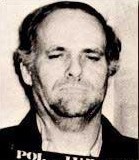 Ervil LeBaron
Murderer · USA · 1972
Ervil Morrell LeBaron (1925 to August 16, 1981) was the leader of a polygamous…
35 victims
Ervil LeBaron
Murderer · USA · 1972
Ervil Morrell LeBaron (1925 to August 16, 1981) was the leader of a polygamous…
35 victims
 Brian Kevin Rosenfeld
Murderer · USA · 1985
Brian Kevin Rosenfeld Brian Kevin Rosenfeld was sentenced to three concurrent l…
23 victims
Brian Kevin Rosenfeld
Murderer · USA · 1985
Brian Kevin Rosenfeld Brian Kevin Rosenfeld was sentenced to three concurrent l…
23 victims
 Marvin Gray
Murderer · USA · 1975
Marvin Gray was convicted killer who claimed responsibility for 23 slayings and…
23 victims
Marvin Gray
Murderer · USA · 1975
Marvin Gray was convicted killer who claimed responsibility for 23 slayings and…
23 victims
 Yahweh ben Yahweh
Murderer · USA · 1980
Yahweh ben Yahweh was born and legally named Hulon Mitchell Jr. (October 27, 19…
23 victims
Yahweh ben Yahweh
Murderer · USA · 1980
Yahweh ben Yahweh was born and legally named Hulon Mitchell Jr. (October 27, 19…
23 victims
 Donna Roberts
Murderer · USA · 2001
Donna Roberts was convicted as an accomplice to murder and was sentenced to dea…
1 victim
Donna Roberts
Murderer · USA · 2001
Donna Roberts was convicted as an accomplice to murder and was sentenced to dea…
1 victim
 Radcliffe Haughton
Murderer · USA · 2012
Radcliffe Franklin Haughton was tentatively identified as the shooter. He was 4…
3 victims
Radcliffe Haughton
Murderer · USA · 2012
Radcliffe Franklin Haughton was tentatively identified as the shooter. He was 4…
3 victims
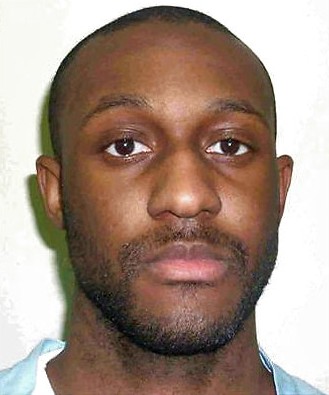 Kent Jermaine Jackson
Murderer · USA · 2000
Kent Jermaine Jackson was a male Black defendant. He was a Newport News inmate…
1 victim
Kent Jermaine Jackson
Murderer · USA · 2000
Kent Jermaine Jackson was a male Black defendant. He was a Newport News inmate…
1 victim
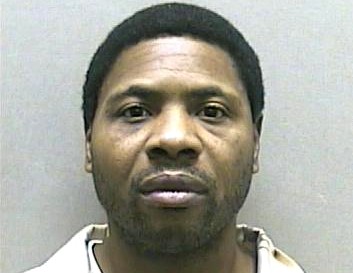 Jerome Dennis
Serial killer · USA · 1991
Jerome Dennis was a paroled rapist who was charged with five murders and four r…
5 victims
Jerome Dennis
Serial killer · USA · 1991
Jerome Dennis was a paroled rapist who was charged with five murders and four r…
5 victims
 Kirk Lankford
Murderer · USA · 2007
Kirk Matthew Lankford (born 1985) was an American from Kalihi, Hawaii. He was c…
1 victim
Kirk Lankford
Murderer · USA · 2007
Kirk Matthew Lankford (born 1985) was an American from Kalihi, Hawaii. He was c…
1 victim
 Bevan Von Einem
Murderer · Australia · 1979
Bevan Spencer von Einem (born c.1945), also known as Bevan von Einem (with the…
5 victims
Bevan Von Einem
Murderer · Australia · 1979
Bevan Spencer von Einem (born c.1945), also known as Bevan von Einem (with the…
5 victims
- Gender
- male
- Country
- USA
- Location
- Ouachita Parish, Louisiana, USA
- Date of birth
- 1938
- Age at first offence
- 40
- Characteristics
- robbery
- Victim profile
- Mary James Peters (85-year-old blind woman)
- Method of murder
- Beating with a skillet, a stool, a small television, and a telephone
- Date(s) of murder
- April 4, 1978
- Years active
- 1978
- Date of arrest
- —
- Status
-
Executed
Executed by electrocution in Louisiana on September 10, 1984
Overview
Timothy George Baldwin was executed by electrocution in Louisiana on September 10, 1984.
Baldwin was convicted of beating to death Mary James Peters, an 85-year-old blind woman, during the robbery of her West Monroe home on April 4, 1978. Baldwin maintained his innocence.
Background
Timothy Baldwin, his wife Rita Baldwin, and their seven children were neighbors of Mary James Peters in West Monroe, Louisiana, from 1971 until 1977. Mrs. Peters was godmother to their youngest child, Russell.
During the latter part of their stay in West Monroe, William Odell Jones also resided with the Baldwins. The group went to Bossier City for six months and then moved to Ohio. The oldest daughter, Michelle, remained in West Monroe with one brother. A second son entered the service.
Marilyn Hampton and her three daughters stayed with the Baldwins in Ohio. Marilyn, Timothy Baldwin, and her children then left, accompanied by Jones. Baldwin and Jones worked together in the business of installing aluminum siding.
After the departure of her husband, Rita Baldwin got in financial difficulties and was picked up on bad check charges. Her four younger children went to live with Michelle in West Monroe.
Meanwhile, Timothy Baldwin, Jones, Marilyn Hampton, and her three children led an itinerant existence. Their last means of transportation was a 1978 black Ford van, rented in Tampa, Florida.
The offence
On April 4, 1978, Marilyn Hampton and Timothy Baldwin drove the van to West Monroe. Jones and the children stayed at a cabin in Holmes State Park, near Jackson, Mississippi.
Baldwin and Marilyn Hampton visited Michelle’s apartment in West Monroe but left there around 8:00 p.m. Shortly thereafter, a van was seen parked in front of Mrs. Peters’ house. A man and woman were observed leaving the residence between 10:00 p.m. and 11:00 p.m.
Shortly before their departure, passersby saw and heard indications that someone in the Peters’ home was being beaten. Baldwin testified in his own behalf and admitted that he and Marilyn visited Mrs. Peters that evening but denied the murder.
Mrs. Peters, who was 85 years old, was beaten with various things, among them a skillet, a stool, and a telephone. She remained on the kitchen floor overnight and was discovered the next morning shortly before noon by an employee of the Ouachita Council Meals on Wheels, who was bringing her noon meal.
Although helpless and incoherent, Mrs. Peters tried to defend herself against the police officers and the ambulance attendant who took her to the hospital.
Dr. A. B. Gregory saw her in the emergency room around 12:30 p.m. on April 5, 1978, and found her semi-comatose. Her left cheekbone and jawbone were shattered; she had brain damage from multiple contusions and lacerations. Dr. Gregory found that Mrs. Peters could not communicate rationally. She died of the injuries the following day.
Dr. Frank Chin, who performed the autopsy, attributed her death to massive cerebral hemorrhage and swelling secondary to external head injuries.
Baldwin was convicted after the jury recommended the death sentence, based on the finding of two aggravating circumstances:
- "the offender was engaged in the perpetration or attempted perpetration of an armed robbery (appellant had a knife on his person)"
- "the offense was committed in an especially heinous, atrocious or cruel manner."
Investigation
A safe that belonged to the victim had been located in the LaFourche Canal in West Monroe with help from Jones. Jones helped police officers locate the safe.
Baldwin’s finger and palm prints were found on various items in the Peters’ home: a cigarette lighter, a television set, and a coffee cup.
Timothy Baldwin and Marilyn Hampton were subsequently located in El Dorado, Arkansas. Baldwin signed consents for the search of their motel room and the van.
In the van, two blue bank bags were found—one empty and one containing savings bonds and certificates of deposit payable to Mary James.
The prosecution also relied on testimony by Jones that Baldwin had said he would kill the victim if necessary in order to get her money.
Arrest
Baldwin and Marilyn Hampton were located in El Dorado, Arkansas.
Trial
Charges and verdict
Baldwin was convicted. The jury recommended the death sentence.
The jury recommended death and found two aggravating circumstances, including that Baldwin was engaged in the perpetration or attempted perpetration of an armed robbery and that the offense was committed in an especially heinous, atrocious or cruel manner.
Trial proceedings and evidence
Baldwin testified at trial and admitted that he and Marilyn visited Mrs.
The main witness against Baldwin was his girlfriend, Marilyn Hampton, who received a life sentence rather than the death penalty.
Baldwin’s defense included the theory that he had visited the victim’s home but left without committing the murder. After trial, defense lawyers found a hotel receipt proving that Baldwin was hundreds of miles away in another state on the night of the murder.
In response, the prosecution claimed that he had driven to the hotel to establish an alibi and then returned to Louisiana to commit the murder. The prosecution claimed that Hampton waited outside in a car while Baldwin committed the murder.
Baldwin allegedly had confessed to the crime and was convicted by an all-white jury.
The judge, the prosecutor, and Baldwin’s own court-appointed attorney used racially derogatory language during the trial.
Baldwin’s final statement
Baldwin gave this final statement: "I've always tried to be a good sport when I've lost at something and I see no reason not to leave this world with the same policy. After all, it was a hell of a battle. "I therefore congratulate all those who have tried so hard to murder me. I definitely have to give them credit as it takes a very special kind of person to murder an innocent man and still be able to live with themselves."
Sentencing
Baldwin was sentenced to death in Louisiana.
The jury was directed to impose death or life based on its unanimous findings at the sentencing stage under Louisiana law.
The sentencing charge included the instruction that if the jury found beyond a reasonable doubt that any statutory aggravating circumstances existed, it was authorized to consider imposing a sentence of death; if the jury did not unanimously find beyond a reasonable doubt that any statutory aggravating circumstances existed, life imprisonment without benefit of probation, parole or suspension of sentence was the only sentence that may be imposed.
Appeals
State proceedings
The Louisiana Supreme Court affirmed Baldwin’s conviction and denied rehearing.
The United States Supreme Court denied certiorari on January 12, 1981 (Baldwin v. Louisiana, 449 U.S. 1103).
Appellant’s execution had been scheduled for March 31, 1981. Post-conviction relief was denied for lack of jurisdiction by the state district court on March 26, 1981, and was denied by the Louisiana Supreme Court without written reasons on March 27, 1981.
Baldwin immediately filed a petition for writ of habeas corpus in federal district court and was granted a stay of execution on March 27, 1981. The district court denied relief without an evidentiary hearing and ordered the stay dissolved as of May 4, 1981.
Federal habeas corpus proceedings in the Fifth Circuit
Baldwin’s petition for habeas corpus was considered in multiple Fifth Circuit decisions.
In one Fifth Circuit decision, the court discussed his claims of ineffective assistance of counsel, including counsel’s failure to pursue a consistent defense strategy involving intoxication, and failure to move for a new trial based on newly discovered evidence in the form of a motel receipt indicating he was in El Dorado, Arkansas some 70 miles away on the night of the murder.
The Fifth Circuit concluded it was not error to deny an evidentiary hearing while finding counsel’s assistance at trial had been effective, and it held that the claims alleged no federal constitutional deprivation.
The Fifth Circuit also addressed a claim that the trial judge did not instruct the last seven jurors concerning sequestration and allowed them to go to a concession stand in the courthouse lobby during trial, and it found no constitutional violation.
The court also addressed challenges to jury instructions on substantive crime and sentencing, as well as district-wide proportionality review. The Fifth Circuit affirmed the denial of relief.
In a later Fifth Circuit decision, Baldwin sought a stay of the issuance of the mandate denying his petition for habeas corpus, pending filing and disposition of a petition for a writ of certiorari to the Supreme Court. The court denied the stay and explained that the issues did not warrant Supreme Court review in a way that would justify a stay.
A dissenting opinion argued that controlling legal standards might be altered by the Supreme Court’s grants of certiorari in Washington v. Strickland and Harris v. Pulley, and that execution should not proceed while fundamental constitutional issues remained unresolved.
Timeline
- April 4, 1978 — Marilyn Hampton and Timothy Baldwin drove a 1978 black Ford van to West Monroe; Mrs. Peters was beaten to death during the robbery of her home.
- April 5, 1978 — Dr. A. B. Gregory examined Mrs. Peters in the emergency room around 12:30 p.m.
- January 12, 1981 — The United States Supreme Court denied certiorari in Baldwin v. Louisiana, 449 U.S. 1103.
- March 26, 1981 — State district court denied post-conviction relief for lack of jurisdiction.
- March 27, 1981 — Louisiana Supreme Court denied review without written reasons; federal district court granted a stay of execution.
- May 4, 1981 — Federal district court ordered the stay dissolved.
- September 1, 1983 — A Fifth Circuit decision was issued regarding a motion for a stay of the mandate pending Supreme Court certiorari.
- September 10, 1984 — Timothy George Baldwin was executed by electrocution in Louisiana.
Other details
Appellate and execution scheduling history
The district court set an execution date for May 27, 1982 after exhaustion of direct appellate remedies and the failure of the initial application for post-conviction relief. The Fifth Circuit stayed Baldwin’s execution on May 24, 1982, and affirmed the district court’s denial of habeas corpus on May 16, 1983. The Fifth Circuit denied a petition for rehearing on June 23, 1983.
Claims about coercion of confession and clemency process
Shortly before the execution, a former sheriff’s deputy swore in a statement that Baldwin had been beaten and tortured into a confession by white officers.
Howard Marsellus, the chairman of the Louisiana Board of Pardons and Parole, was troubled that he may have allowed an innocent man to be put to death. Marsellus felt he had to go along with the governor’s wishes that there be no recommendation for clemency in any capital case.
The governor visited Hampton in prison before signing Baldwin’s death warrant. Marsellus believed the purpose of the visit was to induce Hampton to maintain her original testimony.
Two months later the Board of Pardons and Paroles received Hampton’s file marked "Expedite." Seven years into a life sentence for first-degree murder, Hampton was freed.
Names and relationships
Mary James Peters was previously known as Mary James prior to her last marriage. Peters was a former neighbor of Baldwin’s and the godmother of his youngest child.
Baldwin’s wife was Rita Baldwin. The oldest daughter was Michelle. Baldwin had seven children. William Odell Jones also resided with the Baldwins during the latter part of their stay in West Monroe and later stayed with the Jones children at a cabin in Holmes State Park.
Marilyn Hampton was Baldwin’s girlfriend and received a life sentence rather than the death penalty. Russell was the name of the youngest child.
Evidence and forensic details noted in appellate discussion
The record included expert criminologist analysis detecting blood and hair that matched the blood type and hair samples of the victim.
The homicide involved blunt instruments from the victim’s own home, including a skillet, a stool, and a telephone.
The Fifth Circuit discussed that evidence also included two stool legs, part of a telephone, and pieces of a skillet, and it referenced Baldwin’s intent to rob the victim and to kill her if necessary in order to take her money.
Legal citations and procedural references included in the federal decisions
The Fifth Circuit decision referenced:
- State v. Baldwin, 388 So.2d 664 (La. 1980)
- Baldwin v. Louisiana, 449 U.S. 1103
- Strickland v. Washington, summarized in the certiorari petition discussion
- Pulley v. Harris, summarized in the certiorari petition discussion
- Washington v. Strickland, and Harris v. Pulley as Supreme Court certiorari grants referenced in the stay motion decision
- La. Code Crim. P. 905.9 and La. Supreme Court Rule 28 for district-wide proportionality review
Outcome

Spotted an error, or have more information about this case?