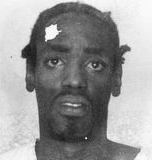
Askari Abdullah Muhammad
Murderer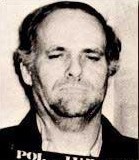 Ervil LeBaron
Murderer · USA · 1972
Ervil Morrell LeBaron (1925 to August 16, 1981) was the leader of a polygamous…
35 victims
Ervil LeBaron
Murderer · USA · 1972
Ervil Morrell LeBaron (1925 to August 16, 1981) was the leader of a polygamous…
35 victims
 Marvin Gray
Murderer · USA · 1975
Marvin Gray was convicted killer who claimed responsibility for 23 slayings and…
23 victims
Marvin Gray
Murderer · USA · 1975
Marvin Gray was convicted killer who claimed responsibility for 23 slayings and…
23 victims
 Yahweh ben Yahweh
Murderer · USA · 1980
Yahweh ben Yahweh was born and legally named Hulon Mitchell Jr. (October 27, 19…
23 victims
Yahweh ben Yahweh
Murderer · USA · 1980
Yahweh ben Yahweh was born and legally named Hulon Mitchell Jr. (October 27, 19…
23 victims
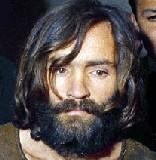 Charles Manson
Murderer · USA · 1969
Charles Milles Manson (born November 12, 1934) was an American criminal and mus…
9 victims
Charles Manson
Murderer · USA · 1969
Charles Milles Manson (born November 12, 1934) was an American criminal and mus…
9 victims
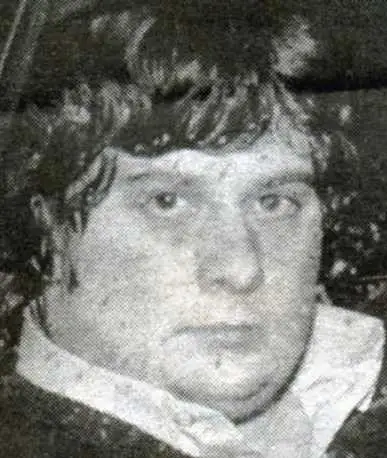 Kevin Weaver
Spree killer · United Kingdom · 1987
Kevin Weaver was sentenced to closed psychiatric confinement on March 28, 1988.…
4 victims
Kevin Weaver
Spree killer · United Kingdom · 1987
Kevin Weaver was sentenced to closed psychiatric confinement on March 28, 1988.…
4 victims
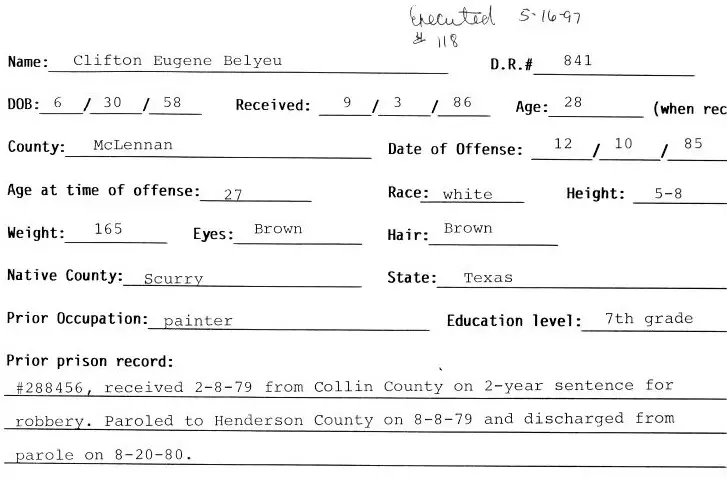 Clifton Eugene Belyeu
Murderer · USA · 1985
Clifton Eugene Belyeu was arrested, convicted, and put to death by lethal injec…
1 victim
Clifton Eugene Belyeu
Murderer · USA · 1985
Clifton Eugene Belyeu was arrested, convicted, and put to death by lethal injec…
1 victim
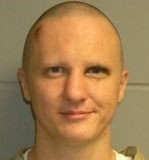 Jared Loughner
Mass murderer · USA · 2011
January 8, 2011 — Jared Lee Loughner opened fire at a constituent meeting held…
6 victims
Jared Loughner
Mass murderer · USA · 2011
January 8, 2011 — Jared Lee Loughner opened fire at a constituent meeting held…
6 victims
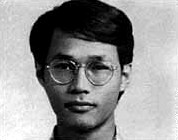 Jaturun Siripongs
Murderer · USA · 1981
Jaturun Siripongs was a native of Thailand and was known as “Jay” to friends an…
2 victims
Jaturun Siripongs
Murderer · USA · 1981
Jaturun Siripongs was a native of Thailand and was known as “Jay” to friends an…
2 victims
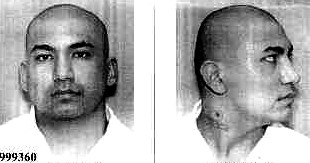 Juan Martin Garcia
Murderer · USA · 1998
Juan Martin Garcia was convicted of capital murder in Harris County, Texas, und…
1 victim
Juan Martin Garcia
Murderer · USA · 1998
Juan Martin Garcia was convicted of capital murder in Harris County, Texas, und…
1 victim
- Gender
- male
- Country
- USA
- Location
- Florida/Georgia, USA
- Date of birth
- February 4, 1951
- Age at first offence
- 23
- Characteristics
- kidnapping, rape?, armed robbery
- Victim profile
- Sydney and Lillian Gans / William Culpepper (store clerk) / Richard Burke, 48 ( prison guard)
- Method of murder
- Shooting / St abbing with knife
- Date(s) of murder
- 1974 / 1980
- Years active
- 1974–1980
- Date of arrest
- December 24, 1974
- Status
-
Executed
Executed by lethal injection in Florida on January 7, 2014
Case details
Askari Abdullah Muhammad, previously known as Thomas Knight, was convicted of two counts of First-Degree Murder involving Sydney Gans and Lillian Gans, and later of the fatal stabbing of corrections officer Richard Burke. He was resentenced to death in 1996 for the earlier killings, and his execution was carried out on January 7, 2014.
Timeline
- July 17, 1974 — Thomas Knight kidnapped and murdered Sydney and Lillian Gans of Bay Harbor Islands; he was immediately arrested.
- September 1974 — Knight and 10 other inmates escaped from Dade County jail; he was placed on the FBI’s Ten Most Wanted List.
- October 1974 — Police believed Knight and another man fatally shot a liquor store clerk during a robbery in Crisp County, GA; he was not charged.
- December 1974 — FBI agents captured Knight in New Smyrna Beach.
- December 03, 1980 — Original defense counsel Joseph H. Forbes was relieved of duties as Special Appointed Counsel; Susan Cary remained as counsel of record.
- December 17, 1980 — Steven Bernstein was appointed as counsel and Susan Cary remained as co-counsel effective January 1, 1981.
- January 20, 1983 — Knight was sentenced to death for the Burke murder.
- April 21, 1975 — Knight was sentenced to death in the Gans case.
- March 12, 1996 — Knight was resentenced to death in the Gans case.
- January 7, 2014 — Muhammad was executed by lethal injection in Florida.
People
- Askari Abdullah Muhammad — the defendant; previously known as Thomas Knight; convicted and sentenced to death for the kidnapping and killings of Sydney and Lillian Gans and later for the killing of corrections officer Richard Burke.
- Thomas Knight — the defendant; previously known as Askari Abdullah Muhammad.
- Sydney Gans — victim; kidnapped and shot to death; described as a prominent businessman and paper-bag company owner.
- Lillian Gans — victim; kidnapped and shot to death.
- Richard Burke — victim; corrections officer murdered by stabbing at Florida State Prison.
- Carolyn Burke Thompson — Richard Burke’s daughter.
- Margaret Dela Vega — Richard Burke’s other daughter.
- Greg Smith — retired Miami-Dade homicide detective who attended the execution.
- Gail Levine — Miami-Dade prosecutor who attended the execution.
- Judd Shapiro — grandson of the Ganses.
- Harriet Shapiro — Ganses’ daughter.
- Rodolfo Sorondo Jr. — Circuit Judge.
- Adalberto Jordan — U.S. District Judge who ruled issues about the 1996 sentencing.
- Gene Williams — sentencing judge in the Burke case information section.
- Chester B. Chance — sentencing judge referenced for the Burke case.
- Wayne M. Carlisle — appointed judge in the Burke case trial proceedings.
- R.A. Green Jr. — recused judge in the Burke case trial proceedings.
- Stephen Breyer — U.S. Supreme Court Justice referenced in a dissent about a stay.
- James Mathews — Special Counsel in the Burke case information section.
- James Mathews – Private Attorney — listed as Trial Attorney.
- William J. Hutchinson — listed as Direct Appeal attorney (Private Attorney) in the Gans case information section.
- Louis Campbell — listed as Direct Appeal (Resentencing) attorney.
- D. Todd Doss — Pro Bono attorney in the Gans case information section; also listed under collateral appeals in the Burke case information section.
- Linda McDermott — listed under collateral appeals in the Burke case information section.
- Joseph H. Forbes — original defense counsel relieved of duties.
- Susan Cary — counsel of record after Joseph H. Forbes was relieved.
- Steven Bernstein — appointed as counsel.
- Stephen Bernstein — appointed as counsel and later discharged as legal counsel; requested to serve as standby counsel.
- Stephen Bernstein — referenced as discharged as legal counsel while standby counsel requested.
- Robert Graham — listed as Governor Bob Graham in connection with signing a death warrant.
- Rick Scott — listed as Gov. Rick Scott signing the death warrant and rescheduling the execution.
The offence
Kidnapping and killings of Sydney and Lillian Gans (July 17, 1974)
On July 17, 1974, Thomas Knight abducted Sydney Gans and his wife Lillian Gans at rifle point and forced Sydney Gans to withdraw $50,000 from a downtown Miami bank. Sydney Gans notified a bank manager, and the police and FBI were alerted. The FBI and local law enforcement tailed the vehicle, but briefly lost sight of it in a rural area of Miami-Dade County. Knight ordered the couple to stop in a remote area, then shot both victims with a bullet to the neck and fled. Knight attempted to hide by burying himself in the dirt and weeds of a heavily wooded area. Police noticed bloodstains on his pants and discovered the automatic rifle and $50,000 hidden underneath him.
Killing of corrections officer Richard Burke (October 12, 1980)
In the Burke case, at 9:45 a.m. on October 12, 1980, a guard at Florida State Prison told the subject he had a visitor; the subject was denied the visit because he refused to shave in compliance with prison regulations. During the incident, the guards overheard the subject state, “Well, it looks like I will have to start sticking people.” Richard Burke was escorting death row inmates to the showers. When the subject’s cell was unlocked, the subject attacked Burke with a homemade knife described as a sharpened spoon. Another officer overheard screams and called for help. Within seconds, two other officers were present and observed Burke lying on his back trying to fend off blows. The subject complied with an order to back off and discarded the weapon in a trash container. More than a dozen wounds were inflicted on Burke, with one being a fatal stab wound to the heart.
Escape and alleged armed robbery in Georgia during escape period
On September 19, 1974, while awaiting trial, the defendant escaped from the Dade County Jail along with ten inmates. The defendant was placed on the FBI’s Ten Most Wanted List and a nationwide manhunt ensued. While on escape status the defendant allegedly committed a murder and armed robbery in Cordele, Georgia (Crisp County). Georgia authorities received circumstances in which Knight and another subject entered a liquor store, demanded money after asking for a bottle, and then started shooting. William Culpepper was shot three times and was killed; A.V. Norton was shot twice. The defendant and codefendant fled taking $641.00. FBI agents arrested the subject in New Smyrna Beach, Florida, on December 31, 1974; at arrest the subject possessed a sawed-off shotgun, a .38 caliber revolver, and a 9mm automatic, which were reported stolen from Titusville, Florida. Previous reports indicated Georgia authorities did not prosecute the subject due to his Florida death sentence. The subject’s codefendant was charged only with Aggravated Battery. The defendant was captured and returned to jail later described as December 31, 1975 in the trial summary section.
Investigation and apprehension
FBI and police followed the car after the abduction of Sydney and Lillian Gans, including use of aircraft, but lost track of it for a short time in a rural area of Miami-Dade County. During the escape period, a nationwide manhunt ensued after Knight escaped with ten other inmates, and Knight was listed on the FBI’s Ten Most Wanted List. He was later found in a New Smyrna Beach shack, and at the time of his arrest in Florida he was found with weapons reported stolen from Titusville, Florida.
Arrest
Knight was immediately arrested after the July 17, 1974 abduction and killings of Sydney and Lillian Gans. He was later arrested by FBI agents in New Smyrna Beach, Florida, on December 31, 1974 after being listed on the FBI’s Ten Most Wanted List during his escape period.
Trial
Gans case trial
On April 19, 1975, the defendant was found guilty by the trial jury of two counts of First-Degree Murder as charged in the indictment. Upon advisory sentencing, the jury recommended the death penalty by majority. The defendant was sentenced on April 21, 1975.
Burke case trial and competency proceedings
The Burke case trial proceedings included changes in counsel and judicial appointments. Original defense counsel Joseph H. Forbes was relieved of duties as Special Appointed Counsel, and Susan Cary remained as counsel of record. Steven Bernstein was appointed as counsel and Susan Cary remained as co-counsel effective January 1, 1981. Judge R.A. Green Jr. recused himself on January 21, 1981, and Judge Wayne M. Carlisle was appointed. Trial ended in a mistrial on May 25, 1982. Judge Wayne M. Carlisle recused himself on May 26, 1982, and the case was reassigned to Judge Chester B. Chance of the Eighth Judicial Circuit.
The court ordered the defendant was competent to stand trial on June 7, 1982. On June 15, 1982, the court granted a motion to allow the defendant to represent himself. Stephen Bernstein was discharged as legal counsel but the court requested that he be standby counsel, and the court granted a motion for Stephen Bernstein to be relieved as standby counsel on July 20, 1980. On October 26, 1982, the defendant was found guilty under the name Askari Abdullah Muhammad by the trial jury of First-Degree Murder as charged in the indictment. The defendant waived consideration by the jury of an advisory sentence, and the cause proceeded without a jury recommendation.
Mental health issues
There were mental health issues throughout the case, with numerous mental health experts testifying on Knight’s behalf. The experts claimed he had longstanding mental health problems that may include schizophrenia. Experts for the State determined that Knight had a personality disorder but was a “malingerer” and not schizophrenic. Knight was determined competent to stand trial. In the factors contributing to delay section, the defense contended the defendant was mentally ill, while State experts disputed that contention; competency hearings began in February 1999, reports were presented in November 1999, and in December 1999 the defendant was determined competent.
Sentencing
Gans case sentencing (April 21, 1975)
On April 21, 1975, the defendant was sentenced:
- Count I: First-Degree Murder (Lillian Gans) — Death
- Count II: First-Degree Murder (Sydney Gans) — Death
Burke case sentencing (January 20, 1983)
On January 20, 1983, the defendant was sentenced to death for the Burke murder.
Gans case resentencing (March 12, 1996)
On March 12, 1996, the defendant was resentenced:
Appeals
Direct appeal and habeas proceedings in the Gans case
- May 20, 1975 — Appeal filed to the Florida Supreme Court.
- September 30, 1976 — Florida Supreme Court affirmed convictions and death sentence.
- January 22, 1980 — Petition for Writ of Habeas Corpus filed in the Florida Supreme Court.
- February 6, 1980 — Florida Supreme Court transferred the petition to the trial court to be treated as a 3.850 Motion for postconviction relief.
- February 12, 1980 — Motion received per Florida Supreme Court order.
- August 15, 1980 — Trial court dismissed motion and determined it should be treated as a Habeas by the Florida Supreme Court.
- October 1, 1980 — Petition for Writ of Habeas Corpus filed.
- February 24, 1981 — Petition denied.
- February 20, 1981 — 3.850 Motion filed; August 25, 1981 — Motion denied.
- February 24, 1981 — United States District Court, Southern District petition filed.
- February 26, 1981 — United States District Court granted a Stay of Execution.
- June 27, 1986 — Petition dismissed.
- November 3, 1981 — Appeal filed; December 16, 1982 — Florida Supreme Court affirmed denial of the 3.850 Motion.
- March 2, 1983 — Rehearing denied; April 11, 1983 — Mandate issued.
- June 9, 1983 — United States Supreme Court petition filed; October 6, 1983 — Petition denied.
- July 30, 1986 — Habeas appeal filed in the United States Court of Appeals for the 11th Circuit.
- September 6, 1989 — Remanded to United States District Court to grant Habeas Petition unless State resentenced defendant in accordance with Lockett.
- September 6, 1989 — Mandate issued.
- April 22, 1996 — Direct Appeal after resentencing to the Florida Supreme Court.
- March 11, 1999 — Rehearing denied.
- November 8, 1999 — United States Supreme Court petition denied.
- April 8, 2003 — Appeal filed; November 3, 2005 — Florida Supreme Court affirmed denial of 3.850 Motion.
- February 24, 2006 — Rehearing denied; March 13, 2006 — Mandate issued.
- July 12, 2004 — Petition filed in Florida Supreme Court; November 3, 2005 — Petition denied; February 24, 2006 — Rehearing denied; March 13, 2006 — Mandate issued.
- March 7, 2006 — Petition filed in United States District Court, Southern District; it was pending.
Direct appeal, resentencing-related challenges, and collateral proceedings in the Burke case
- July 17, 1986 — Florida Supreme Court affirmed conviction and death sentence in the Burke case.
- October 22, 1986 — Motion for rehearing denied.
- November 25, 1986 — Mandate issued.
- January 9, 1987 — Petition for Writ of Certiorari filed in United States Supreme Court; February 23, 1987 — Petition denied.
- February 23, 1989 — 3.850 Motion filed; August 31, 1989 — motion denied.
- November 27, 1989 — 3.850 Appeal filed in Florida Supreme Court; June 12, 2000 — evidentiary hearing held on remand; August 21, 2003 — Florida Supreme Court reversed trial court’s order vacating death sentence and also denied a Petition for Writ of Habeas Corpus filed May 13, 2002.
- January 20, 2004 — mandate for Habeas issued.
- March 18, 2004 — Petition for Writ of Certiorari filed; May 24, 2004 — petition denied.
- January 18, 2005 — Petition for Writ of Habeas Corpus filed in United States District Court, Middle District; March 26, 2008 — petition denied; dismissed with prejudice.
- July 2, 2008 — Certificate of Appealability filed; August 25, 2008 — certificate denied.
- June 16, 2008 — Habeas appeal filed in United States Court of Appeals for the 11th Circuit; January 9, 2009 — Certificate of Appealability denied.
- July 13, 2009 — Petition for Writ of Certiorari filed; January 25, 2010 — petition denied.
- July 24, 2008 — 3.851 Motion filed; September 9, 2008 — motion denied.
- February 2, 2009 — 3.850 Appeal filed; November 5, 2009 — Florida Supreme Court affirmed the disposition of the lower court.
- February 1999 — competency hearings began in the factors contributing to delay section.
- November 1999 — competency reports were presented to the court.
- December 1999 — defendant was determined competent.
Outcome
Muhammad was executed by lethal injection in Florida on January 7, 2014. The execution took place at Florida State Prison. He was pronounced dead at 6:45 p.m. after a lethal injection. Family members of corrections officer Richard Burke witnessed the execution. Muhammad declined to make any statement before the sentence was carried out.
Aftermath
A small group opposed to the death penalty protested outside the prison. A group of family members witnessed the execution, including Richard Burke’s daughters. The execution had been delayed by numerous appeals and rulings, including a 1987 federal appeals court decision tossing out the original death sentence in the Gans case due to the failure to allow character and background witnesses during the penalty phase. The U.S. Supreme Court refused to hear final appeals. In a dissent, Justice Stephen Breyer said he would have granted a stay to hear claims that it may have been unconstitutional to execute an inmate after such a long time on death row. During the 1996 resentencing, Muhammad was described as disrupting proceedings, including cursing at the judge and lawyers and yelling “Allahu Akbar!” — “God is great” in Arabic.
Other details
Defendant’s name change and prison conversion
Muhammad converted to Islam in prison, changing his name from Knight to Askari Abdullah Muhammad. During his 1996 resentencing, he yelled “Allahu Akbar!” — “God is great” in Arabic.
Escape and fugitivity details
While awaiting trial, Muhammad escaped with 10 other inmates from Dade County jail. The escape led to a nationwide manhunt, including a top 10 fugitives listing by the FBI. Muhammad was recaptured 101 days after his escape.
Locations and factual details mentioned
- The earlier murders occurred involving Sydney and Lillian Gans in Miami-Dade County, with the vehicle later lost sight of in a rural area of Miami-Dade County.
- The later stabbing occurred at Florida State Prison in Starke.
- The rural area and secluded wooded area in Miami-Dade County were identified in the record as including Southwest 132nd Street and 117th Avenue.
- The armed robbery in Georgia took place in Cordele, Georgia (Crisp County).
- The arrest during the escape period occurred in New Smyrna Beach, Florida.
- Weapons at arrest included a sawed-off shotgun, a .38 caliber revolver, and a 9mm automatic, reported stolen from Titusville, Florida.
Procedural and sentencing docket information
- Florida Supreme Court docket number 75055 is associated with Askari Abdullah Muhammad, Appellant, vs. State of Florida, Appellee.
- Florida execution warrant and delays in the Burke case were described as being tied to procedural proceedings, including a stay and rehearings referenced in the appellate summaries.
Quotes (verbatim)
- The guards overheard the subject state, “Well, it looks like I will have to start sticking people.”
- “Allahu Akbar!” — “God is great” in Arabic.
- “No,” is all Knight muttered when a corrections official asked if he had any last words.
Spotted an error, or have more information about this case?