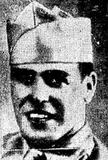
Clarence Bertucci
Mass murderer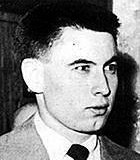 John Gilbert Graham
Mass murderer · USA · 1955
John “Jack” Gilbert Graham was born on January 23, 1932, at Denver, Colorado. H…
44 victims
John Gilbert Graham
Mass murderer · USA · 1955
John “Jack” Gilbert Graham was born on January 23, 1932, at Denver, Colorado. H…
44 victims
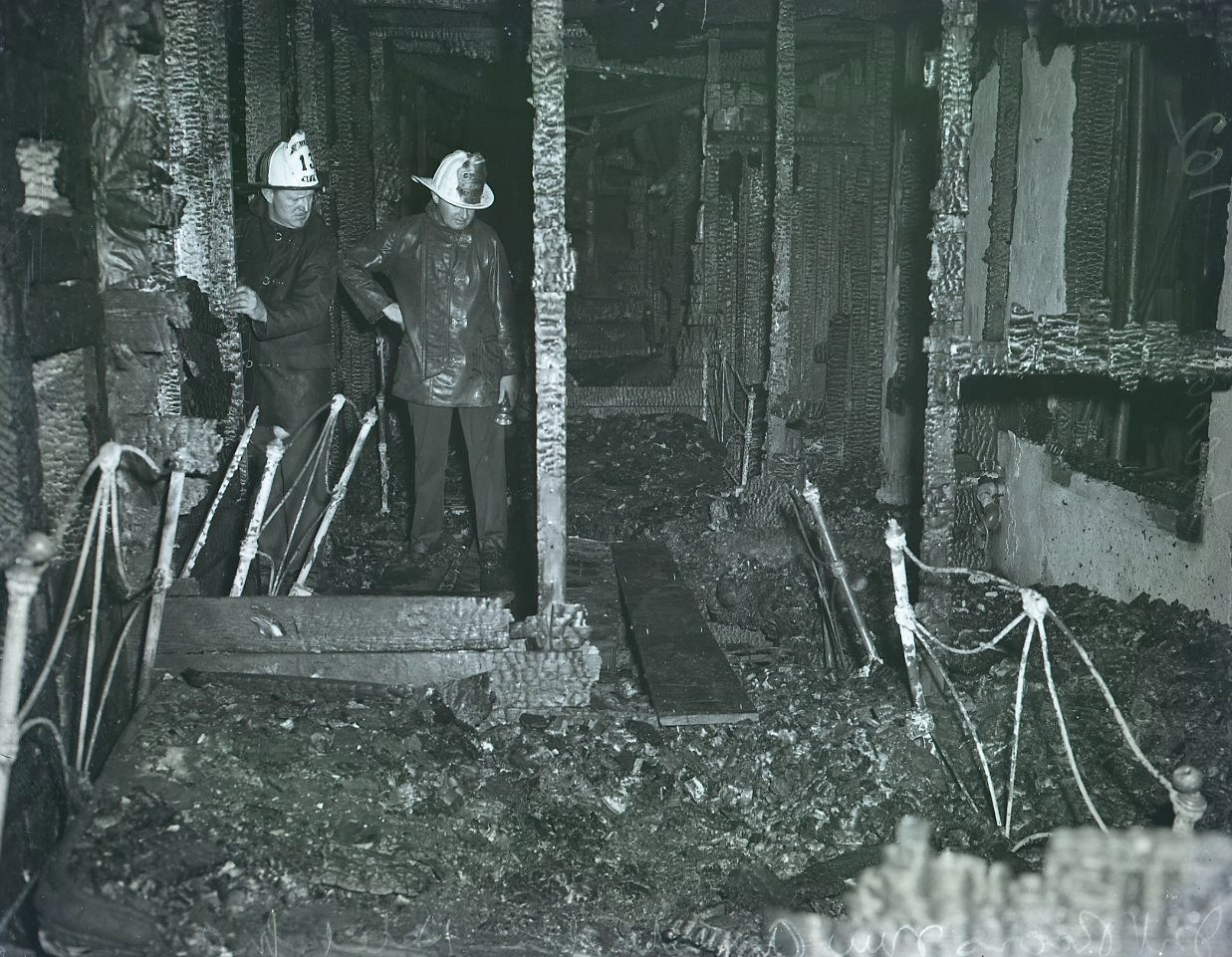 George Holman
Mass murderer · USA · 1944
George Holman was described as a pyromaniac and an arsonist blamed for a deadly…
22 victims
George Holman
Mass murderer · USA · 1944
George Holman was described as a pyromaniac and an arsonist blamed for a deadly…
22 victims
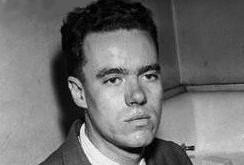 Howard Unruh
Mass murderer · USA · 1949
Howard Barton Unruh (born January 21, 1921, Camden, N.J.) carried out a shootin…
13 victims
Howard Unruh
Mass murderer · USA · 1949
Howard Barton Unruh (born January 21, 1921, Camden, N.J.) carried out a shootin…
13 victims
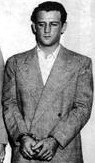 Ernest Ingenito
Mass murderer · USA · 1950
Ernest Ingenito (1924–1995) was an American mass murderer who shot nine people,…
5 victims
Ernest Ingenito
Mass murderer · USA · 1950
Ernest Ingenito (1924–1995) was an American mass murderer who shot nine people,…
5 victims
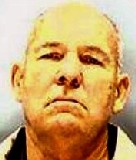 Gerald Mason
Murderer · USA · 1957
Gerald Fit Mason (born c. 1934) was a criminal from the United States. In 1957…
2 victims
Gerald Mason
Murderer · USA · 1957
Gerald Fit Mason (born c. 1934) was a criminal from the United States. In 1957…
2 victims
 Angela Johnson
Murderer · USA · 1993
Angela Jane Johnson was convicted in federal court of aiding and abetting the m…
5 victims
Angela Johnson
Murderer · USA · 1993
Angela Jane Johnson was convicted in federal court of aiding and abetting the m…
5 victims
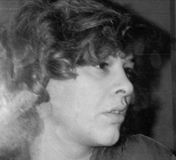 Tina Resch
Murderer · USA · 1992
Tina Resch (pronounced "Resh"), born October 23, 1969, achieved some fame durin…
1 victim
Tina Resch
Murderer · USA · 1992
Tina Resch (pronounced "Resh"), born October 23, 1969, achieved some fame durin…
1 victim
- Gender
- male
- Country
- USA
- Location
- Salina, Utah, USA
- Date of birth
- September 14, 1921
- Age at first offence
- 24
- Characteristics
- serial rapist, the bodies were never found
- Victim profile
- German prisoners of war
- Method of murder
- Shooting (.30-caliber M1917 Browning machine gun)
- Date(s) of murder
- July 8, 1945
- Years active
- 1945
- Date of arrest
- Same day
- Status
-
Died in custody
Declared insane by a military panel and sent to a New York mental hospital; he died in December 1969
Case details
Clarence V. Bertucci was an American soldier, Private Clarence V. Bertucci, who killed nine German prisoners of war and wounded twenty others at a camp in Salina, Utah, in the course of what became known as the Midnight Massacre.
Timeline
- July 7, 1945 (night) — Private Bertucci was out drinking and stopped at a cafe on Main Street to have some coffee and speak with a waitress before reporting for guard duty back at the camp.
- July 8, 1945 (just after midnight) — After the midnight changing of the guard, Bertucci waited for the previous watch to go to bed, climbed up the guard tower nearest the officer's quarters, loaded a .30-caliber M1917 Browning machine gun mounted at the position, and opened fire on the tents of sleeping Germans.
- July 10, 1945 — A barely legible copy of the Piqua Daily Call reported that Clarence V. Bertucci was under mental observation after he sprayed gun bullets on a group of prisoners while they slept, killing eight and wounding 20.
- July 23, 1945 — Time published an article describing Bertucci’s earlier furlough, his time at Salina, and the massacre.
- December 1969 — Clarence Bertucci died.
Background
During World War II, Utah held about 15,000 German and Italian prisoners distributed across several camps.
Camp Salina was a small, temporary branch camp occupied from 1944 to 1945 by about 250 Germans, most of whom were from Erwin Rommel's elite Afrikakorps. The camp comprised forty-three tents with wooden floors, an officer's quarters, and three guard towers around the perimeter. Camp Salina was located within the small town of Salina at the eastern end of Main Street rather than in an isolated area. The Germans were sent there to help with the harvest, and they were described as well-behaved and friendly to the locals.
Private Bertucci was born in New Orleans in 1921. He dropped out of school at sixth grade and joined the United States Army in 1940. After five years of service, including one tour to England with an artillery unit, he seemed to be incapable of being promoted and also had a “discipline problem.” Later testimony described him as unsatisfied with his tour and as saying that he felt “cheated” out of his chance to kill Germans. He was also quoted as saying, “Someday I will get my Germans; I will get my turn.” Apart from expressing his hatred of Germans, he did not show indications of what he was planning to do before the massacre.
The offence
On the night of July 7, 1945, Bertucci waited for the previous watch to go to bed after the midnight changing of the guard. He then climbed up the guard tower nearest the officer's quarters, loaded the .30-caliber M1917 Browning machine gun mounted at the position, and opened fire on the tents of sleeping Germans.
He moved the gun from left to right and back again, hitting thirty of the forty-three tents before being removed from the tower by another soldier. The firing lasted about fifteen seconds and was enough to fire 250 rounds of ammunition. Bertucci was reported to have been taken into custody without any resistance.
Six Germans were killed outright. Three later died in Salina’s hospital, and twenty others were wounded. One prisoner was described as “nearly cut in half” by the machine gun fire but managed to survive for six hours.
Investigation
A barely legible copy of the Piqua Daily Call reported the following verbatim:
“Clarence V Bertucci was under mental observation today [July 10] after... he sprayed gun bullets on a group of [prisoners] while they slept[,] killing eight and wounding 20 because he just didn't like Germans[.] Col[.] Arthur J[.] Ericsson[,] man for the branch prisoners camp near here[,] reported that Bertucci had been unable to account for his shooting [on] Sunday night[,] during which he fired a mounted gun from the guard tower[,] where he was on duty[.] Ericsson quoted Bertucci as [saying] that on several occasions he had been tempted to turn the tower gun on the prisoners and was not at all sorry for what he had done. He just didn't like [German]s. [T]he colonel said [n]o other reason was given[.] Bodies of the eight dead [pris]oners were taken to Brigham[,] Utah. (sic)”
Arrest / custody
After the firing, Bertucci was removed from the tower by another soldier and was reported to have been taken into custody without any resistance.
Trial
After he was taken into custody, Bertucci was completely unrepentant about what he had done and maintained that the killings were justified because the victims were German. After his placement in a local hospital for a psychiatric assessment, the military dealt with the “political fallout” from the killings, which was described as a “public relations disaster” during a time of celebration.
Despite the absence of any significant evidence of mental impairment, he was declared insane by a military panel and sent to a New York mental hospital.
Sentencing
No sentencing details were provided beyond the decision by a military panel to declare him insane and send him to a New York mental hospital.
Outcome
The Midnight Massacre occurred just after midnight on July 8, 1945, when Private Clarence V. Bertucci killed nine German prisoners of war and wounded twenty others at a camp in Salina, Utah.
The killing was remembered for being “the worst massacre at a POW camp in U.S. history,” and Bertucci’s conviction made him one of only three American soldiers prosecuted during World War II for killing Axis prisoners. The massacre occurred two months after the German surrender and the end of the war in Europe.
Aftermath
The victims, who were between twenty-four and forty-eight years old, were buried with full military honors at Fort Douglas Cemetery. They were dressed in khaki American uniforms, but there was no Nazi flag on the caskets because there was not one available at that time.
The wounded soldiers were sent back to Germany when they were deemed healthy enough for the journey.
A statue called the German War Memorial was placed at the cemetery. In 1988, the German Air Force funded the refurbishment of the statue. A ceremony was held on Volkstrauertag, the German national day of mourning, and two of the prisoners wounded in 1945 attended.
Clarence Bertucci died in December 1969.
Other details
According to Time (July 23, 1945), Private Clarence V. Bertucci had been home from England on furlough the previous year and, after that time, had written the legend on the doorsill: “Live & let live.” The Time article also described the events at Salina in the following verbatim excerpt:
“When he was home from England on a furlough last year, slight, dark-haired Private Clarence V. Bertucci relaxed with his family on Dryades Street in New Orleans. But when he left he mystified his kinfolk with a legend he penciled on the doorsill: "Live & let live." One evening last week Private Bertucci, stationed at Salina, Utah, abandoned his motto. First he had a few beers in town. He chatted with some Salina girls, stopped off at a cafe for coffee, strolled out to the temporary camp at Main Street's east end, where 250 German prisoners of war slept. A cooling breeze rustled through the tents and the dusty town. At midnight Private Bertucci climbed a tower, relieved the guard. Below him lay the silent tent-city whose occupants, next morning, would be out in the fields, thinning beets. A .30-caliber machine gun pointed into the sky. Private Bertucci picked up a belt of cartridges, carefully threaded it into the gun. He had never been in action, but he knew how to work a machine gun. He lowered the muzzle and, aiming carefully, pressed the trigger. Methodically he swept the 43 tents, from left to right and back again. Screams and strangled shouts came from the tents. Above the screams, Private Bertucci heard an officer shouting at him. A corporal panted up to take Bertucci off the tower. As the Army buried eight prisoners at Fort Douglas last week, and treated 20 more for wounds, Bushnell General Hospital psychiatrists examined Private Bertucci. Ninth Service Command officers admitted that Bertucci's record already showed two courts-martial, one in England. His own calm explanation seemed a little too simple: he had hated Germans, so he had killed Germans.”
Spotted an error, or have more information about this case?