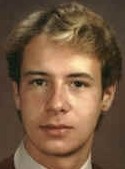
Derek Rocco Barnabei
Murderer Brian Kevin Rosenfeld
Murderer · USA · 1985
Brian Kevin Rosenfeld Brian Kevin Rosenfeld was sentenced to three concurrent l…
23 victims
Brian Kevin Rosenfeld
Murderer · USA · 1985
Brian Kevin Rosenfeld Brian Kevin Rosenfeld was sentenced to three concurrent l…
23 victims
 Russell Ellwood
Murderer · USA · 1991
Russell Ellwood was a former taxi driver. Authorities suspected him of killing…
20 victims
Russell Ellwood
Murderer · USA · 1991
Russell Ellwood was a former taxi driver. Authorities suspected him of killing…
20 victims
 Robert Martines Perez
Murderer · USA · 1994
Name: Robert Martines Perez · Other name used in proceedings: Robert Martinez P…
15 victims
Robert Martines Perez
Murderer · USA · 1994
Name: Robert Martines Perez · Other name used in proceedings: Robert Martinez P…
15 victims
 Billy Frank Vickers
Murderer · USA · 1993
Billy Frank Vickers Vickers was executed by lethal injection in Texas on Januar…
14 victims
Billy Frank Vickers
Murderer · USA · 1993
Billy Frank Vickers Vickers was executed by lethal injection in Texas on Januar…
14 victims
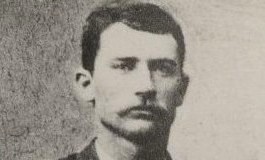 Henry Newton Brown
Murderer · USA · 1870
Henry Newton Brown — 19th century gunman; orphan; raised by relatives in Rolla,…
6 victims
Henry Newton Brown
Murderer · USA · 1870
Henry Newton Brown — 19th century gunman; orphan; raised by relatives in Rolla,…
6 victims
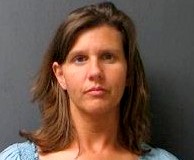 Teresa Stone
Murderer · USA · 2010
Teresa Stone conspired with her minister and lover to kill her husband, Randy S…
1 victim
Teresa Stone
Murderer · USA · 2010
Teresa Stone conspired with her minister and lover to kill her husband, Randy S…
1 victim
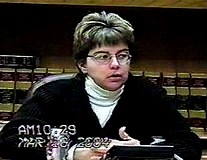 Coleen Thompson
Homicide · USA · 2002
Coleen Thompson was a former intensive care nurse at Shady Grove Adventist Hosp…
5 victims
Coleen Thompson
Homicide · USA · 2002
Coleen Thompson was a former intensive care nurse at Shady Grove Adventist Hosp…
5 victims
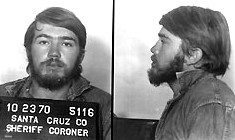 John Linley Frazier
Mass murderer · USA · 1970
John Linley Frazier was from Soquel and was later arrested in connection with t…
5 victims
John Linley Frazier
Mass murderer · USA · 1970
John Linley Frazier was from Soquel and was later arrested in connection with t…
5 victims
- Gender
- male
- Country
- USA
- Location
- Norfolk, Virginia, USA
- Date of birth
- 1967
- Age at first offence
- 26
- Characteristics
- rape
- Victim profile
- Sarah Wisnosky (female, 17)
- Method of murder
- Beating with a ball peen hammer
- Date(s) of murder
- September 22, 1993
- Years active
- 1993
- Date of arrest
- —
- Status
-
Executed
Executed by lethal injection in Virginia on September 14, 2000
Parties
- Derek Rocco Barnabei — convicted person; petitioner-appellant
- Sarah Wisnosky — victim; 17-year-old student at Old Dominion University
- Ronald J. Angelone — Director, Virginia Department of Corrections; respondent-appellee
- James R. Spencer — District Judge
- Diana Gribbon Motz — Circuit Judge who wrote the opinion
- Wilkinson — Chief Judge
- Hamilton — Senior Circuit Judge
- Michele Brace — resource center attorney
- Seth A. Tucker — lawyer
- Andy Protogyrou — one of Barnabei’s attorneys
- Craig Barnabei — Barnabei’s brother
- Jane Barnabei — Barnabei’s mother
- Ron Angelone — corrections director mentioned in execution account
- Rev. Jim Gallagher — Roman Catholic priest who spoke to Barnabei briefly in the execution chamber and then entered the witness booth
- Rev. Bob West — Barnabei’s spiritual adviser
- Shaun Squyres — Officer; senior homicide investigator in 1993; later described as a police sergeant
- Paula Barto — Barnabei’s ex-wife; mother of Barnabei’s now-13-year-old son; testified during the penalty phase
- Dr. Paul Ferrara — Director of the Virginia Division of Forensic Science
- Dr. Faruk Presswalla — Commonwealth witness (medical evidence referenced in appellate opinion)
Timeline
- August 1993 — Barnabei first arrived in the Norfolk Virginia Beach area; he identified himself to others as “Serafino” or “Serf” Barnabei and claimed to have been a member of the Tau Kappa Epsilon (TKE) fraternity at Rutgers University.
- September 21, 1993 — Nicki Vanbelkum, Wisnosky’s dormitory roommate, last saw Wisnosky alive on the afternoon of September 21, 1993.
- September 22, 1993 (about 1:00 a.m.) — William Rolland Gee, III, a TKE pledge, drove Barnabei from a TKE pledge meeting to Barnabei’s rooming house; Wisnosky was in Barnabei’s room when Gee departed about 45 minutes later.
- September 22, 1993 (shortly after 6:00 p.m.) — Wisnosky’s nude body was discovered floating in the Lafayette River in the City of Norfolk.
- September 22, 1993 (after discovery) — Police found a leather shoe later identified as Wisnosky’s on one of the steps leading down to the river and found a washcloth that appeared to be bloodstained.
- September 22, 1993 (after discovery) — An autopsy performed by a state deputy medical examiner reported at least 10 severe blows to the back and right side of Wisnosky’s head, fracturing her skull; Wisnosky’s death was manually strangled.
- September 23, 1993 — Police recovered Wisnosky’s other shoe, which appeared to be bloodstained; recovered white socks and a towel with dark red stains; obtained a search warrant and searched Barnabei’s room that “appeared to have been abandoned.”
- June 14, 1995 — A Virginia jury found Barnabei guilty of raping and murdering Sarah Wisnosky.
- June 15, 1995 — The jury sentenced Barnabei to death.
- 1995 — Barnabei’s conviction and death sentence were imposed following trial proceedings that included penalty phase testimony by Paula Barto.
- 1997 — The Supreme Court of the United States denied Barnabei’s petition for a writ of certiorari (described as Barnabei v. Virginia, 520 U.S. 1224 (1997)).
- December 1993 — Barnabei was arrested in Ohio.
- June 5, 2000 — The U.S. Court of Appeals for the Fourth Circuit affirmed the dismissal of Barnabei’s federal habeas petition.
- September 11, 2000 — Virginia Governor Gilmore stated the new DNA tests were presented to him.
- September 13, 2000 — Barnabei’s attorneys were described as living out of a nearby hotel and working; Barnabei’s call and the discussion of appeal activity occurred.
- September 14, 2000 — Barnabei was executed by lethal injection at Greensville Correctional Center; lethal chemicals began flowing into his left arm at 9:02 p.m.; he was pronounced dead at 9:05 p.m.
Background
Derek Rocco Barnabei was convicted, sentenced, and executed for the capital murder and rape of 17-year-old Old Dominion University freshman Sarah Wisnosky.
Sarah Wisnosky dated Barnabei and was last seen at the apartment he shared with others. Barnabei fled to Ohio. His denial of the charges was followed by a conviction for capital murder and rape.
At the time of the events described, Barnabei was associated with members of TKE at ODU and rented a room in a house occupied by four other young men who were past or present students at ODU.
The offence
On September 22, 1993, shortly after 6:00 p.m., Wisnosky’s nude body was discovered floating in the Lafayette River in the City of Norfolk. Nearby, police found a leather shoe later identified as Wisnosky’s on one of the steps leading down to the river and found a washcloth that appeared to be bloodstained.
An autopsy performed by a state deputy medical examiner revealed:
- at least 10 severe blows to the back and right side of Wisnosky’s head, fracturing her skull
- the blows had been inflicted by a heavy blunt object such as a ball peen hammer
- bruising to her abdomen that could have been caused by a blow to her abdomen or by the assailant kneeling on her “to hold [her] in place”
- bruises to her neck and larynx and petechiae on her face described as “a manifestation of mechanical asphyxia”
- findings suggesting she had been “manually strangled”
- bruising on the introitus of Wisnosky’s vagina and a half-inch tear of her anal opening, with the examiner opining the bruising had been sustained prior to death and the anal tear had been inflicted “very close to the time of her death”
- an opinion that such a tear is usually caused by “forcible stretching”
- a statement that death was not caused by drowning, although a “little fluid” was found in her lungs, and that the possibility could not be ruled out that she may not have been dead when her body was put into the water
- the “primary cause” of death was the head injuries, with mechanical asphyxia as a contributing factor
Additional offence-related circumstances described included:
- Wisnosky last being seen alive on the afternoon of September 21, 1993
- Barnabei arriving in the Norfolk Virginia Beach area in August 1993 and identifying himself as “Serafino” or “Serf” Barnabei and claiming membership in the Tau Kappa Epsilon fraternity at Rutgers University
- Barnabei and Wisnosky attending a number of functions at the rooming house and Wisnosky spending the night with Barnabei on several occasions
- Wisnosky becoming intoxicated and refusing to leave a “toga party” at Barnabei’s rooming house
- Barnabei shunning Wisnosky during the party and telling Thomas Walton to “keep [Wisnosky] away from him because he was trying to hook up with someone else.”
- Barnabei denying sexual intercourse and stating that he had had only oral sex when confronted after the fraternity meeting where Barnabei was “bragging about his sex life”
- William Rolland Gee, III driving Barnabei to Barnabei’s rooming house at about 1:00 a.m. on September 22, 1993, with Wisnosky in Barnabei’s room when Gee departed about 45 minutes later
- loud music being heard in the early hours of September 22, 1993, followed by house occupants attempting to access Barnabei’s room and finding the door locked
- Barnabei demanding that Troy Manglicmot move his vehicle because it was blocking Barnabei’s car; Barnabei took Manglicmot’s car keys but could not start the vehicle; Manglicmot moved his vehicle; Barnabei backed his car out, struck the side of the house next door, nearly collided with Manglicmot’s vehicle and Wirth’s truck, and then drove away, described as “pulled out real fast”
- Justin Dewall returning about 2:30 a.m. unable to find his dog, observing Barnabei “stark naked” when Barnabei opened the door slightly, and observing Barnabei’s face as “expressionless,” “wide-eyed, open-mouthed,” and “not focusing on [Dewall]”
- Wirth observing Barnabei asleep on a couch in the living room and being told it was “a long, f___ed-up story”
- Barnabei being seen by Dewall’s girlfriend carrying a duffle bag and a surfboard from his bedroom in the early afternoon of September 22
- Barnabei asking Richard Patton to take the surfboard to his room “because he was tired of carrying it around in his car”
- Patton noticing “a really bad smell,” and Barnabei telling him the smell probably came from his “bag of laundry,” a large, closed duffle bag
- Barnabei calling and asking whether Anderson had “heard anything” and replying “[L]ike, oh, nothing,” and stating that he was “going away for a couple days to work with [his] dad”
- Barnabei’s departure to Towson, Maryland and later to Ohio where he was arrested in December 1993
Investigation
A massive search for Sarah Wisnosky involved more than 500 volunteers and officers after her body was found in the Lafayette River.
Investigators also concentrated on physical evidence and forensic analysis:
- Police found items including a leather shoe, a washcloth, other shoe, socks, towel, stains on a waterbed and bedroom wall, a damp red stain beneath carpet, and stains on a surfboard.
- A handwritten note stated: “Women just don’t get it.”
- A state forensic serologist found sperm on Wisnosky’s vaginal swabs and found blood beneath Wisnosky’s fingernails, on one of her shoes, on the surfboard, and on a washcloth and towel, as well as hairs and fibers on the socks, towel, and washcloth.
- A state DNA analyst conducted an RFLP DNA analysis and testified:
- blood recovered from the waterbed frame matched Wisnosky
- chances were one in 202,000 that the blood came from a Caucasian other than Wisnosky
- chances were one in 972 billion that the sperm found on the vaginal swabs wasn’t Derek Barnabei
- Another DNA analyst conducted a PCR DNA analysis and testified:
- blood recovered from the surfboard, shoe, wall, and waterbed was consistent with Wisnosky’s blood type
- only 3.9 percent of the Caucasian population has the “HLA DQ type” found in these samples
- sperm fraction from vaginal swabs was consistent with Barnabei’s blood type
- only 1.9 percent of the Caucasian population has the HLA DQ type found in this sample
- An expert on hair and fiber analysis determined that socks recovered contained four pubic hairs, similar to samples taken from Wisnosky and dissimilar to Barnabei’s samples “in all identifiable microscopic characteristics.”
Arrest
Barnabei fled the area and was arrested in December 1993 in Ohio. He steadfastly denied involvement in the murder of the college freshman.
Trial
A Virginia jury convicted Barnabei of raping and murdering Sarah Wisnosky on June 14, 1995, and the same jury sentenced him to death on the following day.
The capital murder conviction and death eligibility were predicated on the jury finding that Barnabei murdered Sarah Wisnosky during the commission of rape. Virginia law referenced in the appellate decision included Va. Code Ann. § 18.2-31(5) (Michie Supp. 1999).
Sentencing
On June 15, 1995, the jury sentenced Barnabei to death.
In the penalty phase, the jury used a verdict form stating it had unanimously found the first aggravating factor (future dangerousness) “and/or” the second aggravating factor (vileness). Barnabei argued that “and/or” permitted death without unanimity on either aggravating factor.
In the penalty phase, Barnabei’s ex-wife and mother of his now-13-year-old son, Paula Barto, testified about the deterioration of their marriage including verbal, physical, and finally sexual abuse, including an incident in which she testified Derek told her: “If you ever leave me, maybe a year will pass, maybe two, but someday I'll find you and I'll kill you!”
Appeals
Barnabei appealed the conviction and death sentence. On direct appeal, the Supreme Court of Virginia upheld the conviction and sentence and denied a petition for rehearing.
After exhausting state remedies, Barnabei filed for federal habeas relief. The district court dismissed the petition, and the Fourth Circuit affirmed.
The Fourth Circuit decision described the standard under 28 U.S.C. § 2254(d) (1994 & Supp. IV 1998), as amended by the Antiterrorism and Effective Death Penalty Act (AEDPA), and addressed claims including:
- ineffective assistance of counsel related to contesting forensic evidence of rape
- ineffective assistance related to the “and/or” verdict form
- a constitutional challenge to Virginia’s “vileness” aggravator as unconstitutionally vague
- due process claims related to Paula Barto’s penalty-phase testimony
- an argument that the jury should have been instructed that a life sentence would render him ineligible for parole for twenty-five years
- arguments related to refusal to order additional DNA and forensic testing
The Fourth Circuit affirmed the dismissal and denied a certificate of appealability, holding that the evidence “admits of no real uncertainty on the question whether Barnabei raped Sarah Wisnosky.”
The Fourth Circuit decision included quotations and references to Strickland v. Washington and described the analysis as to prejudice. It also discussed Simmons v. South Carolina in relation to parole eligibility and concluded that Simmons instruction requirements did not apply because Barnabei would have been eligible for parole in twenty-five years.
Outcome
Barnabei was executed by lethal injection in Virginia on September 14, 2000.
The execution description included:
- Barnabei was brought into the execution chamber at approximately 8:54 p.m.
- He wore a blue shirt, dungarees, white socks, and blue shower slippers
- Rev. Jim Gallagher spoke briefly to Barnabei in the execution chamber and entered the witness booth, where he whispered prayers throughout the execution
- Lethal chemicals began flowing into Barnabei’s left arm at 9:02 p.m.
- Barnabei’s lip movement suddenly stopped a few seconds later
- Barnabei continued talking until his lip movement stopped
- He was pronounced dead at 9:05 p.m.
- Barnabei made a final statement: “I am truly innocent of this crime.” and “Eventually, the truth will come out.”
- Barnabei’s final statement in another portion included: “I am truly innocent of this crime. Eventually the truth will come out. I love you Mom, I love you Craig, I Love you Fabrizio, I Love you Patrizia, I love you Tony.”
- The account included Barnabei reciting Psalm 55, verse 18, with the sentence: “He hath delivered my soul in peace from the battle that was against me: for many were with me.”
- Tucker was described as reciting the Shema quietly during the execution
- The execution included witnesses and prison personnel details: Barnabei glared at Virginia corrections director Ron Angelone, who was on a red telephone linked to Gov. Jim Gilmore’s office
- The account stated no family members of the victim attended the execution
- The account included that about 25 death penalty opponents conducted a candlelight vigil outside the rural prison’s main gate as the execution hour approached
After the execution, Barnabei’s body was transported to the family’s home in Somers Point, New Jersey for burial.
Aftermath
A clemency petition was filed and DNA testing of fingernail scrapings occurred at the clemency stage.
Governor Gilmore’s statements included:
- After a jury trial of 11 days, Barnabei was convicted of capital murder and rape of 17-year-old Sarah Wisnosky.
- The presiding judge affirmed the sentence of death.
- Governor Gilmore stated: “The evidence was overwhelming that Barnabei raped and murdered Sarah Wisnosky.”
- The statement included that “Two separate DNA tests performed during the original investigation revealed that Barnabei's semen was present in the victim.”
- The statement included: “DNA tests also showed that no other person's semen was present.”
- The statement included: “An autopsy confirmed the sexual intercourse was by force.”
- The statement included: “DNA tests also confirmed Ms. Wisnosky's blood was on Barnabei's bed and throughout his room.”
- The statement included that Barnabei fled Norfolk in the hours before Ms. Wisnosky's body was found and thereafter lived under an assumed name.
Governor Gilmore’s further DNA-testing narrative included:
- Barnabei’s lawyers urged further testing of the victim’s fingernail scrapings.
- An order of the Norfolk Circuit Court delivered fingernail evidence envelopes in sealed and secured envelopes, with one containing clippings from the left hand and one from the right.
- Dr. Paul Ferrara advised that envelope seals displayed initials of the examiner who originally reviewed the fingernail clippings and secured them in the envelopes; the seal was secure and unopened.
- Governor Gilmore directed DNA tests to proceed, and the new DNA tests were presented on September 11, 2000.
- Governor Gilmore stated that the new DNA tests revealed the victim’s fingernails contained her own DNA and the DNA of one other person.
- Governor Gilmore stated that the Division of Forensic Science ran the DNA profile of the second individual through the Commonwealth’s DNA data bank, which revealed a positive match with one and only one individual — Derek Rocco Barnabei.
- Governor Gilmore stated: “This DNA test result confirms that Derek Rocco Barnabei is guilty of the rape and murder of Sarah Wisnosky and vindicates the jury's verdict, as well as the numerous appellate court rulings upholding the jury.”
- Governor Gilmore stated: “I extend my heartfelt sympathy to Ms. Wisnosky's family for their loss and for any pain caused by this clemency process.”
- Governor Gilmore stated: “Based upon a thorough review of the DNA test results confirming Barnabei's guilt, the numerous court decisions in this case, and the circumstances of this matter, I decline to intervene in the case of Derek Rocco Barnabei.”
- The statement included a moral and legal rationale paragraph, including: “I believe we are entitled to set a moral standard that violent murder will not be tolerated by a civilized people. The rule of the law requires that at some point the community is likewise entitled to justice.”
International attention described included protests in Italy and a plea for clemency from the Vatican.
Other details
Victim
- Sarah Wisnosky was a 17-year-old Caucasian student in her first year at Old Dominion University (ODU).
Defence and evidentiary disputes
- Barnabei alleged that police and prosecutors were conspiring to protect the real killer and sought DNA tests to prove someone else committed the crime; instead, DNA tests matched Barnabei.
- There were no witnesses to the crime and a murder weapon was never found.
Claims and arguments described in proceedings
- Barnabei claimed that his sex was consensual.
- Barnabei requested an expert be provided to show Commonwealth’s Medical Examiner could not know whether rape occurred, and Judge William F. Rutherford refused his request to appoint an expert.
- Barnabei’s arguments on federal habeas included claims of unfair surprise and misrepresentation related to testimony by Paula Barto during the penalty phase.
- Barnabei’s federal habeas arguments also included that the district court abused its discretion in refusing to order forensic testing of certain evidence, and that trial counsel failed to seek additional forensic testing.
Execution day related statements and conduct
- Barnabei repeatedly said he was innocent during the execution process.
- Barnabei spoke with his mother and brother earlier in the day; his last words to his mother in the execution account were: “Mom, I can deal with it, but I'm a little afraid.”
- Barnabei’s spiritual adviser Rev. Bob West stated that the condemned man was “ready to die” and that he was “at peace, in great spirits.”
- Craig Barnabei described Derek as “remarkably calm and at peace with himself.”
- At a final family meeting at the prison, Barnabei told his brother and mother Jane to “to go on with our lives and fight,” and Craig Barnabei quoted Barnabei: “I hope this is not for nothing,” and “I hope people take a hard look at my case.”
- Barnabei wrote out a will by hand about 2 hours before the execution, and Barnabei’s attorney Andy Protogyrou declined to identify Barnabei’s beneficiaries.
- Barnabei was pronounced dead after the execution process began; lethal chemicals began flowing into his left arm at 9:02 p.m. and death was pronounced at 9:05 p.m.
Investigators and testimony described
- Officer Shaun Squyres described being certain of one thing in relation to the case: “I am absolutely, 100 percent confident that Derek Barnabei killed Sarah Wisnosky and disposed of her body. And he is 100 percent guilty.”
- Jane Barnabei stated: “When my son was convicted, it wasn't just circumstantial evidence. It was evidence planted by Shaun Squyres,” and Squyres responded in the account with comments including: “If the people who don't like me, or attack me professionally are murderers, drug dealers, and the attorneys that are on their payroll -- OK, I can live with that.”
- The Fourth Circuit’s opinion described that the evidence included vaginal bruise and anal tear, testimony that the anal tear occurred close to the time of death, sightings in Barnabei’s room shortly before 2:00 a.m., blood matching on Barnabei’s waterbed frame, semen in vaginal swabs, and Barnabei’s own admission that he had sex with Wisnosky on the night of her death.
Exhibits and physical items described
- Items mentioned as recovered included: Wisnosky’s leather shoe, washcloth, the other shoe, white socks, towel with dark red stains, waterbed stains, stains on a bedroom wall, a damp red stain beneath carpet, a surfboard with stains retrieved from Patton’s bedroom, and a handwritten note stating “Women just don't get it.”
- In relation to the homicide scene described in the appellate opinion, Barnabei’s room had an abandoned appearance at the time of search, and investigators found stains on a waterbed and wall and stains beneath carpet.
Spotted an error, or have more information about this case?