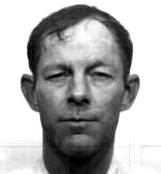
Harold Amos Barnard
Murderer Ervil LeBaron
Murderer · USA · 1972
Ervil Morrell LeBaron (1925 to August 16, 1981) was the leader of a polygamous…
35 victims
Ervil LeBaron
Murderer · USA · 1972
Ervil Morrell LeBaron (1925 to August 16, 1981) was the leader of a polygamous…
35 victims
 Brian Kevin Rosenfeld
Murderer · USA · 1985
Brian Kevin Rosenfeld Brian Kevin Rosenfeld was sentenced to three concurrent l…
23 victims
Brian Kevin Rosenfeld
Murderer · USA · 1985
Brian Kevin Rosenfeld Brian Kevin Rosenfeld was sentenced to three concurrent l…
23 victims
 Marvin Gray
Murderer · USA · 1975
Marvin Gray was convicted killer who claimed responsibility for 23 slayings and…
23 victims
Marvin Gray
Murderer · USA · 1975
Marvin Gray was convicted killer who claimed responsibility for 23 slayings and…
23 victims
 Yahweh ben Yahweh
Murderer · USA · 1980
Yahweh ben Yahweh was born and legally named Hulon Mitchell Jr. (October 27, 19…
23 victims
Yahweh ben Yahweh
Murderer · USA · 1980
Yahweh ben Yahweh was born and legally named Hulon Mitchell Jr. (October 27, 19…
23 victims
 David Bieber
Murderer · United Kingdom · 2003
David Francis Bieber (born 3 February 1966) was known under the alias Nathan Wa…
1 victim
David Bieber
Murderer · United Kingdom · 2003
David Francis Bieber (born 3 February 1966) was known under the alias Nathan Wa…
1 victim
 Bobby Marion Francis
Murderer · USA · 1975
Bobby Marion Francis (also referred to as Bobby Marion Francis) · August 16, 19…
1 victim
Bobby Marion Francis
Murderer · USA · 1975
Bobby Marion Francis (also referred to as Bobby Marion Francis) · August 16, 19…
1 victim
 Luka Magnotta
Murderer · Canada · 2012
Luka Rocco Magnotta was born as Eric Clinton Kirk Newman in July 24, 1982 in Sc…
1 victim
Luka Magnotta
Murderer · Canada · 2012
Luka Rocco Magnotta was born as Eric Clinton Kirk Newman in July 24, 1982 in Sc…
1 victim
 Frank Chester
Murderer · USA · 1987
Frank Chester · October 23, 1968 — Frank Chester was born. · December 14, 1987…
1 victim
Frank Chester
Murderer · USA · 1987
Frank Chester · October 23, 1968 — Frank Chester was born. · December 14, 1987…
1 victim
- Gender
- male
- Country
- USA
- Location
- Galveston County, Texas, USA
- Date of birth
- November 1, 1942
- Age at first offence
- 38
- Characteristics
- robbery, alcohol
- Victim profile
- Tuan Nguyen (male, 16, store clerk)
- Method of murder
- Shooting (sawed-off .22 caliber rifle)
- Date(s) of murder
- June 6, 1980
- Years active
- 1980
- Date of arrest
- Same day
- Status
-
Executed
Executed by lethal injection on February 2, 1994
Timeline
- June 6, 1980 — Harold Amos Barnard, Jr., killed sixteen-year-old Tuan Nguyen during the robbery of a convenience store in Galveston, Texas.
- April 1, 1981 — A jury convicted Barnard of capital murder for killing sixteen-year-old Tuan Nguyen.
- April 6, 1981 — After a punishment hearing, the jury affirmatively answered the three special issues; the court imposed a death sentence.
- April 8, 1987 — The Texas Court of Criminal Appeals affirmed Barnard's conviction.
- October 31, 1988 — Barnard filed a petition for a writ of habeas corpus in the state trial court.
- November 22, 1988 — The trial court entered its findings of fact and conclusions of law and recommended denial of the writ.
- January 6, 1989 — The Court of Criminal Appeals denied the writ.
- March 14, 1989 — The trial court rescheduled Barnard's execution for this date.
- February 21, 1989 — Barnard filed a petition for habeas corpus relief and an application for stay of execution in United States district court.
- December 12, 1989 — The district court dismissed the petition for a writ of habeas corpus and lifted the stay of execution.
- February 7, 1990 — The district court entered a stay of execution after granting a certificate of probable cause.
- April 3, 1992 — The United States Court of Appeals for the Fifth Circuit affirmed denial of habeas relief and vacated the stay of execution.
- May 22, 1992 — Rehearing was denied.
- March 16, 1993 — The state trial court rescheduled Barnard's execution for this date.
- January 11, 1993 — The Supreme Court denied certiorari review of Barnard's petition for federal habeas relief.
- March 8, 1993 — The Supreme Court denied Barnard's application for a stay of execution and petition for rehearing.
- March 10, 1993 — Barnard filed his second petition for state habeas relief asserting he was incompetent to be executed and challenging the Texas special issues.
- March 15, 1993 — The state court issued its findings and conclusions recommending denial of habeas relief; later that day the Texas Court of Criminal Appeals granted a stay of execution.
- May 11, 1993 — The Texas Court of Criminal Appeals ordered an evidentiary hearing on Barnard's competency.
- July 22, 1993 — The competency evidentiary hearing was held.
- September 29, 1993 — The trial court issued findings and conclusions recommending denial of habeas relief.
- November 8, 1993 — The Texas Court of Criminal Appeals adopted the trial court's findings and conclusions and denied the habeas petition.
- February 2, 1994 — Barnard's execution date was rescheduled for this date.
- January 27, 1994 — Barnard filed his second petition for federal habeas corpus relief in the United States District Court for the Southern District of Texas.
- January 28, 1994 — The district court denied all relief and denied a certificate of probable cause.
- Jan. 31, 1994 — The United States Court of Appeals, Fifth Circuit, denied Barnard's application for a certificate of probable cause and his motion for stay of execution; it reversed the portion denying appointment of counsel under 21 U.S.C. § 848(q)(4)(B) and granted the motion for appointment of counsel.
- February 2, 1994 — Barnard was executed by lethal injection in Texas.
Background
Harold Amos Barnard, Jr., petitioned for federal habeas corpus relief pursuant to 28 U.S.C. Sec. 2254 and was a death-row inmate in the Texas Department of Criminal Justice (TDCJ), Institutional Division.
The case included two Fifth Circuit habeas proceedings. In one proceeding, the Fifth Circuit affirmed the district court's dismissal of Barnard's petition for a writ of habeas corpus, affirmed denial of habeas relief, and vacated the stay of execution. In a later proceeding, the Fifth Circuit denied Barnard's application for a certificate of probable cause (CPC) and his motion for stay of execution, but reversed the district court's denial of appointment of counsel under 21 U.S.C. Sec. 848(q)(4)(B) and granted counsel and in forma pauperis status.
The offence
On June 6, 1980, Barnard killed sixteen-year-old Tuan Nguyen during the robbery of a convenience store in Galveston, Texas.
Investigation
Barnard presented testimony and evidence about his head injury and its effects during his trial.
During Barnard's capital trial, Barnard testified that several months before he committed the crime, his son-in-law beat him in the head with a tire iron. Barnard's friend, Marie Farquhar, and his mother, Maude Barnard, testified to the apparent severity of the wounds resulting from the beating. Maude Barnard stated that Barnard was unable to work for four or five months and was less helpful around the house after the beating. She also stated that since the beating, she thought he needed psychiatric help. Maude Barnard also told of an occasion after the beating when she accompanied Barnard to a hospital so that he would get a psychiatric examination, recalling that he left the hospital the same day, apparently without receiving treatment.
Farquhar was also a licensed vocational nurse.
Barnard first filed a psychological evaluation, prepared by a psychologist in October 1988, with his petition for habeas corpus relief in the district court. The report revealed that, in addition to the attack with the tire iron, Barnard suffered a serious head injury from a car accident when he was seventeen years old. The report also indicated that Barnard suffered from extreme paranoia and delusional ideation and that, since his incarceration, he had consistently been diagnosed as having a paranoid disorder with possible schizophrenia. The psychologist was unable to conclude that Barnard was afflicted with paranoid delusions at the time he committed the capital offense. Because Barnard did not present this evidence at trial, it could not be considered in the later review.
Barnard also relied on his history of heavy alcohol consumption and marijuana use, and testimony about his troubled childhood.
Maude Barnard noted that she retired from her job when she had a nervous breakdown in the 1960s. Barnard was eighteen years old in 1961.
Arrest
The record did not provide information about arrest.
Trial
A jury convicted Barnard of capital murder on April 1, 1981, for the killing of sixteen-year-old Tuan Nguyen during a robbery of a convenience store in Galveston, Texas.
After a punishment hearing, the jury affirmatively answered the three special issues submitted pursuant to Texas law, and on April 6, 1981, the court imposed a death sentence.
The Texas Court of Criminal Appeals affirmed Barnard's conviction on April 8, 1987.
Jury instructions on intoxication and temporary insanity
During the punishment phase of Barnard's trial, the court gave the following instructions to the jury:
You are instructed that under our law neither intoxication nor temporary insanity of mind caused by intoxication shall constitute any defense to the commission of crime. Evidence of temporary insanity caused by intoxication should be considered in mitigation of the penalty attached to the offense. By the term "intoxication" as used herein is meant, disturbance of mental or physical capacity resulting from the introduction of any substance into the body. By the term "insanity" as used herein, is meant, that as a result of the intoxication the defendant either did not know that his conduct was wrong or he was incapable of conforming his conduct to the requirements of the law he allegedly violated. Now if you find from the evidence that the defendant, Harold Amos Barnard, Jr., at the time of the commission of the offense for which he is on trial, was laboring under temporary insanity as above defined, produced by voluntary intoxication, then you may take such temporary insanity into consideration in mitigation of the penalty which you attach to the offense, if any.
Special issues submitted under Texas law
Pursuant to Texas law in effect at the time of Barnard's sentencing, the trial court instructed the jury to consider the following special issues:
- Was the conduct of the Defendant that caused the death of the deceased committed deliberately and with the reasonable expectation that the death of the deceased would result?
- Is there a probability that the Defendant would commit criminal acts of violence that would constitute a continuing threat to society?
- Was the conduct of the Defendant in killing the deceased unreasonable in response to the provocation, if any, by the deceased?
Sentencing
After a punishment hearing, the jury affirmatively answered the three special issues, requiring that Barnard be sentenced to death. On April 6, 1981, the court imposed the death sentence.
The state trial court pronounced Barnard's death sentence and set his execution for September 23, 1987 on July 17, 1987.
Appeals
State habeas corpus
Barnard filed a petition for a writ of habeas corpus in the state trial court on October 31, 1988. On November 22, 1988, the trial court entered its findings of fact and conclusions of law and recommended denial of the writ. The Court of Criminal Appeals denied the writ on January 6, 1989.
Barnard filed a second petition for state habeas relief on March 10, 1993, asserting that he was incompetent to be executed under Ford v. Wainwright and that the Texas special issues did not allow the jury to reflect adequately the mitigation value of his proffered evidence. He also argued that Article 8.04(b) of the Texas Penal Code, which the judge read to the jury as an instruction at the sentencing phase of the trial, was unconstitutional both on its face and as applied. On March 15, 1993, the state court issued its findings and conclusions recommending denial of habeas relief. Later that same day, the Texas Court of Criminal Appeals granted a stay of execution. On May 11, 1993, the Texas Court of Criminal Appeals ordered an evidentiary hearing on Barnard's claim that he was incompetent to be executed. The hearing was held on July 22, 1993. The trial court recommended denial of habeas relief on September 29, 1993, and on November 8, 1993, the Texas Court of Criminal Appeals adopted the trial court's findings and conclusions and denied Barnard's petition for habeas relief.
Federal habeas corpus: first Fifth Circuit decision
Barnard filed a petition for federal habeas corpus relief and an application for stay of execution in United States district court on February 21, 1989. The district court stayed the execution pending its consideration of his petition. On December 12, 1989, the district court dismissed the petition and lifted the stay. After Barnard filed a motion under Federal Rule of Civil Procedure 59(e), which the district court denied, and after Barnard filed a notice of appeal, the district court granted a certificate of probable cause and entered a stay of execution on February 7, 1990.
On appeal, Barnard contended that the Texas capital sentencing statute prevented the jury from considering and giving effect to mitigating evidence, that the instruction on temporary insanity caused by intoxication prevented mitigating consideration unless Barnard proved he was insane due to intoxication, that evidence of good character was not adequately treated within the special issues, and that he received ineffective assistance of counsel.
The Fifth Circuit considered and rejected those claims. It concluded that Barnard's Penry claims lacked merit as to the mitigating evidence issues and further concluded that the state procedural bar precluded review of the claim regarding the temporary insanity instruction. It also rejected the claim that the terms in the sentencing statute were unconstitutionally vague and rejected the ineffective assistance of counsel claim.
The Fifth Circuit affirmed the district court's denial of habeas relief and vacated the stay of execution.
Federal habeas corpus: second Fifth Circuit decision and counsel
In his second petition for federal habeas corpus relief, Barnard filed it in federal district court on January 27, 1994 and requested a stay of execution, an evidentiary hearing on competency, and a writ vacating his death sentence. He also requested appointment of counsel under 21 U.S.C. Sec. 848(q)(4)(B).
On January 28, 1994, the district court denied all relief and denied a certificate of probable cause and denied appointment of counsel.
Barnard then filed a notice of appeal to the Fifth Circuit with an application for a CPC, a motion to stay execution, and a renewed motion for appointment of counsel. The State moved to dismiss as an abuse of the writ under Rule 9(b) based on McCleskey v. Zant principles.
The Fifth Circuit held it did not reach whether Barnard abused the writ for purposes of entitlement to habeas relief on the merits. The Fifth Circuit denied Barnard's application for a CPC and denied a stay of execution because Barnard had not made a substantial showing of a denial of a federal right.
The Fifth Circuit reversed the portion of the district court's order denying appointment of counsel under 21 U.S.C. Sec. 848(q)(4)(B). It granted the motion for appointment of counsel, noting exigent circumstances due to the shortness of time remaining before execution. It also stated that the district court would need to hold a hearing at a future date to determine whether and in what amount fees would be awarded appointed counsel.
The Fifth Circuit addressed competency to be executed. It held that the state habeas court's finding of competency to be executed was entitled to the deference required under 28 U.S.C. Sec. 2254(d). It described the state habeas court's factual finding that Barnard comprehended the nature, pendency, and purpose of his execution, including knowledge that he was found guilty of killing a young boy in a robbery in Galveston County, knowledge that his pending execution was because of that crime, and knowledge that execution would occur by lethal injection via intravenous injection. The state court also found that Barnard's perception of the reason for his conviction and pending execution was at times distorted by a delusional system that attributed negative events to conspiracies involving Asians, Jews, Blacks, homosexuals, and the Mafia.
The Fifth Circuit held that it could not determine Barnard had made a substantial showing of denial of a federal right, and therefore denied the CPC and stay while granting counsel.
Other details
Last statement
Harold Barnard's last statement was:
God, please forgive me of my sins. Look after my people. Bless and protect all people. I am sorry for my sins. Lord, take me home with you. Amen. ( A couple of sentences garbled. )
Good character evidence
Three former employers testified that Barnard was a competent worker and that they felt no fear for themselves or their families when he was present. Barnard also introduced evidence that he had worked to receive a General Equivalency Diploma and that he spent time with his children and supported his family. Barnard's mother testified about how he helped to support her financially and around the house.
Barnard argued that his good character evidence, including carpentry skills, work history, and familial responsibility and support, fell outside the scope of the second special issue. The Fifth Circuit concluded that good character evidence did not require a special instruction under Penry and that it could find adequate expression through the second special issue.
Family and childhood history
Trial testimony revealed that Barnard's parents divorced when he was four years old and that he lived alone with his mother until he was thirteen. His father was absent from his life during that period. At age thirteen, Barnard was sent to live with his father, but had difficulties with him and eventually lived with an uncle. Barnard's mother testified that she had been in a mental hospital four times, but specified the approximate date of her institutionalization for only one occasion, which occurred after Barnard was eighteen years old. Barnard did not offer evidence showing that his mother received institutional care during his childhood.
The Fifth Circuit rejected Barnard's attempt to portray this testimony as mitigation evidence of permanent characteristics and disabilities stemming from his troubled childhood, concluding that there was no evidence that the childhood experiences had any psychological effect on Barnard.
Intoxication-related arguments
Barnard testified and presented testimony recounting frequent episodes of heavy alcohol consumption, alcohol intoxication, and marijuana use. The Fifth Circuit concluded that voluntary intoxication was not a uniquely severe permanent handicap requiring a special instruction and held that evidence of intoxication had adequate expression through the special issues even though Barnard challenged the temporary insanity instruction in a way the court treated as procedurally barred.
Prosecution closing argument and waiver
In his supplemental brief, Barnard argued for the first time that the prosecution's closing argument violated his constitutional rights because it erroneously permitted the jury to presume from the mere act of shooting that Barnard intended to kill the victim. The Fifth Circuit concluded that because Barnard did not present this argument in his opening brief, it was waived, and because Barnard did not raise this claim either before the trial court on state habeas review or before the federal district court, the court could not consider the claim.
Ford v. Wainwright competency standard
The Fifth Circuit described the Ford competency standard as requiring that a prisoner understand the fact of impending execution and the reason for it. It stated that the plurality opinion in Ford was made a majority by Justice Powell's concurring opinion and adopted Justice Powell's standard as the Ford standard.
It also stated that the state habeas court found Barnard competent to be executed under the Ford standard after a full evidentiary hearing in which the state court could review both live and affidavit testimony. During that hearing, Barnard presented live medical testimony from Dr. Philip Murphy, a psychologist, and Dr. Allen Childs, a psychiatrist. It also described that the State presented live testimony of Dr. Edward B. Gripon, who had been ordered by the court to examine Barnard.
The Fifth Circuit described the state court's findings regarding Barnard's delusions of being persecuted by various minority groups while still finding that Barnard understood the fact and reason for execution.
Counsel appointment under 21 U.S.C. Sec. 848(q)(4)(B)
Barnard argued that the district court erred in denying his motion to have counsel appointed under 21 U.S.C. Sec. 848(q)(4)(B). The Fifth Circuit held that the district court was incorrect in denying counsel's motion for appointment under 21 U.S.C. Sec. 848(q)(4)(B), reversed that portion of the order, and granted appointment of counsel and in forma pauperis status. It also stated the district court needed to hold a hearing to determine whether and in what amount fees would be awarded appointed counsel, and to determine whether counsel had good cause for delay in filing the second federal habeas petition and motion to be appointed only a few days before Barnard's scheduled execution, and if not, whether the amount of fees should be reduced as a sanction.
Outcome
The Fifth Circuit affirmed the district court's denial of habeas relief and vacated the stay of execution in the earlier appeal.
In the later appeal, the Fifth Circuit denied Barnard's application for a CPC and denied his motion for stay of execution, but it reversed the district court's denial of appointment of counsel under 21 U.S.C. Sec. 848(q)(4)(B) and granted the appointment of counsel and in forma pauperis status.
Barnard was executed by lethal injection on February 2, 1994.


Spotted an error, or have more information about this case?