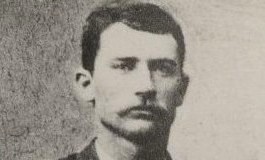
Henry Newton Brown
Murderer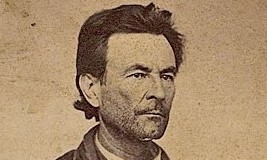 Champ Ferguson
Murderer · USA · 1861
Champ Ferguson was born November 29, 1821 in Clinton County, Kentucky, near the…
100 victims
Champ Ferguson
Murderer · USA · 1861
Champ Ferguson was born November 29, 1821 in Clinton County, Kentucky, near the…
100 victims
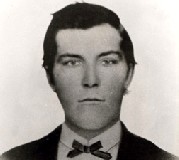 John Wesley Hardin
Murderer · USA · 1867
John Wesley (Wes) Hardin (1853-1895) was an American outlaw, gunfighter, and co…
42 victims
John Wesley Hardin
Murderer · USA · 1867
John Wesley (Wes) Hardin (1853-1895) was an American outlaw, gunfighter, and co…
42 victims
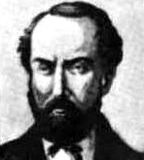 Henry Wirz
Murderer · USA · 1864
Henry Wirz (also known as Heinrich Hartmann Wirz) (November 25, 1823 – November…
11 victims
Henry Wirz
Murderer · USA · 1864
Henry Wirz (also known as Heinrich Hartmann Wirz) (November 25, 1823 – November…
11 victims
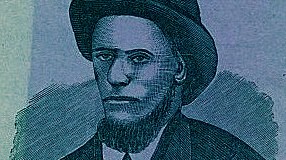 Joseph LaPage
Murderer · USA · 1874
Joseph LaPage was described as a French-Canadian trapper who donned a bearskin…
2 victims
Joseph LaPage
Murderer · USA · 1874
Joseph LaPage was described as a French-Canadian trapper who donned a bearskin…
2 victims
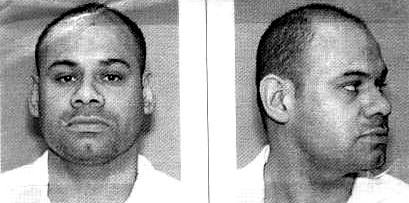 Manuel Vasquez
Murderer · USA · 1998
Manuel Vasquez (Hispanic male) was convicted of capital murder and was sentence…
1 victim
Manuel Vasquez
Murderer · USA · 1998
Manuel Vasquez (Hispanic male) was convicted of capital murder and was sentence…
1 victim
 Joachim Knychala
Serial killer · Poland · 1975
Joachim Knychała (September 8, 1952 - October 28, 1985) was a Polish serial kil…
5 victims
Joachim Knychala
Serial killer · Poland · 1975
Joachim Knychała (September 8, 1952 - October 28, 1985) was a Polish serial kil…
5 victims
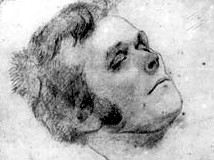 Alexander Pearce
Murderer · Australia · 1822
1819 — Alexander Pearce was sentenced at Armagh in 1819 to penal transportation…
6 victims
Alexander Pearce
Murderer · Australia · 1822
1819 — Alexander Pearce was sentenced at Armagh in 1819 to penal transportation…
6 victims
 David Lamar Anthony
Murderer · USA · 2001
David Lamar Anthony (born 1948), better known as David Anthony, was convicted o…
3 victims
David Lamar Anthony
Murderer · USA · 2001
David Lamar Anthony (born 1948), better known as David Anthony, was convicted o…
3 victims
 Donald Ray Wallace
Mass murderer · USA · 1980
Donald Ray Wallace Jr. was executed by lethal injection in Indiana on March 10,…
4 victims
Donald Ray Wallace
Mass murderer · USA · 1980
Donald Ray Wallace Jr. was executed by lethal injection in Indiana on March 10,…
4 victims
- Gender
- male
- Country
- USA
- Location
- Texas/N ew Mexico/Kansas , USA
- Date of birth
- 1857
- Age at first offence
- 13
- Characteristics
- —
- Victim profile
- Men
- Method of murder
- Shooting
- Date(s) of murder
- 1870's -1884
- Years active
- 1870–1884
- Date of arrest
- —
- Status
-
Died in custody
Killed by a mob while attempting to escape after a bank robbery on May 1, 1884
Case record: Henry Newton Brown
People
Henry Newton Brown — 19th century gunman; orphan; raised by relatives in Rolla, Missouri; later deputy sheriff in Oldham County, Texas; later assistant marshal and then marshal in Caldwell, Kansas; convicted of no charge in the provided material; killed by a mob after a bank robbery attempt.
William Brady — Lincoln sheriff; opposition partisan associated with the “Murphy-Dolan faction” (or “The House”); killed during the Lincoln County War.
John Tunstall — the Regulators’ employer whose death was said to be indirectly responsible for the death of the Regulators’ members; killed during the Lincoln County War background.
Billy the Kid — ally during the Lincoln County War; traveled with Brown and other Regulators; later traveled with Brown to the Texas Panhandle in the fall of that year; involved in later New Mexico and Texas movements.
Jim French — involved in the ambush and murder of William Brady with Brown and others on April 1, 1878.
Frank McNab — involved in the ambush and murder of William Brady with Brown and others on April 1, 1878.
John Middleton — involved in the ambush and murder of William Brady with Brown and others on April 1, 1878.
Fred Waite — involved in the ambush and murder of William Brady with Brown and others on April 1, 1878.
Buckshot Roberts — a man the Regulators believed was involved in John Tunstall’s murder; killed after a long shootout.
Richard Brewer — Regulators’ nominal leader who was killed by Buckshot Roberts before Brown and the other Regulators mortally wounded Roberts.
Alexander McSween — one of Tunstall’s partners; trapped in McSween’s home in Lincoln; was shot while fleeing a fire.
Ben Robertson (also referred to as Ben Wheeler) — Brown’s friend and deputy; later worked with Brown during the bank robbery attempt; later wounded.
William Smith — outlaw allied with Brown and Robertson for the bank robbery attempt.
John Wesley — outlaw allied with Brown and Robertson for the bank robbery attempt.
Barney O’Connor — vigilante who knew and recognized Brown.
Bank employees at the Medicine Valley Bank:
- Bank president (named in the detailed account as E.W. Payne) — shot by Brown during the robbery attempt.
- Chief cashier (named in the detailed account as George Geppert) — shot by another gang member; closed the vault door; died soon after.
Kathy Weiser — named in the material as “Kathy Weiser/Legends of America.”
Spotted Horse — said to have been killed by Brown in May 1883 near the marker mentioned in the material.
Newt Boyce — said to have been killed by Brown in December 1883 down the street.
Kathy Weiser/Legends of America “Henry Newton Brown” image caption subjects:
- John Wesley — identified in the photo from left to right.
- Henry Newton Brown — identified in the photo from left to right.
- Billy Smith — identified in the photo from left to right as a would-be robber of the Medicine Valley Bank (spelled “Billy Smith” in the photo caption text).
- Ben Wheeler — identified in the photo from left to right.
“Kathy Weiser/Legends of America” — mentioned as author/attribution in the materials around the photo caption.
Lincoln County War faction members:
- Regulators — the rancher faction allied with the Regulators’ actions in the Lincoln County War.
- “The House” — the opposition faction associated with the Murphy-Dolan faction.
Background
Henry Newton Brown was born 1857 and was killed on April 30, 1884 in the detailed narrative and described as killed by a mob while attempting to escape after a bank robbery on May 1, 1884 in the provided status field. He was an orphan who was raised in Rolla, Missouri, by relatives until the age of seventeen, when he left home and headed west.
Brown worked in cowboy jobs in Colorado and Texas. The material said he killed a man in a gunfight in the Texas Panhandle and later moved to Lincoln County, New Mexico, where he became involved in the Lincoln County War as one of the Regulators fighting on behalf of the rancher faction. The material described his involvement alongside Billy the Kid and others.
Life after the war
In the fall of that year, Brown, Billy the Kid, and a few remaining Regulators traveled to the Texas Panhandle, mostly to rustle horses. The Regulators returned to New Mexico, but Brown remained in Texas, later securing a job as deputy sheriff in Oldham County, Texas. He was dismissed for fighting with drunks. Brown then drifted through Oklahoma and Kansas, working on ranches, until he settled in Caldwell, Kansas, where he was appointed City Marshal.
The material stated Brown hired his friend Ben Robertson (also referred to as Ben Wheeler) as a deputy and that the two cleaned up the town with swift justice. It also stated the marshal began in July 1882 when Caldwell’s city council appointed him assistant marshal, and he was later promoted to marshal.
The offence
Lincoln County War killings (April 1, 1878)
On April 1, 1878, Brown, Billy the Kid, Jim French, Frank McNab, John Middleton, and Fred Waite ambushed and murdered Lincoln sheriff William Brady.
Three days later, Brown and the Regulators tracked down Buckshot Roberts, another man they believed was involved in the murder of John Tunstall. Roberts managed to kill the Regulators’ nominal leader Richard Brewer before Brown and the other Regulators mortally wounded Roberts. Roberts was chased into an outhouse and eventually died after a long shootout.
Lincoln siege and fire (July 15, 1878)
The Regulators, fugitives for the Brady killing, spent several months in hiding and were then trapped, along with Alexander McSween, in McSween’s home in Lincoln on July 15, 1878 by members of “The House” and some of Brady’s men. Henry Brown was one of three Regulators not in McSween’s house at the time; he was sniping at Brady’s men from a nearby storage shed. He escaped with Billy the Kid and the others when the house was set on fire. McSween was shot while fleeing the blaze, and his death marked the end of the Lincoln County Cattle War.
Medicine Valley Bank robbery and killings (April 30, 1884)
In 1884, Brown and Robertson were described as having decided their wages were no longer sufficient and they used the cover story of traveling to Oklahoma to hunt a murderer. Brown and Robertson allied themselves with outlaws William Smith and John Wesley.
The four men rode to Medicine Lodge, Kansas, and attempted to rob the Medicine Valley Bank. The material said Brown murdered the bank’s president. Another gunman murdered the bank’s chief cashier, who sealed the vault before he died, preventing the robbers from escaping with any money.
An angry posse pursued the group and trapped them in a box canyon outside town. The outlaws surrendered after a two-hour shootout. The material also said a mob chanted “Hang them!” while the group was secured in the Medicine Lodge jail.
Investigation
The material stated that during their capture, vigilantes recognized and recognized Brown. It named Barney O’Connor as a vigilante who knew and recognized Brown.
Arrest and confinement
After surrendering to the vigilantes, Brown and the other outlaws were taken to the Medicine Lodge jail. The material said they were given a meal, their photo was taken, and they were told to write letters to their families.
Trial
No trial or courtroom proceedings were described in the provided material.
Sentencing
No formal sentence was described in the provided material. The material described that the outlaws were hanged by a mob “as planned.”
Appeals
No appeal proceedings were described in the provided material.
Outcome
The outlaws were hanged by the mob as planned. The material stated Brown was killed by a mob while attempting to escape.
It described that Brown wrote a letter to his wife. In that letter, Brown said:
"It was all for you. I did not think this would happen."
It also described that Brown drafted a letter to his wife of six weeks and wrote of his love for her, claimed he did not shoot anyone, and directed her to dispose of his property. In that version, he wrote:
"I will send you all of my things, and you can sell them," and: "but keep the Winchester."
The material described that during the night Brown somehow managed to escape his handcuffs. When the lynch mob came at 9pm and opened his cell, Brown raced past his jailors, right through the startled lynch mob to an alley alongside the jail. A quick-thinking farmer shot Brown as he ran past, with both barrels of his shotgun at almost point blank range, killing Brown and nearly tearing him in half. The material then said members of the lynch mob pumped bullets into Brown’s mangled corpse. It further stated that the other three outlaws were hanged by the mob.
Aftermath
Brown’s widow continued to live in Caldwell but ignored the instructions about the Winchester, giving the gun to acquaintances. The rifle moved to Texas with new owners and was later sold to a gun collector. In 1977, the gun was donated to the Kansas Museum of History, where it was on display in the main gallery.
The material also referred to Brown being hired as assistant marshal in 1882 and later promoted to marshal, and it said he failed to tell the city council about his interesting past, including cattle rustling, riding with Billy the Kid, and a “trivial murder charge during the Lincoln County Wars.”
It also described Brown’s enforcement reputation in Caldwell. The material said he beat “rowdys” to the draw on two occasions on Caldwell’s Main Street, and it named two killings said to have occurred in May 1883 near the marker (Spotted Horse) and in December 1883 down the street (Newt Boyce). It further stated that the citizens gave him a new, engraved Winchester rifle after he felled two outlaws in the streets of Caldwell in 1883.
The material included another account of his appointment timeline, stating Caldwell’s city council appointed him assistant marshal in July 1882 and that Caldwell’s tough cowtown reputation worsened beforehand due to four murders (all of them lawmen) and eight lynchings. It described that Brown was a welcome addition to the town’s police force, and it quoted the Caldwell Post advocating “a little bit of fine shooting” and bragging that he was “one of the quickest men on the trigger in the Southwest.” It also stated that Caldwell citizens were unaware his gunplay experience had been “mostly on the wrong side of the law.”
The material also stated that “one year later” he used his Winchester to rob the Medicine Lodge bank.
Other details
Caldwell marshal appointment and recognition
The material stated the citizens presented Brown a Winchester rifle on New Year’s Day 1883. It stated the gun had an inscription plate reading:
"Presented to City Marshall H.N. Brown for valuable services rendered in behalf of the Citizens of Caldwell Kas., A.N. Colson, Mayor, Dec. 1882 ."
It also stated Brown purchased a house and furnishings and married a local woman in early spring of 1884.
The material described that Caldwell’s Commercial lauded him as:
"cool, courageous and gentlemanly, and free from...vices."
Plan and robbery narrative details
The detailed bank robbery account described that on April 30, 1884, Henry Brown and three friends used the new rifle to rob the Medicine Lodge, Kansas bank and shoot two bank employees. It stated that rain poured down on that morning as the four men rode into town and hitched their horses behind the coal shed of the Medicine Valley Bank.
It stated that bank president E.W. Payne reached for his revolver and was shot by Brown, and the clerk was shot twice by another gang member but triggered the combination lock by staggering to the vault.
It also stated that after the robbery attempt failed, the gang mounted their horses and fled with an angry posse. It further said they surrendered about two hours later after being trapped in a box canyon outside town.
Photo caption identification
The material included a photo caption stating the men shackled at the ankles in Medicine Lodge, Kansas were identified from left to right as:
- John Wesley
- Henry Newton Brown
- Billy Smith
- Ben Wheeler
Spotted an error, or have more information about this case?