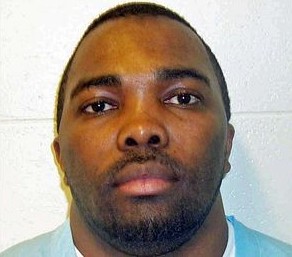
Edward Nathaniel Bell
Murderer Russell Ellwood
Murderer · USA · 1991
Russell Ellwood was a former taxi driver. Authorities suspected him of killing…
20 victims
Russell Ellwood
Murderer · USA · 1991
Russell Ellwood was a former taxi driver. Authorities suspected him of killing…
20 victims
 Robert Martines Perez
Murderer · USA · 1994
Name: Robert Martines Perez · Other name used in proceedings: Robert Martinez P…
15 victims
Robert Martines Perez
Murderer · USA · 1994
Name: Robert Martines Perez · Other name used in proceedings: Robert Martinez P…
15 victims
 Billy Frank Vickers
Murderer · USA · 1993
Billy Frank Vickers Vickers was executed by lethal injection in Texas on Januar…
14 victims
Billy Frank Vickers
Murderer · USA · 1993
Billy Frank Vickers Vickers was executed by lethal injection in Texas on Januar…
14 victims
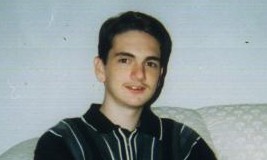 Samuel Manzie
Homicide · USA · 1997
Samuel Manzie was a 15-year-old charged as an adult in New Jersey for the killi…
1 victim
Samuel Manzie
Homicide · USA · 1997
Samuel Manzie was a 15-year-old charged as an adult in New Jersey for the killi…
1 victim
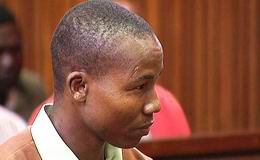 Petrus Madiba
Spree killer · South Africa · 2012
Petrus Madiba was a 29-year-old farmworker who was described as a serial killer…
9 victims
Petrus Madiba
Spree killer · South Africa · 2012
Petrus Madiba was a 29-year-old farmworker who was described as a serial killer…
9 victims
 Jeffrey Dillingham
Murderer · USA · 1992
Jeffrey Dillingham was executed by lethal injection in Texas on November 1, 200…
1 victim
Jeffrey Dillingham
Murderer · USA · 1992
Jeffrey Dillingham was executed by lethal injection in Texas on November 1, 200…
1 victim
 Marilyn Lemak
Murderer · USA · 1999
Marilyn Lemak (also referred to in criminal court as Marilyn Lemak; born May 30…
3 victims
Marilyn Lemak
Murderer · USA · 1999
Marilyn Lemak (also referred to in criminal court as Marilyn Lemak; born May 30…
3 victims
- Gender
- male
- Country
- USA
- Location
- City of Winchester, Virginia, USA
- Date of birth
- September 12 , 1964
- Age at first offence
- 35
- Characteristics
- to avoid arrest, rape?, mentally ill
- Victim profile
- Winchester Police Officer Sgt. Ricky Lee Timbrook , 32
- Method of murder
- Shooting ( .38 caliber handgun)
- Date(s) of murder
- October 29, 1999
- Years active
- 1999
- Date of arrest
- Same day
- Status
-
Executed
Executed by lethal injection in Virginia on February 19, 2009
Case record
Parties and roles
- Defendant: Edward Nathaniel Bell (male, Black; Jamaican national).
- Victim: Sgt. Ricky L. Timbrook, 32, Winchester Police Department.
- Other identified individuals (witnesses/participants in the case): Daniel Charles Spitler, Gerrad Wiley (wanted for violating probation), Robert L. Bower, Brad Triplett, Officer Brian King, Emily Marlene Williams, David Sobonya, James G. Prince, Justin William Jones, Arthur Edward Clarke, Michael Carter Johnson, Billy Jo Swartz, Kasi (appeal reference), Dennis L. Hupp, Cynthia D. Kinser, Shedd (appeal reference), James P. Jones (federal judge reference).
Timeline
- October 29, 1999 — Sgt. Ricky L. Timbrook and two probation/parole officers patrolled in Winchester and searched for Gerrad Wiley; Sgt. Timbrook was shot and pronounced dead at a local hospital.
- May 30, 2001 — Circuit Judge Dennis L. Hupp confirmed the jury’s death sentence at the formal sentencing hearing.
- January 16, 2001 — Bell’s trial commenced.
- June 7, 2002 — The Virginia Supreme Court upheld Bell’s conviction.
- 2002 — The United States Supreme Court ruled in Atkins v. Virginia (2002), and Bell was described in later narrative as having an I.Q. of 68 and being very likely mentally retarded.
- April 29, 2004 — Bell v. True (state habeas) held an ineffective-assistance claim satisfied neither “performance” nor “prejudice” under Strickland.
- 2008 — Bell v. Kelly, 260 Fed. Appx. 599 (4th Cir. 2008) affirmed denial of federal habeas relief.
- February 19, 2009 — Bell was executed by lethal injection in Virginia.
Background
Edward Nathaniel Bell was charged in the shooting death of Sgt. Ricky L. Timbrook, 32, from the Winchester police Department during a late evening police chase on October 29, 1999. Police found Bell in the basement of a house near the shooting and was initially charged with burglary.
Bell was a Jamaican national.
The offence
On the evening of October 29, 1999, Sgt. Timbrook and two probation and parole officers were working in a program known as Community Oriented Probation and Parole Services, assisting probation officers in making home visits to individuals on probation or parole. The officers were patrolling in an unmarked car in Winchester, and they were searching for Gerrad Wiley, who was wanted for violating the terms of his probation. The officers went to Wiley’s residence on Woodstock Lane in Winchester several times that evening to no avail.
Just before midnight, when they returned to Wiley’s residence for the sixth time, they saw an individual standing in a grassy area between a trash dumpster and an apartment building. As one probation officer and Sgt. Timbrook exited the vehicle and approached that individual (later identified as Daniel Charles Spitler), another person, who had “dipped behind in the shadows,” began running away. Spitler identified the runner as Bell.
Spitler testified that he was in the area of Woodstock Lane for the purpose of obtaining cocaine from Wiley. Spitler testified that, during his encounter with Bell, Bell “put his hands on [Spitler] like to pat [him] down to check and see if [Spitler] had a wire on [him].”
When the vehicle’s headlights illuminated Spitler and Bell, Spitler started walking toward the headlights, but Bell stepped into the shadows of a building. Spitler identified Sgt. Timbrook as one of the individuals who emerged from the vehicle. According to Spitler, Bell started running away, and Sgt. Timbrook chased Bell, yelling “We have one running. Stop.” Spitler lost sight of Bell and Sgt. Timbrook when they ran behind a building, but Spitler testified that he heard a shot soon thereafter.
Sgt. Timbrook chased Bell along several streets and down an alley between two houses located at 301 and 303 Piccadilly Street. These houses were separated by a fence approximately two or three feet in height. As Sgt. Timbrook started to climb over the fence, a shot rang out. Sgt. Timbrook’s body was found lying on the ground with his feet close to the fence and his upper torso leaning against a wall, and Sgt. Timbrook’s gun was still in its holster. Sgt. Timbrook was transported to a local hospital where he was pronounced dead.
The cause of death was a single gunshot wound above his right eye, caused by a bullet fired from a distance of between six and eighteen inches.
Investigation
The police searched the area for the suspect throughout the night by securing a perimeter around the neighborhood where the shooting had occurred and by using a helicopter equipped with a heat-sensitive “Forward Looking Infrared” camera and a spotlight.
A police officer, Robert L. Bower, who responded to Sgt. Timbrook’s radio call for assistance, described the incident in these terms:
[A]s [Sergeant Timbrook] started to cross over, I took my eyes off of him, and directed it toward the subject. I noticed it stopped. And, I saw a, what appeared to be a left shoulder as it stopped. All I could was ... it was like a black material.... As soon as I saw it stop, I looked back at [Sergeant] Timbrook to say something, at which time I heard the shot. And, I saw [Sergeant] Timbrook falling.
One probation officer, Brad Triplett, ran in a parallel direction during part of Sgt. Timbrook’s pursuit. At one street intersection, Triplett saw Sgt. Timbrook running after the “same dark[ly] dressed figure” and described the person’s clothing as a “dark black type of jumpsuit, nylon material,” with “reflective like stripes on the jacket.” Triplett testified that he heard Sgt. Timbrook yelling, “Stop running. Police.” Triplett also heard the gunshot.
During the search, Officer Brian King spotted an individual lying on the back steps of a house located at 305 Piccadilly Street. King stated that the person was wearing a dark colored jacket with reflective strips on the sleeves that “li[t] up like a Christmas [t]ree” when he shined his flashlight on the individual. The person then stood up and disappeared behind a bush.
Emily Marlene Williams, who lived at 305 Piccadilly Street, testified that she heard the gunshot and about five minutes later heard a “crash” in the basement of her house. After she told the police about the noise in her basement, the police evacuated her and her family from their home.
Arrest and discovery
The following morning, police discovered Bell hiding in a coal bin in the basement of the Williams residence.
Bell was wearing a “LUGZ” black nylon jacket and a black beret cap with a gold pin. The jacket had reflective stripes on the sleeves. Spitler identified both the jacket and the beret cap as the items Bell wore on the evening when Sgt. Timbrook was shot.
Before Bell was transported from the Williams residence to the police department, a gunshot residue test was administered to Bell’s hands, and recovered particles were identified as gunshot primer residue.
During a search of the backyard of the Williams residence the day after Bell was apprehended, a deputy sheriff found a pearl-handled, Smith and Wesson .38 Special double action revolver under the edge of a porch and covered with leaves and twigs. Forensic testing established that this handgun fired the bullet that killed Sgt. Timbrook.
Forensic testing of DNA recovered by swabbing the grips, butt, trigger, and trigger guard of the revolver could not eliminate Bell as a co-contributor of DNA, which was consistent with a mixture of DNA from at least three individuals.
Statements by Bell
After his arrest, Bell admitted that he had been on Woodstock Lane when “a white guy” allegedly began bothering him for information. Bell said that when a car drove up and a man got out of the car, he “was scared” and ran. Bell said he did not know who was chasing him or why, and that when he heard a shot fired, he hid in the basement of the house where he was later discovered. Bell denied having a gun.
While Bell was confined in jail awaiting trial, he told another inmate that he shot Sgt. Timbrook, threw the gun underneath a porch, and then broke into a house and changed clothes in the basement.
Other witnesses and additional details from the trial record
Testimony of Justin William Jones
Justin William Jones testified that, around nine o’clock on the evening of the shooting, he saw Bell in the vicinity of Piccadilly Street. Jones testified that Bell showed him a revolver and asked if Jones knew of anyone who wanted to buy a weapon. Jones identified the pearl-handled, .38 caliber revolver introduced at trial as the same weapon Bell had shown him.
Prior encounters between Bell and Sgt. Timbrook
Sgt. Timbrook had arrested Bell for carrying a concealed weapon in May 1997. In September 1998, Sgt. Timbrook was present during the execution of an Immigration and Naturalization Service order to detain Bell. Eight months later, Sgt. Timbrook assisted in executing a search warrant at Bell’s home, where Bell was present.
Bell’s statements to others
In the summer of 1999, one of Bell’s friends heard Bell state, as Sgt. Timbrook drove by in a vehicle, “Somebody needs to bust a cap in his ass.” Another acquaintance testified that she heard Bell say he would like to see Sgt. Timbrook dead, and that if Bell ever came face to face with Sgt. Timbrook, he would shoot him in the head because he knew Sgt. Timbrook wore a bullet-proof vest.
Other suspects and related evidence
Bell’s defense theory rested on his claim that three people were involved in the chase during which Sgt. Timbrook was shot: Bell, Sgt. Timbrook, and an unidentified gunman.
Evidence was presented that a second individual might have been in the vicinity and could have been the actual shooter. The DNA from the gun came from at least three individuals and could not conclusively link Bell to the gun.
A police officer, Arthur Edward Clarke, advised police that he had seen Bell exiting a 1997 Chevrolet Cavalier on the morning before Sgt. Timbrook was shot. Clarke stated Bell walked behind an apartment building on Woodstock Lane and proceeded down an alley; Clarke stated Bell did not live at that apartment complex. Clarke stated he connected Bell with the vehicle and the shooting after another tenant told Clarke that Bell’s girlfriend had tried to break into the vehicle.
When police called to have the vehicle towed, police learned the vehicle was not registered to Bell. Information from a finance company holding a lien on the automobile’s title indicated the vehicle had been stolen from an “Impound Lot” in Front Royal and needed to be taken to the police department for the lienholder’s repossession agent to pick up the vehicle. The lienholder gave Winchester Police Department permission to search the automobile. Using keys found in Bell’s possessions when he was arrested, police accessed the vehicle and found three .38 caliber Federal Hydra-Shok bullets in a black nylon cartridge case. A search of Bell’s home uncovered an empty box of the same brand and caliber cartridges.
Michael Carter Johnson, the owner of the vehicle, testified he never gave Bell permission to drive the automobile. Johnson acknowledged that the vehicle had been impounded and that his girlfriend retrieved it from the impoundment lot. The girlfriend admitted she loaned Bell the automobile on two occasions; the first time Bell returned it but he did not return it the second time despite repeated requests.
Trial
Bell was convicted in Winchester Circuit Court in January 2001. The proceedings were held in that court by Judge Dennis L. Hupp.
The Virginia Supreme Court later described the statutory basis for the capital murder conviction as killing a police officer deliberately, willfully, and with premeditation for the purpose of interfering with the performance of the officer’s official duties. The jury convicted Bell of capital murder and recommended that he be sentenced to death. Bell was convicted with an all-white jury of nine women and three men, and the jury deliberated for only three hours.
During the penalty phase, the Commonwealth presented evidence regarding Bell’s criminal history. Bell introduced evidence during the penalty phase only from his sister and father.
Crime evidence admitted and motive
Over Bell’s objection, the Commonwealth introduced evidence during the guilt phase that Sgt. Timbrook had arrested Bell in May 1997 for carrying a concealed weapon and that Bell had been convicted of that charge. The court instructed the jury that it could consider the evidence only as evidence of Bell’s intent or motive.
The Commonwealth’s theory was that if Sgt. Timbrook had apprehended Bell in possession of the .38 caliber revolver, Sgt. Timbrook could have charged Bell with a felony because it would have been Bell’s second firearms offense, and that such a charge would have adversely affected Bell’s pending appeal regarding deportation.
Execution procedure issues raised on appeal
Bell contended he was entitled to an evidentiary hearing regarding the Commonwealth’s methods of execution, including risks of administering lethal injection. The court discussed prior cases regarding electrocution and noted that Bell had the right under Code § 53.1-234 to choose lethal injection or electrocution.
Sentencing
At the sentencing hearing on May 30, 2001, Circuit Judge Dennis L. Hupp confirmed the jury’s sentence. Bell received a death sentence in the Commonwealth of Virginia for the shooting death of Sgt. Ricky L. Timbrook.
Appeals
Direct appeal (Virginia Supreme Court)
On June 7, 2002, the Virginia Supreme Court upheld Bell’s conviction.
Bell v. Commonwealth, 264 Va. 172, 563 S.E.2d 695 (Va. 2002) affirmed the conviction and death sentence. The opinion stated that the jury convicted Bell of capital murder of a police officer for interfering with official duties and recommended death at the penalty phase after finding a probability Bell would commit criminal acts of violence in the future constituting a continuing serious threat to society. It also stated that Bell was sentenced to death after the circuit court reviewed post-sentence report pursuant to Code § 19.2-264.5.
The Supreme Court of Virginia rejected multiple issues, including:
- speedy trial claims under statutory and constitutional rights;
- Vienna Convention arguments regarding consular notification and suppression of statements;
- search standing related to a vehicle search;
- dismissal of the indictment based on allegedly prejudicial flyers;
- juror selection issues and voir dire claims;
- evidence regarding prior arrest and conviction for carrying a concealed weapon as motive evidence;
- constitutionality of death penalty arguments as applied in Virginia;
- issues regarding jury instructions in response to a question about early release;
- statutory review under Code § 17.1-313.
The court concluded there was no error and affirmed. It also stated it perceived no reason to commute the death sentence.
Federal habeas appeal
After state court proceedings, Bell filed a petition in federal district court for a writ of habeas corpus. The United States District Court for the Western District of Virginia denied the petition. Bell appealed.
In Bell v. Kelly, 260 Fed. Appx. 599 (4th Cir. 2008), the United States Court of Appeals held that the Virginia Supreme Court’s finding that Bell was not prejudiced by counsel’s failure to present mitigating evidence was not an unreasonable application of law warranting federal habeas relief. The court affirmed.
The federal court described the Supreme Court of Virginia’s facts and discussion and noted Bell’s Strickland ineffective assistance claims. The Supreme Court of Virginia stated its conclusion in Bell v. True (April 29, 2004) that the ineffective assistance claim satisfied neither the “performance” nor the “prejudice” prong of the two-part Strickland test, based on mitigation evidence introduced through Bell’s sister and father and Bell’s failure to proffer additional information that counsel should have discovered or presented during the penalty phase that would have mitigated the offense. The federal court later affirmed denial of habeas relief.
Outcome
Bell’s conviction of capital murder and sentence of death were affirmed on direct appeal and through state habeas proceedings. Federal habeas relief was denied, and the denial was affirmed by the Fourth Circuit. Bell was executed by lethal injection in Virginia on February 19, 2009.
Aftermath
At the formal sentencing hearing on May 30, 2001, Judge Dennis L. Hupp confirmed the jury’s death sentence. Bell later pursued multiple post-conviction remedies, including state habeas and federal habeas proceedings, which were denied.
Spotted an error, or have more information about this case?