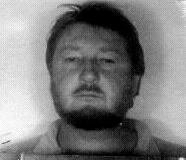
Larry Gene Bell
Murderer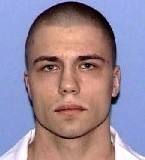 Clinton Lee Young
Murderer · USA
Clinton Lee Young (born July 19, 1983) was convicted of murdering two men in No…
2001 victims
Clinton Lee Young
Murderer · USA
Clinton Lee Young (born July 19, 1983) was convicted of murdering two men in No…
2001 victims
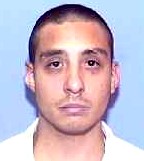 Ivan Abner Cantu
Murderer · USA
Name: Ivan Abner Cantu · TDCJ number: 999399 · Date of birth: 06/14/1973 · Age…
2000 victims
Ivan Abner Cantu
Murderer · USA
Name: Ivan Abner Cantu · TDCJ number: 999399 · Date of birth: 06/14/1973 · Age…
2000 victims
 Michael John Yowell
Murderer · USA
Name: Michael John Yowell · TDCJ number: 999334 · Date of birth: 01/25/1970 · P…
1998 victims
Michael John Yowell
Murderer · USA
Name: Michael John Yowell · TDCJ number: 999334 · Date of birth: 01/25/1970 · P…
1998 victims
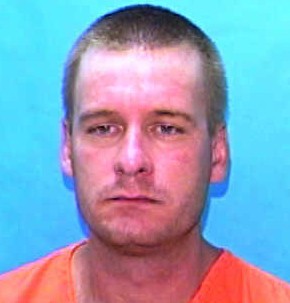 Michael Duane Zack
Murderer · USA
Michael Duane Zack was convicted and sentenced to death for the 06/13/96 murder…
1996 victims
Michael Duane Zack
Murderer · USA
Michael Duane Zack was convicted and sentenced to death for the 06/13/96 murder…
1996 victims
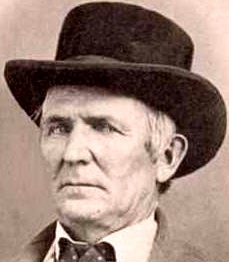 John Doyle Lee
Murderer · USA · 1857
Name: John Doyle Lee Lifespan: September 12, 1812 - March 23, 1877 Legal outcom…
120 victims
John Doyle Lee
Murderer · USA · 1857
Name: John Doyle Lee Lifespan: September 12, 1812 - March 23, 1877 Legal outcom…
120 victims
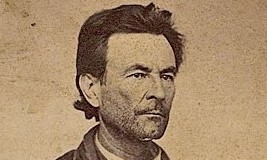 Champ Ferguson
Murderer · USA · 1861
Champ Ferguson was born November 29, 1821 in Clinton County, Kentucky, near the…
100 victims
Champ Ferguson
Murderer · USA · 1861
Champ Ferguson was born November 29, 1821 in Clinton County, Kentucky, near the…
100 victims
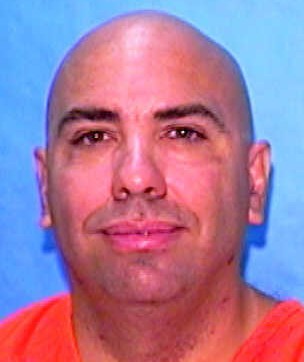 Jose Antonio Jimenez
Murderer · USA · 1990
Jose Antonio Jimenez (DOB: 10/12/63) was sentenced to death on December 14, 199…
2 victims
Jose Antonio Jimenez
Murderer · USA · 1990
Jose Antonio Jimenez (DOB: 10/12/63) was sentenced to death on December 14, 199…
2 victims
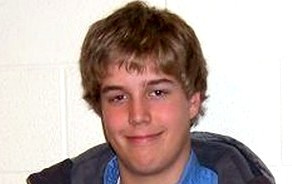 Nicholas Browning
Homicide · USA · 2008
Nicholas W. Browning — 15-year-old boy charged as an adult with four counts of…
4 victims
Nicholas Browning
Homicide · USA · 2008
Nicholas W. Browning — 15-year-old boy charged as an adult with four counts of…
4 victims
 Billy George Hughes
Murderer · USA · 1976
Name: Billy George Hughes Victim: Trooper Mark Frederick, a Texas Department of…
1 victim
Billy George Hughes
Murderer · USA · 1976
Name: Billy George Hughes Victim: Trooper Mark Frederick, a Texas Department of…
1 victim
 Patricia Columbo
Murderer · USA · 1976
Patricia Columbo and Frank DeLuca were convicted after a jury trial of three co…
3 victims
Patricia Columbo
Murderer · USA · 1976
Patricia Columbo and Frank DeLuca were convicted after a jury trial of three co…
3 victims
- Gender
- male
- Country
- USA
- Location
- Lexington County, South Carolina, USA
- Date of birth
- October 30, 1949
- Characteristics
- rape
- Victim profile
- Sharon "Shari" Faye Smith, 17 / Debra May Helmick, 10
- Method of murder
- Asphyxia by suffocation
- Date(s) of murder
- May-June1985
- Years active
- —
- Date of arrest
- June 27, 1985
- Status
-
Executed
Executed by electrocution in South Carolina on October 4, 1996
Case overview
Larry Gene Bell (1948 – October 4, 1996) was awaiting execution in South Carolina for kidnapping and brutally murdering Sharon Faye Smith and for the murder of Debra May Helmick. He was executed by electrocution in South Carolina on October 4, 1996.
Timeline
- May 31, 1985 — Seventeen-year-old Sharon Faye Smith (“Shari”) was abducted from the driveway of her Lexington County, South Carolina home at approximately 3:15 p.m.
- June 5, 1985 — A body was found; Shari’s body was found on June 5, 1985.
- June 27, 1985 — Bell was arrested.
- February 1986 — Larry Gene Bell was convicted of murdering and kidnapping Shari.
- September 15, 1987 — A petition for rehearing was denied.
- November 1992 — Bell’s appeal of his post-conviction relief application to the South Carolina Supreme Court was denied.
- December 18, 1995 — The United States Court of Appeals for the Fourth Circuit decided the case; the district court’s denial of Bell’s final petition for writ of habeas corpus was affirmed.
- October 4, 1996 — Bell was executed by electrocution in South Carolina.
Background
Larry Gene Bell was born in Ralph, Alabama. He had three sisters and one brother. The family reportedly moved around a lot.
Bell attended Eau Claire High School in Columbia, South Carolina from 1965 to 1967. The Bell family moved to Mississippi, where Larry Gene Bell graduated high school and took training as an electrician. He returned to Columbia, South Carolina, married, and had one son.
Bell joined the Marines in 1970, but was discharged the same year due to a knee injury suffered when he accidentally shot himself when cleaning a gun. The following year, he worked as a prison guard at the Department of Corrections in Columbia for one month. Bell and his family moved to Rock Hill, South Carolina in 1972 and the couple divorced in 1976.
The offence
Abduction and kidnapping of Sharon Faye Smith
On Friday, May 31, 1985, at approximately 3:15 p.m., seventeen-year-old Sharon Faye Smith (“Shari”) was abducted from the driveway of her Lexington County, South Carolina home while most of her friends and classmates were packing for their high school graduation trip. Her car was discovered by Shari’s father unattended and still running. When his efforts failed, Mr. Smith contacted the police.
A massive manhunt for Shari was initiated by state officials and local FBI agents, and it lasted until Shari’s body was found on June 5, 1985.
While Shari was still missing, someone identifying himself as Shari’s abductor made the first in a series of harassing phone calls to the Smiths. The caller knew details that would have been known to only Shari or her kidnapper, and the Smiths made notes of the calls. Authorities eventually traced and recorded later calls.
During the first conversation, the abductor told Shari’s family they would be receiving a letter from Shari. State officials intercepted her letter entitled “Last Will and Testament” from the mail. The abductor apparently had Shari draft it shortly before her death.
During the next three weeks after Shari’s body was discovered, Bell made harassing phone calls to the Smiths. In those calls, Bell depicted how he abducted Shari at gunpoint, raped and sodomized her, wrapped her head in duct tape, and suffocated her. He also discussed Shari’s funeral arrangements with Shari’s sister, and he identified the locations of victims in calls to the Smiths.
Following the discovery of Shari’s body, the pathologist could not ascertain either the cause of her death or whether or not she had been sexually assaulted. The pathologist believed that Shari either suffocated or died from dehydration, resulting from the rare form of diabetes from which Shari suffered.
Location directions and “Last Will and Testament”
On June 5, 1985, the caller—later identified as Bell—provided directions leading to Shari’s body. The pathologist was unable to ascertain the cause of death or whether Shari had been sexually assaulted.
The abductor told Shari’s family they would be receiving a letter from Shari, and the letter was intercepted by state officials from the mail. The letter was entitled “Last Will and Testament,” and it was apparently drafted shortly before Shari’s death.
Kidnapping and murder of Debra May Helmick
Bell identified the location of the body of ten-year-old Debra May Helmick, whom he kidnapped exactly two weeks after he kidnapped Shari. Bell later gave directions to the location of Debra May Helmick’s body and was identified as the caller whose information led authorities.
Investigation and arrest
State officials and local FBI agents initiated a massive manhunt after Shari’s abduction and disappearance. The Smiths made notes of the harassing phone calls, and authorities traced and recorded later calls.
Bell was arrested on June 27, 1985. Authorities tracked him down through an anonymous tip and by raising a telephone number imprinted on the paper on which Shari wrote her “Last Will & Testament.” Evidence later found in Bell’s parent’s home and in the house where Bell was housesitting confirmed Bell’s involvement in Shari’s disappearance and murder.
Trial
Competency and proceedings
Bell underwent three competency hearings throughout the course of his trial. The first hearing was held before trial started. On two other occasions during trial, the proceedings were stopped to further evaluate Bell’s competency. Both of these hearings were requested by Bell’s attorney, who indicated that Bell was becoming difficult to control and was not cooperating in the defense effort.
At each hearing, the trial judge made specific findings of fact on the record concluding that Bell was competent to stand trial. The findings included testimony of both the state experts and Bell’s experts, and the court’s observations of Bell before, during, and after the hearings.
Bell’s examination involved Dr. Dunlap, who served as a consultant to the state hospital and was appointed by the trial court in accordance with the S.C. Code Ann. § 44-23-410. Several experts Bell hired assisted in preparation of his defense.
A federal habeas proceeding reviewed whether there was due process and effective assistance of counsel related to competency proceedings. The state PCR judge made specific findings that Dr. Dunlap was neutral and impartial.
Conviction and recommended death sentence
In February 1986, Larry Gene Bell was convicted of murdering and kidnapping Shari. The jury recommended the death sentence, and the trial judge imposed the sentence in accordance with the jury’s findings.
Bell’s conviction and sentence were affirmed by the South Carolina Supreme Court in State v. Bell, 360 S.E.2d 706 (S.C. 1987). A petition for rehearing was denied on September 15, 1987. Bell’s later petition for writ of certiorari in the United States Supreme Court was denied in Bell v. South Carolina, 484 U.S. 1020 (1988).
Evidence presented at trial
The appellate opinion described multiple categories of evidence:
- Copies of taped telephone conversations Bell made with the Smith family, in which he depicted sexually assaulting and sodomizing Shari and wrapping duct tape around her head.
- Several witnesses identified Larry Bell as the caller.
- The paper on which Shari wrote her “Last Will and Testament” contained imprints of a telephone number that eventually led authorities to the residence where Bell was housesitting during the time of the crimes.
- Additional evidence found at Bell’s parents’ home further solidified his involvement.
- A witness identified Bell as the man seen near the Smith house around the time of Shari’s abduction.
- After his arrest, Bell made statements linking himself to the murder.
Bell’s trial conduct and closing argument
During his testimony at his trial, Bell continuously blurted out bizarre comments and carried on nonstop theatrics. He refused to give answers by rambling on and on. “Silence is Golden” was his favorite phrase when he did not want to answer a question. At one time he yelled out, “I would like Dawn E. Smith to marry me”.
Bell’s closing argument issues were later discussed in federal habeas review.
Verbatim closing argument passage (kidnapping concession)
The appellate opinion included the following passage from Bell’s trial counsel’s closing arguments:
Now, there has been a lot of talk here about what the defense is going to say. I will tell you what I am going to say. I am going to do something that probably hasn't been done before, pretty novel way to approach your final argument when you are representing your client, but I am not here to insult your intelligence. I am not here to make you think that [defense counsel] is trying to blow smoke at you. I will tell you right now that the State has proved beyond a reasonable doubt that Larry Gene Bell is guilty of kidnapping. That is his lawyer talking to you. That is his lawyer telling you what the State has proved or not proved. We haven't come in here and tried to create any kind of illusion. We haven't come in here and tried to create any evidence, blow smoke in your face so that you don't see the truth. During this trial think about how much I tested the allegations made by the State of South Carolina. Did we really contest the guilt of the kidnapping? We contested a witness' identification, we contested identification of the car, because Mr. Bell believes that was not him. And for that purpose we contested it. And the fact of the matter is ladies and gentlemen, they got the right guy, they got Mr. Bell for the abduction. . . .
Verbatim closing argument passage (homicide alternative)
The appellate opinion also included another passage from Bell’s trial counsel:
The tapes suggest that he gave Miss Smith this awful alternative, but Dr. Sexton and the other witnesses for the state have really never proved how Miss Smith died. Was Mr. Bell's revelations on that tape the result of what really happened? Or was it the ravings of a lunatic who is out of his mind, who didn't know what was happening? I don't know. Nobody from the state knows either. That is why you were given an alternative of whether [Shari's death] was by suffocation or dehydration. . . . And you will have to use your good common sense and go back and find out and determine and figure out whether or not the state has proved guilt beyond a reasonable doubt as to the homicide. . . .
Sentencing
The jury recommended the death sentence, and the trial judge imposed the sentence in accordance with the jury’s findings after the jury recommended death.
The federal appellate discussion addressed jury instructions concerning the “guilty but mentally ill” (“GBMI”) verdict and sentencing considerations. The appellate opinion stated that trial counsel sought curative instructions and a clarifying instruction, but the trial judge refused the entire request because the jury should not be concerned with possible penalties at the guilt phase.
The appellate opinion also noted what the jury was instructed at the guilt/innocence phase:
- The trial judge instructed the jury: “There is another verdict in this case and that is not a defense. It is guilty, but mentally ill. As I said, that is not a defense, like not guilty by reason of insanity. Rather, it is a form of guilty verdict.”
- The jury was instructed that it “was concerned only with the question of guilty or innocence. Your sole attention is to be focused on that determination and your decision is to be made completely aside from any consideration relative to punishment.”
The appellate opinion further described the sentencing jury instructions:
- The sentencing jury consideration of mitigating circumstances included, but was not limited to, three statutory mitigating circumstances:
- the murder was committed while the defendant was under the influence of mental or emotional disturbance;
- the capacity of the defendant to appreciate the criminality of his conduct or to conform his conduct to the requirements of the law was substantially impaired;
- the mentality of the defendant at the time of the crime.
- The trial judge instructed that the jury should not limit consideration of nonstatutory mitigating circumstances to the statutory examples and could consider any other circumstances as reasons for either imposing a life sentence or not imposing death.
- The trial judge clarified that the jury did not “have to find the existence of a mitigating circumstance beyond a reasonable doubt.”
Appeals and habeas corpus
South Carolina Supreme Court and certiorari denial
Bell*, 360 S.E.2d 706 (S.C. 1987). Bell’s petition for writ of certiorari in the United States Supreme Court was also denied in Bell v. South Carolina, 484 U.S. 1020 (1988).
Post-conviction relief (PCR) in South Carolina
On March 4, 1988, Bell filed an application for post-conviction relief (“PCR”) in South Carolina State Court. The court held two hearings on the matter after respondents filed a return.
On August 22, 1991, the PCR court dismissed the application. On September 9, 1991, the PCR court permitted a motion to alter or amend judgment and heard arguments on November 20. The order denying the motion was issued January 18, 1992.
Bell appealed his PCR application to the South Carolina Supreme Court, which denied his request in November 1992. Bell subsequently filed a second petition for writ of certiorari in the Supreme Court of the United States, which was denied in Bell v. South Carolina, 113 S. Ct. 1824 (1993).
Federal habeas corpus petition and Fourth Circuit decision
After exhausting state relief, Bell initiated a petition for a writ of habeas corpus in federal court, citing numerous grounds for relief detailed in the appellate opinion.
The case caption was:
- LARRY GENE BELL, Petitioner-Appellant, v. PARKER EVATT, Commissioner, South Carolina Department of Corrections; T. TRAVIS MEDLOCK, Attorney General, State of South Carolina, Respondents-Appellees.
- No. 94-4016
- Argued: September 25, 1995
- Decided: December 18, 1995
- Appeal from the United States District Court for the District of South Carolina, at Columbia.
- Henry M. Herlong, Jr., District Judge.
The Fourth Circuit panel included Judges RUSSELL, MICHAEL, and MOTZ. The court affirmed the district court’s denial of Bell’s final petition for writ of habeas corpus, and it stated that none of Bell’s “eleventhhour” complaints warranted habeas relief. Judge Russell wrote the opinion with Judges Michael and Motz joining.
The appellate opinion addressed and rejected multiple claims, including:
- ineffective assistance of counsel concerning trial counsel’s concessions of guilt to kidnapping and pursuit of a GBMI verdict;
- due process concerns under Boykin v. Alabama related to counsel’s concessions not being a guilty plea;
- due process and effective assistance issues related to competency examiners and neutrality;
- challenges to competency findings based on the record;
- claims about violation of the right to be present during trial through ejection during part of trial counsel’s closing argument and denial of an audio hook-up;
- claims of denial of a proper public trial due to restrictions on ingress and egress;
- claims that the trial judge failed to issue a clarifying instruction after the State’s closing argument about GBMI and alleged evasion of punishment;
- claims related to the trial judge’s comments in the jury’s presence and denial of a motion for mistrial;
- sentencing-related ineffective assistance claims about failure to present evidence of dysfunctional family and chronic psychosis;
- claims regarding jury instructions about GBMI and mitigating factors, including that mental illness could not be considered aggravation;
- claims about State comments during the penalty phase injecting arbitrary factors into the verdict;
- claims that the evidence was insufficient to support the jury’s guilty verdict rather than GBMI.
The opinion concluded that the district court’s denial of the federal habeas petition should be affirmed.
Verbatim remark included about trial judge’s comments
The appellate opinion included a cited remark by the trial judge:
“Mr. Bell, I am telling you. I know, Mr. Bell, that you understand the question.”
It also included the curative instruction given to the jury:
Ladies and gentlemen of the jury panel, in addressing Mr. Bell I stated Mr. Bell, you understand the question. By that no juror should draw the inference that in any way I am commenting on the facts. That was not a comment or statement or opinion by me in regard to Mr. Bell's mental capacity to understand anything at all. Those matters are solely left up to you ladies and gentlemen of the jury panel. I ask you please disregard [sic] that remark I made as being inadvertent and not an expression of opinion. Just simply my manner of addressing Mr. Bell in that particular. So disregard it.
Outcome
The Fourth Circuit affirmed the district court’s denial of Bell’s federal habeas petition.
Bell was executed by electrocution in South Carolina on October 4, 1996.
Other details
Victim identities and ages mentioned in the appellate opinion
- Sharon Faye Smith (“Shari”) — 17
- Debra May Helmick — 10
Disappearance of Sandee Elaine Cornett (suspect allegation)
Bell was also a suspect in the 1984 disappearance of Sandee Elaine Cornett from Charlotte, North Carolina. Cornett was described as a girlfriend of one of Bell’s coworkers.
Additional statements and behavior attributed to Bell
Bell claimed he was Jesus Christ even to his death. Bell chose to die by the electric chair instead of lethal injection.
Execution-related information
Bell was the last prisoner in South Carolina executed by electrocution until James Neil Tucker was executed in 2004 for the double murders of Rosa Lee Dolly Oakley and Shannon Lynn Mellon.
Media portrayal
A CBS television movie titled “Nightmare in Columbia County” portrayed the events of the Shari Smith murder.
Appeals and procedural references included in the opinion
The appellate opinion referenced Townsend v. Sain in discussing evidentiary hearings. It also described standards under Strickland v. Washington, Boykin v. Alabama, Ake v. Oklahoma, Illinois v. Allen, Waller v. Georgia, Richmond Newspapers, Inc. v. Virginia, and Darden v. Wainwright, among other cited cases within the opinion’s analysis.
Spotted an error, or have more information about this case?