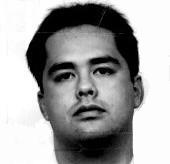
Earl Russell Behringer
Murderer Brian Kevin Rosenfeld
Murderer · USA · 1985
Brian Kevin Rosenfeld Brian Kevin Rosenfeld was sentenced to three concurrent l…
23 victims
Brian Kevin Rosenfeld
Murderer · USA · 1985
Brian Kevin Rosenfeld Brian Kevin Rosenfeld was sentenced to three concurrent l…
23 victims
 Yahweh ben Yahweh
Murderer · USA · 1980
Yahweh ben Yahweh was born and legally named Hulon Mitchell Jr. (October 27, 19…
23 victims
Yahweh ben Yahweh
Murderer · USA · 1980
Yahweh ben Yahweh was born and legally named Hulon Mitchell Jr. (October 27, 19…
23 victims
 Russell Ellwood
Murderer · USA · 1991
Russell Ellwood was a former taxi driver. Authorities suspected him of killing…
20 victims
Russell Ellwood
Murderer · USA · 1991
Russell Ellwood was a former taxi driver. Authorities suspected him of killing…
20 victims
 Juan Carlos Alvarez
Murderer · USA · 1998
Juan Carlos Alvarez, born on March 9, 1977, in San Luis, Mexico, was a Hispanic…
5 victims
Juan Carlos Alvarez
Murderer · USA · 1998
Juan Carlos Alvarez, born on March 9, 1977, in San Luis, Mexico, was a Hispanic…
5 victims
 Stacey Lamont Lawton
Murderer · USA · 1992
Stacey Lamont Lawton was executed by lethal injection in Texas on November 14,…
1 victim
Stacey Lamont Lawton
Murderer · USA · 1992
Stacey Lamont Lawton was executed by lethal injection in Texas on November 14,…
1 victim
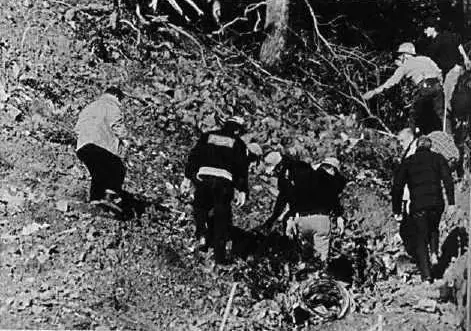 David Burke
Mass murderer · USA · 1987
David Augustus Burke (May 18, 1952–December 7, 1987) was an employee of USAir,…
43 victims
David Burke
Mass murderer · USA · 1987
David Augustus Burke (May 18, 1952–December 7, 1987) was an employee of USAir,…
43 victims
 Thomas William Hawkins
Homicide / Murderer · USA · 1980
1980 — Thomas W. Hawkins Jr. pleaded guilty to third-degree murder in Berks in…
2 victims
Thomas William Hawkins
Homicide / Murderer · USA · 1980
1980 — Thomas W. Hawkins Jr. pleaded guilty to third-degree murder in Berks in…
2 victims
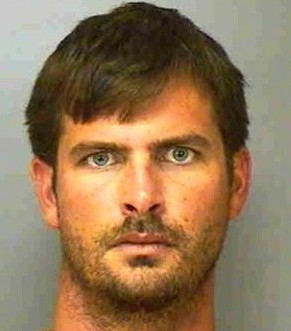 Thomas Rigterink
Murderer · USA · 2003
Thomas Rigterink was adopted son of Polk Community College professors James and…
2 victims
Thomas Rigterink
Murderer · USA · 2003
Thomas Rigterink was adopted son of Polk Community College professors James and…
2 victims
- Gender
- male
- Country
- USA
- Location
- Tarrant County, Texas, USA
- Date of birth
- January 3, 1964
- Age at first offence
- 22
- Characteristics
- robbery
- Victim profile
- Janet Hancock, 21, and fiancé, Daniel Brennon Meyer, 22
- Method of murder
- Shooting
- Date(s) of murder
- September 14, 1986
- Years active
- 1986
- Date of arrest
- —
- Status
-
Executed
Executed by lethal injection in Texas on June 11, 1997
Case record
Identifiers
Earl Russell Behringer was identified as the offender (Earl Behringer #914).
Timeline
- June 11, 1997 — Earl Russell Behringer was executed by lethal injection in Texas.
- Sep. 14, 1986 — Behringer shot and killed the young couple in a $15 robbery attempt.
- October 2, 1995 — Judge John McBryde denied the petition for writ of habeas corpus and vacated a stay of execution.
- October 18, 1995 — Behringer filed a notice of appeal from the judgment in No. 95-10976.
- October 25, 1994 — Behringer filed an amended state habeas application.
- May 30, 1995 — Behringer filed his first habeas petition in the district court.
- March 9, 1995 — Behringer filed his second state habeas application.
- February 15, 1996 — Behringer was scheduled to be executed.
- March 18, 1996 — Certiorari was denied.
- Dec. 21, 1995 — Behringer filed a motion for relief from judgment and brief under Fed.R.Civ.P. 60(b) in the district court.
- Dec. 27, 1995 — Judge McBryde denied the motion.
- Jan. 2, 1996 — Behringer filed his notice of appeal from that order.
- Feb. 5, 1996 — The United States Court of Appeals denied Behringer’s application for stay of execution and refused to issue a certificate of probable cause.
- 1994 — Behringer’s counsel approached Jerry Hogue regarding Hogue’s conversations with Rouse.
- November 27, 1995 — Hogue told Behringer’s lawyer in a telephone call that he would cooperate.
- December 12 — Hogue gave his affidavit that Rouse had admitted killing the two murder victims.
Background
Earl Russell Behringer was incarcerated for 8 years before he was given a lethal injection. Behringer was 22 years old on Sep. 14, 1986 when he shot and killed the young couple. Behringer was 33 years old when he was executed. Marc Barta, the former Tarrant County assistant District Attorney who prosecuted the case, said, “Most have extensive records before they get to capital crime,” and that Behringer’s lack of criminal history left reasons for his actions to speculation.
The offence
On Sep. 14, 1986, Behringer shot and killed Janet Hancock and her fiancé, Daniel Brennon Meyer, in a $15 robbery attempt. Residents of Mansfield had reason to be stunned by the murders. Meyer was a 22-year-old finance and accounting major at Texas A&M. Hancock was an education major at the University of Texas in Arlington. The two were shot less than a mile from Hancock’s home. Behringer and Hancock attended Mansfield Highschool together and were friendly acquaintances.
Investigation and accomplice
Behringer had an accomplice, 18-year-old Lawrence Rouse. Rouse turned himself and Behringer in just hours after the murders. Rouse received a 40-year jail sentence in exchange for his testimony regarding the murders. The prosecution relied solely on Rouse’s testimony. The defense put Rouse as the perpetrator and Behringer as the accomplice.
Trial
Detective D.N. Looney was described as a friend of Behringer’s during high school and after they graduated. Looney said: “Earl and I were in band and Janet was on the drill team. That’s really how they knew each other. We all worked a lot together on routines.” Looney also said Behringer had grown up “a clean-cut quiet young man,” made good grades, attended church, and “had never been in trouble with the law.” Barta said Behringer was “very clean-cut.” When Behringer stood to make his plea, Barta said, “he clicked his heels together and said, ‘not guilty.’ It was very unusual,” and Behringer’s plea was not guilty. The trial lasted a week and a half. After two to three hours of jury deliberation, Behringer was found guilty. Behringer was then sentenced to death.
Other details
Looney said that during Behringer’s last couple of years of high school, he became more outgoing. Looney also said that after Behringer went into the army and came out, “he became infatuated with weaponry and got into the Dungeons and Dragons game,” and that “It seemed to change him a lot.”
Appeals
Behringer filed several appeals. In one appeal, he claimed his innocence and stated that Rouse admitted to another death row inmate, Jerry Hogue, that he killed the couple. Hogue would not provide sworn statements. Behringer also claimed he was denied effective assistance of counsel at trial, his right to trial by jury and due process. His appeals were repeatedly turned down.
Federal habeas corpus (Fifth Circuit)
Case references included: 75 F.3d 187; Earl Russell Behringer, Petitioner-Appellant, v. Gary L. Johnson, Director, Texas Department of Criminal Justice, Institutional Division, Respondent-Appellee; No. 95-10976; Federal Circuits, 5th Cir. On March 18, 1996, the court referenced certiorari denied. The court stated that it denied Behringer’s request for stay of execution and certificate of probable cause. The court addressed five claims that Behringer asserted in his petition to the United States District Court:
- Whether Behringer was denied effective assistance of counsel, his right to a trial by jury, and due process by the trial court's sua sponte excusal of veniremembers David Wayne Wright, Doris Odle Simmons, and Irma K. Warters in the absence of Behringer and his counsel.
- Whether Behringer was denied due process of law and subjected to cruel and unusual punishment by the jury's affirmative answer to special issue two based on insufficient evidence.
- Whether Texas' statutory scheme requiring direct appeal of death penalty cases to the Texas Court of Criminal Appeals denied Behringer due process of law and equal protection under the law.
- Whether the Texas death penalty scheme denied Behringer due process of law and imposed cruel and unusual punishment by preventing Behringer from informing the jury of the parole implications of a life sentence while authorizing a jury instruction not to consider parole eligibility in deciding the answer to special issue two.
- Whether the Texas death penalty scheme denied Behringer due process of law and imposed cruel and unusual punishment by simultaneously restricting the jury's discretion to impose the death penalty while allowing the jury unlimited discretion to consider mitigating evidence. The United States District Court, Judge John McBryde, filed a detailed Memorandum and Order on October 2, 1995, denying the petition for writ of habeas corpus and vacating a stay of execution. The district court rejected each of these claims. The application for Stay of Execution and Certificate of Probable Cause were DENIED.
Rule 60(b) proceedings
In a related appeal, the court stated that it denied the request for stay of execution and refused to issue a certificate of probable cause. Behringer’s motion for relief under Rule 60(b) asserted:
- his actual innocence of the capital offense
- that he was denied effective assistance of counsel at trial when his attorney failed to introduce the testimony of Jerry Hogue. The court described the contention that Hogue would testify that Scott Rouse, Behringer's co-defendant, admitted to Hogue that he, Rouse, killed both the murder victims. The contention was that Behringer’s trial counsel failed to offer the evidence at trial despite being aware of Hogue’s testimony. The court stated that Behringer’s counsel in the habeas proceeding approached Hogue in 1994, but Hogue refused to provide sworn statements regarding his claimed conversations with Rouse. Behringer asserted that on November 27, 1995, Hogue told his lawyer in a telephone call that he would cooperate. Behringer asserted that on December 12, Hogue gave his affidavit that Rouse had admitted killing the two murder victims. Behringer asserted that Hogue “notified Larry Moore, petitioner's trial attorney, that Rouse had acknowledged his own guilt of the double murder.”
The court stated that it reviewed denial of relief under 60(b) by an abuse of discretion standard. The court stated it could not find that the district court abused its discretion in denying Rule 60(b) relief. The court decided nothing regarding the merit of the unexhausted claim. The application for a stay of execution and a certificate of probable cause in that appeal were denied. The court declined to consolidate the appeal in this case with the appeal in No. 95-10976.
Last meal and execution details
For his last meal, Behringer requested scrambled eggs, hash browns, toast, gravy, sausage, and grape juice. The victim’s families and his own watched as he was given a lethal injection. After thanking family members and friends, Behringer turned to the victim’s families and said: “I am sorry for any pain I have caused you. If my death gives you peace, so be it.” He took his last gasps of air and said his final words: “ I’m going home.” Behringer died 7 minutes after receiving the injection. Behringer’s last statement included: “It’s a good day to die. I walked in here like a man and I am leaving here like a man. I had a good life. I have known the love of a good woman, my wife. I have a good family. My grandmother is the pillar of the community. I love and cherish my friends and family. Thank you for your love. To the Hancock family, I am sorry for the pain I caused you. If my death gives you any peace, so be it. I want my friends to know it is not the way to die, but I belong to Jesus Christ. I confess my sins. I have… Earl Russell BEHRINGER”
Outcome
Earl Russell Behringer was executed by lethal injection in Texas on June 11, 1997, after spending 8 years incarcerated for the murders of Janet Hancock and fiancé, Daniel Brennon Meyer. He was described as the 21st inmate to be executed that year.

Spotted an error, or have more information about this case?