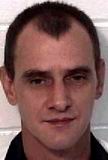
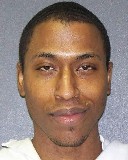
Roy Willard Blankenship
Murderer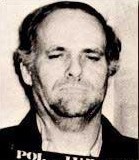 Ervil LeBaron
Murderer · USA · 1972
Ervil Morrell LeBaron (1925 to August 16, 1981) was the leader of a polygamous…
35 victims
Ervil LeBaron
Murderer · USA · 1972
Ervil Morrell LeBaron (1925 to August 16, 1981) was the leader of a polygamous…
35 victims
 Brian Kevin Rosenfeld
Murderer · USA · 1985
Brian Kevin Rosenfeld Brian Kevin Rosenfeld was sentenced to three concurrent l…
23 victims
Brian Kevin Rosenfeld
Murderer · USA · 1985
Brian Kevin Rosenfeld Brian Kevin Rosenfeld was sentenced to three concurrent l…
23 victims
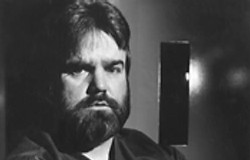 Marvin Gray
Murderer · USA · 1975
Marvin Gray was convicted killer who claimed responsibility for 23 slayings and…
23 victims
Marvin Gray
Murderer · USA · 1975
Marvin Gray was convicted killer who claimed responsibility for 23 slayings and…
23 victims
 Yahweh ben Yahweh
Murderer · USA · 1980
Yahweh ben Yahweh was born and legally named Hulon Mitchell Jr. (October 27, 19…
23 victims
Yahweh ben Yahweh
Murderer · USA · 1980
Yahweh ben Yahweh was born and legally named Hulon Mitchell Jr. (October 27, 19…
23 victims
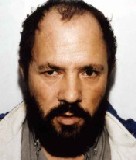 Francisco García Escalero
Serial killer · Spain · 1987
Francisco García Escalero was born on May 24, 1948 in Madrid, Spain. He was des…
11 victims
Francisco García Escalero
Serial killer · Spain · 1987
Francisco García Escalero was born on May 24, 1948 in Madrid, Spain. He was des…
11 victims
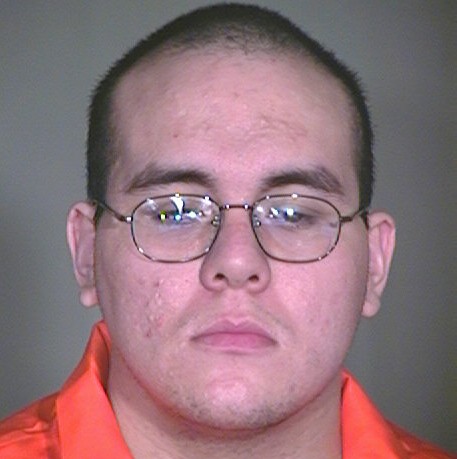 Ruben Garza
Murderer · USA · 1999
December 1, 1999 — Ruben Garza entered the Franco/Rush residence and shot Ellen…
2 victims
Ruben Garza
Murderer · USA · 1999
December 1, 1999 — Ruben Garza entered the Franco/Rush residence and shot Ellen…
2 victims
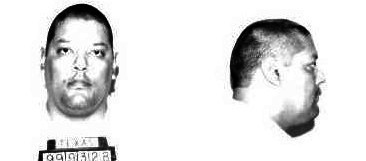 Louis Castro Perez
Murderer · USA · 1998
Louis Castro Perez was listed as a condemned killer with TDCJ Number 999328. He…
3 victims
Louis Castro Perez
Murderer · USA · 1998
Louis Castro Perez was listed as a condemned killer with TDCJ Number 999328. He…
3 victims
 Cornelius Alan Goss
Murderer · USA · 1987
Name: Cornelius Alan Goss · May 20, 1987 — 66-year-old Carl Leevy, a sporting g…
1 victim
Cornelius Alan Goss
Murderer · USA · 1987
Name: Cornelius Alan Goss · May 20, 1987 — 66-year-old Carl Leevy, a sporting g…
1 victim
- Gender
- male
- Country
- USA
- Location
- Chatham County, Georgia, USA
- Date of birth
- 1955
- Age at first offence
- 23
- Characteristics
- rape
- Victim profile
- Sarah Mims Bowen, 78
- Method of murder
- T he victim died from heart failure brought on by the trauma
- Date(s) of murder
- March 2, 1978
- Years active
- 1978
- Date of arrest
- March 17, 1978
- Status
-
Executed
Executed by lethal injection in Georgia on June 23, 2011
Case record: Roy Willard Blankenship
Parties and identifiers
Roy Willard Blankenship was a white male born in 1955. He was incarcerated in Georgia Department of Corrections facility under GDC ID: 0000397505. His case involved offenses including rape, burglary, and murder.
Victim
The victim was Sarah Mims Bowen, a 78-year-old woman.
Timeline
- March 2, 1978 — Police officers were called to the residence of Sarah Mims Bowen at 204 West 44th Street in Savannah, Georgia.
- March 3, 1978 — Dr. Roderick Guerry conducted the autopsy of Sarah Bowen.
- March 11, 1978 — Pursuant to a search warrant, Detective Jones seized tennis shoes from Blankenship’s house.
- April 21, 1980 — Trial commenced in the original case proceedings in the Superior Court of Chatham County, Georgia.
- April of 1980 — Blankenship was originally convicted in the Superior Court of Chatham County of murder, burglary and rape.
- September 1982 — First resentencing trial was held in the Superior Court of Chatham County, Georgia.
- June 13, 1986 — Blankenship was sentenced to death for a third time.
- January 24, 2011 — The United States Supreme Court denied Blankenship’s petition for writ of certiorari.
- February 4, 2011 — The State Board of Pardons and Paroles entered a stay of execution.
- June 23, 2011 — Blankenship was executed by lethal injection in Georgia.
- June 24, 2011 — Reports described the execution and the use of a new drug mixture.
Background and preparation for trial
Blankenship left a bar after a night of drinking and began to walk home in the early morning hours of March 2, 1978.
At the time of the original trial and subsequent sentencing proceedings, Blankenship’s defense counsel included:
- Bart Shea, appointed as counsel on March 22, 1978, later deceased.
- John Hendrix, appointed to represent Blankenship on July 17, 1978.
- Penny Haas, as co-counsel with Hendrix.
The court ordered investigators to assist Hendrix and Haas:
- William Friday
- Richard Moesch
The offence
Blankenship decided he wanted to break in to the victim’s upstairs apartment as he walked past.
He climbed up a railing to a porch of Sarah Bowen’s apartment, kicked out the lower pane of a window, waited and watched briefly, and then entered the apartment. He grabbed Sarah Bowen from behind by placing his hand over her mouth and nose to keep her from screaming. She struggled and fell; Blankenship fell on top of her. She became unconscious. Blankenship picked her up and took her back to her bed, where he raped her. After the rape, he dressed and left the apartment the same way that he entered it.
Police and forensic evidence described the victim’s condition as severe:
- She was severely beaten, scratched, bitten, and forcibly raped.
- A plastic bottle of hand lotion had been forced into her vagina.
- Her bloody and nude body was discovered by friends and neighbors.
- Forensic evidence established that Sarah Bowen died from heart failure brought on by the trauma.
Additional details included injuries to the victim’s oral cavity and forensic findings involving semen, bruising, redness, ripped and torn tissue, and other marks described during the autopsy testimony.
Investigation and forensic evidence
On arrival at the scene, officers were met by friends and neighbors of Mrs. Bowen. Officers cleared the apartment of people and secured the area until additional officers arrived.
In the living room of the apartment, officers found blood-soaked paper towels on the floor, multiple blood-soaked towels on a chair, blood spatters on the wall above the chair, and the remaining portion of the roll of towels on an end table.
In the bedroom, officers found several blood-soaked rags on a stool next to the head of the bed, on the foot of the bed, and on the floor.
The apartment was extremely dusty, and shoe prints were found in a trail from the family room to the second story porch. Broken glass from the door between the balcony and family room was found inside the room. A struggle had occurred in the living room, evidenced by disarray and blood on the floor, a bloody pillow on the floor, bloody hand towels on the floor, and a small overturned chair or stool.
In the dust, officers found dirt from footprints and additional footprints:
- One set of prints led around the exterior of the house and then came upstairs.
- Footprints were found on the iron lattice post going up to the second story balcony, as well as on the top of the banister.
- There was a trail of footprints in the dust between the family room and the porch.
- A set of footprints also led from the house at a southwest angle into the street. Blankenship lived about one block across the street from the victim in a southwest direction, in the same direction as the footprints leading away from the apartment.
Dr. Rodrick Guerry performed an autopsy on March 3, 1978. The pathologist described the elderly victim as having been beaten severely about the face, arms, and over much of her body, with many bruises on her face. The victim’s vagina, anal area, and mouth were bruised and red; her lips were scraped and bruised, as well as her tongue, and the pharynx at the back of her mouth was bruised, ripped and torn.
The pathologist found signs of severe pericarditis, and the victim also evidenced severe cardioarteriosclerosis, with scarring in her lungs. The pathologist concluded there were three possible causes of death: heart attack; heart failure; or strangulation, as indicated by marks on her neck. A whitish fluid was found in both her mouth and vagina.
Evidence described right-side facial injuries as more severe, leading to an inference that the assailant was left-handed; Blankenship was left-handed.
Forensic serologist Linda Tillman tested samples taken from both the victim and Blankenship:
- The blood scrapings evidenced type O blood and both the victim and Blankenship were type O secretors.
- Tests revealed sperm in the vaginal smear and in the anal and vaginal swabs.
- No sperm was found in the oral smear-microscopic slide, and sperm often were not found following evidence of oral sexual activity.
In some described forensic evidence, scrapings taken from the fingernails of the victim matched Blankenship’s type O blood, and scrapings under nails and other evidence were described with reference to blood group findings.
Footprints led toward Blankenship’s house; shoes identical to the type that made the prints were recovered from his possession, and fingerprints were found at the scene.
On March 11, 1978, Detective Jones seized tennis shoes from Blankenship’s house that had similar ridges to the footprints found in the dust.
Blankenship made a confession after his arrest, but at trial he denied that he beat Sarah Bowen severely and recanted part of his confession, stating he was unable to consummate the rape.
Arrest and statements
Blankenship was arrested by police after officers responded to the call and evidence at the scene led toward his residence.
After being arrested, Blankenship waived his right to remain silent. He spoke with police, and his oral statement was transcribed and signed.
In his oral statement, Blankenship described climbing to the porch area, kicking the window, entering through the window, seeing the reflection of the woman in a mirror, grabbing her to prevent screaming, she slid down and he fell on top of her, noticing blood coming out of her head, carrying her to the bed, taking her pajamas off, saying he “may as well go ahead and get some pleasure,” and describing leaving about “forty-five minutes or an hour all together.”
He also stated he had been drinking that night and had to be drunk and stoned, and he described drinking bourbon and coke. He described stopping at her house rather than making it home, including time at the Orential Lounge, and stated he did not remember anything about the plastic bottle.
Verbatim confession statement included the following text: “I went up on the iron rail on the side of the porch and climbed over the banister. I stood up there for a few minutes thinking, what the hell, I really didn't know what to think. I had to be drunk. Stoned. And I kicked the window in and I waited. When I kicked the window in to see if anybody heard it, I could've got shot or something. I guess I should have. It would have been better. I went in through the window, I think. I scraped my arm on the window. I don't think it cut it. I went into the next room, I saw no one. Just the bedroom. I looked around there and the door was opened into the next room. I went up to the door and started to go through when I saw a mirror straight ahead in the next room where the lady was. I seen her reflection through the mirror sitting in a chair so I stood beside the door for awhile watching her pray or something. Moaning. I don't know. Then I grabbed her. I think her mouth so she did not scream. [sic] I covered her mouth and her nose and then she slid down in the chair. She fell on the floor and I fell on top of her. After I fell over on top of her I didn't have to hold her mouth or anything. She was not screaming or kicking or anything. So this blood was coming out of her head, I think, on the right side. I think. I pushed this little stool back and I picked her up and I carried her and laid her on the bed. All right. I put her on the bed. She had some pajamas on, I think. I took them off. It's crazy. When I put her on the bed and took her clothes off, I was drunk, I guess. I said I may as well go ahead and get some pleasure. That's when I had the relationship with her. As far as I know, I thought I was in the right hole. After that I got up and was afraid that I might have hurt her. I thought I'd better get out of there. I left as soon as I did that shit. I left. I went the same way I came. I was wearing the same shoes that the police confiscated from my house today. I watched her about 10 minutes. After I grabbed her she fell to the floor and I put her on the bed. Right after that I shot off or got my pleasure or whatever you want to call it. I put back on my clothes and left. It probably was not long. I was in the house maybe 45 minutes or an hour all together. I don't know why I did it. I was drunk. I know I had to be just coming back from the Orential [sic] Lounge. I came by myself. I had been at the bar with Joe and Alex. They left the bar about 1:30 or 2:00. I know I stayed until closing, 3:00. I walked from the bar to the house. The Orential [sic] Lounge on Abercorn Street. I shoot pool all the time. It takes me about five to seven minutes to get to my house walking. I never did make it home. I stopped at her house and went upstairs before I went home. I know the witnesses in the bar-waitresses, sorry. I know the waitresses in the bar. I don't dance. I just shoot pool and get high and get drunk. I was drinking that night. I was drinking burbon and coke. I don't remember anything about the plastic bottle.”
Evidence presented at trial and sentencing
Blankenship’s statement was read to the jury.
In the 1980 original trial proceedings, prosecutors presented evidence including shoes whose prints were found in and around Bowen’s apartment, the fingerprint found on the glass inside the apartment, blood and semen samples taken from Bowen’s corpse, and Blankenship’s signed confession.
Defense strategy involved demonstrating the investigation into Bowen’s death was incomplete and attempting to implicate another person. Defense counsel attempted to implicate Gary X. Nelson, a black male convicted for the oral and anal rape and stabbing murder of a six-year old black female.
The defense presented testimony from Roger Parian, Director of the Savannah Crime Lab branch. He found a broken segment of Negroid hair on the victim’s body, and described it as broken on both ends and too small to have come from anywhere. He also stated that four fibers he had identified as Negroid hairs were synthetic fibers upon microscopic analysis.
The defense also called Medical Examiner Dr. Joe Burton, who testified he did not view the injuries as severe and opined that the victim’s medical history and medication could explain some bruises and other injuries found during the autopsy.
The trial court and appellate proceedings included discussion of juror exclusion and jury instructions on voluntary intoxication.
At resentencing trials, prosecutors presented photographs of the crime scene and autopsy photographs, and introduced Blankenship’s confession. Autopsy testimony again included descriptions that Bowen had been severely beaten and that her heart failure resulted from trauma. The defense faced limitations on introducing evidence relating to guilt or innocence.
Trial proceedings and legal history
Original trial and appeal (April 1980 to 1981)
Blankenship was convicted in the Superior Court of Chatham County of murder, burglary and rape and sentenced to death for murder. He received two twenty-year sentences for burglary and rape to run consecutively to the death sentence.
On direct appeal to the Georgia Supreme Court:
- Convictions for murder and rape were affirmed.
- Burglary conviction was reversed and the burglary sentence vacated as a lesser included offense of felony murder.
- The death sentence for murder was reversed due to error under Witherspoon v. Illinois and remanded for resentencing.
First resentencing trial and appeal (September 1982 to 1983)
The first resentencing trial was held in September 1982 in the Superior Court of Chatham County, Georgia.
The jury found the existence of two statutory aggravating circumstances in O.C.G.A. § 17-10-30(b)(2) and (b)(7), recommended death, and the trial court imposed death.
On direct appeal:
- The Georgia Supreme Court found that Blankenship had been impermissibly restricted in presenting evidence in mitigation and reversed the death sentence.
- The death sentence was reversed and ordered a second resentencing trial.
Second resentencing trial and appeal (June 1986 to 1988)
The second resentencing trial was held in June 1986, and the jury found the same statutory aggravating circumstances as previously found.
Blankenship was sentenced to death for a third time on June 13, 1986.
On direct appeal:
- The Georgia Supreme Court affirmed the death sentence.
- Blankenship filed a petition for writ of certiorari in the United States Supreme Court, denied on October 3, 1988.
State habeas proceedings and federal habeas proceedings
Blankenship filed:
- A first state habeas corpus petition in the Superior Court of Butts County on May 15, 1989, with an evidentiary hearing on February 28, 1990.
- Denial of state habeas relief on March 13, 1991.
- A certificate of probable cause to appeal denied on September 25, 1991.
- United States Supreme Court certiorari denied on March 30, 1992.
In federal proceedings:
- A first federal habeas corpus petition was filed in the United States District Court for the Southern District of Georgia on February 8, 1993.
- The district court process included a denial of federal habeas corpus relief and other procedural rulings in later federal habeas matters.
- A second federal habeas corpus petition was filed in the United States District Court for the Southern District of Georgia on October 21, 2005.
- The district court denied federal habeas corpus relief on December 13, 2007, denied a motion to alter and amend judgment on January 2, 2008, and granted a certificate of appealability on February 6, 2008.
Eleventh Circuit and Supreme Court postures
The case was orally argued before the Eleventh Circuit on July 16, 2008. On September 15, 2008, the Eleventh Circuit issued an opinion denying relief. Blankenship v. Hall, 542 F.3d 1253 (11th Cir. 2008). Panel rehearing was denied on November 20, 2008.
Blankenship filed a petition for writ of certiorari in the United States Supreme Court on April 20, 2009, which was denied on January 24, 2011. Blankenship v. Hall, 2011 U.S. LEXIS 1014 (Case No. 08-9917).
Sentencing
Blankenship received death sentences three times after two reversals.
He was sentenced to death for murder in 1980. After direct appeal reversals, he was sentenced to death again following resentencing in September 1982, and that death sentence was reversed for mitigation evidence restrictions. He was sentenced to death a third time on June 13, 1986, and that death sentence was affirmed.
In the original trial, he also received two twenty-year sentences for burglary and rape, to run consecutively to the death sentence, but the burglary conviction was later reversed and the sentence vacated as a lesser included offense of felony murder.
Appeals and outcomes (verbatim case outcomes and rulings)
Blankenship v. State, 247 Ga. 590, 277 S.E.2d 505 (Ga. 1981)
Outcome listed:
- (Direct Appeal-Reversed)
Blankenship v. State, 247 Ga. 590, 280 S.E.2d 623 (Ga. 1981)
Outcome listed:
- (On Reconsideration)
Blankenship v. State, 251 Ga. 621, 308 S.E.2d 369 (Ga. 1983)
Outcome listed:
- (Direct Appeal-Reversed)
Blankenship v. State, 258 Ga. 43, 365 S.E.2d 265 (Ga. 1988)
Outcome listed:
- (Direct Appeal - Affirmed)
Blankenship v. Hall, 542 F.3d 1253 (11th Cir. 2008)
Outcome listed:
- (Habeas)
Statements and last meal
Blankenship declined to request a special last meal and instead would be offered the institution’s meal tray consisting of chicken and rice, peas, carrots, collard greens, corn bread, a brownie and iced tea.
Final words included the following quote: “I hope to see you again.”
Execution and aftermath
Blankenship was scheduled for execution by lethal injection at 7:00 p.m. on Thursday, June 23, 2011, at Georgia Diagnostic and Classification Prison in Jackson.
Before the procedure began, Blankenship told the warden: “I hope to see you again.”
Reports described his physical movements during the injection procedure, including head jerking and grimacing, and that he was pronounced dead at 8:37 p.m.
Media witnesses for the execution were:
- Greg Bluestein, The Associated Press
- Eddie Ledbetter, Statesboro Herald
- Mitchell E. Peace, The Claxton Enterprise
Other details
Blankenship was described in proceedings as left-handed, and the victim’s right-side face beating supported an inference regarding the assailant’s handedness.
During later reporting, it was stated that he was 55 years old at the time of the execution in connection with media accounts, and other reports stated 56 years old. The Georgia Department of Corrections ID and offense and sentencing fields included:
- Major offense: MURDER
- Offense: RAPE (conviction county: CHATHAM COUNTY; crime commit date: 03/02/1978; sentence length: 20 YEARS, 0 MONTHS, 0 DAYS)
- Offense: BURGLARY (conviction county: CHATHAM COUNTY; crime commit date: 03/02/1978; sentence length: 20 YEARS, 0 MONTHS, 0 DAYS)
- Offense: MURDER (crime commit date: 03/02/1978; incarceration begin: 10/15/1980)
Legal and factual content in appeals included:
- Discussion of sufficiency of evidence, including footprint and fingerprint evidence, shoes matching prints, and confession.
- Discussion of merger of burglary with felony murder and reversal and vacating of burglary sentence.
- Discussion of jury instructions on voluntary intoxication.
- Discussion of Witherspoon v. Illinois and juror exclusion and resulting reversal and remand of death sentence for resentencing.
- Discussion of restriction on presenting mitigation evidence and scope of admissible evidence in resentencing.
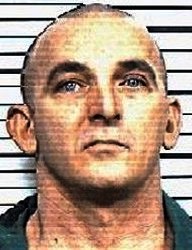
Spotted an error, or have more information about this case?