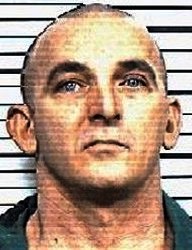
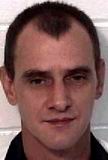
Jimmy Dale Bland
Murderer Ervil LeBaron
Murderer · USA · 1972
Ervil Morrell LeBaron (1925 to August 16, 1981) was the leader of a polygamous…
35 victims
Ervil LeBaron
Murderer · USA · 1972
Ervil Morrell LeBaron (1925 to August 16, 1981) was the leader of a polygamous…
35 victims
 Brian Kevin Rosenfeld
Murderer · USA · 1985
Brian Kevin Rosenfeld Brian Kevin Rosenfeld was sentenced to three concurrent l…
23 victims
Brian Kevin Rosenfeld
Murderer · USA · 1985
Brian Kevin Rosenfeld Brian Kevin Rosenfeld was sentenced to three concurrent l…
23 victims
 Marvin Gray
Murderer · USA · 1975
Marvin Gray was convicted killer who claimed responsibility for 23 slayings and…
23 victims
Marvin Gray
Murderer · USA · 1975
Marvin Gray was convicted killer who claimed responsibility for 23 slayings and…
23 victims
 Yahweh ben Yahweh
Murderer · USA · 1980
Yahweh ben Yahweh was born and legally named Hulon Mitchell Jr. (October 27, 19…
23 victims
Yahweh ben Yahweh
Murderer · USA · 1980
Yahweh ben Yahweh was born and legally named Hulon Mitchell Jr. (October 27, 19…
23 victims
 Andrew Paul Witt
Murderer · USA · 2004
Andrew Paul Witt (born 1982) was a former Senior Airman in the United States Ai…
2 victims
Andrew Paul Witt
Murderer · USA · 2004
Andrew Paul Witt (born 1982) was a former Senior Airman in the United States Ai…
2 victims
 Denton Crank
Murderer · USA · 1984
June 14, 1994 — Denton Crank was executed by lethal injection in Texas. · April…
1 victim
Denton Crank
Murderer · USA · 1984
June 14, 1994 — Denton Crank was executed by lethal injection in Texas. · April…
1 victim
 Nelson Serrano
Mass murderer · USA · 1997
Nelson Iván Serrano Sáenz was sentenced to death by lethal injection on June 26…
4 victims
Nelson Serrano
Mass murderer · USA · 1997
Nelson Iván Serrano Sáenz was sentenced to death by lethal injection on June 26…
4 victims
- Gender
- male
- Country
- USA
- Location
- Till County, Oklahoma, USA
- Date of birth
- September 26, 1957
- Age at first offence
- 18
- Characteristics
- —
- Victim profile
- 1 male (soldier) / Doyle Windle Rains, 62 (the former mayor of Manitou)
- Method of murder
- Shooting (.22-caliber rifle)
- Date(s) of murder
- 1975 / 1996
- Years active
- 1975–1996
- Date of arrest
- November 20, 1996
- Status
-
Executed
Executed by lethal injection in Oklahoma on June 26, 2007
Case details
Jimmy Dale Bland was executed by lethal injection in Oklahoma on June 26, 2007.
Bland shot and killed Doyle Windle Rains in the garage of Rains’s home in Manitou, Tillman County, Oklahoma, on November 14, 1996.
Bland had previously been convicted of killing Raymond Prentice and kidnapping Prentice’s wife and son in 1975.
Bland was diagnosed with lung cancer in the period leading up to the execution, and his cancer had spread to his brain and his hip bone.
Timeline
- November 14, 1996 — Jimmy Dale Bland shot and killed Doyle Windle Rains in Rains’s garage in Manitou, Tillman County, Oklahoma.
- 1975 — Bland served a 60-year sentence after killing Raymond Prentice and kidnapping Prentice’s wife and son.
- June 12 — The Oklahoma Pardon and Parole Board rejected Bland’s request for clemency.
- June 14 — Bland’s request for a stay of execution based on terminal cancer was filed.
- June 26, 2000 — The Oklahoma Court of Criminal Appeals denied post-conviction relief in an unpublished opinion on Bland v. State, No. PCD-99-1200 (June 26, 2000).
- June 26, 2007 — Bland was executed by lethal injection in Oklahoma.
- 6:12 p.m. — Lethal injection was administered.
- 6:19 p.m. — Bland was pronounced dead.
- August 5, 1998 — Bland’s Petition in Error was filed in the Court of Criminal Appeals.
- April 20, 1999 — Bland’s brief was filed.
- August 9, 1999 — The State’s brief was filed.
- August 26, 1999 — The case was submitted to the Court.
- November 2, 1999 — Oral argument was held.
- March 17, 2005 — A certificate of appealability was granted for additional issues in Bland’s federal habeas proceedings.
- November 26, 2001 — Bland filed a petition for writ of habeas corpus under 28 U.S.C. § 2254.
- December 14, 2004 — The district court denied the habeas petition.
- January 8, 2001 — The United States Supreme Court denied a petition for writ of certiorari in Bland v. Oklahoma.
Background
Bland was 49 when he was executed.
Rains was 62.
Rains was described as retired and working handyman jobs in the area.
Christina Stringer, Rains’s foster daughter, spoke about Rains being compassionate and friendly and about helping Bland.
Raymond Prentice’s son, Ronnie Prentice, was 3 or 4 years old when Prentice was kidnapped, and he later attended Bland’s execution.
Bland’s mother, two sisters, a brother, and a spiritual adviser witnessed his execution.
Bland’s attorney was David Autry.
During the federal habeas proceedings, the case was appealed following denial in the district court.
The offence
On November 14, 1996, Bland shot and killed Doyle Windle Rains in Rains’s garage in Manitou, Tillman County, Oklahoma.
Bland used a .22-caliber rifle and shot Rains in the back of the head.
Bland brought the keys to Rains’s pickup out of Rains’s front pants pocket, loaded Rains’s body into the pickup, and drove to a rural area where he deposited the body and covered it with logs.
Bland returned to Rains’s home and spent the night.
The evidence included that Bland took elaborate steps to hide the body by cleaning the garage area where the killing occurred and disposing of Rains’s body.
Bland was described as having borrowed Rains’s Cadillac to visit his girlfriend in Oklahoma City before the killing.
While in Oklahoma City, Bland spent almost all of the cash in his possession, approximately $380, and a substantial portion of this money was spent on drugs. Bland and his girlfriend ingested some of the drugs.
Connie gave Bland $10 so he could return home.
After the killing, Bland retrieved and used Rains’s vehicle and later appeared to authorities with cash in his possession.
Investigation and arrest
Tillman County Sheriff Billy Hanes went to Doyle’s residence on November 17, 1996. He observed the Cadillac in the driveway but did not see the pickup.
Hanes went out to the property where Rains ran cattle but found no sign of Rains.
Returning to the home, Hanes, with assistance of agents from the Oklahoma State Bureau of Investigation (O.S.B.I), entered the house and observed several spots of blood on the garage floor.
Hanes listed Doyle and his pickup on the NCIC register of missing persons and required contact with him.
On November 16, 1996, Bland was involved in a one-car accident near Stroud, Oklahoma while driving Rains’s pickup, and he was arrested for driving under the influence. The arresting trooper noticed Bland had over $300 in cash on his person.
Bland was taken to the Econo-Lodge in Chandler, Oklahoma, where he paid for his room with a $100 bill.
On November 17, 1996, a friend picked up Bland from the Econo-Lodge and drove him to the home of another friend in Oklahoma City.
Bland was subsequently located by authorities at that home and arrested on November 20, 1996.
Initially, Bland was arrested for the unauthorized use of Doyle’s pickup.
After being taken to the Tillman County Sheriff’s office, Bland confessed to killing Doyle and hiding his body.
Bland took officers to the rural area where he had left the body.
The body was badly decomposed, but an autopsy determined the cause of death was a bullet wound to the back of the head.
Bland admitted to shooting Rains but claimed he did not intend to kill him.
Bland stated he had borrowed Rains’s Cadillac and that while it was in his possession it had a flat tire, that he changed the tire, and that he damaged the hubcap.
Bland stated that when he returned the car to Rains and explained the situation, Rains became angry.
Bland stated that Rains’s anger escalated and that Rains took a swing at Bland; Bland stated he was not sure if Rains struck him and that he thought he may have kicked Rains.
Bland stated that both men fell to the floor and that a gun he had been carrying, wrapped in coveralls, fell to the ground; he then picked up the gun and fired one shot hitting Rains in the back of the head.
Bland stated he attempted to clean up the garage area where the altercation occurred and then took Rains’s body to a field and covered it with logs.
Trial
Charges and verdict
Bland was convicted of First Degree Malice Aforethought Murder.
The jury found the existence of two aggravating circumstances and recommended the punishment of death.
The trial court sentenced Bland to death.
The record included that the jury convicted Bland of first-degree malice-aforethought murder, with references to felony murder being treated as a scrivener’s error to be corrected.
Witnesses and testimony
Connie Lord was Bland’s girlfriend.
Christina Stringer was Rains’s foster daughter.
Ronnie Prentice attended Bland’s execution.
Dr. Sally Church, Ph.D. in Educational Psychology, was referenced as a defense witness whose testimony was limited.
Humberto Martinez picked up Bland from the Econo-Lodge and drove him to the home of James Baker in Oklahoma City.
James Baker was referenced as the friend whose home Bland was taken to.
Ruby Hess was Bland’s mother, and Hess shared a home with Bland in Davidson, Oklahoma.
Frances Lewis was Connie Lord’s sister, and Hess phoned the Tillman County Sheriff after Lewis’s call.
Evidentiary and instructional disputes (appeal issues)
Bland raised multiple legal issues on appeal, including arguments about the sufficiency of evidence for malice aforethought, limitations on expert testimony regarding chemical dependency, admission of certain photographs, legality of arrest and suppression of evidence, failure to instruct on voluntary intoxication, and failure to instruct on first-degree manslaughter by resisting criminal attempt and second-degree murder.
Bland also raised issues concerning admission of prior conviction evidence for sentencing aggravators and instructional challenges to the continuing threat aggravator.
Bland argued that the judgment and sentence reflected convictions for both malice aforethought murder and felony murder and that references to felony murder should be corrected to reflect the jury’s verdict.
Quotes
Bland said:
- “I'm sorry for what happened,” he could be heard saying to his family.
- “I love you all.”
- “I'm ready.”
Christina Stringer said:
- “He helped Jimmy when no one else would have anything to do with him,” and:
- “Windle taught me to try to find good in everyone,” and:
- “I didn't know much about the first killing he (Bland) had committed. I just knew he was a kid and Windle was giving him a second chance.”
Ronnie Prentice said:
- “One of the things I remember is when he (Bland) dragged my dad in the house -- when he drug him in by his boots -- and I remember all the blood,”
- “I remember my mom hollering, my mom asking him, of course, to cover him up because I was right there.” He also said:
- “He killed two men -- cold-blooded -- kidnapped me and my mom, shot at all the cops during that, threatened to shoot me, threatened to shoot my mom,”
- “and we want to keep him around?”
Diann Rust-Tierney said:
- “This is a pointless exercise,”
- “This is the kind of thing that continues to undermine public confidence in the death penalty.”
Bland’s attorney David Autry said:
- “This execution could turn into a catastrophe if the veins in his arms where a lethal dose of chemicals will be injected have been compromised by his chemotherapy treatments.”
Judge Charles Chapel said:
- “the dignity of society itself from the barbarity of exacting mindless vengeance.”
During execution, Bland’s brother whispered:
- “He's in heaven,”
Sentencing
Bland was sentenced to death after the jury found two aggravating circumstances.
The aggravating circumstances included:
- prior violent felony,
- and continuing threat.
In Bland’s sentencing, evidence was presented about Bland’s prior kidnapping and manslaughter convictions.
The trial court struck an aggravating circumstance described as “committed for the purpose of avoiding or preventing a lawful arrest or prosecution.”
Mitigating evidence presented in the sentencing included testimony that Bland had mental disorders including post-traumatic stress disorder, schizoid personality disorder, attention deficit disorder and drug dependency, and that he had expressed remorse, accepted responsibility, and was not expected to be released if sentenced to life without parole.
The sentencing record included that Dr. Church testified to disorders and drug dependency.
Appeals
Oklahoma Court of Criminal Appeals
The Oklahoma Court of Criminal Appeals affirmed the conviction and death sentence and denied applications for further hearing.
In the sentencing review under Oklahoma law, the court determined the death sentence was appropriately supported and that there was no error warranting reversal or modification.
Federal habeas proceedings
Bland filed a petition for a writ of habeas corpus under 28 U.S.C. § 2254.
The district court denied the petition.
The United States Court of Appeals affirmed the denial of the habeas petition.
The appellate holdings included determinations rejecting claims regarding:
- jury instruction issues,
- prosecutorial argument,
- post-Miranda silence,
- and ineffective assistance of counsel.
Outcome
Bland was executed by lethal injection in Oklahoma on June 26, 2007.
The lethal injection was administered at 6:12 p.m., and Bland was pronounced dead at 6:19 p.m.
Aftermath
Anti-death penalty groups opposed the execution and argued that executing a terminally ill inmate was pointless and raised ethical issues.
Bland’s execution was opposed based on arguments that his terminal cancer made execution inappropriate.
The United States Supreme Court denied a request for clemency.
The Oklahoma Court of Criminal Appeals had voted 3-2 against a stay of execution.
The Oklahoma Pardon and Parole Board unanimously rejected a request for clemency on June 12.
Bland was described as the first terminally ill inmate to face execution in Oklahoma.
Bland was the second person executed in Oklahoma in that year, following Corey Duane Hamilton, who was executed on Jan. 9 for the slaying of four fast-food employees during a robbery in 1992.
Other details
Bland had been driving a vehicle owned by Rains when he was arrested for driving under the influence two days later.
Bland confessed to killing Rains and hiding his body.
Bland had spent about 20 years of a 60-year sentence in jail after pleading guilty to manslaughter and kidnapping charges in 1975, and had been out of prison less than a year when he killed Rains.
Bland’s defense asserted that at the time of the shooting he did not intend to kill.
Spotted an error, or have more information about this case?