Andrew Lee Jones
Murderer Brian Kevin Rosenfeld
Murderer · USA · 1985
Brian Kevin Rosenfeld Brian Kevin Rosenfeld was sentenced to three concurrent l…
23 victims
Brian Kevin Rosenfeld
Murderer · USA · 1985
Brian Kevin Rosenfeld Brian Kevin Rosenfeld was sentenced to three concurrent l…
23 victims
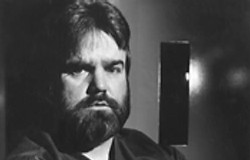 Marvin Gray
Murderer · USA · 1975
Marvin Gray was convicted killer who claimed responsibility for 23 slayings and…
23 victims
Marvin Gray
Murderer · USA · 1975
Marvin Gray was convicted killer who claimed responsibility for 23 slayings and…
23 victims
 Yahweh ben Yahweh
Murderer · USA · 1980
Yahweh ben Yahweh was born and legally named Hulon Mitchell Jr. (October 27, 19…
23 victims
Yahweh ben Yahweh
Murderer · USA · 1980
Yahweh ben Yahweh was born and legally named Hulon Mitchell Jr. (October 27, 19…
23 victims
 Russell Ellwood
Murderer · USA · 1991
Russell Ellwood was a former taxi driver. Authorities suspected him of killing…
20 victims
Russell Ellwood
Murderer · USA · 1991
Russell Ellwood was a former taxi driver. Authorities suspected him of killing…
20 victims
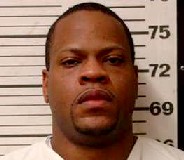 Lemaricus Davidson
Murderer · USA · 2007
January 7, 2007 — Channon Christian and Christopher Newsom were kidnapped, late…
2 victims
Lemaricus Davidson
Murderer · USA · 2007
January 7, 2007 — Channon Christian and Christopher Newsom were kidnapped, late…
2 victims
 David Afuta
Murderer · Israel · 1997
David Afuta killed his ex-girlfriend, Israeli fashion model and actress Anat El…
1 victim
David Afuta
Murderer · Israel · 1997
David Afuta killed his ex-girlfriend, Israeli fashion model and actress Anat El…
1 victim
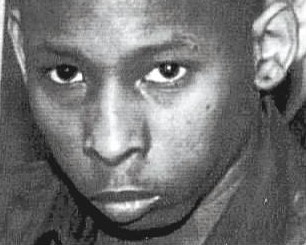 Ronald Lee Fitzgerald
Murderer · USA · 1993
January 29, 1993 — Ronald Lee Fitzgerald was convicted of capital murder in sla…
2 victims
Ronald Lee Fitzgerald
Murderer · USA · 1993
January 29, 1993 — Ronald Lee Fitzgerald was convicted of capital murder in sla…
2 victims
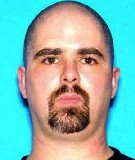 Wade Michael Page
Mass murderer · USA · 2012
Wade Michael Page was an American white supremacist and a United States Army ve…
6 victims
Wade Michael Page
Mass murderer · USA · 2012
Wade Michael Page was an American white supremacist and a United States Army ve…
6 victims
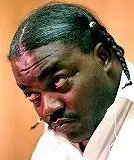 Barry Lee Fairchild
Homicide · USA · 1983
Barry Lee Fairchild was convicted of the kidnap, rape and murder of a 22-year-o…
1 victim
Barry Lee Fairchild
Homicide · USA · 1983
Barry Lee Fairchild was convicted of the kidnap, rape and murder of a 22-year-o…
1 victim
- Gender
- male
- Country
- USA
- Location
- Baton Rouge, Louisiana, USA
- Date of birth
- 1955
- Age at first offence
- 29
- Characteristics
- rape
- Victim profile
- Tumekica Jackson (female, 11)
- Method of murder
- Strangulation
- Date(s) of murder
- February 17, 1984
- Years active
- 1984
- Date of arrest
- 2 days after
- Status
-
Executed
Executed by electrocution in Louisiana on July 22, 1991
Case information
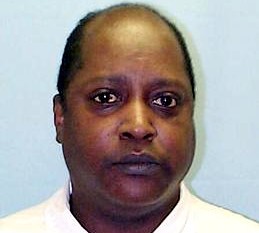
Andrew Lee Jones (1955–July 22, 1991) was an American murderer.
The offence
On February 17, 1984, eleven-year old Tumekica Jackson was living with her mother and her grandparents in the Scotlandville section of Baton Rouge. At 4:00 a.m., the grandmother discovered that the child was missing from her bedroom.
Police discovered that someone had broken the screen of the rear den window and had opened the back door. In the muddy ground near the house, police obtained a cast of an imprint made by the left shoe from a pair of size 8 1/2 tennis shoes. There were no signs of a struggle inside the house.
The investigation focused on Jones because of his stormy romantic relationship of several years with the victim’s mother, which had been broken off by her the week before. The victim knew Jones well and Jones had been in the home many times.
On the evening of the child’s disappearance, Jones called the mother’s home three times and told the grandmother that he would not be responsible for his actions if the mother continued to refuse to see him.
About 6:30 p.m., the victim’s partially nude body was found in a drainage canal. An autopsy established that the child had been beaten, raped and manually strangled.
Investigation
Police obtained physical evidence including a cast of a left shoe imprint from size 8 1/2 tennis shoes found at the scene area and later seized similar shoes from Jones’s apartment. The investigation obtained a warrant and resulted in Jones’s arrest.
Police seized a pair of size 8 1/2 tennis shoes and a pair of green gloves from Jones when they searched his apartment.
Analysis identified stains from clothing recovered after the offence as a mixture of blood and seminal fluid.
Serological testing established that the blood on the victim’s underwear and pajama bottoms, and the blood on Jones’s boxer shorts and the blue jeans, came from the victim. The seminal fluid on these articles of clothing came from an individual with Type O blood, the same type as Jones.
Forensic testing confirmed that the tennis shoes seized from Jones’s apartment were the same size and tread design as the one which left the impression at the victim’s house, but a positive identification was not made because of poor quality of the soil and resultant poor quality of the cast; the forensic scientist stated there were no dissimilarities.
Arrest
Jones lived with his sister Terry Jones and his half brother Abraham Mingo.
At about 6:30 p.m., police went to Jones’s apartment. Jones told police he had been home all night, and Mingo and Miss Jones confirmed his story. A few hours later, Miss Jones called police and said she may have been “mistaken” about Jones being home all night. After further questioning, police obtained written consent to search the apartment at about 10:00 a.m..
When no one answered the officer’s knock, Miss Jones used her key to open the door. Officers found Jones in the bathroom washing a pair of size 8 1/2 tennis shoes. The bath tub was full of dirt and leaves. Officers seized the tennis shoes and a pair of green gloves and requested that Jones give them a statement at the station. After signing a waiver, Jones gave a tape-recorded statement in which he denied any knowledge of the offense and was allowed to leave with his sister.
Mingo gave police a detailed account of his activities with Jones. The account included that Jones returned to the apartment around 12:30 a.m. on Saturday and later left alone for about 30 minutes at about 1:00 a.m. before returning again. Between 4:30 and 5:00 a.m., Mingo was awakened by Jones’s knock; Mingo let Jones into the apartment and went back to bed. When Mingo and Jones were alone later that morning, Jones told him that he “shoulda stayed home”, “did something he didn't want to do”, and “done fucked up”. Jones gave Mingo a TG & Y bag and asked him to throw it away. Mingo did so without looking inside.
At Mingo’s direction, police recovered a TG & Y bag from a dumpster near a grocery store. The bag contained socks, a pair of blue jeans, and a pink sweatshirt, which were wet, muddy, and stained. Later analysis identified the stains as a mixture of blood and seminal fluid.
Mingo also told police about a pair of boxer shorts found in the bathroom. The shorts belonged to Mingo, but Jones had worn them on Friday night. Pursuant to Mingo’s written consent, police recovered a pair of stained brown and white boxer shorts from the trunk of Mingo’s car. Analysis confirmed the presence of blood and seminal fluid on the boxer shorts.
Based on this information, police obtained a warrant and arrested Jones on Sunday. After advise and waiver of rights, Jones gave a video-taped statement. In that statement, Jones asserted that he and Rudolph Springer had gone to the victim’s house early Saturday morning to commit a burglary. Jones claimed that he remained in the car while Springer entered the house. Jones stated that after Springer returned carrying the victim, Jones got in the back seat and pulled his cap over his face, and that Springer drove Jones to Jones’s apartment at Jones’s request. Jones stated that it was the last time that he saw the victim.
Trial
At trial, Abraham Mingo, Terry Jones, and Rudolph Springer testified for the state.
Mingo testified about Jones’s statements and his request to dispose of the TG & Y bag after Mingo was granted immunity.
Springer denied any knowledge of the crime, and he and two corroborating witnesses established his alibi for the pertinent times.
Another witness, Reginald Jackson, testified that on the night of the murder Jones asked him for a ride to Scotlandville to look for the victim’s mother. Reginald Jackson identified the tennis shoes, blue jeans, and pink sweatshirt as the clothes worn by Jones that night.
The state introduced the tennis shoes seized from Jones’s apartment.
A forensic scientist testified that the shoes seized from Jones’s apartment were the same size and tread design as the one that left the impression at the victim’s house but could not make a positive identification because of the poor quality of the soil and resultant poor quality of the cast; the scientist stated there were no dissimilarities.
A serologist testified regarding blood and seminal fluid origins and matching blood typing results as described in the trial evidence.
Jones did not testify and the defense presented no evidence.
The jury unanimously found Jones guilty as charged of first degree murder.
Sentencing
In the sentencing hearing, the state reintroduced all evidence adduced at trial. The defense presented the testimony of Jones’s mother, four of his sisters, and a cousin.
The jury found two statutory aggravating circumstances and unanimously recommended the sentence of death.
The aggravating circumstances included that Jones killed the victim in the course of an aggravated rape and that the offense was inflicted in an “especially heinous, atrocious, or cruel manner.”
Appeals
Direct review
Jones’s conviction and sentence were affirmed by the Louisiana Supreme Court.
After the Louisiana Supreme Court denied his petition for rehearing, Jones filed a petition for certiorari in the United States Supreme Court. The Court denied the petition and a later petition for rehearing.
Jones filed a petition for post-conviction relief, writ of habeas corpus, and an evidentiary hearing in the state district court. The state district judge denied the writ in 1987. After first granting a stay of execution for consideration, the Louisiana Supreme Court denied the petition.
Jones filed another petition for certiorari with the United States Supreme Court. The Court denied the petition and Jones’s petition for rehearing.
Jones’s execution was then scheduled for March 31, 1988. He filed an application for stay of execution and a writ of habeas corpus in the federal district court for the Middle District of Louisiana on March 25 and filed motions for an evidentiary hearing and for funds for expert assistance. In a twenty-page opinion issued on March 27, 1988, the district court denied all relief sought and refused to grant a certificate of probable cause for appeal. Jones filed a notice of appeal on March 29.
The United States Court of Appeals for the Fifth Circuit granted a stay pending further order, later vacated its order staying execution, and affirmed the district court’s denial of a writ of habeas corpus.
In that appeal, the case caption included Andrew Lee Jones, Petitioner-appellant, v. Robert H. Butler, Sr., Warden, Louisiana State Penitentiary, Angola, Louisiana, Respondent-appellee.
The Court of Appeals’ decision was issued Dec. 21, 1988, and rehearing and rehearing en banc were denied Feb. 21, 1989.
Federal habeas proceedings (abuse of the writ)
In United States Court of Appeals, Fifth Circuit case No. 91-3608, the Court issued a decision July 20, 1991 in Andrew Lee Jones, Petitioner-Appellant, v. John Whitley, Warden Louisiana State Penitentiary, Respondent-Appellee. The petition was treated as a request for a certificate of probable cause. The Court denied the request for certificate of probable cause and denied the motion for stay of execution.
The Court concluded that Jones’s second federal habeas petition was properly denied as an abuse of the writ under Rule 9(b).
Outcome
Jones was convicted of first degree murder and sentenced to death by a jury in the Nineteenth Judicial District Court for the Parish of East Baton Rouge, State of Louisiana. His conviction and sentence were affirmed by the Louisiana Supreme Court.
Execution
On July 22, 1991, Andrew Lee Jones was executed by the electric chair at the Louisiana State Penitentiary at Angola.
The record stated that Jones did not make a final statement.
At a Pardon Board hearing three days before he was executed, he said:
"There's a possible chance I did it, a possible chance I didn't do it. If I had not been drunk, nothing like that would have happened. I'm like anybody else. . . I don't want to die or anything like that."
Other details
Family and living arrangements mentioned at trial and investigation
The investigation included a romantic relationship between Jones and the victim’s mother.
Jury deliberation and verdict details
The jury found Jones guilty unanimously as charged of first degree murder.
At sentencing, the jury unanimously recommended death after finding two statutory aggravating circumstances.
Evidence and physical exhibits
Police obtained a cast of an imprint made by the left shoe from size 8 1/2 tennis shoes at the scene and later seized similar shoes from Jones washing them in the bathroom.
The TG & Y bag recovered contained socks, blue jeans, and a pink sweatshirt that were wet, muddy, and stained.
The TG & Y bag was recovered from a dumpster near a grocery store.
Mingo consented to police recovery of boxer shorts from the trunk of Mingo’s car. The boxer shorts were stained brown and white and were confirmed to contain blood and seminal fluid.
Mentions of other proceedings and filings
Jones’s habeas proceedings included litigation describing his claims about electrocution and about alleged suppression of evidence related to serological testing and prosecutorial conduct, as well as claims about jury selection and jury instructions.
In the appellate proceedings, the Court discussed allegations of Brady material related to lab reports and also quotations from closing arguments and rebuttal arguments.
Spotted an error, or have more information about this case?