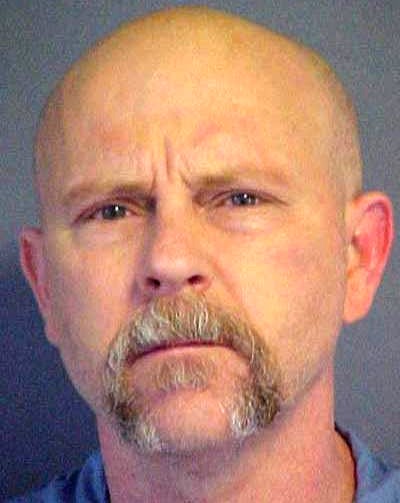
David Jay Brown
Murderer Brian Kevin Rosenfeld
Murderer · USA · 1985
Brian Kevin Rosenfeld Brian Kevin Rosenfeld was sentenced to three concurrent l…
23 victims
Brian Kevin Rosenfeld
Murderer · USA · 1985
Brian Kevin Rosenfeld Brian Kevin Rosenfeld was sentenced to three concurrent l…
23 victims
 Yahweh ben Yahweh
Murderer · USA · 1980
Yahweh ben Yahweh was born and legally named Hulon Mitchell Jr. (October 27, 19…
23 victims
Yahweh ben Yahweh
Murderer · USA · 1980
Yahweh ben Yahweh was born and legally named Hulon Mitchell Jr. (October 27, 19…
23 victims
 Russell Ellwood
Murderer · USA · 1991
Russell Ellwood was a former taxi driver. Authorities suspected him of killing…
20 victims
Russell Ellwood
Murderer · USA · 1991
Russell Ellwood was a former taxi driver. Authorities suspected him of killing…
20 victims
 Robert Martines Perez
Murderer · USA · 1994
Name: Robert Martines Perez · Other name used in proceedings: Robert Martinez P…
15 victims
Robert Martines Perez
Murderer · USA · 1994
Name: Robert Martines Perez · Other name used in proceedings: Robert Martinez P…
15 victims
 Chauncy Starling
Murderer · USA · 2001
Chauncy Starling Starling, Richard Frink, and Alfred Gaines went into a barbers…
2 victims
Chauncy Starling
Murderer · USA · 2001
Chauncy Starling Starling, Richard Frink, and Alfred Gaines went into a barbers…
2 victims
 Gwenda Sloane
Murderer · New Zealand · 2012
Gwenda Leigh Sloane, also known as Pluss, was a Rotorua process worker aged 44…
1 victim
Gwenda Sloane
Murderer · New Zealand · 2012
Gwenda Leigh Sloane, also known as Pluss, was a Rotorua process worker aged 44…
1 victim
 Caroline Grills
Serial killer · Australia · 1947
Caroline Grills (born Caroline Mickelson; 1890 – October 1960), was an Australi…
4 victims
Caroline Grills
Serial killer · Australia · 1947
Caroline Grills (born Caroline Mickelson; 1890 – October 1960), was an Australi…
4 victims
 Frank Duane Welch
Murderer · USA · 1987
Name: Frank Duane Welch On February 25, 1987, Tracy Cooper arrived at his Norma…
2 victims
Frank Duane Welch
Murderer · USA · 1987
Name: Frank Duane Welch On February 25, 1987, Tracy Cooper arrived at his Norma…
2 victims
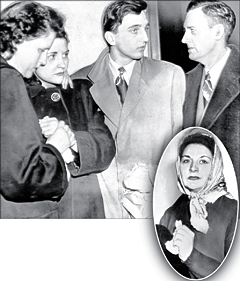 Milton Babich
Murderer · USA · 1949
March 20, 1949 — Firefighters were summoned to the Milwaukee River after a truc…
1 victim
Milton Babich
Murderer · USA · 1949
March 20, 1949 — Firefighters were summoned to the Milwaukee River after a truc…
1 victim
 Marcelina Mendoza
Murderer · USA · 1992
Marcelina Mendoza was 20 years old at the time of the Aug. 19 death of her 3-ye…
1 victim
Marcelina Mendoza
Murderer · USA · 1992
Marcelina Mendoza was 20 years old at the time of the Aug. 19 death of her 3-ye…
1 victim
- Gender
- male
- Country
- USA
- Location
- Grady County, Oklahoma, USA
- Date of birth
- March 30, 1954
- Age at first offence
- 34
- Characteristics
- parricide
- Victim profile
- Eldon Lee McGuire, 47 ( his former father-in-law )
- Method of murder
- Shooting
- Date(s) of murder
- February 19, 1988
- Years active
- 1988
- Date of arrest
- March 3, 1988
- Status
-
Executed
Executed by lethal injection in Oklahoma on March 9, 2004
Case information
- Defendant: David Jay Brown
- Victim: Eldon McGuire (also referred to as Eldon Lee McGuire)
- Other named individuals:
- Lee Ann McGuire (ex-wife; daughter of the victim)
- Connie Brown (ex-wife)
- Lillie McGuire (the victim’s mother)
- Ann McGuire (the victim’s wife)
- Laverne McGuire (the victim’s wife, described as being in a local hospital)
- Allen McGuire (the victim’s cousin)
- Jeff McGuire (the victim’s cousin)
- Lillian McGuire (referred to as the victim’s mother in the federal appellate summary)
- Bret Burns (Grady County assistant district attorney)
- Sandy Howard (Assistant Attorney General)
- Sandy Rinehart (Senior Assistant Attorney General)
- Wayne F. Alley (judge)
- Gary Peterson (attorney)
- Dr. Chai Choi (performed the autopsy)
- Jerry Clark (a man Brown met outside Oklahoma; witness)
- Lillian McGuire (victim’s mother, named in the federal summary)
- James R. Winchester, J. (District Court judge referenced in appellate summaries)
- Lumpkin, P.J. (Presiding Judge referenced in direct appeal)
- Strubhar, V.P.J. (concurring in results referenced in PCR summary)
- Brorby, Circuit Judge (referenced in habeas summary)
Timeline
- 1983 — David Jay Brown and Lee Ann McGuire had a short, stormy relationship and a marriage of about six months; they later divorced.
- 1983 (after the marriage was terminated) — Brown walked into the hair styling shop where Lee Ann worked, fired into a vacant barber chair, and was arrested and charged with several criminal counts.
- 1983 (less than a month before the homicide) — Brown called the victim’s house; the victim’s wife picked up an extension and heard Brown tell the victim: “you all's time is up,” and that “they would pay for what they had done to him.”
- 1986 — Brown showed up with a rifle at Lee Ann McGuire’s hair salon, the Clipper Ship, told people in the shop: “Don't anyone touch the phone or I'll blow you away,” and shot into an empty barber chair.
- February 20, 1988 — The victim was discovered dead by Lee Ann McGuire and the victim’s mother when he could not be contacted by telephone.
- Evening before February 20, 1988 — The victim telephoned his wife (described as a patient in a local hospital) between 7:30 and 7:45 p.m. and told her he was tired and would visit her the next morning.
- February 19, 1988 — Brown checked into an El Reno motel about 40 miles north of Chickasha, left the motel on the day of the homicide, and did not return.
- February 19, 1988 — The confrontation at the victim’s home occurred; Brown later claimed he was fired upon, then fired back.
- February 16 (year referenced in the narrative) — Brown returned to Louisville on the date described as February 16, and checked back into the El Reno motel on February 16.
- March 3, 1988 — Authorities arrested Brown in Louisville, Kentucky.
- December 3, 2001 — The U.S. Supreme Court denied Brown's final appeal.
- Jan 8, 2002 — The Oklahoma Court of Criminal Appeals set an execution date for February 5, 2002.
- February 5, 2002 — An execution date was set by the Oklahoma Court of Criminal Appeals.
- January 6, 2004 (publication date of quoted release) — Attorney General News Release referenced an execution date set for March 9, 2004.
- June 11, 2002 — A clemency hearing occurred; the Pardon and Parole Board voted to recommend clemency.
- June 18, 2002 — Gov. Frank Keating denied clemency.
- June 21, 2002 — Brown filed an emergency request for a stay of execution and a second application for post-conviction relief, and requested an evidentiary hearing claiming trial error.
- July 17, 2002 — The Oklahoma Court of Criminal Appeals issued a stay of execution.
- April 23, 2002 — The Tenth Circuit Court of Appeals denied a request to file a second and successive habeas petition.
- May 6, 2002 — The Oklahoma Court of Criminal Appeals set a second execution date for June 25, 2002.
- June 25, 2002 — An execution date was set for June 25, 2002.
- March 9, 2004 — Brown was executed by lethal injection in Oklahoma.
- 6:04 p.m. (March 9, 2004) — The lethal dose of chemicals began.
- 6:07 p.m. (March 9, 2004) — Brown was declared dead.
Background
David Jay Brown and Lee Ann McGuire were married for about six months in 1983 and then divorced. Their breakup was followed by years of family conflict in which Brown made threats against the McGuire family. Eldon McGuire, Lee Ann’s father, never approved of the relationship and did not like Brown, and Brown did not like Eldon.
Brown blamed Eldon for his legal troubles, believing Eldon wielded influence with law enforcement officers. Brown believed the criminal charges arising from an earlier incident were manufactured by Eldon. Brown absconded while on bail and fled the jurisdiction. Brown later returned to the area a little over a year after absconding.
The offence
Earlier incident involving Lee Ann’s hair salon
Brown walked into the hair styling shop where Lee Ann worked carrying a rifle and fired a weapon into a vacant barber chair during an argument. Several people were in the shop at the time. He told people in the shop not to touch the phone or he would blow them away; Lee Ann McGuire testified:
“Don't anyone touch the phone or I'll blow you away,”
Brown was arrested and charged with several criminal counts as a result of the incident, including twelve counts of kidnapping (described as sixteen criminal counts including twelve counts of kidnaping). Brown believed the charges were bogus and believed he would get a long prison term.
Murder of Eldon McGuire
Brown’s murder of his former father-in-law, Eldon McGuire, occurred in 1988. Brown claimed in trial and throughout his appeals that he shot Eldon McGuire in self-defense. Prosecutors disputed Brown’s self-defense claim, noting that McGuire was shot eight times, including two in the head at close range.
Brown admitted going to Eldon’s house. He claimed that when he went inside, Eldon attacked him, pulled a gun and fired at him, and that Brown pulled his own gun and fired back. Brown testified he fired approximately eighteen times in two or three seconds until the gun was empty.
Hostilities, threats, and preparations described in testimony
Brown made threatening statements toward Eldon and the McGuire family. When the friend of Brown asked what he could do to help, Brown asked the friend to beat up Eldon. Connie Brown testified that Brown said he would like to beat up Eldon. In conversations described by witness Jerry Clark, Brown stated that he would like to get intoxicated and kill Eldon, and that he did not care if the whole family were dead.
A friend of Brown talked with him before the homicide, and Brown blamed Eldon for his legal troubles, believing Eldon had undue influence over Lee Ann. Brown also described to Lee Ann the actions of her and her parents at the house on a particular night, indicating he had been watching the house. An obscene message was found in the woodpile at Lee Ann’s parents’ house.
Encounter and shots described
The murder discovery occurred on February 20, 1988. The victim had telephoned his wife between 7:30 and 7:45 the evening before and told her he would visit her the next morning.
Authorities found the victim’s body lying in the south end of the living room. Lee Ann and the victim’s mother arrived at his house after receiving word they could not contact him by telephone and forced entry through the front door.
Brown testified he ran out of the house and locked the door behind him. He did not seek help for Eldon after the shooting and instead ran out the door apparently locking it behind him.
Investigation
At the victim’s home, authorities found evidence including:
- A cordless telephone in the kitchen area.
- Meat and cheese in the kitchen area that was unwrapped and uneaten, appearing consistent with preparation for an evening meal.
- Heel marks on a bedroom door across the room and paint matching that on the door with the victim’s boot heel.
- Several 9 mm casings around the living room sofa and others around the room.
- Three slugs found in the open: one on the floor near a chair, one between the victim’s feet, and one on nearby clothing.
- Nine bullets in the lower portion of the wall behind the body similar to those lying in the open.
- In the northeast corner of the living room, a copper-jacketed bullet and fragment embedded in a wall that were not consistent with the others.
- An entry and exit hole in the corner of a television set consistent with the path of the embedded bullet.
- A shattered oil lamp globe near the television.
- A lever-action rifle found in the middle of the room; one shot had been fired from it. The lever action was partially pulled down but not far enough to eject the spent casing in the chamber, and four live copper-jacketed rounds were found inside the rifle.
- Blood found on the rifle and a small dent as if something had ricocheted off the rifle.
- A man’s gold ring found in the living room that had been badly damaged.
- The victim suffered severe gunshot injury to the index, middle, and ring finger of his left hand, which the medical examiner opined would have rendered him incapable of using it.
- The medical examiner found seven additional gunshot wounds to the body and two to the head.
- A wound on the left shoulder bore evidence of stippling indicating the weapon was fired at intermediate range.
- Firearms expert tests by the Oklahoma State Bureau of Investigation on a handgun taken from Brown concluded the weapon would have left stippling if it were fired from a distance of less than 30 inches.
- Entry wounds in the head showed shots fired from relatively close range: one surrounded by stippling indicating intermediate range, and the other with gunpowder residue inside the wound itself.
- The medical examiner concluded the second head wound could only come from a “hard contact wound,” meaning the barrel was pressed against the scalp when fired.
Self-defense evidence disputed by physical findings
The position of the bullets and scene evidence were described as disproving Brown’s self-defense theory. Photographs were described as showing that a hallway corner blocked by a wall heater could not be seen from the front door area, and the heater did not exhibit any signs of being fired at. The evidence described the line of fire would have been blocked by the wall heater if Brown was running toward the door while firing as he claimed.
Arrest
Authorities arrested David Jay Brown in Louisville, Kentucky, on March 3, 1988.
Trial
Charges and conviction
Brown was convicted in the District Court, Grady County, of first-degree murder and was sentenced to death. The jury found one aggravating circumstance: the probability that Brown would commit criminal acts of violence that would constitute a continuing threat to society (as referenced in the appellate summaries). The jury recommended death as punishment, and the trial court sentenced accordingly.
Brown’s testimony about the shooting
Brown testified that he went to the victim’s house to convince him to change his mind about the charges. He claimed that the victim hit him from behind, knocking him down, then kicked him, told him he would kill him, and fired at him as Brown ran for the front door. Brown then pulled a loaded 9 mm semi-automatic pistol from his back pocket and began firing blindly until the gun was empty, firing approximately eighteen times in two or three seconds.
The appellate narrative further described that Brown asserted he got no closer than two or three feet during the brief struggle, and that he intended to use the weapon if he had to.
Prosecutorial dispute of self-defense
Senior Assistant Attorney General Sandy Rinehart disputed Brown’s self-defense claim. Rinehart asserted that there was a “hard-contact wound” and that the muzzle had to be against the head, which Rinehart said defeated any self-defense claim. Dr. Chai Choi performed the autopsy and testified that the victim had been shot eight times, including once in the back of the head.
“There was a hard-contact wound,”
“The muzzle had to be against the head, which defeats any self-defense claim.”
Sentencing
The jury found the existence of one aggravating circumstance: the probability that Brown would commit criminal acts of violence constituting a continuing threat to society. The jury recommended death, and the trial court sentenced accordingly. On review in mitigation and aggravation, the sentence of death was described as being factually substantiated and appropriate in the direct appeal opinion.
Appeals
Direct appeal
In Brown v. State, 871 P.2d 56 (Okl.Cr. 1994) (Direct Appeal), the Court of Criminal Appeals affirmed. The summary of holdings included:
- The affidavit in support of application for change of venue had to set forth facts rendering a fair and impartial trial there improbable.
- Failure to grant defendant change of venue was not fundamental error.
- Evidence was sufficient to support finding premeditation.
- The defendant’s waiver of the right to be present during the sentencing phase was valid and his absence was voluntary.
- The continuing threat aggravating circumstance outweighed mitigating factors.
The court stated: “We affirm.”
Post-conviction relief (PCR)
In Brown v. State, 933 P.2d 316 (Okl.Cr. 1997) (PCR), the District Court of Grady County denied relief and the Court of Criminal Appeals affirmed. The summary of holdings included that several claims were waived, trial defense counsel was not ineffective, appellate counsel was not ineffective, discovery and denial of claims without an evidentiary hearing were proper, and the pro se motion for a crime scene reconstruction expert was not properly before the postconviction court. The summary stated “Affirmed.”
Federal habeas corpus
In Brown v. Gibson, 7 Fed.Appx. 894 (10th Cir. 2001) (Habeas), the district court denied relief and the Court of Appeals affirmed.
- Ineffective assistance of trial counsel was not shown.
- State procedural bar was not adequate as to one claim.
- Ineffective assistance of appellate counsel was not established to excuse procedural defaults.
- Argument asserting legal, not factual, innocence did not overcome procedural default.
- Prosecutor’s comment on mitigating evidence did not warrant relief.
- Brown knowingly, voluntarily and intelligently waived the right to be present at the penalty phase.
- Evidence did not require a second-degree murder instruction.
- The state appellate court’s determination regarding the continuing threat aggravator was reasonable.
The summary stated: “We affirm.”
Outcome
Execution and final statement
Brown’s execution occurred at the Oklahoma State Penitentiary in McAlester on March 9, 2004.
As lethal injection began at 6:04 p.m., Brown was declared dead at 6:07 p.m.
Before lethal injections were administered, Brown delivered a final statement criticizing appeals courts. Brown said:
"All I want to know is... I want to tell ya'll people that the state and federal courts that works on our cases, specifically on our appeals, are nothing but a bunch of morons, " Brown said in his last statement. "Specifically, the Oklahoma Court of Criminal Appeals and the US Court of Appeals for the Tenth Circuit. My records prove this. That's it. Let's go."
Earlier in the same context, Brown also said: “I want to tell y'all people that the state and federal courts that works on our cases, specifically on our appeals, are nothing but a bunch of morons, specifically the Oklahoma Court of Criminal Appeals and the 10th Circuit Court of Appeals,”
After his statement, Brown “jerked his head to the left” to see his lawyers, including Peterson, and then closed his eyes and sighed deeply after the lethal injections were administered.
This execution was described as the fourth execution date scheduled for Brown and as the third execution in Oklahoma that year.
Other details
Execution dates and stay history described
Brown’s execution history included multiple execution dates and stays:
- An execution date for February 5, 2002 was set after the Oklahoma Court of Criminal Appeals on Jan. 8, 2002.
- Brown asked attorneys be allowed to withdraw; Judge Wayne F. Alley granted the request and entered a stay of execution in the U.S. District Court for the Western District of Oklahoma.
- A request to file a second and successive habeas petition was denied April 23, 2002 by the Tenth Circuit Court of Appeals.
- Attorney General Drew Edmondson requested the Oklahoma Court of Criminal Appeals set an execution date after April 23, 2002.
- On May 6, 2002, the court set a second execution date for June 25, 2002.
- At a June 11, 2002 clemency hearing, the Pardon and Parole Board voted to recommend clemency.
- Gov. Frank Keating denied clemency June 18, 2002.
- On June 21, 2002, Brown filed an emergency request for a stay of execution and post-conviction relief and requested an evidentiary hearing claiming trial error.
- On July 17, 2002, the Oklahoma Court of Criminal Appeals issued a stay of execution.
- On March 25, 2003, a third application for post conviction relief was filed.
- On March 26, the Court of Criminal Appeals granted the request for an evidentiary hearing and remanded the case to Grady County District Court.
- The District Court found no trial error and returned the case to the Court of Criminal Appeals.
- After briefing, the Court of Criminal Appeals formally denied the request for post conviction relief and set the execution date.
Prosecutorial remarks quoted
Grady County assistant district attorney Bret Burns said:
“This is a person who definitely deserves the ultimate punishment,”
and:
“He planned and executed a cold-blooded murder,”
and:
"He's not somebody that we want living amongst us."
Assistant Attorney General Sandy Howard said:
"That defeats any claim of self defense,"
"That defeats any claim of self defense," Assistant Attorney General Sandy Howard said.
Last meal described
Brown’s last meal was described as barbecue beef with hot sauce and onion, two large orders of french fries and a vanilla malt.
Witnesses to the execution described
The execution was witnessed by two of the victim’s cousins, Allen McGuire and Jeff McGuire. The victim’s wife Ann and daughter Lee Ann were described as being on vacation and did not see Brown die. Allen McGuire said:
“The family is just really glad this is over,”
and:
“It should have been over a long time ago.”
Allen McGuire also said:
“We think he (Brown) got what he deserved,”
and:
“We'll put it behind us and go on.”
Clew in federal summary about evidence found before murder
The federal habeas summary described that at the time the victim was found, there was unwrapped meat and cheese on the kitchen table suggesting he was preparing to eat before he was murdered.
Legal citations included in case record text
The federal appellate summary and direct appeal excerpts included these citations:
- Brown v. State, 871 P.2d 56 (Okl.Cr. 1994) (Direct Appeal)
- Brown v. State, 933 P.2d 316 (Okl.Cr. 1997) (PCR)
- Brown v. Gibson, 7 Fed.Appx. 894 (10th Cir. 2001) (Habeas)
- Jackson v. Virginia, 443 U.S. 307 (1979) (discussed in the direct appeal excerpt)
Spotted an error, or have more information about this case?