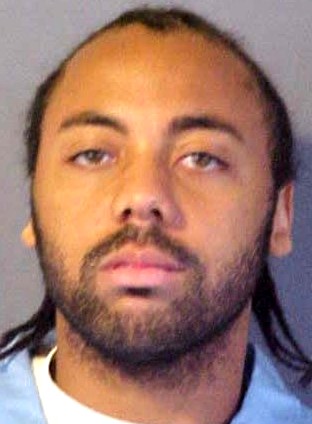
Darwin Demond Brown
Murderer Brian Kevin Rosenfeld
Murderer · USA · 1985
Brian Kevin Rosenfeld Brian Kevin Rosenfeld was sentenced to three concurrent l…
23 victims
Brian Kevin Rosenfeld
Murderer · USA · 1985
Brian Kevin Rosenfeld Brian Kevin Rosenfeld was sentenced to three concurrent l…
23 victims
 Russell Ellwood
Murderer · USA · 1991
Russell Ellwood was a former taxi driver. Authorities suspected him of killing…
20 victims
Russell Ellwood
Murderer · USA · 1991
Russell Ellwood was a former taxi driver. Authorities suspected him of killing…
20 victims
 Robert Martines Perez
Murderer · USA · 1994
Name: Robert Martines Perez · Other name used in proceedings: Robert Martinez P…
15 victims
Robert Martines Perez
Murderer · USA · 1994
Name: Robert Martines Perez · Other name used in proceedings: Robert Martinez P…
15 victims
 Billy Frank Vickers
Murderer · USA · 1993
Billy Frank Vickers Vickers was executed by lethal injection in Texas on Januar…
14 victims
Billy Frank Vickers
Murderer · USA · 1993
Billy Frank Vickers Vickers was executed by lethal injection in Texas on Januar…
14 victims
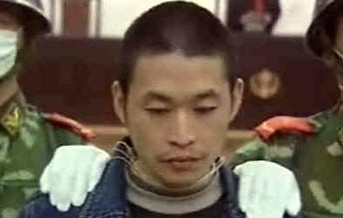 Dong Wenyu
Serial killer · China · 2006
Dong Wenyu Dong Wenyu was sentenced to death in June 2007 and was executed on N…
6 victims
Dong Wenyu
Serial killer · China · 2006
Dong Wenyu Dong Wenyu was sentenced to death in June 2007 and was executed on N…
6 victims
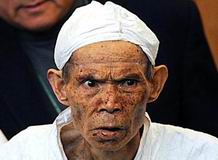 Jieming Liu
Murderer · USA · 2012
Jieming Liu was a 79-year-old man from Shrewsbury. His wife, Yuee Zhou, was 73…
1 victim
Jieming Liu
Murderer · USA · 2012
Jieming Liu was a 79-year-old man from Shrewsbury. His wife, Yuee Zhou, was 73…
1 victim
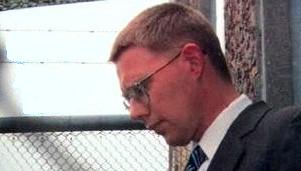 Christopher John Lewis
Murderer · New Zealand · 1996
Christopher John Lewis was found dead in his cell by Auckland Mt Eden prison st…
1 victim
Christopher John Lewis
Murderer · New Zealand · 1996
Christopher John Lewis was found dead in his cell by Auckland Mt Eden prison st…
1 victim
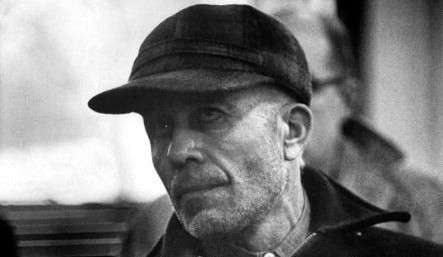 Edward Gein
Homicide · USA · 1954
Edward Gein was sentenced to life imprisonment in 1968. He was found not guilty…
2 victims
Edward Gein
Homicide · USA · 1954
Edward Gein was sentenced to life imprisonment in 1968. He was found not guilty…
2 victims
- Gender
- male
- Country
- USA
- Location
- Tulsa County, Oklahoma, USA
- Date of birth
- January 19, 1977
- Age at first offence
- 18
- Characteristics
- robbery
- Victim profile
- Richard Kevin Yost, 30 (store clerk)
- Method of murder
- Beating with a metal baseball bat
- Date(s) of murder
- February 26, 1995
- Years active
- 1995
- Date of arrest
- —
- Status
-
Executed
Executed by lethal injection in Oklahoma on January 22, 2009
Parties and names
- Darwin Demond Brown (32 at execution) was convicted for his part in the bludgeoning death of Richard Yost (30) during a robbery at a Tulsa QuikTrip convenience store.
- Richard Yost was the victim and an attendant at a Tulsa QuikTrip store.
- Billy D. Alverson (37) and Michael L. Wilson (33) were convicted of the killing and received death sentences; they were awaiting execution.
- Richard J. Harjo (30) received a no-parole life sentence.
- Brown’s father was Dunbar Brown.
- Brown’s attorney was James Hankins.
- A prior Tulsa County District Attorney was Bill LaFortune.
- The present District Attorney was Tim Harris.
- Yost’s widow was Angie Houser-Yost.
- Yost’s son mentioned in the material was Lance Houser (now 22 at the time of the execution account).
- The habeas proceedings referenced Marty Sirmons as Warden and Gary Gibson as the initial respondent.
Victim and incident
Richard Yost (30) worked the graveyard shift as an attendant at a Tulsa QuikTrip store. His body was found inside a walk-in cooler at the convenience store at 215 N. Garnett Road.
According to the descriptions of the case events, Yost was attacked with a metal baseball bat during a robbery. LaFortune described the killing as a fight in which “four men and a bat versus one defenseless man” occurred.
A store surveillance tape and audio recording indicated that Yost was moaning and conscious when beaten with the bat during a span of “two minutes,11 seconds,” and an assistant prosecutor estimated that 54 “pings” were audible on the tape, reflecting the number of times Yost was struck. The material also said Yost was “beaten to a bloody pulp” in a fight for his life.
Yost’s bound and battered body was discovered in a pool of blood, milk and beer.
Timeline
- February 26, 1995 — Richard Yost was bludgeoned to death during a robbery of a QuikTrip store at 215 N. Garnett Road in Tulsa; his body was later found inside a walk-in cooler.
- Early that winter morning — Yost’s body was found by a customer inside the walk-in cooler.
- About 6:00 a.m. — Customer Larry Wiseman discovered Yost’s body on the floor in a pool of blood, milk and beer.
- April 9, 1997 — Brown was sentenced to death for the murder conviction and sentenced to life imprisonment for the robbery conviction.
- January 7, 2009 — The Oklahoma Pardon and Parole Board denied clemency for Brown.
- January 22, 2009 — Brown was executed by lethal injection; he was pronounced dead at 6:11 p.m. after lethal drugs were injected beginning at 6:05 p.m..
Background
Brown was convicted along with three codefendants for the February 26, 1995 brutal killing of QuikTrip employee Richard K. Yost. Brown’s direct appeal and subsequent habeas proceedings addressed issues including trial procedures, evidence admission, and sentencing aggravators.
The matter included statements and accounts about Yost’s status at the time of his death, including that when he was killed he had “just received his real estate license.”
The offence
Brown participated with three other men in the events at the QuikTrip store at 215 North Garnett Road in Tulsa.
The described sequence included:
- Yost was cleaning the windows on the coolers with all of the defendants surrounding him.
- As Yost walked near a passage-way to the back room, all four defendants attacked him and dragged him to the back room.
- Billy Alverson came back out, picked up items that were knocked from shelves, and kept watch for customers.
- Alverson and Richard Harjo walked out the front door, and then re-entered the store with Harjo carrying a black aluminum baseball bat.
- The surveillance camera picked up the sounds of the bat striking Yost.
- Circumstantial evidence indicated the bat struck the handcuffs on Yost’s wrists above his head.
- As the blows were being struck, Michael Wilson walked from the back room, put on a QuikTrip jacket, got behind the counter, and tried to move the safe.
- Wilson greeted customers, sold them merchandise, and said “thank you, come again” or “have a nice day,” while continuing to try to pull the safe from underneath the counter.
- The defendants then loaded two safes into Wilson’s car using a dolly from QuikTrip.
After the beating, Yost’s body was discovered:
- One handcuff was found near Yost’s body.
- The other cuff was missing from the scene.
- Yost’s ankles were taped together with duct tape.
Investigation and arrest
The material described:
- Detectives learned that Wilson was at the store between 4:00 a.m. and 6:00 a.m.
- Wilson failed to show up for work at 3:00 p.m. on the same day.
- Officer Allen set up surveillance on Wilson’s house, and at about 4:00 p.m. he spotted Wilson get into a gray vehicle; the vehicle was stopped and all four defendants were taken into custody.
- A large number of five dollar bills was recovered from Harjo at the site of the stop.
- Later at the police station, money was recovered from all defendants except Wilson.
- Officers searched Alverson’s place of abode, discovering the drop safe, dolly, QuikTrip glass cleaner, money tubes, and the store surveillance videotape.
- A search was conducted of Wilson’s house but nothing of value was discovered.
- The next day, Wilson’s mother called Officer Makinson to her house, and detectives found evidence on the front porch including the baseball bat, a bloody QuikTrip jacket with Yost’s name on it, Wilson’s Nike jacket matching the one worn in the store video, and the other cuff of the set of handcuffs.
Trial
Charges and trial setting
Brown was charged with:
- Count one: first degree malice murder and, in the alternative, first degree felony murder.
- Count two: robbery with a dangerous weapon.
The jury trial was held in the District Court, Tulsa County, before Honorable E.R. “Ned” Turnbull, District Judge.
Findings at guilt phase
The jury found Brown guilty of first degree murder and robbery with a dangerous weapon.
Sentencing and aggravating circumstances
At the punishment stage, the jury found the existence of all three aggravating circumstances:
- The murder was especially heinous, atrocious or cruel.
- The murder was committed for the purpose of avoiding or preventing a lawful arrest or prosecution.
- There was a probability that the defendant would commit criminal acts of violence that would constitute a continuing threat to society.
The aggravators were described with statutory references: 21 O.S.1991, § 701.12(4), (5) & (7).
After the punishment stage:
- Brown was sentenced to death for the murder conviction.
- Brown was sentenced to life imprisonment for the robbery conviction.
Dual jury procedure and other procedural issues on appeal
In the direct appeal discussion, the material included numerous issues addressed by the Oklahoma Court of Criminal Appeals, including:
- Dual jury issues, collateral estoppel, and whether dual juries were authorized and constitutional.
- Claims regarding voir dire excusals of potential jurors opposed to the death penalty.
- Claims under Batson v. Kentucky for alleged race-based excusals of jurors Busby and Sims, with the state offering race-neutral reasons including opposition to the death penalty and inconsistent answers for Busby, and that Sims had been sleeping during voir dire.
- A claim involving Bruton v. United States arising from statements made by a juror’s acquaintance regarding what Wilson said to his ex-girlfriend, and the appellate court finding no information divulged that implicated Brown.
Prosecutorial misconduct and evidentiary rulings
The direct appeal discussion included analysis of alleged prosecutorial misconduct tied to:
- Presentation of gruesome photographs in the first stage.
- Admission of a post-autopsy photograph of the interior of the victim’s skull (State’s exhibit 115) and the court’s determination that admitting this photograph was error, but that the error was harmless.
- Claims of cumulative evidence, including diagrams of Yost’s injuries and a crime scene video.
- A cumulative error argument, with the court stating cumulative effect did not require reversal after considering errors.
Sentencing
Brown’s sentencing included:
- Death sentence for murder.
- Life imprisonment for robbery with a dangerous weapon.
The clemency denial and execution procedures were described in the material. Lethal drugs were injected beginning at 6:05 p.m., and Brown was pronounced dead at 6:11 p.m.
Brown received his last meal described as: barbecued ribs, chopped beef, baked beans, potato chips, coconut doughnuts and chocolate milk. Another account listed hot links and plain potato chips among the requested items.
Appeals
Oklahoma direct appeal (state law)
The material included direct appeal holdings described as:
- Conviction for robbery with a dangerous weapon was reversed and remanded with instructions to dismiss.
- Judgment and sentence for first-degree murder was affirmed.
The direct appeal decision included discussion of:
- Voir dire excusals for cause.
- Batson claims.
- Prosecutorial misconduct and evidentiary issues, including the harmless error determination.
- Mandatory sentence review under 21 O.S.1991, § 701.13(C), including whether the death sentence was influenced by passion, prejudice, or any arbitrary factor.
- The mitigation evidence included “positive family relationships,” a “cooperative and sensitive attitude towards family members,” his “young age (eighteen at the time of the crime),” and a “personality of being a follower who was adrift at the time of the crime.”
- The appellate court concluded the death sentence was not imposed because of passion, prejudice, or arbitrary factor, and declined to disturb the sentence.
Post-conviction and habeas corpus
Brown filed a petition for writ of habeas corpus challenging his conviction and sentencing in federal court under 28 U.S.C. § 2254. The federal district court denied the petition.
The material described that the petition’s holdings included that dual jury process was not constitutional error and that multiple other claims failed, including:
- Victim impact evidence did not render trial fundamentally unfair.
- Heinous, atrocious or cruel aggravator evidence was sufficient.
- Prosecutorial comments did not render trial fundamentally unfair.
- Admission of a photograph of the interior of the victim’s skull during second stage did not render trial fundamentally unfair.
- Victim impact statements by the victim’s wife and mother did not render trial fundamentally unfair.
- A claim about insufficient evidence to prove murder committed for purpose of avoiding or preventing lawful arrest was procedurally barred.
The federal court also denied Brown’s request for an evidentiary hearing.
Execution
Brown’s execution occurred at the Oklahoma State Penitentiary. The material described:
- He was executed by lethal injection and was pronounced dead at 6:11 p.m.
- Lethal drugs were injected beginning at 6:05 p.m.
- Brown apologized to the family of his victim, including:
- “I apologize for anybody I hurt,”
- “I’m sorry to everybody. … I’d like to thank all of my family for the support that they’ve given me.”
- Brown mouthed “I love you” to Dunbar Brown and two uncles through the glass of the witness room.
- Brown’s father, Dunbar Brown, responded: “I love you Darwin.”
- The material stated that Brown spoke words of remorse during the execution.
- Inmates banged on their cell doors and building pipes shortly before the execution.
The material also included clemency and last meal details:
- The Oklahoma Pardon and Parole Board denied clemency on Jan. 7.
- Brown’s attorney James Hankins said Brown had exhausted all appeals.
Other details
Co-defendants’ sentencing
- Michael L. Wilson (33) and Billy D. Alverson (37) received death sentences and were awaiting execution.
- **Richard J.
- The material described that Wilson was a co-worker of Yost who took a post behind the counter to wait on customers while Yost lay dying in the cooler.
Victim family statements and plans
- Yost’s widow Angie Houser-Yost said: “This is the final step to closing everything.”
- She said: “They have caused a lot of pain for a lot of people, not only for my family and his family but for the people who walked in and found Richard, their visions, what they will live with now.”
- She said: “What they did, they have caused a lot of pain to a lot of people.”
- She said: “I just wish his parents the best of luck.”
- She witnessed the execution with other relatives including Lance Houser.
District attorney commentary
Former Tulsa County District Attorney Bill LaFortune said:
- “All murders are terrible crimes.”
- “But I think this crime and this murder was as barbaric a crime as we’ve ever seen in Tulsa County.”
- “The strongest piece of evidence — the surveillance tape — has to be one of the most compelling pieces of evidence ever presented to a jury anywhere, in my opinion.”
- He also said Yost was “beaten to a bloody pulp” in a fight for his life that pitted “four men and a bat versus one defenseless man.”
- He said: “I think this crime and this murder was as barbaric a crime as we'd ever seen in Tulsa County.”
Present District Attorney Tim Harris witnessed the execution with LaFortune.
Spotted an error, or have more information about this case?