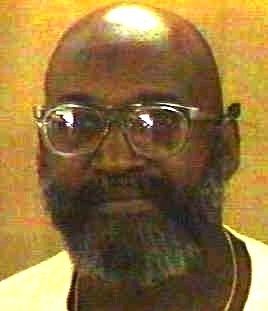
David Junior Brown
Murderer Ervil LeBaron
Murderer · USA · 1972
Ervil Morrell LeBaron (1925 to August 16, 1981) was the leader of a polygamous…
35 victims
Ervil LeBaron
Murderer · USA · 1972
Ervil Morrell LeBaron (1925 to August 16, 1981) was the leader of a polygamous…
35 victims
 Brian Kevin Rosenfeld
Murderer · USA · 1985
Brian Kevin Rosenfeld Brian Kevin Rosenfeld was sentenced to three concurrent l…
23 victims
Brian Kevin Rosenfeld
Murderer · USA · 1985
Brian Kevin Rosenfeld Brian Kevin Rosenfeld was sentenced to three concurrent l…
23 victims
 Marvin Gray
Murderer · USA · 1975
Marvin Gray was convicted killer who claimed responsibility for 23 slayings and…
23 victims
Marvin Gray
Murderer · USA · 1975
Marvin Gray was convicted killer who claimed responsibility for 23 slayings and…
23 victims
 Yahweh ben Yahweh
Murderer · USA · 1980
Yahweh ben Yahweh was born and legally named Hulon Mitchell Jr. (October 27, 19…
23 victims
Yahweh ben Yahweh
Murderer · USA · 1980
Yahweh ben Yahweh was born and legally named Hulon Mitchell Jr. (October 27, 19…
23 victims
 Mark Howard McClain
Murderer · USA · 1994
Mark Howard McClain was a white male. He was known by the aliases “A.K.A. MALAC…
1 victim
Mark Howard McClain
Murderer · USA · 1994
Mark Howard McClain was a white male. He was known by the aliases “A.K.A. MALAC…
1 victim
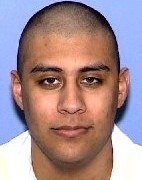 Moises Sandoval Mendoza
Murderer · USA · 2004
Moises Sandoval Mendoza was convicted of capital murder for the death of Rachel…
1 victim
Moises Sandoval Mendoza
Murderer · USA · 2004
Moises Sandoval Mendoza was convicted of capital murder for the death of Rachel…
1 victim
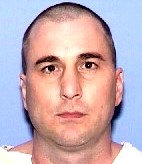 Stephen Barbee
Murderer · USA · 2005
Stephen Dale Barbee received a death sentence for the capital murder of Lisa Un…
2 victims
Stephen Barbee
Murderer · USA · 2005
Stephen Dale Barbee received a death sentence for the capital murder of Lisa Un…
2 victims
 Darrell Keith Rich
Serial killer · USA · 1978
Darrell Keith Rich Darrell Keith Rich was executed by lethal injection in Calif…
4 victims
Darrell Keith Rich
Serial killer · USA · 1978
Darrell Keith Rich Darrell Keith Rich was executed by lethal injection in Calif…
4 victims
- Gender
- male
- Country
- USA
- Location
- Moore County, North Carolina, USA
- Date of birth
- J une 12, 1948
- Age at first offence
- 32
- Characteristics
- mutilation, rape
- Victim profile
- Shelly Diane Chalflinch, 26, and her daughter, Christine, 9
- Method of murder
- St abbing with knife more than 100 times
- Date(s) of murder
- August 24, 1980
- Years active
- 1980
- Date of arrest
- —
- Status
-
Executed
Executed by lethal injection in North Carolina on November 19, 1999
Case record: David Junior Brown (also known as Dawud Muhammad / Dawud Abdullah Muhammad)
Background
David Junior Brown changed his name in prison after his conversion to Islam. During the case, his name also appeared as Dawud Muhammad and as Dawud Abdullah Muhammed.
Brown was 51 years old at the time of execution.
Shelly Diane Chalflinch was 26. Her daughter, Christina Chalflinch, was 9.
Shelly Diane Chalflinch and Christina Chalflinch lived in the same apartment complex as Brown in the Married Quarters Apartments behind the Pinehurst Hotel in Pinehurst, North Carolina. Brown worked as a chef in a hotel in Pinehurst, North Carolina.
The offence
Brown was convicted of killing Shelly Diane Chalflinch and her 9-year-old daughter, Christina.
At trial, the evidence showed that both Diane and Christina were repeatedly stabbed to death. Diane Chalflinch had approximately 100 stab and cut wounds. Christina’s body also bore multiple stab wounds, including several in the head, and a brown electrical cord was wrapped around her neck. Her throat had been cut.
The bodies were found after Diane Chalflinch did not show up for work for two straight days and co-workers called police.
Investigators found the victims stabbed hundreds of times in their apartment in the old employees’ quarters of the Pinehurst Hotel.
Investigation
Investigators found forensic evidence connecting Brown to the killings, including:
- Brown’s bloody palm print on a wall in Diane Chalflinch’s bedroom.
- A trail of bloody foot prints leading from the Chalflinch’s apartment to Brown’s apartment.
- Brown’s silver signet ring found underneath Diane Chalflinch’s liver.
- A distinctive knife described as an R.H. Forschner culinary knife similar to those Muhammad used in the hotel kitchen.
- Blood patterns outside the Chalflinches’ front door, on the steps leading down from their apartment, and on the concrete pad at the foot of the steps.
- A latent palm print on Diane Chalflinch’s bedroom wall identified as Brown’s left palm print.
- Visible bloodstains at the door to Brown’s apartment on the concrete stoop.
- Luminol and phenolphthalein tests showing prints of bare feet in the kitchen and blood presence on Brown’s doorknob and bare footprints across his kitchen floor.
- Blood on Brown’s toolbox, which contained several knives, and on a pillow at the head of his bed.
- In the Chalflinches’ apartment, a bloody knife blade broken at both ends with the inscription “R. H. Forschner,” and Brown’s toolbox containing a collection of knives bearing the inscription “R. H. Forschner.”
- An autopsy finding of the silver ring under Diane Chalflinch’s liver.
A Pinehurst police chief, James Wise, was called to the scene. Wise described it as “the most horrible crime scene I have ever seen in my 40 years of law enforcement.”
Wise traced a trail of bloody bare foot prints from Chalflinch’s apartment to Brown’s ground floor apartment at the opposite end of the building and saw blood on the door frame of Brown’s apartment. Wise said large amounts of blood had been cleaned up in Brown’s apartment, although investigators never proved it was the victim’s blood.
A neighbor said he saw Brown wearing the ring hours before police said the killings occurred.
Arrest
No arrest details were provided.
Trial
Brown was tried and convicted by a Union County jury.
A jury of the North Carolina Superior Court for Union County found Brown guilty of the murders of Shelly Diane Chalflinch and her 9-year-old daughter, Christina.
The same jury returned sentences of death for both murders after the penalty phase.
A clerked summary of defenses and arguments in proceedings described that Brown claimed he may have run into Chalflinch, a secretary at the Pinehurst Resort and Country Club, in the community laundry room shortly before she was murdered. Brown said: “I could have in passing, I'm not sure,” and “That question was put to me by Pinehurst police.”
Brown denied responsibility for the stabbing deaths and maintained that he was innocent of the stabbing deaths and mutilations.
Brown’s defense lawyers also argued that someone else killed Diane and Christina and pointed to evidence that someone else was in the apartment. They argued there was no concrete proof that Brown was in the vicinity at the time of the murders. They also presented an argument that Diane Chalflinch was seen alive at a time when police said she was dead.
During appeals and related discussions, it was also asserted that Brown was too intoxicated to be capable of the killings.
Sentencing
A Union County jury sentenced Brown to die in December 1980.
Brown’s execution order was carried out in November 1999.
Appeals
The U.S. Supreme Court had considered Brown’s case three times.
The case was also reviewed by lower federal courts and a state court, and a request for a stay of execution and a new hearing was denied by the 4th U.S. Circuit Court of Appeals.
A governor-clemency denial narrative stated that more than 80 judges and justices had reviewed the case, including the U.S. Supreme Court on several occasions, and that courts had “consistently” upheld the verdict.
United States Court of Appeals, Fourth Circuit (Brown v. Dixon)
In the United States Court of Appeals, Fourth Circuit matter, the appeals court described Brown as a prisoner of the State of North Carolina under two sentences of death for first-degree murder. The court described the habeas petition as raising thirty challenges, with the district court denying relief from the conviction on seventeen grounds, granting relief from sentence on three claims, and leaving ten penalty-phase arguments unaddressed.
The Fourth Circuit held:
- It reversed the portion of the order granting relief from sentence.
- It affirmed the portion denying relief from the conviction.
- It remanded for the district court to consider ten unaddressed arguments bearing on the sentence.
The decision concluded: “AFFIRMED IN PART, REVERSED IN PART, AND REMANDED.”
Another Fourth Circuit habeas appeal (Brown v. French)
In another Fourth Circuit matter, the court affirmed the district court’s denial of a petition for a writ of habeas corpus, rejecting three issues:
- Brady v. Maryland due process claim based on allegedly withheld exculpatory information.
- Cumulative prosecutorial misconduct claim for ineffective assistance.
- Eighth and Fourteenth Amendment claim concerning admission, during the penalty phase, of Brown’s purported confession to his cellmate when the State previously had not introduced this testimony at the guilt phase.
Outcome
Brown was executed by lethal injection in North Carolina on November 19, 1999.
Witness room procedures and medical sequence were described as follows: the scheduled time was 2 a.m. Brown was injected at 2:01 a.m. with thiopental sodium to put him to sleep, followed by Pavulon. It was 2:07 when breathing became labored and convulsions began. The narrative described the witnesses observing subsequent changes through 2:09, 2:12, and 2:16, including a heart monitor flat line requirement for five minutes. Around 2:16, Brown’s heart stopped and his face turned blue. Brown was pronounced dead at 2:21 a.m. It was 2:25 when the warden announced the orders for the execution had been carried out.
Warden Robey Lee pronounced Brown dead at 2:21 a.m.
Brown’s body was transported to Wake Medical Center.
Final statement
In the moments before execution, Brown made a final statement to Lee. The final statement was: “O Allah, OAllah, condemn and lay curse upon the killers of Dawud Abdullah Muhammed. Cursed be the people who did injustice to me and cursed be the people who heard this and were pleased with it.”
Brown also made a further statement that included: “Every true believer is a a Hussain, Everywhere we go is Karbala, Everyday we live is Ash-Shura.”
Clemency and related proceedings
In a clemency hearing, prosecutors with the state Attorney General’s Office showed the governor pieces of evidence including photos of the crime scene and the victims who had been mutilated, a section of wall with blood on it, a partial bloody palm print later identified as Brown’s, and a ring belonging to Brown discovered inside Diane Chalflinch’s body.
Brown’s lawyers argued that the print could have been placed on the wall before the blood.
The governor, Jim Hunt, denied clemency. The governor stated: “I have given careful and deliberate consideration to all of the facts in the case of David Junior Brown,” and “A jury convicted Mr. Brown of these brutal crimes on the basis of the evidence. As the North Carolina Supreme Court wrote, the 'evidence of [Brown's] guilt was overwhelming. A ring identified as one previously worn by [Brown] was found in the body of Ms. Chalflinch. A bloody palm print lifted from the bedroom wall of the apartment was unquestionably identified as being that of [Brown]. A bloody and broken knife blade similar to ones owned by [Brown] and used by him in his work was found at the crime scene. In addition to the blood at the crime scene, blood was located at the entrance of [Brown's] apartment and throughout the apartment.'”
Hunt continued: “I would also point out in regard to issues concerning Brown's guilt and regarding the prosecution's conduct that this case has been reviewed by more than 80 judges and justices representing every state and federal court with jurisdiction, including the U.S. Supreme Court on several occasions. In almost two decades of appeals and judicial review, the courts consistently have upheld the verdict in this case. I, too, have thoroughly reviewed this case, and I find no reason to grant clemency.”
Brown’s execution was scheduled for November 19.
People and roles mentioned
- David Junior Brown (also known as Dawud Muhammad / Dawud Abdullah Muhammed).
- Shelly Diane Chalflinch, 26 (victim).
- Christine Chalflinch, 9 (victim).
- James Wise, Pinehurst police chief.
- Theodis Black, state Correction Secretary.
- Robey Lee, Warden.
- R.C. Lees, referenced in the execution-chamber narrative as awaiting order to proceed.
- Toswayia Mosley, 24 (Brown’s daughter), of Fayetteville.
- Herbert Mosley, Toswayia Mosley’s husband.
- Larry Frye, brother of Shelly Chalflinch, of Norfolk, Va.
- Wes Frye, father of Diane and grandparents of Christina; also described as still working at the hotel.
- Swannie Frye, mother of Diane and grandparents of Christina.
- Johnny Frye.
- Jimmy Chalflinch.
- Bruce Cunningham of Southern Pines.
- Henderson Hill of Charlotte.
- Joel Morris, former State Bureau of Investigation agent.
- Carroll Lowder, former prosecutor.
- Chris Fitzsimon, death penalty opponent and executive director of the Common Sense Foundation.
- Larry Shaw and Frank Ballance (state senators) were described as meeting with the governor regarding the case.
- Gov. Jim Hunt (denied clemency).
- Chris Fitzsimon (quoted on innocence as a question).
- Henderson Hill of Charlotte (quoted on being close to execution where a jury had not heard evidence of innocence).
- Wes Frye (quoted about infatuation and fairness).
- Larry Frye (quoted about evidence and premeditation).
Other details
Description of crime timeline as alleged in proceedings
Prosecutors alleged that the murder occurred on Monday 25 August 1980 sometime between 3 a.m. and 6 a.m., based on being observed in a hotel lobby and recorded at Brown’s place of work. Defense claims disputed this timeline and presented alibi evidence at other times.
Victims’ employment
Shelly Diane Chalflinch was described as a secretary at the Pinehurst Resort and Country Club and as a co-worker of Brown’s victims, living in the same apartment complex behind the hotel.
Crime scene location details
The murders occurred in the Marriage Quarters (apartments) behind the Pinehurst Hotel in Pinehurst, North Carolina. Another description placed the murders in the old employees’ quarters of the Pinehurst Hotel. The building where the murders occurred was later described as an apartment complex.
Procedure and execution-day observers
Family members of the victims, Brown’s daughter and her husband, Brown’s two lawyers, and five reporters were described as watching from the witness room area.
No proven detail about blood cleanup
Wise said large amounts of blood had been cleaned up in Brown’s apartment, but investigators never proved it was the victim’s blood.
Disputed claims about evidence
In the clemency narrative, Brown’s lawyers argued that the partial bloody palm print could have been placed before the blood.
In discussions of trial and appeals, defense also argued that evidence suggested another person killed the victims, and that there was no concrete proof Brown was near at the time, including claims about Diane being seen alive at a time police said she was dead.
Spotted an error, or have more information about this case?