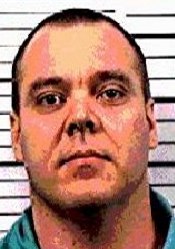
Frank Duane Welch
Murderer Brian Kevin Rosenfeld
Murderer · USA · 1985
Brian Kevin Rosenfeld Brian Kevin Rosenfeld was sentenced to three concurrent l…
23 victims
Brian Kevin Rosenfeld
Murderer · USA · 1985
Brian Kevin Rosenfeld Brian Kevin Rosenfeld was sentenced to three concurrent l…
23 victims
 Yahweh ben Yahweh
Murderer · USA · 1980
Yahweh ben Yahweh was born and legally named Hulon Mitchell Jr. (October 27, 19…
23 victims
Yahweh ben Yahweh
Murderer · USA · 1980
Yahweh ben Yahweh was born and legally named Hulon Mitchell Jr. (October 27, 19…
23 victims
 Russell Ellwood
Murderer · USA · 1991
Russell Ellwood was a former taxi driver. Authorities suspected him of killing…
20 victims
Russell Ellwood
Murderer · USA · 1991
Russell Ellwood was a former taxi driver. Authorities suspected him of killing…
20 victims
 Joyce Cohen
Murderer · USA · 1986
Joyce Cohen was indicted for the first degree murder of her husband, Stanley Al…
1 victim
Joyce Cohen
Murderer · USA · 1986
Joyce Cohen was indicted for the first degree murder of her husband, Stanley Al…
1 victim
 Flor Contemplacion
Murderer · Singapore · 1991
Flor R. Contemplacion (January 1953 - March 17, 1995) was a Filipina domestic w…
2 victims
Flor Contemplacion
Murderer · Singapore · 1991
Flor R. Contemplacion (January 1953 - March 17, 1995) was a Filipina domestic w…
2 victims
 Gerald Patrick Lewis
Serial killer · USA · 1987
Gerald Patrick Lewis was sentenced to death in Alabama and Georgia. He died in…
6 victims
Gerald Patrick Lewis
Serial killer · USA · 1987
Gerald Patrick Lewis was sentenced to death in Alabama and Georgia. He died in…
6 victims
 Roger Lamont Wheeler
Murderer · USA · 1997
Roger Lamont Wheeler was the offender. · Nigel Malone was a male victim. · Nair…
2 victims
Roger Lamont Wheeler
Murderer · USA · 1997
Roger Lamont Wheeler was the offender. · Nigel Malone was a male victim. · Nair…
2 victims
 David Morris
Mass murderer · United Kingdom · 1999
David Morris, a former scrap metal dealer and builder’s labourer from Craig Cef…
4 victims
David Morris
Mass murderer · United Kingdom · 1999
David Morris, a former scrap metal dealer and builder’s labourer from Craig Cef…
4 victims
- Gender
- male
- Country
- USA
- Location
- Cleveland County, Oklahoma, USA
- Date of birth
- J une 26, 1961
- Age at first offence
- 26
- Characteristics
- rape
- Victim profile
- Jo Talley Cooper, 28 (four months pregnant) / Debra Ann Stevens
- Method of murder
- Strangulation
- Date(s) of murder
- February 25 /May 6, 1987
- Years active
- 1987
- Date of arrest
- Ten years after
- Status
-
Executed
Executed by lethal injection in Oklahoma on August 21, 2007
Case information
Name: Frank Duane Welch
The offence
On February 25, 1987, Tracy Cooper arrived at his Norman home around 1:00 p.m. and found his wife, Jo Talley Cooper, lying dead in their living room. Cooper was 28 and was nude. Leather straps formed a ligature around Cooper’s neck that also went down her back binding her hands. A piece of duct tape covered her mouth. One of her seven-month-old child’s toys was inserted in her vaginal area. The Coopers’ seven-month-old child was unharmed and was in his crib in his room.
The physical and circumstantial evidence at trial supported the State’s theory that Welch secured entry into the Coopers’ home by posing as a Norman Cablevision employee. There were no signs of forced entry, and the Coopers’ dogs were found secured in the garage, where Cooper kept them when repairpersons were working who needed access to the backyard.
After gaining secure entry, Welch bound Cooper with leather straps and tightened the straps around her neck, causing her death by ligature strangulation. Welch then raped Cooper and shoved a toy pylon into her vagina before leaving.
The medical examiner testified that Cooper’s anal swab was positive for sperm and that she had perianal peri-postmortem tears indicating the tears were sustained immediately after or during death. The medical examiner also testified that Cooper had sustained a peri-postmortem vaginal tear consistent with trauma that could be caused by insertion of a plastic toy like the one found in her vagina. The medical examiner noted Cooper was approximately twelve weeks pregnant.
The case remained unsolved for approximately ten years until Welch’s DNA was matched to a similar crime scene in the ten-year-old unsolved Debra Stevens homicide case in Grady County.
Welch admitted he killed both Cooper and Debra Stevens. He claimed he met Cooper during a service call when he was working for Norman Cablevision. He said they started having an affair shortly thereafter and that he had sex with her on three different occasions. On the day of her death, Welch testified Cooper expected him and asked him to have anal sex, which he said he complied with. Welch testified he asked if she would be willing to try sexual asphyxiation, which he said she consented to. Welch testified that after placing leather straps around her neck and hands, he tightened the strap and began having vaginal sex from behind. He said he did not stop immediately when Cooper collapsed because he did not realize she was in distress, and when he rolled her over she was not breathing and had no heartbeat. He said he panicked because he was a convicted felon with pending charges and decided to make it look like Cooper was attacked. He described placing more strap around her neck, duct taping her mouth, wiping with a kitchen towel, inserting a plastic toy into Cooper’s vagina, and leaving the Cooper home.
Welch told the jury he had pled guilty to prior offenses because he was guilty but would not plead guilty to the Cooper homicide because he did not intend to kill her.
Welch also testified he killed Debra Stevens, with whom he was also having an affair. He said he intentionally killed Stevens after an argument where Stevens threatened to tell authorities about the Cooper homicide unless Welch gave her ten thousand dollars.
Victim information
- Jo Talley Cooper (victim): 28; survived spouse Tracy Cooper; three months’ pregnancy described as approximately twelve weeks pregnant at death; seven-month-old child present and unharmed in crib.
- Debra Stevens (victim): woman killed in Grady County; the case proceeded as evidence in Welch’s trial.
Investigation
The case remained unsolved for approximately ten years until Welch’s DNA was matched to a similar unsolved murder.
A Norman police detective, Steve Lucas, obtained a sample of Welch’s blood and had DNA testing performed. Welch’s DNA matched DNA from sperm found on a towel at the Cooper home, and charges were filed.
Lucas testified he was assigned as the primary investigator for the Cooper murder in November 1989. In October 1996, Lucas testified that the investigative team received a telephone call from Ed Briggs, an agent with the Oklahoma State Bureau of Investigation (OSBI), indicating Welch had been identified as a suspect in the Stevens murder and suggesting they look at Welch for the Cooper murder.
Other crimes evidence involving Debra Stevens
Approximately one month prior to trial, the prosecution filed a notice stating it intended to introduce evidence that on or about May 6, 1987, in Grady County, Oklahoma, Welch forcibly raped and killed by means of strangulation a woman named Debra Anne Stevens.
The prosecution introduced testimony and exhibits describing the Stevens murder. Stacie Stromberg, daughter of Debra Stevens, testified her mother was laying face up on her bed with a rope around her neck. Stromberg testified she found the family dog locked in her sister’s room.
Robert Lee, an OSBI agent who assisted in the investigation of the Stevens murder, testified Stevens’ naked body was found laying face up with a small rope tied tightly around her neck; Stevens’ hands were bound tightly behind her with the same small gauge rope found around her neck; and white tissue or toilet paper was stuffed in her mouth.
Larry Balding, deputy medical examiner who performed the autopsies, testified Stevens died as a result of ligature strangulation and sperm was found in vaginal swabs taken from her body. Mary Long, OSBI criminalist, testified she performed DNA testing on sperm samples taken from Stevens’ body and that samples matched DNA found in a blood sample from Welch.
At the conclusion of the first stage evidence, the jury found Welch guilty of first degree malice aforethought murder. At the conclusion of the second-stage evidence, the jury found the existence of two aggravating factors alleged in the bill of particulars and recommended a sentence of death.
Trial
The case proceeded to trial on March 23, 1998.
Welch’s appeal decision describes the trial court formally sentencing him on April 3, 1998 in accordance with the jury’s recommendation.
Evidence and trial proceedings described on appeal
Welch argued the admission of evidence of the Stevens murder did not fall within exceptions for other crimes evidence and was improper propensity evidence. He claimed the State’s Burks notice was defective because it failed to specify under which exception the evidence was sought, that evidence was unnecessary and irrelevant, that there was no visible connection, that the limiting instruction was defective, and other arguments.
The Court of Criminal Appeals held the failure to specify the § 2404(B) exception in the State’s notice and the trial court’s instruction did not amount to plain error and found the Stevens homicide evidence admissible because its similarities created a visible connection between the crimes and were probative of identity and intent/absence of mistake. The appellate decision listed similarities including: no signs of forced entry; each victim’s house adjacent to a large field; family dogs locked inside rooms contrary to where normally kept; both murders occurred one day after Welch appeared in Cleveland County District Court; both victims were white females who were raped and strangled in their own homes during daytime hours; drawers had been opened suggesting a robbery although nothing was missing; both women were gagged; both victims found nude, spread eagle, lying on their backs; and both had ligatures around their necks similar with a loop forming a knot and cord/strap running through it.
Welch also challenged opinion testimony from Detective Steve Lucas and OSBI Agent Robert Lee. The appellate decision addressed issues including whether Lucas’ testimony about how the dogs were placed was speculative, whether Lucas’ statements about the murders occurring the day after Welch appeared in court were improper, whether Lucas’ description of bindings and use of certain terminology were improper, and whether Lucas improperly invaded the province of the jury when he testified Cooper’s death was not self-inflicted or autoerotic behavior.
The Court of Criminal Appeals also addressed hearsay testimony via Katherine Roberts. Roberts testified she received a telephone call from her friend, Talley Cooper, several weeks before her death, stating a man came to her house to look at the cable and followed her closely and seemed more interested in following and talking than in looking at the cable, and that she was scared and got the “creeps.” The appellate decision described admitting Cooper’s statement about being scared under a state of mind hearsay exception, while finding the remainder should have been excluded but concluded the error was harmless beyond a reasonable doubt.
The appellate decision also discussed admission of photographs and diagrams, including photographs of Cooper and Stevens, a joint autopsy diagram, a diagram of the Cooper residence, and DNA statistical evidence.
Welch argued the trial judge should have recused because the judge’s son was the primary case agent and a key prosecution witness. The appellate decision stated the jurors were not apprised of the relationship and described waiver and the lack of showing prejudice.
Direct appeal legal outcome
The Court of Criminal Appeals affirmed. It stated that Welch was tried by jury and convicted of Murder in the first degree and sentenced to death, and it affirmed the judgment and sentence. The case is cited as Welch v. State, 2 P.3d 356 (Okla.Crim. 2000).
Sentencing
The jury found two aggravating factors were present and recommended a death sentence. The trial court sentenced Welch on April 3, 1998 in accordance with the jury’s recommendation.
The Court of Criminal Appeals in the direct appeal described mandatory sentence review under 21 O.S.1991, § 701.13(C) and concluded: the aggravating circumstances outweighed the mitigating evidence; the sentence of death was factually substantiated and appropriate; and no error warranted reversal or modification.
Appeals
Direct appeal
Welch v. State, 2 P.3d 356 (Okla.Crim. 2000). The Court of Criminal Appeals affirmed the conviction and death sentence.
United States Supreme Court
The United States Supreme Court denied Welch’s final appeal earlier on the execution date.
Outcome
Welch was executed in Oklahoma by lethal injection on August 21, 2007.
He was declared dead at 6:21 p.m. after receiving a lethal mixture of drugs at the Oklahoma State Penitentiary.
Last statements and apologies
While strapped to a gurney in the death chamber, Welch apologized for his crimes and said:
“There is nothing that can change the horrible thing I done,” Welch said. “There is nothing that can change that. I take full responsibility for what I done. I am truly, truly sorry for all the hurt and pain I have caused you.”
In one account he said:
“For the Cooper and Stevens families, there's nothing that can change the horrible thing I've done,” Welch said while strapped to a gurney. I'm truly, truly sorry for all the hurt and pain I've caused ya'll. I take full responsibility for what I've done. There's no excuse for it. There never was.”
Last meal
Welch’s last meal was a large super supreme pizza and a two-liter bottle of Coca-Cola, according to a statement from the Oklahoma Department of Corrections.
Clemency and witnesses
The article accounts stated that no appeals were pending and that the Oklahoma Pardon and Parole Board denied clemency on Aug. 1. Nearly two dozen members of Cooper’s and Stevens’ families witnessed the execution.
Cooper’s son, Travis Cooper, wrote in a letter to the Oklahoma Pardon and Parole Board urging denial of clemency and describing his anger, pain, and loneliness. The letter included the following quotations:
“It would be different if my mother would have died of natural causes,” he wrote. “It would be different if it was God's will, but the truth is that an evil man named Frank Welch took her life. "And the unspeakable things he did to her, my mother, is what fills me with anger, the pain, and the loneliness that I feel to this day.”
Cooper’s younger brother, Jeb Anderson, made a statement after the execution:
“My sister Talley was a beautiful person and will always be remembered for her friendliness, her laugh and her love and passion for life,” Cooper's brother, Jeb Anderson, of Franklin, Tenn., said after the execution. “Now with the finality of the long legal process, it is our hope that the memory of her horrible death will diminish.”
Travis Cooper also said:
“None of this will ever bring my mom back,” Travis Cooper said after Tuesday's execution. “I miss my mom. We just want to remember all the good things about my mother.”
Medical incident during execution
As the drugs flowed into Welch’s arm, one of his brothers, who was in an adjacent viewing room, began having breathing problems and collapsed. Prison medical personnel attended to him, but he refused to be taken to a hospital in an ambulance.
Other details
- Welch was serving time in prison for a kidnapping charge in 1997 when he was linked by DNA to the killings of Cooper and Stevens.
- The appellate record notes Welch had retained possession of his Norman Cablevision uniform even though he was fired from employment prior to February 25, 1987.
- The record included discussion of victim impact evidence in capital sentencing and related rulings on objections.
- Welch v. Sirmons, 451 F.3d 675 (10th Cir. 2006) described federal habeas proceedings and included holdings that affirmed denial of habeas relief.
Spotted an error, or have more information about this case?