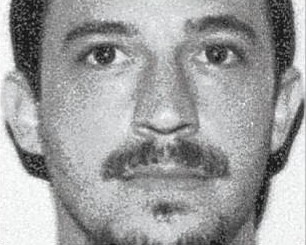
William Clifford Bryson
Murderer Brian Kevin Rosenfeld
Murderer · USA · 1985
Brian Kevin Rosenfeld Brian Kevin Rosenfeld was sentenced to three concurrent l…
23 victims
Brian Kevin Rosenfeld
Murderer · USA · 1985
Brian Kevin Rosenfeld Brian Kevin Rosenfeld was sentenced to three concurrent l…
23 victims
 Yahweh ben Yahweh
Murderer · USA · 1980
Yahweh ben Yahweh was born and legally named Hulon Mitchell Jr. (October 27, 19…
23 victims
Yahweh ben Yahweh
Murderer · USA · 1980
Yahweh ben Yahweh was born and legally named Hulon Mitchell Jr. (October 27, 19…
23 victims
 Russell Ellwood
Murderer · USA · 1991
Russell Ellwood was a former taxi driver. Authorities suspected him of killing…
20 victims
Russell Ellwood
Murderer · USA · 1991
Russell Ellwood was a former taxi driver. Authorities suspected him of killing…
20 victims
 Robert Martines Perez
Murderer · USA · 1994
Name: Robert Martines Perez · Other name used in proceedings: Robert Martinez P…
15 victims
Robert Martines Perez
Murderer · USA · 1994
Name: Robert Martines Perez · Other name used in proceedings: Robert Martinez P…
15 victims
 Kirk Lankford
Murderer · USA · 2007
Kirk Matthew Lankford (born 1985) was an American from Kalihi, Hawaii. He was c…
1 victim
Kirk Lankford
Murderer · USA · 2007
Kirk Matthew Lankford (born 1985) was an American from Kalihi, Hawaii. He was c…
1 victim
 Joel Schmeiderer
Murderer · USA · 1998
Joel Schmeiderer was convicted of first degree premeditated murder for killing…
2 victims
Joel Schmeiderer
Murderer · USA · 1998
Joel Schmeiderer was convicted of first degree premeditated murder for killing…
2 victims
 Jesse Fanus
Murderer · USA · 1998
The Supreme Court of the State of Oregon conducted automatic and direct review…
1 victim
Jesse Fanus
Murderer · USA · 1998
The Supreme Court of the State of Oregon conducted automatic and direct review…
1 victim
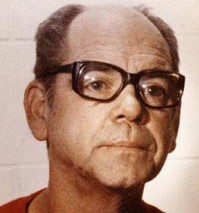 Gilbert Paul Jordan
Serial killer · Canada · 1965
Gilbert Paul Jordan (born December 12, 1931; died July 7, 2006) was known as th…
10 victims
Gilbert Paul Jordan
Serial killer · Canada · 1965
Gilbert Paul Jordan (born December 12, 1931; died July 7, 2006) was known as th…
10 victims
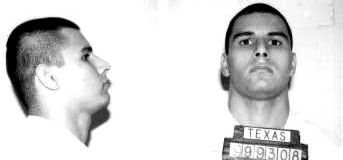 Ruben Gutierrez
Murderer · USA · 1998
Ruben Gutierrez (TDCJ Number 999308) was born on 06/10/1977. He was Hispanic, m…
1 victim
Ruben Gutierrez
Murderer · USA · 1998
Ruben Gutierrez (TDCJ Number 999308) was born on 06/10/1977. He was Hispanic, m…
1 victim
 Rickey Cummings
Murderer · USA · 2011
Rickey Cummings was recorded with the name Rickey Donnell Cummings, and with TD…
2 victims
Rickey Cummings
Murderer · USA · 2011
Rickey Cummings was recorded with the name Rickey Donnell Cummings, and with TD…
2 victims
- Gender
- male
- Country
- USA
- Location
- Oklahoma County, Oklahoma, USA
- Date of birth
- J uly 11, 1970
- Age at first offence
- 18
- Characteristics
- murder for hire, attempt to collect insurance money, arson
- Victim profile
- James Earl Plantz, 33 (the husband of his lover)
- Method of murder
- Beating with baseball bat
- Date(s) of murder
- August 26, 1988
- Years active
- 1988
- Date of arrest
- 4 days after
- Status
-
Executed
Executed by lethal injection in Oklahoma on July 15, 2000
Case overview
William Clifford Bryson was convicted in Oklahoma of first-degree murder for the 1988 murder of James Earl Plantz, 33, and of related offenses including third degree arson, solicitation to commit murder, and conspiracy to commit murder. Bryson was sentenced to death and was executed by lethal injection in Oklahoma.
Timeline
- August 17, 1988 — One of Marilyn Plantz’s schemes was carried further but ultimately failed; Bryson, McKimble, and Rory Jenkins stole a car planned to be used to run Mr. Plantz off the road; the plan was not carried out because Mr. Plantz took an unexpected route home and Jenkins did not want to go through with the plan.
- August 25, 1988 — Plantz, Bryson, and McKimble were together; Marilyn Plantz withdrew money from her bank, purchased crack cocaine and beer for them, and drove them around until Mr. Plantz had gone to work.
- August 26, 1988 (approximately 4:00 a.m.) — Mr. Plantz left his job and headed home.
- August 26, 1988 (approximately 5:15 a.m.) — Mr. Plantz’s charred body was discovered inside his burned out pickup truck in the northeast part of Oklahoma City.
- Friday, August 26, 1988 (early morning) — James Earl Plantz was found dead in his pickup.
- Following Monday after August 26, 1988 — Police arrested Marilyn Kay Plantz, 27, on a murder charge.
- Next day after Marilyn Kay Plantz’s arrest — William Clifford Bryson, 18, was arrested on charges of conspiracy to commit murder in an alleged murder-for-hire scheme.
- October 20, 1988 — Prosecutors agreed to let Clinton Eugene McKimble plead guilty to murder and be sentenced to life imprisonment as part of an agreement to testify against Plantz and Bryson.
- March 1989 — Trial took place; jurors found Plantz and Bryson guilty of murder and related offenses.
- June 6 (year not stated) — Oklahoma Pardon and Parole Board voted 4-0 to deny clemency to William Bryson.
- June 15, 2000 — Bryson was executed by the state of Oklahoma; he was pronounced dead at 12:14am.
- July 15, 2000 — Execution date stated for Bryson in the case status field.
Background
James Earl Plantz, 33, worked the night shift as a pressroom supervisor at The Daily Oklahoman and left his job and headed home on the morning of August 26, 1988. Prosecutors alleged that Mr. Plantz was beaten with baseball bats at his Midwest City home and then burned in his pickup at a secluded location.
Marilyn Kay Plantz, 27, was Bryson’s older co-defendant and lover; Bryson met co-defendant Marilyn Plantz in late 1987 or early 1988 when he was sixteen and she was in her late twenties and married. In the spring of 1988, they became romantically involved and sexually intimate. Plantz allowed Bryson to drive her car, entertained him and his friends at her home while her husband worked at night, and either provided Bryson with money to purchase alcohol and crack cocaine or purchased them for him. Bryson also became acquainted with co-defendant Clinton McKimble, who was a teenager and knew of Bryson and Plantz’s romantic involvement.
Prosecutors alleged that collection on two life insurance policies on James Plantz, worth $319,000, was the probable reason behind his murder. Prosecutors stated that McKimble and Bryson were hired by Marilyn Plantz to kill her husband. The plan was also described as to collect approximately $300,000 in life insurance for Mr. Plantz’s accidental death.
Roderick Eugene Farris testified at a preliminary hearing. He testified that Plantz said the murder would “have to look life an accident.” He also testified that a few days earlier Bryson said his girlfriend, Marilyn Plantz, had called and was crying because her husband had beaten her. Farris also later testified in the detailed account of events that he was offered money and was introduced to Marilyn Plantz as someone who would “kill your husband.”
The offence
Offence description
Early on August 26, 1988, Bryson, then 18, and his friend Clinton Eugene McKimble surprised James Plantz in his house and ambushed him after he returned home from work. They beat him with baseball bats provided by Marilyn Plantz.
The victim’s charred body was later discovered inside his burned out pickup truck in the northeast part of Oklahoma City. The drivers side door was open; the body was slumped behind the steering wheel with the left leg outside the pickup resting flat on the ground. An autopsy revealed that the decedent died from a combination of a blunt force injury to the head and thermal injuries caused by the fire.
Forensic and physical details
An autopsy later revealed that the decedent had died from a combination of a blunt force injury to the head and thermal injuries caused by the fire. The body was discovered inside the burned out pickup truck in the northeast part of Oklahoma City.
Motive and plan
Prosecutors alleged that Marilyn Plantz and Bryson planned to collect an insurance policy of about $300,000 for Plantz’s accidental death, with Mrs. Plantz as the beneficiary. Another account stated that the victim was insured for approximately $299,000 and that the probable reason was collection on two life insurance policies worth $319,000.
In the lead-up to the killing, multiple schemes were discussed and at least one attempt failed. On August 17, 1988, one scheme involving stealing a car to run Mr. Plantz off the road ultimately failed because Mr. McKimble offered Roderick Farris $7000 to help kill Mr. Plantz; Farris refused. Bryson later offered Farris $40,000 if Farris could kill Mr. Plantz without Bryson’s involvement. Bryson told Farris he could catch Mr. Plantz coming home from work, beat him with a bat, and set him on fire in his truck.
At a later point Bryson introduced Farris to Marilyn Plantz as “the one I was telling you about that would kill your husband.” Marilyn Plantz told Farris it would have to look like an accident.
Timeline of events on the night of the murder (trial facts as recounted)
Marilyn Plantz withdrew money from her bank, purchased crack cocaine and beer for Bryson and McKimble, and drove them around until Mr. Plantz had gone to work. They then returned to her house. Bryson and McKimble drank beer and smoked crack cocaine in the living room until they fell asleep. Hours later, hearing a key in the front door, they hid on opposite sides of the house.
Mr. Plantz entered the house whistling with a bag of groceries. Bryson struck first and hit the decedent with the baseball bat; the decedent cried out for his wife, but Bryson hit him again, with McKimble soon joining in. The men repeatedly struck the decedent because “he would not stay down.” The decedent later crumpled to the floor.
As the decedent lay moaning, Bryson and McKimble picked him up and took him outside. Mrs. Plantz emerged from the house, handed the pickup keys to Bryson, and commented that the decedent’s “head was busted open” and that it was not going to look much like an accident. She told the men “to burn him.” The victim was placed in the bed of pickup, and Bryson drove to a deserted location on the route the decedent would have taken to work. McKimble followed in Mrs. Plantz’s car.
The victim was placed in the cab of the pickup behind the steering wheel. McKimble placed a rag in the gas tank and lit it in an attempt to cause an explosion; it failed to catch on fire. Bryson poured gasoline on the decedent and in the cab of the pickup, then lit it. As the men drove away, they turned around and saw the decedent raise up.
Bryson and McKimble returned to the Plantz home and found Marilyn Plantz cleaning up the blood. The men changed into clothes of the decedent. They dumped their bloody clothes and rags into a creek; they went to a convenience store and purchased sandwiches and drinks with money from Mr. Plantz’s wallet.
Related planning and recruitment
At trial and in later procedural accounts, the killing was described as intended to appear accidental, with Marilyn Plantz providing the bats and in some accounts providing other assistance and materials. Byron and Marilyn Plantz had previously attempted to have the decedent killed. It was also alleged that Marilyn Plantz indicated to Bryson that the decedent was abusive to her and she wanted to get rid of him and collect on his life insurance policy.
McKimble was offered forty-five thousand dollars ($45,000) for his part and later changed his mind about joining the plan. McKimble pled guilty to murder and testified against Plantz and Bryson. Bryson offered Roderick Farris ($40,000.00) to kill the decedent, and later offered Farris ten thousand dollars ($10,000.00) to kill the decedent again after a second encounter at a local grocery store.
Defense and prosecution accounts included that Mrs. Plantz suggested that the men drive up on the side of his pickup and shoot him, or catch him coming home from work and beat him, and that prosecutors alleged Bryson and McKimble were hired to kill him.
Investigation and arrest
Discovery of the victim
James Earl Plantz was found dead in his pickup. Prosecutors alleged that he was beaten with baseball bats and burned in his pickup at a secluded location.
Arrests and jail events
Police arrested the victim’s wife, Marilyn Kay Plantz, 27, on a murder charge on the Monday following the early morning discovery. Investigators believed she had paid someone to kill her husband.
William Clifford Bryson, 18, was arrested the next day on charges of conspiracy to commit murder in an alleged murder-for-hire scheme. While in the holding cell awaiting booking, Bryson tried to hang himself with his shoelaces. He was treated at a local hospital and returned to the jail. After he was booked for conspiracy to commit murder and solicitation to commit murder, Bryson was placed in an isolation cell and put under observation. He then tried to drown himself in the toilet, but was uninjured.
Clinton Eugene McKimble, 18, was also arrested on Tuesday.
Charges before trial
On Wednesday, Marilyn Plantz, William Bryson, and Clinton McKimble were all charged with first-degree murder. Prosecutors announced they would seek the death penalty.
Trial
Joint trial and severance issue
Defense attorneys argued that Bryson and Plantz should have separate trials due to inconsistent, mutually antagonistic defenses. Oklahoma County District Judge Charles Owens ruled that they would be tried together.
Convictions and verdict
At trial in March 1989, jurors took less than three hours to find Plantz and Bryson guilty of the murder of James Plantz, of conspiracy to murder, of recruiting others to help, and of arson. Neither Plantz nor Bryson testified during the trial. The next day jurors deliberated for five hours before voting in favor of death sentences for both Marilyn Plantz and William Bryson.
Sentences imposed
The trial court sentenced Bryson to death for first-degree murder. Bryson was also sentenced to 100 years for recruiting others to help in the murder, 10 years for conspiracy to murder, and a 15-year sentence for burning the pickup truck.
A separate appellate-style account also stated the jury recommended punishment as death penalty for Count I, fifteen (15) years imprisonment and ten thousand dollar ($10,000) fine in Count II, one hundred (100) years imprisonment for Count III, and ten (10) years imprisonment on Count IV. It stated that the trial court sentenced accordingly and that it was from this judgment and sentence that Appellant appealed; the appellate outcome was “We affirm.”
Charges as enumerated in the appellate record
Appellant William Clifford Bryson, Jr. was tried by jury and convicted for:
- Murder in the First Degree (Count I) (21 O.S.Supp.1982, § 701.7)
- Third Degree Arson (Count II) (21 O.S.S.1981, § 1403(A))
- Solicitation to Commit Murder (Count III) & Conspiracy to Commit Murder (Count IV) (21 O.S.S.1981, §§ 421, case no. CRF-86-4781 in the District Court of Oklahoma County)
Confessions and statements
Preliminary hearing testimony
Roderick Eugene Farris testified that Plantz said the murder would “have to look life an accident.”
Videotaped confession
In videotaped testimony, Bryson told police how he and an accomplice beat James Plantz and stated:
“I didn't have no specific reason why I killed him. All I was thinking while I was beating him was all the times she came up to me with a black eye and crying. I didn't like that.”
In the videotape, Bryson said that he loves Marilyn Plantz. He also stated that Marilyn said her husband had threatened to kill himself and her if she divorced him. Plantz denied any role in the killing of her husband, and she told police they had a perfect marriage.
Statements attributed to others during the offence
Clinton McKimble testified that Mrs. Plantz looked at her husband’s head injuries from the beating and remarked that it didn’t look like an accident, and that she told them “to burn him.”
Competency to stand trial (habeas proceedings)
Bryson argued that the trial court violated his right to due process under the Fifth, Sixth, and Fourteenth Amendments when it determined he was competent to stand trial. He argued the trial court wrongfully used the clear and convincing standard of proof to determine competency and erred in not holding a competency hearing required by Oklahoma statute.
Bryson also argued substantive and procedural due process competency claims. The appellate discussion described that the record reflected that the trial court held only a threshold competency hearing under Oklahoma procedure and determined there was no doubt that Bryson was competent.
The appellate record quoted procedural events: Bryson filed an application for determination of competency one month before the hearing, alleging that he was currently incompetent, that specific facts raised a doubt, that he was unable to comprehend his attorney or meaningfully assist in the defense, and that his mental state and communication abilities seriously interfered with understanding and capability.
At the hearing, counsel stated she believed Bryson may be incompetent but gave vague reasons and admitted that experts had not examined Bryson for competency to stand trial. The judge examined Bryson at the hearing, advised him the judge would not question him about the charged crimes, and asked questions to determine whether he understood the nature of charges and proceedings. Bryson indicated understanding of his trial, charges, attorney, and potential death penalty, and denied or possibly was confused about police questioning in the Oklahoma City Jail.
Bryson later requested a jury trial on competency and an ex parte hearing to submit affidavits of two mental health experts. The record included only the affidavit of Dr. Murphy, who stated that he had not examined Bryson for competency at that time and offered an opinion of “substantial doubt” and further testing required to “remove the doubt as to his ability to meaningfully and rationally assist his counsel with his defense.” The appellate discussion characterized Dr. Murphy as not stating Bryson was incompetent.
The appellate court held there was no constitutional error in the competency determination and affirmed denial of habeas relief.
Sentencing proceedings and mitigating evidence
Videotape confession exclusion
Bryson argued that the trial court violated the Eighth and Fourteenth Amendments by excluding a videotape of his confession from capital sentencing proceedings as mitigating evidence. The Oklahoma Court of Criminal Appeals held that the trial court’s exclusion was constitutional error but was harmless.
The federal appellate discussion included that Bryson argued the videotape would have shown his remorse, demeanor, state of mind, and motive for the killing, and explained the nature and extent of his relationship with Marilyn Plantz. The discussion stated that the videotaped confession did not tend to show remorse and that other evidence was presented despite exclusion. It also stated that exclusion did not tend to establish facts not already presented to the jury.
Jury instructions at sentencing
Option of life sentence
Bryson argued that the trial court erred in failing to instruct the jury that it had the option to return a life sentence even if it found aggravating circumstances outweighed mitigating circumstances. The Oklahoma Court of Criminal Appeals rejected the argument. The federal appellate discussion examined an instruction numbered as Instruction No. 12, which stated:
“Should you unanimously find that one or more aggravating circumstances existed beyond a reasonable doubt, you would be authorized to consider imposing a sentence of death. If you do not unanimously find beyond a reasonable doubt that one or more of the aggravating circumstances existed, you are prohibited from considering the penalty of death. In that event, the sentence must be imprisonment for life or imprisonment for life without parole.”
The federal appellate discussion held the instruction was constitutionally permissible and described it as effectively instructing the jury of its discretion to decline the death penalty.
Lesser included offences instructions
Bryson asserted that the trial court erred by instructing only on the capital murder charge and refusing lesser included non-capital offense instructions for second degree murder and first degree manslaughter in violation of the Eighth and Fourteenth Amendments. The state trial and appellate courts determined the evidence did not support giving those instructions.
The federal appellate decision agreed that the evidence did not support instructions on either second degree murder or first degree manslaughter, and it discussed that the evidence established plotting and intentional premeditated design to kill the victim, and that there was not adequate provocation immediately preceding the murder to support heat of passion manslaughter instruction.
Requested mitigation instructions
Bryson argued the trial court erred in refusing to give his requested mitigation instructions. He requested that the jury consider:
- one or both of the co-defendants exerted considerable influence over him;
- Marilyn Plantz led him to believe that the victim was beating and raping her;
- he acted in defense of his lover; and
- Marilyn Plantz provided alcohol and crack cocaine to him.
The federal appellate discussion described that the Oklahoma Court of Criminal Appeals held the instructions allowed the jury to consider fully any relevant mitigating evidence and that the district court agreed.
The discussion identified mitigating instruction content including that Instruction No. 15 listed among others: Bryson’s age at time of offense; his age when he first met Marilyn Plantz; the crime was the idea of a co-defendant; that Bryson had been consuming alcohol and crack cocaine before the murder; a neuropsychological deformity made worse by drug use; his emotional and intellectual development making him susceptible to suggestions of an older person; and that he was less able than an emotionally and chronologically mature adult to make responsible decisions and consider consequences. The discussion also stated that Instruction No. 13 directed jurors to determine mitigating circumstances under the facts and circumstances of the case.
Appeals and post-conviction history
Direct appeal and state appellate outcomes
- Bryson v. State, 876 P.2d 240 (Okl. Crim. App. 1994) (Direct Appeal) — convictions and sentence were affirmed.
- Bryson filed post-conviction relief in the state district court, which denied relief.
- The Oklahoma Court of Criminal Appeals affirmed. Bryson v. State, 903 P.2d 333 (Okl. Crim. App. 1995).
- The Supreme Court denied petitions for writ of certiorari in Bryson v. Oklahoma, 513 U.S. 1090 (1995), and later in Bryson v. Oklahoma, 517 U.S. 1144 (1996).
Federal habeas appeal
Bryson appealed denial of his federal habeas petition. The federal appellate case was titled:
- WILLIAM CLIFFORD BRYSON, Petitioner-Appellant, v. RONALD WARD, Respondent-Appellee (appeal from the United States District Court for the Western District of Oklahoma; D.C. No. 96-CV-1004). The federal appellate court affirmed denial of habeas relief.
The federal appellate court affirmed on claims including: competency to stand trial; exclusion of a videotape confession as mitigating evidence; jury instruction on option to return a life sentence; refusal to instruct on second degree murder and first degree manslaughter; and refusal to give requested mitigation instructions.
Issues discussed but certificate of appealability not granted
Notes stated that the district court granted a certificate of appealability (COA) on the first two issues and that the federal appellate court granted COA on the other three issues. It further stated that Bryson also raised additional issues but the COA was declined as to those other issues, confirming that Bryson was not entitled to COA on them.
Clemency
A clemency hearing occurred on June 6, when the Oklahoma Pardon and Parole Board voted 4-0 to deny clemency to William Bryson. The discussion included a statement by Bryson that he would not “waste” the board’s time by having anyone speak on his behalf because “… persuading the majority of this board to vote to spare my life is impossible.”
Bryson stated he would not present a case for clemency because:
- “ three of the five members of this board are appointed by the governor, which does, in fact, make him them their employer. The governor has made his position crystal clear … regarding capital cases. Therefore your job security demands you respect the governor's wishes.”
He further said:
- “These proceedings are far from being a process in which actual consideration is given to capital cases, but rather a process that belongs solely to the governor … in which his vote and the votes of those whom he has appointed will forever be one and the same.”
The discussion identified Board members present at the hearing: Flint Breckinridge, Currie Ballard, Stephanie Chappelle, and Chairperson Susan Bussey. It stated that three of the four Board members present were appointees of Governor Frank Keating.
Execution and aftermath
Execution details
Bryson was executed by lethal injection in Oklahoma. One account stated he was pronounced dead at 12:14am, and another stated execution occurred by lethal injection early in the day.
Thirteen relatives and friends of the victim, including his two sisters, father and brother, planned to witness the execution. Karen Lowery, the victim’s sister, and Sharon Cotton, the victim’s other sister, spoke about closure and the impact of the execution.
Karen Lowery said Bryson’s death did not mean a victory for her family and quoted: “It’s a no-win situation. Nobody is going to win in the end,” and that “this will bring some closure” was also attributed to her hopes in another account.
Sharon Cotton said before the execution that it would provide only partial closure: “Marilyn Plantz and Clifford Bryson (have) lived almost 12 years since Jim was murdered; that is 12 years longer than my brother lived.”
Attorney General Drew Edmondson said Plantz “suffered a horrible, cruel, painful death,” and said “I hope that his execution will, after these 12 long years, bring a sense of justice to those who loved Jim Plantz.”
Statements attributed to Bryson after clemency and apology references
The execution reporting described that Bryson apologized to the Plantz family for the pain he had caused after a tour of the penitentiary; it also described that Bryson’s death was the outcome of his death sentence.
Other details
Prison and communications
A fragment included a “OCADP Penpals” message consisting of questions and responses about pen pal preferences and interests. The fragment stated interests included “Speaking to people who care about others, in spite of their faults,” described hobbies including sports, reading, writing poetry and making greeting cards, stated that the language was English with “a very little Spanish,” and preferences included a trustworthy, honest, sensitive pen pal who was willing to listen, with preference for a female pen pal who could come visit. It included “I've included a poem I've written. It's called ‘ Deprived Heart’.”
Related appellate account on other proceedings
The federal appellate decision noted that Bryson had attempted to commit suicide twice in jail after arrest, and that trial was scheduled to start on a Monday but was continued later to Wednesday. It also noted the district court’s handling of a COA and that no constitutional error was found in the asserted claims.
Additional legal identifiers and citations included in the case record
- Bryson v. State, 876 P.2d 240 (Okl. Crim. App. 1994) (Direct Appeal).
- Bryson v. State, 903 P.2d 333 (Okl. Crim. App. 1995).
- Bryson v. Oklahoma, 513 U.S. 1090 (1995).
- Bryson v. Oklahoma, 517 U.S. 1144 (1996).
- Briscoe, Circuit Judge concurring: included discussion of harmless error standard and characterization of factual determinations vs legal determinations regarding lesser included offenses, along with references to Chapman v. California, 386 U.S. 18, 24 (1967), and Townsend v. Sain, 372 U.S. 293, 309 n.6 (1963).
- The record included legal citations such as Cooper v. Oklahoma, 517 U.S. 348 (1996), Skipper v. South Carolina, 476 U.S. 1 (1986), Eddings v. Oklahoma, 455 U.S. 104 (1982), Lockett v. Ohio, 438 U.S. 586 (1978), Dusky v. United States, 362 U.S. 402 (1960), Drope v. Missouri, 420 U.S. 162 (1975), Brecht v. Abrahamson, 507 U.S. 619 (1993), and Beck v. Alabama, 447 U.S. 625 (1980).
Spotted an error, or have more information about this case?