
Jesse Fanus
Murderer Russell Ellwood
Murderer · USA · 1991
Russell Ellwood was a former taxi driver. Authorities suspected him of killing…
20 victims
Russell Ellwood
Murderer · USA · 1991
Russell Ellwood was a former taxi driver. Authorities suspected him of killing…
20 victims
 Robert Martines Perez
Murderer · USA · 1994
Name: Robert Martines Perez · Other name used in proceedings: Robert Martinez P…
15 victims
Robert Martines Perez
Murderer · USA · 1994
Name: Robert Martines Perez · Other name used in proceedings: Robert Martinez P…
15 victims
 Billy Frank Vickers
Murderer · USA · 1993
Billy Frank Vickers Vickers was executed by lethal injection in Texas on Januar…
14 victims
Billy Frank Vickers
Murderer · USA · 1993
Billy Frank Vickers Vickers was executed by lethal injection in Texas on Januar…
14 victims
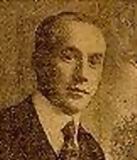 Carl Otto Wanderer
Murderer · USA · 1920
Carl Otto Wanderer (1887–1921) was described as a murderer known for what becam…
2 victims
Carl Otto Wanderer
Murderer · USA · 1920
Carl Otto Wanderer (1887–1921) was described as a murderer known for what becam…
2 victims
 Joyce Cohen
Murderer · USA · 1986
Joyce Cohen was indicted for the first degree murder of her husband, Stanley Al…
1 victim
Joyce Cohen
Murderer · USA · 1986
Joyce Cohen was indicted for the first degree murder of her husband, Stanley Al…
1 victim
 Beatrice Annie Pace
Justice miscarriage · United Kingdom · 1928
Beatrice Annie Pace was tried and acquitted for murdering her husband with arse…
0 victims
Beatrice Annie Pace
Justice miscarriage · United Kingdom · 1928
Beatrice Annie Pace was tried and acquitted for murdering her husband with arse…
0 victims
 Willard Jimerson
Homicide · USA · 1994
Willard Jimerson was 13 years old when he was charged with the first degree mur…
1 victim
Willard Jimerson
Homicide · USA · 1994
Willard Jimerson was 13 years old when he was charged with the first degree mur…
1 victim
 Anna Mansdotter
Murderer · Sweden · 1889
Anna Månsdotter was executed by beheading with an axe in Kristianstad on August…
1 victim
Anna Mansdotter
Murderer · Sweden · 1889
Anna Månsdotter was executed by beheading with an axe in Kristianstad on August…
1 victim
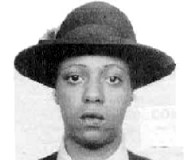 Corrine Sykes
Murderer · USA · 1944
Corrine Sykes was 20 years old when she worked as a housemaid for Mrs. Wodlinge…
1 victim
Corrine Sykes
Murderer · USA · 1944
Corrine Sykes was 20 years old when she worked as a housemaid for Mrs. Wodlinge…
1 victim
- Gender
- male
- Country
- USA
- Location
- Douglas County, Oregon, USA
- Date of birth
- J une 2, 1979
- Age at first offence
- 19
- Characteristics
- armed robbery, robbery, shooting spree, domestic violence, abuse
- Victim profile
- Maj. Gen. Marion Carl, 82 , a World War II aviator hero
- Method of murder
- Shooting
- Date(s) of murder
- June 28, 1998
- Years active
- 1998
- Date of arrest
- J uly 5, 1998
- Status
-
Sentenced to death
Sentenced to death on 1999; conviction and sentence of death were affirmed on automatic and direct review by the Supreme Court of the State of Oregon
Parties and court
- The Supreme Court of the State of Oregon conducted automatic and direct review of the judgment of conviction and sentence of death imposed by the Douglas County Circuit Court.
- Robert C. Millikan, Judge, imposed the sentence of death.
- The case was argued and submitted January 6, 2003.
- Dan Maloney, Deputy Public Defender, Salem, argued the cause and submitted the brief for appellant Jesse Stuart Fanus.
- David E. Groom, State Public Defender, was on the brief with Maloney.
- Kaye E. McDonald, Assistant Attorney General, Salem, argued the cause and filed the brief for respondent.
- Hardy Myers, Attorney General, Mary H. Williams, Solicitor General, and Christina M. Hutchins, Assistant Attorney General, were on the brief with McDonald.
- Leeson, J., resigned January 31, 2003, and did not participate in the decision.
- Kistler, J., did not participate in the consideration or decision.
Timeline
- June 28, 1998 — Jesse Stuart Fanus broke into the home of Major General Marion Carl and his wife, Edna Carl, in Douglas County, Oregon, armed with a shotgun he had stolen from D & D Towing, a Roseburg vehicle towing business, on or around June 17, 1998; Fanus shot and killed Marion Carl, shot and wounded Edna Carl, and forced Edna Carl at gunpoint to give him several hundred dollars and the keys to the Carls’ vehicle.
- June 17, 1998 — Fanus stole a shotgun from D & D Towing, a Roseburg vehicle towing business.
- July 5, 1998 — Fanus was arrested in Pasadena, California and was subsequently extradited to Oregon.
- April 1999 — A Douglas County jury convicted Fanus of all 13 counts.
- 1995 and 1996 — Fanus was in custody at MacLaren Youth Correctional Facility, where Goodman and Flory testified he contributed to racial tensions, made racist remarks to and provoked a fight with a minority youth, and committed acts of racist graffiti.
- 1995 and 1996 (during custody; after arrest for the crimes in this case) — Fanus scratched graffiti, including a swastika symbol and the letters “SS,” in his jail cell after his arrest for the crimes in this case.
- Night of Marion Carl’s murder (June 28, 1998) — Douglas County Detective Perkins testified that Fanus confessed to spray-painting swastikas, the letters “SS,” and the words “Juden Frei” on a shack on the night of Marion Carl’s murder.
- 1999 (penalty-phase adjudication and sentence of death) — Following a separate penalty-phase proceeding on the two counts of aggravated murder, the trial court entered a sentence of death after the jury unanimously answered yes to the four questions set out in ORS 163.150(1)(b).
- January 6, 2003 — The case was argued and submitted.
- 1999 (appeal decision affirmed) — The judgment of conviction and the sentence of death were affirmed on automatic and direct review.
- October 23, 2003 — Jesse Stuart Fanus’s filing occurred in the Supreme Court of the State of Oregon (C98CR1510FE; SC S46472).
Background
- The Supreme Court reviewed a judgment of conviction and a sentence of death after convictions for two counts of aggravated murder involving a single victim and 11 additional felony convictions.
- The judgment was reviewed under former ORS 163.150(1)(g) (1997), repealed by Or Laws 1999, ch 1055, § 1, and ORAP 12.10.
The offence
- On the night of June 28, 1998, Jesse Stuart Fanus broke into the home of Major General Marion Carl and Edna Carl in Douglas County, Oregon.
- Fanus was armed with a shotgun that he had stolen from D & D Towing, a Roseburg vehicle towing business, on or around June 17, 1998.
- Fanus shot and killed Marion Carl and shot and wounded Edna Carl.
- Fanus then forced Edna Carl at gunpoint to give him several hundred dollars and the keys to the Carls’ vehicle.
Investigation
- Douglas County Detective Perkins testified during the penalty-phase proceeding that Fanus confessed to spray-painting swastikas, the letters “SS,” and the words “Juden Frei” on a shack on the night of Marion Carl’s murder.
- The state introduced photographs of the shack as exhibits, showing graffiti including a swastika, the letters “SS,” and the words “Death to All Jews” and “Fuck Niggers and Jews.”
Arrest and extradition
- Fanus was arrested in Pasadena, California on July 5, 1998 and was subsequently extradited to Oregon.
Charges
Crimes on June 28, 1998
- The state charged Fanus with:
- two counts of aggravated murder, ORS 163.095
- two counts of felony murder, ORS 163.115 (1997)
- one count of murder, ORS 163.115 (1997)
- two counts of attempted aggravated murder, ORS 161.405 and ORS 163.095
- one count of attempted murder, ORS 161.405 and ORS 163.115 (1997)
- one count of first-degree robbery with a firearm, ORS 164.415 and ORS 161.610 (1997)
- one count of second-degree assault with a firearm, ORS 163.175 and ORS 161.610 (1997)
- one count of first-degree burglary with a firearm, ORS 164.225 and ORS 161.610 (1997)
Burglary of D & D Towing (on or around June 17, 1998)
- The state charged Fanus with:
- one count of second-degree burglary, ORS 164.215
- one count of first-degree theft, ORS 164.055
Trial
- In April 1999, a Douglas County jury convicted Fanus of all 13 counts.
Penalty phase
- After a separate penalty-phase proceeding on the two counts of aggravated murder, the jury unanimously answered yes to the four questions set out in ORS 163.150(1)(b).
- The trial court entered a sentence of death.
Appeals
- On automatic and direct review, Fanus asked the Supreme Court to reverse his convictions or, alternatively, to vacate his sentence of death and remand for resentencing.
- The Supreme Court affirmed the judgment of conviction and the sentence of death.
Other details
Demurrer to the indictment and constitutional challenges
- Fanus asserted the trial court erred by overruling his pretrial demurrer to the indictment, which included constitutional challenges to Oregon’s death-penalty statutes.
- The trial court denied the demurrer because it concluded that none of Fanus’s arguments was well taken.
- Fanus contended ORS 163.150(1)(a) and related jury instruction in ORS 163.150(1)(c)(B) (1997) violated the Eighth Amendment.
- The Supreme Court addressed whether those facial challenges were properly raised by demurrer and concluded they were properly raised when the only allegedly invalid penalty provision applied.
- The Supreme Court concluded ORS 163.150(1)(a) and the jury instruction in ORS 163.150(1)(c)(B) (1997) did not violate the Eighth Amendment in the manner Fanus contended.
- Fanus also argued that ORS 163.150 did not allow meaningful judicial review of the jury’s decision to impose the death sentence and did not provide comparative sentencing review.
- The Supreme Court stated those challenges were previously considered and rejected and declined further discussion.
- The Supreme Court stated: “The judgment of conviction and the sentence of death are affirmed.”
Jury venue and voir dire issues
Fanus argued the trial court erred by denying pretrial motions for change of venue.
In February 1999, Fanus sought change of venue before jury selection, citing prejudicial pretrial publicity about the victim Marion Carl and the case.
Fanus submitted copies of television news reports and newspaper articles, including 41 articles from the local newspaper.
The news director for the dominant local television station testified that approximately 70 percent of local television news reports primarily focused on Marion Carl.
Fourteen local newspaper articles primarily focused on facts about Marion Carl’s life, career as a celebrated Marine Corps Major General, and local and national tributes being offered in his honor.
Other local newspaper articles included 15 reports about the crime and the court proceedings, nine letters to the editor, two editorials, and Marion Carl’s obituary.
Some newspaper articles reported facts about Fanus’s criminal history.
One article described Marion Carl’s murder as the top local news story in 1998.
Fanus provided a voter survey conducted about two months after the victim’s murder.
- The survey purported to show 94 percent of polled Douglas County voters and 83 percent of polled Multnomah County voters recognized Fanus’s case.
- The survey purported to show 71 percent of polled Douglas County voters and 57 percent of polled Multnomah County voters believed Fanus was guilty.
- The survey purported to show 58 percent of polled Douglas County voters and 43 percent of polled Multnomah County voters believed that, if found guilty, Fanus should receive the death penalty.
Fanus offered an expert witness who opined that, based upon pretrial publicity and survey results, there was at least a reasonable likelihood Fanus could not obtain a fair trial in Douglas County.
The trial court denied the first motion, concluding Fanus failed to show he could not obtain a fair and impartial jury in Douglas County.
The trial court found some publicity was “problematic” and speculated about the effect of the victim’s status and publicity, but the court concluded Fanus could still obtain a fair trial because most publicity occurred more than six months earlier and Fanus’s survey was flawed.
Fanus renewed his motion for change of venue on the fifth day of voir dire and near the close of voir dire; the trial court denied both.
The Supreme Court reviewed the denial for abuse of discretion under ORS 131.355 and found no abuse of discretion.
Fanus assigned error to the denial of his challenge for cause against juror Ocumpaugh.
Ocumpaugh disclosed during voir dire and on a juror questionnaire that she was familiar with Fanus’s case from pretrial publicity, believed Fanus probably was guilty, would require Fanus to prove his innocence, and believed the death penalty was appropriate for murder.
The prosecutor asked permission to inquire; Ocumpaugh stated she would comply with the oath to base guilt on trial evidence and to require the state to prove beyond a reasonable doubt.
After further questioning, the Supreme Court stated the trial court found Ocumpaugh could perform her duties fairly and impartially and found no abuse of discretion in refusing to excuse Ocumpaugh for cause.
The Supreme Court rejected the state’s waiver argument regarding Ocumpaugh.
The Supreme Court described the trial court’s discretion and stated it would not disturb the decision absent manifest abuse of discretion.
Prosecutor closing argument and alleged mistrial/cure
- Fanus argued that the trial court erred by failing to issue a curative instruction or declare a mistrial sua sponte because of statements by the prosecutor during closing argument.
- Fanus made no objection at trial.
- The prosecutor stated:
- “ So if the defense were able to persuade you of all of these things, all we'd be left with is robbery and burglary, not any murder charges, no attempted murder charges, zilch. He's off the hook. If he's unable to establish any of those things and I am able to prove what I'm about to prove to you, then he's stuck with all of them and you'll find him guilty of all of them.”
- The Supreme Court noted that it was not apparent that the statements referred only to intentional murder counts, and even assuming a misstatement, concluded the failure to act did not amount to error apparent on the face of the record.
- Defense counsel responded in closing argument:
- “Well, ladies and gentlemen, I hate to disappoint [the prosecutor] but his attempt to co-op my argument was a little off the mark. I'm going to tell you exactly what Jesse Fanus is guilty of and why. "
- “He's guilty of count four, felony murder. "
- “He's guilty of count nine, robbery in the first degree. "
- “He's guilty of count ten, assault in the second degree. "
- “He's guilty of count eleven, burglary in the first degree. "
- “And counts twelve and thirteen, D & D Towing. "
- “Those are what he's guilty of. You heard evidence that would lead you to believe that. "
- “What he's not guilty of is aggravated murder or attempted aggravated murder, either one.”
- The Supreme Court held there was no error.
Evidence of Nazi/white supremacy beliefs (penalty phase)
- Fanus argued the trial court erred by permitting evidence relating to his white supremacy and Nazi ideology beliefs during the penalty phase.
- Before the penalty-phase proceeding, defense counsel filed a motion in limine to exclude “any evidence relating to defendant's belief or expressions of belief in racist ideals, white supremacy or other matters of similar nature or defendant's use or display of symbols of such belief.”
- The state asserted the evidence was relevant to ORS 163.150(1)(b)(B) future dangerousness and ORS 163.150(1)(b)(D) whether defendant should receive a death sentence.
- The trial court ruled some evidence was relevant to future dangerousness, and the admissibility of other items would depend upon context.
- Employees of MacLaren Youth Correctional Facility, Goodman and Flory, testified that Fanus had contributed to racial tensions, made racist remarks to and provoked a fight with a minority youth, and committed acts of racist graffiti while Fanus had been in custody in 1995 and 1996.
- The state introduced exhibits consisting of Fanus’s writings over Fanus’s objection; Fanus challenged only the admissibility of the five disputed exhibits consisting of Fanus’s writings.
- Fanus argued the exhibits were irrelevant under OEC 401 and unfairly prejudicial under OEC 403.
- Fanus also argued that admission violated his First Amendment rights, citing Dawson v. Delaware.
- The Supreme Court held the evidence was relevant to future dangerousness because, as described in Moore, the evidence related to beliefs that had driven past dangerous conduct and was probative of propensity to act dangerously in the future.
- The Supreme Court concluded there was no danger of unfair prejudice because the jury also heard substantial unchallenged evidence about Fanus’s racist beliefs.
- The Supreme Court rejected the First Amendment argument because the evidence was relevant to the issue being decided.
Sufficiency of indictment arguments
- Fanus contended the death sentence was unconstitutional because, according to him, the indictment did not allege an offense making him eligible for the death penalty.
- The Supreme Court held the arguments were not preserved and, in any event, were resolved against Fanus in State v. Oatney.
Victim(s)
- Major General Marion Carl was killed.
- Edna Carl was shot and wounded and was forced at gunpoint to give Fanus several hundred dollars and the keys to the Carls’ vehicle.


Spotted an error, or have more information about this case?