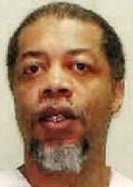
Gregory Bryant-Bey
Murderer Brian Kevin Rosenfeld
Murderer · USA · 1985
Brian Kevin Rosenfeld Brian Kevin Rosenfeld was sentenced to three concurrent l…
23 victims
Brian Kevin Rosenfeld
Murderer · USA · 1985
Brian Kevin Rosenfeld Brian Kevin Rosenfeld was sentenced to three concurrent l…
23 victims
 Russell Ellwood
Murderer · USA · 1991
Russell Ellwood was a former taxi driver. Authorities suspected him of killing…
20 victims
Russell Ellwood
Murderer · USA · 1991
Russell Ellwood was a former taxi driver. Authorities suspected him of killing…
20 victims
 Robert Martines Perez
Murderer · USA · 1994
Name: Robert Martines Perez · Other name used in proceedings: Robert Martinez P…
15 victims
Robert Martines Perez
Murderer · USA · 1994
Name: Robert Martines Perez · Other name used in proceedings: Robert Martinez P…
15 victims
 Billy Frank Vickers
Murderer · USA · 1993
Billy Frank Vickers Vickers was executed by lethal injection in Texas on Januar…
14 victims
Billy Frank Vickers
Murderer · USA · 1993
Billy Frank Vickers Vickers was executed by lethal injection in Texas on Januar…
14 victims
 Geronimo Rene Gutierrez
Murderer · USA · 1999
Geronimo Rene Gutierrez was born on 06/12/1977. He was listed as Hispanic and m…
1 victim
Geronimo Rene Gutierrez
Murderer · USA · 1999
Geronimo Rene Gutierrez was born on 06/12/1977. He was listed as Hispanic and m…
1 victim
 Taffy Hotene
Murderer · New Zealand · 2000
Taffy Hotene was born in Murupara in 1970. He was brought up in a chaotic and a…
1 victim
Taffy Hotene
Murderer · New Zealand · 2000
Taffy Hotene was born in Murupara in 1970. He was brought up in a chaotic and a…
1 victim
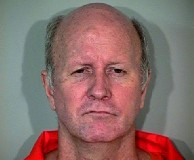 Graham Saunders Henry
Murderer · USA · 1986
Graham Saunders Henry was a Caucasian defendant. · Roy Estes was a Caucasian vi…
1 victim
Graham Saunders Henry
Murderer · USA · 1986
Graham Saunders Henry was a Caucasian defendant. · Roy Estes was a Caucasian vi…
1 victim
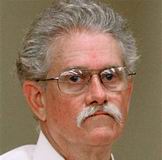 Jim Adkisson
Murderer · USA · 2008
July 27, 2008 — Jim David Adkisson entered the Tennessee Valley Unitarian Unive…
2 victims
Jim Adkisson
Murderer · USA · 2008
July 27, 2008 — Jim David Adkisson entered the Tennessee Valley Unitarian Unive…
2 victims
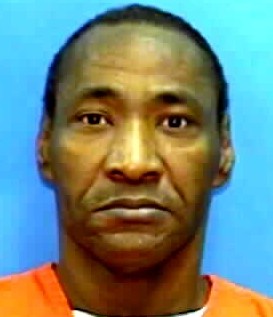 McArthur Breedlove
Murderer · 1974
McArthur Breedlove was sentenced to death for the murder of Frank Budnick on 11…
2 victims
McArthur Breedlove
Murderer · 1974
McArthur Breedlove was sentenced to death for the murder of Frank Budnick on 11…
2 victims
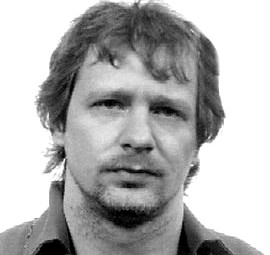 James Games
Murderer · USA · 1983
April 5, 1984 — Games was sentenced to death. · 06-15-99 — On remand, Marion Co…
1 victim
James Games
Murderer · USA · 1983
April 5, 1984 — Games was sentenced to death. · 06-15-99 — On remand, Marion Co…
1 victim
- Gender
- male
- Country
- USA
- Location
- Summit County, Ohio, USA
- Date of birth
- August 6, 1955
- Age at first offence
- 37
- Characteristics
- robbery, abduction, torture, dismemberment
- Victim profile
- Dale Pinkelman, 48 (store owner) / Peter Mihas, 61 (restaurant owner)
- Method of murder
- St abbing with knife
- Date(s) of murder
- August /November 1992
- Years active
- 1992
- Date of arrest
- —
- Status
-
Executed
Executed by lethal injection in Ohio on November 19, 2008
Background
Gregory Bryant-Bey was the owner of no store mentioned; the victims included Dale “Pinky” Pinkelman and Peter Mihas, both of whom were killed in Toledo, Ohio. Bryant-Bey was a male of Black race who was executed in 2008.
The offence
Dale “Pinky” Pinkelman (Pinky’s Collectibles)
Dale “Pinky” Pinkelman, 47, owned a sports collectibles and coin shop called Pinky’s Collectibles in Toledo. Bryant-Bey stabbed Pinkelman in the chest and stole merchandise from the store. The police found Pinkelman’s body lying face up on the floor of his shop with a single stab wound in his chest. Pinkelman’s pants and shoes had been removed; his shoes were lined up next to his body. Pinkelman’s pants were missing and were never recovered. The police discovered valuable items on Pinkelman’s person, including a gold necklace, rings, and two watches, but could not account for other items of value, including merchandise from the store and cash from the register. Bryant-Bey also took Pinkelman’s car. A fingerprint and a palm print on a glass display case approximately three feet from Pinkelman’s body did not initially identify an owner.
Peter Mihas (The Board Room; Boardroom Restaurant)
Peter Mihas, 61, owned The Board Room restaurant in downtown Toledo. Mihas was found dead in a parking lot behind his restaurant. He had received several knife wounds, including stab wounds to his back, chest, and arms, and a knife was still embedded in his chest. Mihas’s pants and shoes were removed, and the shoes were lying next to the body. An empty bank deposit bag was also found next to the body. Bryant-Bey was convicted in connection with Mihas’s stabbing death. Prosecutors also relied on similarities between the two crimes.
Investigation
After police responded to Pinkelman’s apparent murder and robbery, they had no suspect and no solid leads. Later, in November 1992, police found Mihas’s body outside his restaurant, Boardroom Restaurant, and noted similarities between the two cases. Toledo Detective William Gray recognized similarities between the Mihas murder/robbery and the unsolved Pinkelman case. An informant alerted police of Bryant-Bey’s possible involvement with the Mihas murder.
When police confronted Bryant-Bey with evidence, he confessed to murdering and robbing Mihas. Police compared Bryant-Bey’s finger and palm prints with unidentified prints found on the glass display case in Pinkelman’s store, and the prints matched. Police also found Pinkelman’s car less than two blocks from Bryant-Bey’s residence. When officers questioned Bryant-Bey about the Pinkelman murder, Bryant-Bey initially denied knowing Pinkelman and denied being in his store. Later, Bryant-Bey admitted he had purchased a watch from Pinkelman’s store on credit, then returned to ask for more time to pay. When officers asked whether he had harmed Pinkelman or taken his car, Bryant-Bey replied that he did not remember and asked to terminate questioning.
Detective William Gray and police confrontation
An informant alerted police of Bey’s possible involvement with the Mihas murder, and police confronted Bey.
Arrest and interrogation
On the evening of November 3, 1992, Bryant-Bey requested a room at the Riverview Inn, paying the desk clerk with a $100 bill. He also inquired about buying the desk clerk’s automobile, indicating he had $1,100 in cash. Bryant-Bey requested that a bellman take $500 in cash to his wife at a local church. The Riverview Inn desk clerk contacted a friend who was an officer with the Toledo Police Department, noting Bryant-Bey had large sums of money and knowing that Mihas had been murdered earlier that morning.
At approximately noon on November 4, 1992, Officer Ross and other Toledo police officers went to Bryant-Bey’s hotel room at the Riverview Inn to execute two arrest warrants for misdemeanor theft. The officers knocked on the door and announced they were police. No answer was received, but the officers heard movement inside. The officers instructed a hotel maintenance man to use a pass key to open the door. The officers entered the room and informed Bryant-Bey he was under arrest.
Bryant-Bey requested the police gather clothing including a pair of black pants from the floor of the hotel room and take them to the police station. Bryant-Bey was taken to the interrogation room of the police station, where the black pants were deposited in a separate homicide investigation room. Bryant-Bey was immediately searched, and $1,160 in cash was found in one of his socks. Officers counted the money in Bryant-Bey’s presence, filled out an inventory form, and sealed the money in an envelope.
Bryant-Bey waited in the interrogation room approximately four hours prior to interrogation by Officer Ross. During that waiting time, police inspected the black pants in the homicide investigation room and noted a yellow paint stain similar to a paint stain found on Mihas’s pants. A chemical analysis performed on the paint stains indicated the stains from both Mihas’s pants and Bryant-Bey’s pants were similar.
At approximately 5:30 p.m., Officer Ross began interrogation. Officer Ross read Bryant-Bey his Miranda rights, Bryant-Bey stated he understood and wished to waive his rights, and he signed a waiver form.
Initial statements and subsequent changes
Initially, Bryant-Bey told Officer Ross he had nothing to do with Mihas’s murder and had been in a different part of the city on the night in question. He also said the money found in his sock and the money used to pay for the room at the Riverview Inn were won through gambling.
Officer Ross asked Bryant-Bey to explain how the paint on his pants was the same as the paint on Mihas’s pants. Bryant-Bey said he could not explain how the paint was the same. Officer Ross suggested that Mihas may have left his restaurant carrying a knife resulting in an altercation behind the restaurant. After that suggestion, Bryant-Bey changed his statement and said he was present when Mihas died. Bryant-Bey stated that while he was urinating behind the restaurant, Mihas confronted and threatened him. Bryant-Bey stated that Mihas had a knife, that the two men struggled, and that Mihas accidentally fell on his knife.
The interrogation was stopped for a thirty-minute to one-hour break somewhere between 8:00 and 8:30 p.m., and police provided Bryant-Bey with dinner. After the break, police showed Bryant-Bey the Miranda waiver form previously signed. Officers asked if he understood his Miranda rights, and he replied that he did. In the second half of the interrogation, Bryant-Bey explained that Mihas may have received knife wounds to both his chest and back by rolling over after falling on his knife. He also admitted going through Mihas’s wallet before leaving the scene, but he could not explain how Mihas’s pants were removed. The interrogation was completed at approximately 10:00 p.m.
Trial
Charging and severance
A grand jury returned a four-count indictment charging two counts of aggravated murder and two counts of aggravated robbery. The aggravated murder charges each included the same specification: aggravated murder in the course of an aggravated robbery, which would render Bryant-Bey eligible for the death penalty under Ohio law. Bryant-Bey moved to sever the trials so that the Mihas charges, which he had confessed to, were tried separately from the Pinkelman charges. The court granted the motion. The State prosecuted the Mihas murder first.
Mihas trial verdict and recommended sentence
The jury convicted Bryant-Bey of both counts: aggravated murder with the corresponding specification and aggravated robbery. The jury recommended life imprisonment with eligibility for parole after thirty years.
Pinkelman trial verdict and sentence recommendation
At the conclusion of the trial on the Pinkelman murder, the jury convicted Bryant-Bey on all counts and specifications and recommended a sentence of death.
Evidence and trial claims on appeal
On appeal, Bryant-Bey argued the trial court erred in failing to suppress evidence and statements obtained during police entry and interrogation, including challenges to police entry into his hotel room, evidence seized at the hotel room and police station, and statements as involuntary or in violation of Miranda. Bryant-Bey also argued that gruesome photographs of the victim were improperly admitted, that prosecutorial remarks in rebuttal closing argument required reversal, and that he was denied effective assistance of counsel.
The appellate court held that police officers were excused from compliance with R.C. 2935.12(A) due to exigent circumstances and found trial counsel’s performance did not fall below an objective standard of reasonableness.
In addressing voluntariness of Bryant-Bey’s statement, the appellate court discussed the totality of circumstances and considered arguments including deceptive police practices, coercion or duress, moment of silence during interrogation, and length and conditions of interrogation. The appellate court stated that Detective Ross did not make a knowingly false statement about the origin of the knife, explaining that at the time of interrogation Detective Ross believed the knife taken from the restaurant had been used to stab Mihas.
The appellate court also addressed prosecutorial misconduct arguments. The prosecutor’s comments included references to defense counsel and defense counsel’s theory, including:
- “[defense counsel] will be doing cartwheels out of this courtroom if you buy any of this stuff,”
- “this ludicrous story of self-defense or accident,”
- “[defense counsel] is trying to sell you this bill of goods that it was an accident,” and
- “[defense counsel] had very little to work with in preparation of a defense.”
The appellate court found, beyond a reasonable doubt, that even absent these statements the jury would have found Bryant-Bey guilty. The trial court sustained an objection to the prosecutor’s statement that Mihas was “a very good, local businessman who works hard for his living,” and admonished the jury it must “decide this case not based upon sympathy, prejudice, or bias.” The appellate court also addressed two instances where the prosecutor stated “We know it’s this defendant,” finding the remark referred to Bryant-Bey’s presence as evidenced by his statement to police.
The appellate court affirmed the Lucas County Court of Common Pleas judgment, concluding Bryant-Bey was not prejudiced or prevented from having a fair trial.
Sentencing
Bryant-Bey was sentenced in connection with his convictions related to aggravated murder and aggravated robbery.
In the Pinkelman case, the trial court sentenced Bryant-Bey to death for the aggravated murder conviction and imposed a term of imprisonment for aggravated robbery. In the Mihas case, he received a life sentence, with eligibility for parole after thirty years, in the jury’s recommended sentence.
In one account of sentencing, on December 22, 1993, the trial court sentenced Bryant-Bey to death for the aggravated murder conviction and fifteen to twenty-five years for the aggravated robbery conviction.
Appeals
Direct appeal
Bryant-Bey’s direct appeal challenged the suppression rulings, admission of photographs, prosecutorial remarks, and effective assistance of counsel. The appellate court affirmed the decision of the trial court and ordered remand for execution of sentence. The appellate court held that the trial court did not err by denying suppression of the statement made to Detective Ross and denied other assignments of error, ultimately affirming the judgment.
Post-conviction relief appeal (PCR)
Bryant-Bey appealed the denial of his petition for postconviction relief. The appellate court affirmed the trial court’s judgment denying postconviction relief.
In that proceeding, the appellate record stated that on November 19, 1993, a jury found him guilty of aggravated robbery and aggravated murder. On December 22, 1993, the trial court sentenced him to death for aggravated murder and fifteen to twenty-five years for aggravated robbery. Bryant-Bey appealed, and the appellate court affirmed his convictions in State v. Bey (Sept. 19, 1997). The Supreme Court of Ohio upheld his convictions and sentences in State v. Bey (1999), 85 Ohio St.3d 487, 709 N.E.2d 484.
Bryant-Bey filed a petition for postconviction relief on September 20, 1996. The petition asserted ineffective assistance of trial counsel claims based on mitigation-related psychologist analysis. On October 31, 1997, the trial court denied the petition, finding the claims were barred by res judicata because they could have been raised on direct appeal and because Bryant-Bey failed to provide evidence which, if true, would entitle him to relief. The trial court also denied a request for a hearing.
In affirming, the appellate court stated that a criminal defendant seeking to challenge conviction via R.C. 2953.21 was not automatically entitled to a hearing and that the trial court had determined substantive grounds were not shown. The appellate court concluded that issues could have been raised on direct appeal and that a postconviction petition presenting a new expert opinion different from trial did not establish ineffective assistance merely by presenting an alternative diagnosis. The appellate court found Bryant-Bey’s evidence was cumulative or alternative and that his petition was barred by res judicata. The appellate court also concluded that the second assignment of error was moot due to the res judicata finding.
Outcome
Bryant-Bey was executed by lethal injection in Ohio on November 19, 2008. The execution occurred at the Southern Ohio Correctional Facility in Lucasville, with death pronounced at 10:41 a.m.
Prior to execution, the U.S. Supreme Court denied his request for a 60-day reprieve, and Gov. Ted Strickland denied clemency. The Parole Board unanimously recommended that the governor deny clemency.
After execution, Jay Clark, described as the son-in-law of one of the victims, offered his perspective: “This is a difficult day. There aren't any winners on either side.”
Aftermath
Jay Clark’s remarks
Jay Clark thanked detectives, judges, and others involved in Bryant-Bey’s conviction. Clark called the victims “brave, hardworking family men” and said, “We’ll cherish the memories we have and the lessons they taught us.” He also said: “This is a difficult day.
Other details
Inmate details and facility information
Bryant-Bey was identified as Gregory L. Bryant Bey, with DOB: 08/06/1955. Inmate#: OSP #A285890 and Inmate: GREGORY L BRYANT BEY were provided. He was held at Southern Ohio Correctional Facility and was executed at Southern Ohio Correctional Facility in Lucasville.
Prayer/rosary and statements
Before execution, Bryant-Bey clutched a rosary. His final words included: “My heart was seeking a sense of fairness and a dose of justice, but it was not to be,” and the statement continued: “My heart calls out to God, 'Come get me on the double.'” He read his final words from a hand-written two page statement held in front of him by a corrections officer.
The record included Bryant-Bey’s extensive statement alleging he was framed “based on false evidence” and claiming multiple people fabricated evidence. The statement included multiple verbatim passages, including:
My heart was just seeking a sense of fairness and a dose of justice but it was not to be. Just like when a witness for the state testifies "that 2 young men were seen in the victim's automobile" yet Mr. Wingate "objects" because he failed to investigate the matter.
My heart calls out to God, "Come get me on the double."
Specific final-word passage (as captured)
How can a framed man be mad at anyone but himself? Being born again I expect to see God and His kingdom because to die due to Tom Ross, Keefe Snyder and Dale Roach fabricating evidence to allow Joe Solomon to knowingly use false evidence to obtain a conviction and then use that conviction as an aggravating circumstance to subject me to the death penalty. Mr. Ron Wingate allows clients to be convicted with false evidence, he will get the trial court to grant: motion to make the state's evidence available for independent testing, but, instead of utilizing an independent expert, he will piggy-back documents from the prosecution and fail to comply with his own request, cheating clients out of their Constitutional rights to confrontation and authentication. He has been admonished but not disciplined, nor will he because he does not remember the case. My brothers and sisters wonder what can be done to protect their sisters and brothers and children and friends from being framed, lied on and convicted on invisible evidence. We have to pray that they live a life consistent with the truth and love doing right. My heart was just seeking a sense of fairness and a dose of justice but it was not to be. Just like when a witness for the state testifies "that 2 young men were seen in the victim's automobile" yet Mr. Wingate "objects" because he failed to investigate the matter. Having one trial lawyer who fails to investigate, one disbarred and then to have a post-conviction lawyer disbarred speaks of my representation and my lack of effective assistance of counsel especially when at clemency the lack of knowledgeable counsel not only hampered me it further condemned me. Eight days after a clemency hearing I was allowed lawyers and the court refused to let them be effective or useful. My heart was seeking the hope of light that a soul calls on in times of trouble and in the earthly battle our God digs us out of the rubble. My heart was left with Love from above. I touched my son, my daughters, my nieces, my cousin, my sisters and my brother, my grandchildren and my new friends and others.
Witnesses and last interaction
During the execution, Bryant-Bey smiled and made a two-finger peace sign to his half brother, the Rev. Elton Williamson; public defender Rachel Troutman; and his spiritual adviser, Stephen Sparling. Bryant-Bey repeatedly mouthed a question to his brother and attorney that was inaudible to media witnesses; the half brother later said it was asking, “Where's Darlene?” Darlene Hines was expected to witness his death and did not attend.
Elton Williamson later said: “This was not punishment. This was murder,” and “The same thing that he was convicted of, the state of Ohio did to him.” Williamson said Bryant-Bey told him he was innocent, and that he looked at him right in the eyes and said he didn't do that, and Williamson believed it.
Relationship and upbringing claims at clemency
Bryant-Bey’s attorneys urged Gov. Ted Strickland to spare his life, arguing he was twice abandoned as a child by his birth mother, was neglected and beaten by his adoptive mother, and never met his real father. They described that he had just two emotions as a child: “fear and anger.” At the clemency hearing, the Parole Board heard testimony from Bryant-Bey’s half-sister, Ruth Williamson-Bey, who said she asked her father to bring Bryant-Bey to their home after she learned of his existence.
Board report language included: “In fact, testimony and information presented indicated that after Bryant-Bey returned to Toledo at the age of 13, he was able to adjust adequately and conform to societal norms, and experienced a more stable family life,” and: “The board also notes that Gregory L. Bryant-Bey does not accept full responsibility for the crimes of conviction.” The board’s report also stated, “The board finds that the death sentence in this case is fair and just and is not disproportionate when compared to similar cases.”
Ohio Assistant Public Defender Rachel Troutman said: “I was disappointed that they didn't give more weight to the childhood that ended up creating this,” and: “I was a little puzzled by the belief that he ended up able to adjust to societal norms,” and: “I think they misunderstood. Ruth had her share of problems as a result of her childhood, so if that's the more stable family life they're talking about, I don't understand how it could be used against him.”
Food served before execution
The final meal listed included: Three pieces of fried chicken, spaghetti with meat sauce, potato salad, cherry pie with strawberry ice cream and cola.
Timeline (dated events)
- Aug. 9, 1992 — Bryant-Bey stabs and kills Dale Pinkelman, owner of sports collectibles and coin shop; the store's cash register is cleaned out.
- Nov. 2, 1992 — Bryant-Bey stabs and kills Toledo restaurant owner Peter Mihas in a downtown parking lot; an empty money bag is found nearby.
- Nov. 3, 1992 — Employees of the Boardroom Restaurant arrived at work and discovered the body of Peter Mihas in a parking lot behind the restaurant.
- Nov. 4, 1992 — Police execute two arrest warrants at the Riverview Inn; Bryant-Bey is arrested; interrogation occurs later that day.
- June 8, 1993 — Jury finds Bryant-Bey guilty in death of Mihas.
- June 10, 1993 — Bryant-Bey is sentenced to life in prison for killing Mihas.
- Nov. 11, 1993 — At second trial, Bryant-Bey is convicted of killing Pinkelman.
- Dec. 22, 1993 — Bryant-Bey is sentenced to death for Pinkelman's slaying.
- Oct. 22 — Ohio Parole Board unanimously recommends that governor deny clemency.
- Nov. 18 — Bryant-Bey asks U.S. Supreme Court for 60-day reprieve; Gov. Ted Strickland denies Bryant-Bey clemency.
- Nov. 19 — Bryant-Bey is scheduled to be executed; he was executed and pronounced dead at 10:41 a.m.
Trials and judicial proceedings cited
State v. Bryant-Bey, Not Reported, 1995 WL 96783 (Ohio App. 1995) (Direct Appeal). State v. Bryant-Bey, Not Reported, 2000 WL 770131 (6th Cir. 2000) (PCR). The appellate opinion affirmed the Lucas County Court of Common Pleas judgment and remanded for execution of sentence, and ordered appellant pay court costs of the appeal.
Grand jury and statutory references in appeal
The appeal record referenced R.C. 2903.01(B) and R.C. 2911.01 for conviction and sentence. It also referenced R.C. 2935.12(A) regarding “knock and announce” and R.C. 2953.21 in postconviction procedure. The appellate opinion also referenced Strickland v. Washington (1984), State v. Brewer (1990), Oregon v. Bradshaw (1983), and State v. House (1978).
Spotted an error, or have more information about this case?