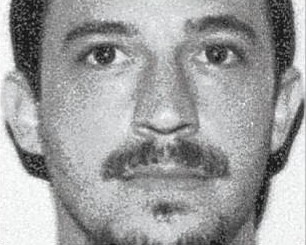
Douglas McArthur Buchanan
Mass murderer Timothy McVeigh
Mass murderer · USA · 1995
Timothy James McVeigh (April 23, 1968 – June 11, 2001) was a United States Army…
168 victims
Timothy McVeigh
Mass murderer · USA · 1995
Timothy James McVeigh (April 23, 1968 – June 11, 2001) was a United States Army…
168 victims
 Julio Gonzalez
Mass murderer · USA · 1990
Julio Gonzalez was sentenced to 174 twenty-five-year sentences (a total of 4,35…
87 victims
Julio Gonzalez
Mass murderer · USA · 1990
Julio Gonzalez was sentenced to 174 twenty-five-year sentences (a total of 4,35…
87 victims
 David Burke
Mass murderer · USA · 1987
David Augustus Burke (May 18, 1952–December 7, 1987) was an employee of USAir,…
43 victims
David Burke
Mass murderer · USA · 1987
David Augustus Burke (May 18, 1952–December 7, 1987) was an employee of USAir,…
43 victims
 George Jo Hennard
Mass murderer · USA · 1991
George Jo Hennard carried out a mass killing at a Luby’s Cafeteria in Killeen,…
23 victims
George Jo Hennard
Mass murderer · USA · 1991
George Jo Hennard carried out a mass killing at a Luby’s Cafeteria in Killeen,…
23 victims
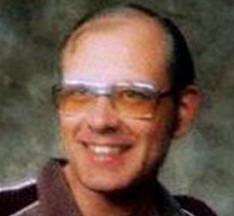 James Huberty
Mass murderer · USA · 1984
James Oliver Huberty was a 41-year-old unemployed security guard. He was born i…
21 victims
James Huberty
Mass murderer · USA · 1984
James Oliver Huberty was a 41-year-old unemployed security guard. He was born i…
21 victims
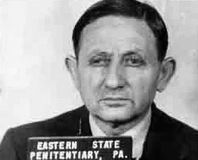 Morris Bolber
Serial killer · USA · 1932
Morris Bolber was prosecuted as part of a Philadelphia poison-murder ring invol…
50 victims
Morris Bolber
Serial killer · USA · 1932
Morris Bolber was prosecuted as part of a Philadelphia poison-murder ring invol…
50 victims
 Tooba Yahya
Murderer · Canada · 2009
Tooba Yahya was a 41-year-old second wife in the polygamous Shafia household. H…
4 victims
Tooba Yahya
Murderer · Canada · 2009
Tooba Yahya was a 41-year-old second wife in the polygamous Shafia household. H…
4 victims
 Tommy Ray Pruitt
Murderer · USA · 2001
Tommy Ray Pruitt was sentenced to death on November 21, 2003. · November 21, 20…
1 victim
Tommy Ray Pruitt
Murderer · USA · 2001
Tommy Ray Pruitt was sentenced to death on November 21, 2003. · November 21, 20…
1 victim
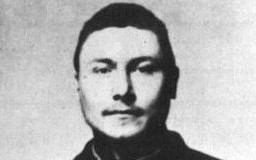 John Nordlund
Mass murderer · Sweden · 1900
John Filip Nordlund (also known as ”Mälarmördaren”, ”Mordlund”, ”Svarte Filip”)…
5 victims
John Nordlund
Mass murderer · Sweden · 1900
John Filip Nordlund (also known as ”Mälarmördaren”, ”Mordlund”, ”Svarte Filip”)…
5 victims
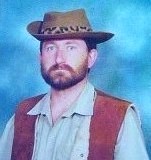 Barend Strydom
Spree killer · South Africa · 1988
Barend Hendrik Strydom was a former policeman who was described as a right-wing…
8 victims
Barend Strydom
Spree killer · South Africa · 1988
Barend Hendrik Strydom was a former policeman who was described as a right-wing…
8 victims
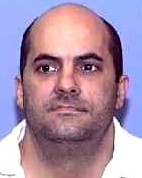 Daniel Clate Acker
Murderer · USA · 2000
Daniel Clate Acker; TDCJ Number 999381. Daniel Clate Acker was convicted of cap…
1 victim
Daniel Clate Acker
Murderer · USA · 2000
Daniel Clate Acker; TDCJ Number 999381. Daniel Clate Acker was convicted of cap…
1 victim
- Gender
- male
- Country
- USA
- Location
- Amherst County, Virginia, USA
- Date of birth
- 1969
- Age at first offence
- 18
- Characteristics
- parricide, jealousy, armed robbery, torture
- Victim profile
- H is father, stepmother and two stepbrothers (ages 10 and 13)
- Method of murder
- Shooting (rifle)
- Date(s) of murder
- September 15, 1987
- Years active
- 1987
- Date of arrest
- October 2, 1987
- Status
-
Executed
Executed by lethal injection in Virginia on March 18, 1998
Case information
Douglas McArthur Buchanan Jr. was convicted in Virginia of capital murder for killing his father and was also convicted of first degree murders of his stepmother and two stepbrothers, as well as firearm offenses. He was sentenced to death for the capital murder and received life imprisonment for each first degree murder, with additional terms of imprisonment for the firearm offenses.
Timeline
- September 15, 1987 — Buchanan shot and stabbed to death his father, stepmother, and two stepbrothers; he later fled with his wife.
- August 22, 1988 — Buchanan entered death row.
- 1988 — Buchanan was convicted of capital murder in Virginia and sentenced to death.
- December 1991 — The state trial court denied habeas relief after an evidentiary hearing on ineffective assistance.
- June 1992 — The Virginia Supreme Court denied appeal.
- 1992 — The United States Supreme Court denied certiorari again in Buchanan v. Murray, 506 U.S. 988 (1992).
- October 30, 1996 — The case was argued in the United States Court of Appeals for the Fourth Circuit.
- December 30, 1996 — The United States Court of Appeals for the Fourth Circuit decided Buchanan v. Angelone, 103 F.3d 344.
- April 8, 1997 — The United States Supreme Court granted a stay of execution pending disposition of his writ of certiorari.
- September 19, 1997 — The United States Supreme Court granted his motion for leave to file an amicus curiae brief by the National Association of Criminal Defense Lawyers.
- March 13, 1998 — Buchanan filed a petition in the United States District Court for the Eastern District of Virginia under 42 U.S.C. § 1983 seeking declaratory judgment and injunctive relief to stop his execution.
- March 18, 1998 — Buchanan was executed by lethal injection in a Virginia death chamber.
- March 17, 1998 — The United States Court of Appeals for the Fourth Circuit submission date in Buchanan v. Gilmore (No. 98-6380).
- March 18, 1998 — The United States Court of Appeals for the Fourth Circuit decided Buchanan v. Gilmore (No. 98-6380).
The offence
Buchanan murdered his father, his stepmother, and his two half brothers on the afternoon of September 15, 1987.
After Buchanan’s mother died of cancer when Buchanan was 10, Buchanan’s father remarried about six months after the death. Buchanan felt left out when his father remarried shortly after his mother died of cancer.
On September 15, 1987, Buchanan showed up at his family home with a rifle after an argument erupted over a remark his father made about Buchanan’s mother.
Buchanan shot and killed his father. After that, when his stepbrothers Joel (13) and Donnie (10) arrived home from school, Buchanan shot Donnie in the face and shot Joel in the back as Joel tried to flee. Later, Buchanan killed his stepmother Geraldine Buchanan with a gun and a knife by shooting her, stabbing her in the chest, and slitting her throat.
Buchanan then fled with his wife. They were captured 17 days later in New Mexico.
Victims
- Douglas M. Buchanan Sr. (father)
- Geraldine Patterson Buchanan (stepmother)
- Donald (also identified as Donnie) Jerry Buchanan (stepbrother), age 10
- Joel Jerry Buchanan (stepbrother), age 13
Investigation and arrest
Buchanan fled with his wife after the killings and they were captured 17 days later in New Mexico.
Trial
Buchanan was charged with capital murder for the killing of “more than one person as part of the same act or transaction.” Va. Code Ann. § 18.2-31(7) (Michie 1996).
In four separate indictments, the grand jury also charged him with the first degree murder of each victim. He was also charged with four counts of use of a firearm in the commission of a murder.
Buchanan pleaded not guilty to all charges.
He was tried before a jury in the Circuit Court for Amherst County, Virginia.
The jury found Buchanan guilty of capital murder for killing his father, four first degree murders, and the firearm offenses.
Jury sentencing verdict and instructions
In the verdict at the penalty phase, the jury stated:
“We, the Jury, on the issue joined, have found the defendant guilty of capital murder by having willfully, deliberately, and with premeditation killed Douglas McArthur Buchanan, Sr., Christopher Donald Buchanan, Joel Jerry Buchanan and Geraldine Patterson Buchanan as part of the same transaction and having found unanimously that his conduct in committing the murders of the above four victims, or any one of them, was outrageously or wantonly vile, horrible, or inhuman, in that it involved torture, depravity of mind or aggravated battery to the above four victims, or to any one of them, and having considered the evidence in mitigation of the offense, we unanimously fix his punishment at death.”
Following a separate hearing, the jury sentenced Buchanan to death for the capital murder, to life in prison for each of the first degree murders, and to a term of imprisonment for the firearm offenses. The circuit court imposed the recommended sentences.
During sentencing, the court told the jury:
“[I]f you believe from all the evidence that the death penalty is not justified, then you shall fix the punishment of the defendant at life imprisonment.”
The statutory verdict form required the jury to indicate that it had “considered the evidence in mitigation of the offense.”
Buchanan asked the court to give a more detailed instruction on mitigation, including that the jury consider his youth, his clean criminal record, and whether he was “under the influence of extreme mental or emotional disturbance” when he committed the crime. Virginia Code § 19.2-264.4 (Michie 1996) designated these factors as mitigating evidence.
Sentencing
The jury sentenced Buchanan to death for the capital murder, to life in prison for each first degree murder, and to a term of imprisonment for the firearm offenses.
Appeals
Supreme Court of Virginia
Buchanan appealed to the Supreme Court of Virginia.
The Supreme Court of Virginia vacated the redundant conviction of first degree murder for the killing of Buchanan’s father and affirmed the other convictions and the related sentences, including the death penalty.
United States Supreme Court denial of certiorari
The United States Supreme Court denied certiorari in Buchanan v. Virginia, 493 U.S. 1063 (1990). The United States Supreme Court again denied certiorari in Buchanan v. Murray, 506 U.S. 988 (1992).
Habeas corpus and federal proceedings
After state habeas proceedings, Buchanan sought federal habeas relief. The district court denied relief.
On appeal to the United States Court of Appeals for the Fourth Circuit, Buchanan presented five issues:
- Inadequate instruction on mitigating evidence.
- Due process violation based on mitigation instruction and the statutory sentencing scheme.
- The trial court impermissibly limited his ability to present mitigating evidence by excluding hearsay statements offered by his expert witness Dr. Robert Brown.
- Ineffective assistance of trial counsel regarding counsel’s failure to pursue a plea strategy Buchanan argued would have avoided a death sentence.
- Claimed constitutional inadequacy in the Virginia Supreme Court’s review, including alleged failure to consider mitigating evidence and alleged inadequacy of proportionality review.
The Fourth Circuit found no reversible error and affirmed the district court’s denial of his petition for a writ of habeas corpus. The judgment was “AFFIRMED.”
The case caption and appellate details included:
- Douglas McArthur Buchanan, Jr., Petitioner-appellant, v. Ronald J. Angelone, Director, Virginia Department Of Corrections; Commonwealth of Virginia, respondents-appellees
- Argued Oct. 30, 1996
- Decided Dec. 30, 1996
- Before HALL and ERVIN, Circuit Judges, and BUTZNER, Senior Circuit Judge
Federal court clemency-related filing
Fourth Circuit decision in Buchanan v. Gilmore
In Buchanan v. Gilmore, the United States Court of Appeals for the Fourth Circuit considered Buchanan’s request for a stay of execution and injunctive relief.
Buchanan filed a petition in the United States District Court for the Eastern District of Virginia on March 13, 1998 under 42 U.S.C. § 1983 against:
- James S. Gilmore, III, Governor, Commonwealth of Virginia, in his individual and official capacities
- Ronald J. Angelone, Director, Virginia Department of Corrections, in his individual and official capacities
Buchanan sought a declaratory judgment, a temporary restraining order, and injunctions against his execution until his application for clemency would be considered and resolved by a lawfully empowered official of the Commonwealth who did not suffer a conflict of interest and could act consistently with due process of law.
The district court had granted a preliminary injunction enjoining execution until further order of the district court. The Commonwealth moved to vacate the stay and injunction. Buchanan filed a response at 9:57 a.m. on March 18, 1998.
The Fourth Circuit reversed the district court’s grant of relief, vacated the stay, and directed dismissal of the action. The mandate was to issue forthwith.
The Fourth Circuit held that Buchanan’s § 1983 action lacked merit because the substance of his clemency petition was based on trial error, and his requested relief was in essence a petition for a writ of habeas corpus, and therefore a successive motion barred by 28 U.S.C. § 2244.
Quotes attributed to Buchanan and others
Buchanan told investigators:
“They never treated me like a son, they treated me like an outsider all the time. I mean, I don't think they cared... They never talked to me when I was living there.”
Buchanan stated that “basically, get the ride started. I'm ready to go.” When asked if he had a final statement, Buchanan smiled at witnesses in a booth adjacent to the death chamber and said:
“Get the ride started. I'm ready to go.”
In explaining his feelings, Buchanan answered:
“They never treated me like a son--they treated me like an outsider all the time. I mean--I don't think they cared.”
When asked about what set it off, Buchanan replied:
“there was no one thing that they could of done that--would have done that, it's just that I mean, they never talked to me when I was living there.”
Buchanan also testified:
“`was getting mad. I was sweating. I was getting real hot and I was shaking."
When his father ended a conversation, Buchanan stated that his father broke off saying:
“that's it, let's go out and look at this car I bought for J.J.’”
After his execution, the Fourth Circuit records noted Buchanan’s request for clemency depended on his complaints about exclusion of mitigating evidence and jury instructions at sentencing.
Outcome
Buchanan’s execution was carried out on March 18, 1998 by lethal injection in a Virginia death chamber.
Aftermath
Buchanan’s wife, Christianne, was serving four life terms for helping to plan the carnage.

Spotted an error, or have more information about this case?