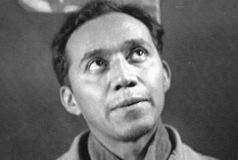
Gregorio Cardenas
Spree killer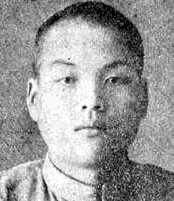 Mutsuo Toy
Spree killer · Japan · 1938
Mutsuo Toi (都井 睦雄; Toi Mutsuo) was a Japanese spree killer. Mutsuo Toi was born…
30 victims
Mutsuo Toy
Spree killer · Japan · 1938
Mutsuo Toi (都井 睦雄; Toi Mutsuo) was a Japanese spree killer. Mutsuo Toi was born…
30 victims
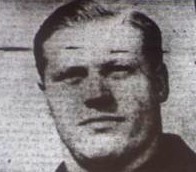 Tore Hedin
Spree killer · Sweden · 1951
September 1943 — Tore Hedin broke into a local brewery near his parental home t…
9 victims
Tore Hedin
Spree killer · Sweden · 1951
September 1943 — Tore Hedin broke into a local brewery near his parental home t…
9 victims
 Joseph Taborsky
Spree killer · USA · 1951
Joseph “Mad Dog” Taborsky (March 23, 1924 – May 17, 1960) was a murderer who wa…
7 victims
Joseph Taborsky
Spree killer · USA · 1951
Joseph “Mad Dog” Taborsky (March 23, 1924 – May 17, 1960) was a murderer who wa…
7 victims
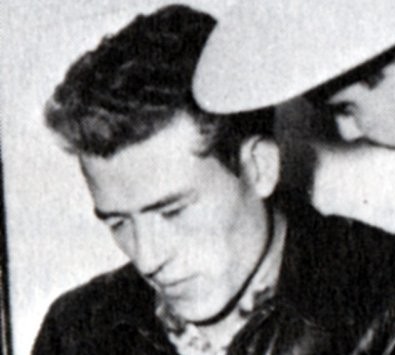 William Cook
Spree killer · USA · 1951
William Cook, also known as “Billy Boy” or “Cockeyed Cook,” committed a spree o…
6 victims
William Cook
Spree killer · USA · 1951
William Cook, also known as “Billy Boy” or “Cockeyed Cook,” committed a spree o…
6 victims
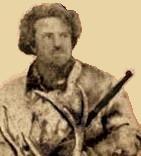 Walter Earl Durand
Spree killer · USA · 1939
Walter Earl Durand (1913-1939) was an only son of Walter W. and Effie Durand. H…
5 victims
Walter Earl Durand
Spree killer · USA · 1939
Walter Earl Durand (1913-1939) was an only son of Walter W. and Effie Durand. H…
5 victims
 Mary Ann Holder
Mass murderer · USA · 2011
Mary Ann Holder carried out a shooting spree and committed suicide by shooting…
5 victims
Mary Ann Holder
Mass murderer · USA · 2011
Mary Ann Holder carried out a shooting spree and committed suicide by shooting…
5 victims
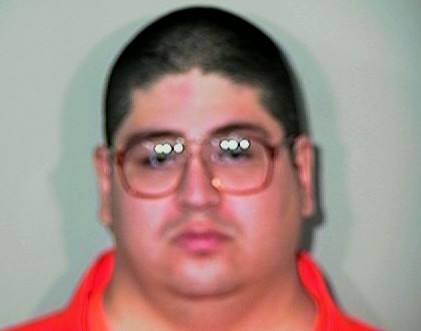 Michael Steven Gallegos
Murderer · USA · 1990
Defendant: Michael Steven Gallegos · Victim: Kindall Wishon, an 8-year-old step…
1 victim
Michael Steven Gallegos
Murderer · USA · 1990
Defendant: Michael Steven Gallegos · Victim: Kindall Wishon, an 8-year-old step…
1 victim
 Emma Hall
Murderer · United Kingdom · 2012
Emma Hall was sentenced to life in prison with a minimum term of 15 years on Ap…
1 victim
Emma Hall
Murderer · United Kingdom · 2012
Emma Hall was sentenced to life in prison with a minimum term of 15 years on Ap…
1 victim
 Ervin Lupoe
Mass murderer · USA · 2009
Ervin Lupoe killed his wife, Ana Lupoe, and their five children, then killed hi…
6 victims
Ervin Lupoe
Mass murderer · USA · 2009
Ervin Lupoe killed his wife, Ana Lupoe, and their five children, then killed hi…
6 victims
- Gender
- male
- Country
- Mexico
- Location
- Mexico, D. F., Mexico
- Date of birth
- 1915
- Age at first offence
- 27
- Characteristics
- rape
- Victim profile
- María de los Ángeles González, 16 (prostitute) / Rosa Reyes, 16 (prostitute) / Raquel Martínez de León, 16 (prostitute) / Graciela Arias Ávalos, 19 (student)
- Method of murder
- Ligature strangulation
- Date(s) of murder
- August-September 1942
- Years active
- 1942
- Date of arrest
- September 4, 1942
- Status
-
Died in custody
Pleaded guilty; sentenced to life in prison in 1943; released on September 8, 1976; died on August 2, 1999
Case record
Characteristics
Gregorio Cárdenas buried the bodies in his garden.
People
- Gregorio Cárdenas Hernández (Goyo), also known as the strangler of Tacuba (estrangulador de Tacuba), was a Mexican spree killer.
- María de los Ángeles González was a 16-year-old prostitute who was visited in his house in the Tacuba neighborhood of Mexico City.
- Rosa Reyes was a prostitute murdered in the following weeks and was aged 16.
- Raquel Martínez de León was a prostitute murdered in the following weeks and was aged 16.
- Graciela Arias Ávalos was a 19-year-old fellow chemistry student.
Background
Gregorio Cárdenas Hernández was born in Mexico City in 1915 to a family originating from the state of Veracruz. In part due to an encephalitis infection, he showed abnormal behavior as a child, including cruelty to animals.
Cárdenas received a scholarship from Petróleos Mexicanos to study chemistry at the Universidad Nacional Autónoma de México (UNAM). He rejected a scholarship from PEMEX.
During his imprisonment, Dr Quiroz Cuarón diagnosed him from criminológica psychology: neurotic personality, evolutionary neurosis, organ-neurosis, narcissism and anal sadistic eroticism. From the psychiatric point of view, his neurotic state was esquizo-paranoide.
Cárdenas learned to play the piano, wrote poetry, and married in prison. His wife bore him four children. He was allowed to pursue psychiatry and law studies while in prison, completed his law studies, and worked as a lawyer until his death in 1999.
A chance meeting with Alejandro Jodorowsky in a backstreet bar in Mexico City inspired the psycho-magician to create the 1989 film Santa Sangre, based loosely on Cárdenas's life.
The offence
Cárdenas Hernández killed four women. After killing, he tried to hide the bodies in his house on Mar del Norte No. 20. The account describes asphyxia to three victims and the fourth victim being killed by hitting her, and it states that he had sex with the victim.
Timeline
- 15 August 1942 — María de los Ángeles González, aged 16, was visited in Cárdenas’s house in the Tacuba neighborhood of Mexico City; after having sex with her, Cárdenas strangled her and buried her body in his garden.
- 7 September 1942 — Cárdenas was arrested on 7 September 1942 after committing himself to a psychiatric hospital shortly before the police exhumed the bodies.
- 1943 — Cárdenas was sentenced to life in prison.
- 1947 — Cárdenas escaped prison in 1947 and fled to Oaxaca.
- September 8, 1976 — Cárdenas was released.
- 1976 — Cárdenas was pardoned by president Luis Echeverría.
- August 2, 1999 — Cárdenas died.
Investigation
His neighbors started to get suspicious and informed the police. Shortly before the police exhumed the bodies, Cárdenas had himself committed to a psychiatric hospital. He was then arrested on 7 September 1942.
The account states that Cárdenas was regularly questioned and investigated by the country's top psychiatrists and criminologists.
Arrest
Cárdenas was arrested on 7 September 1942.
Trial
During his trial, Cárdenas pleaded guilty and was given a life sentence.
Sentencing
Cárdenas was sentenced to life in prison in 1943.
Appeals
No appeal information was included.
Outcome
Cárdenas was convicted after pleading guilty, received a life sentence, and later was released.
Aftermath
In 1976, Cárdenas was pardoned by president Luis Echeverría. He was invited by interior secretary Mario Moya to give a speech in the Congress of the Union, where he was celebrated as a hero and hailed as a “great example” and a “clear case of rehabilitation”.
The narrative also states that after his liberation, he received a tribute, including a standing ovation to him.
Reports included copycat murderers imitating his crimes, and an (illegal) pornographic movie based on his story was made.
Cárdenas wrote three books while in prison.
Works inspired by his history
- “El Asesino” (the Assassin), a kind of porn short movie, from the years forty.
- “El profeta Mimí” (Mimí prophet), film directed by Jose Estrada in 1973.
- “El Criminal de Tacuba” (The Tacuba Criminal), work of Víctor Hugo Rascón Banda, directed by Raul Quintanilla, who showed the play in the “Helénico” Theater in the ninety.
- Cárdenas went to see the play and, as he displeased the references to his personality, he demanded to the producers and writers, who were forced to pay 8 million old pesos.
- “Raptola, matola, violola” (kidnaped, raped, killed her), a videohome of Benjamín Cann, making reference to the case in “The Nativitas strangler”.
- “Goyo”, documentary made in 2003 by Verónica de la Luz, Marco Jalpa, Ricardo Ham and Salvador Méndez.
Other details
Cárdenas Hernández committed his murders in August and September 1942. In the following weeks after 15 August 1942, he murdered prostitutes Rosa Reyes and Raquel Martínez de León, both aged 16, and finally 19-year-old fellow chemistry student Graciela Arias Ávalos.
He escaped prison in 1947 and fled to Oaxaca, but eventually was rearrested.
The account describes Gregorio Cárdenas Hernández (Mexico City, 1915 - Los Angeles, 2 August 1999) as the Tacuba strangler who killed four women, and it states he died when he was 82 years old. It also states that he was the first multiple murderer whose case was widely published in the Mexican media and became a national celebrity.
He went to see the play “El Criminal de Tacuba” and demanded compensation; the producers and writers were forced to pay 8 million old pesos.
Spotted an error, or have more information about this case?